
BuddhistCatholicContemplativeEvangelicalGeneral ChristianHinduJewishLatter-day SaintMuslimNew VisionsProgressive Christian
Beliefs
- Buddhist
- Catholic
- Contemplative
- Evangelical
- General Christian
- Hindu
- Jewish
- Latter-day Saint
- More Voices
- Muslim
- New Visions
- Pagan
- Progressive Christian
Topics
- Religion News
- Food and Religion
- Sports and Religion
- Religious Art
- Religious Music and Entertainment
- Religious Events
- History and Religion
- Style and Religion
- Politics and Religion
- Women in Religion
- Recreation Outdoors and Religion
- Business Finance and Religion
- Careers Workplace and Religion
- Education and Religion
- Family Parenting and Religion
- Health Fitness and Religion
- Home and Religion
- Relationships and Religion
- Technology and Religion
- Travel and Religion
Columnists
- Buddhist Columnists
- Business Finance and Religion Columnists
- Careers Workplace and Religion Columnists
- Catholic Columnists
- Contemplative Columnists
- Education and Religion Columnists
- Evangelists Columnists
- Family Parenting and Religion Columnists
- General Christian Columnists
- Health Fitness and Religion Columnists
- Hindu Columnists
- History and Religion Columnists
- Home and Religion Columnists
- Jewish Columnists
- More Voices Columnists
- Latter Day Columnists
- Muslim Columnists
- New Visions Columnists
- Nonreligious Columnists
- Pagan Columnists
- Politics and Religion Columnists
- Progressive Columnists
- Recreation Outdoors and Religion Columnists
- Relationships and Religion Columnists
- Religion News Columnists
- Religious Art Columnists
- Religious Events Columnists
- Religious Music and Entertainment Columnists
- Sports and Religion Columnists
- Style and Religion Columnists
- Technology and Religion Columnists
- Travel and Religion Columnists
- Women in Religion Columnists
Resource Library
- 2026 Calendar
- Library of World Religions
- The 100 Most Holy Places on Earth
- Patheos Answers
- Podcasts
- Videos
- Faith Leaders Database
- Anglican Episcopalian
- Bahai
- Baptist
- Buddhism
- Christianity
- Confucianism
- Eastern Orthodoxy
- Hinduism
- Holiness and Pentecostal
- ISKCON
- Islam
- Judaism
- Lutheran
- Methodist
- The Church of Jesus Christ of Latter-day Saints
- New Age
- Paganism
- Presbytarian and Reformed
- Protestantism
- Religion Behind the Scenes
- Roman Catholic
- Scientology
- Shia Islam
- Sikhism
- Sufism
- Sunni Islam
- Taoism
- Zen
- See all religions
Research Tools
 Ad-Free & Subscriber Log-In Subscription Support
Ad-Free & Subscriber Log-In Subscription Support
Follow Patheos 

- Trending:
- Forgiveness
- |
- Marriage
- |
- Consciousness
- |
- Death Penalty
- |
- Election
- |
- Halloween
 Why I Am Catholic
-
More
- Home
- For Thoughts On The “Duck Dynasty” Imbroglio By Audrey Assad
For Thoughts On The “Duck Dynasty” Imbroglio By Audrey Assad
Last updated on: January 24, 2017 at 5:13 pm by Frank Weathers
For Thoughts On The “Duck Dynasty” Imbroglio By Audrey Assad 2017-01-24T17:13:14-05:00 Frank Weathers
Patheos Explore the world's faith through different perspectives on religion and spirituality! Patheos has the views of the prevalent religions and spiritualities of the world.
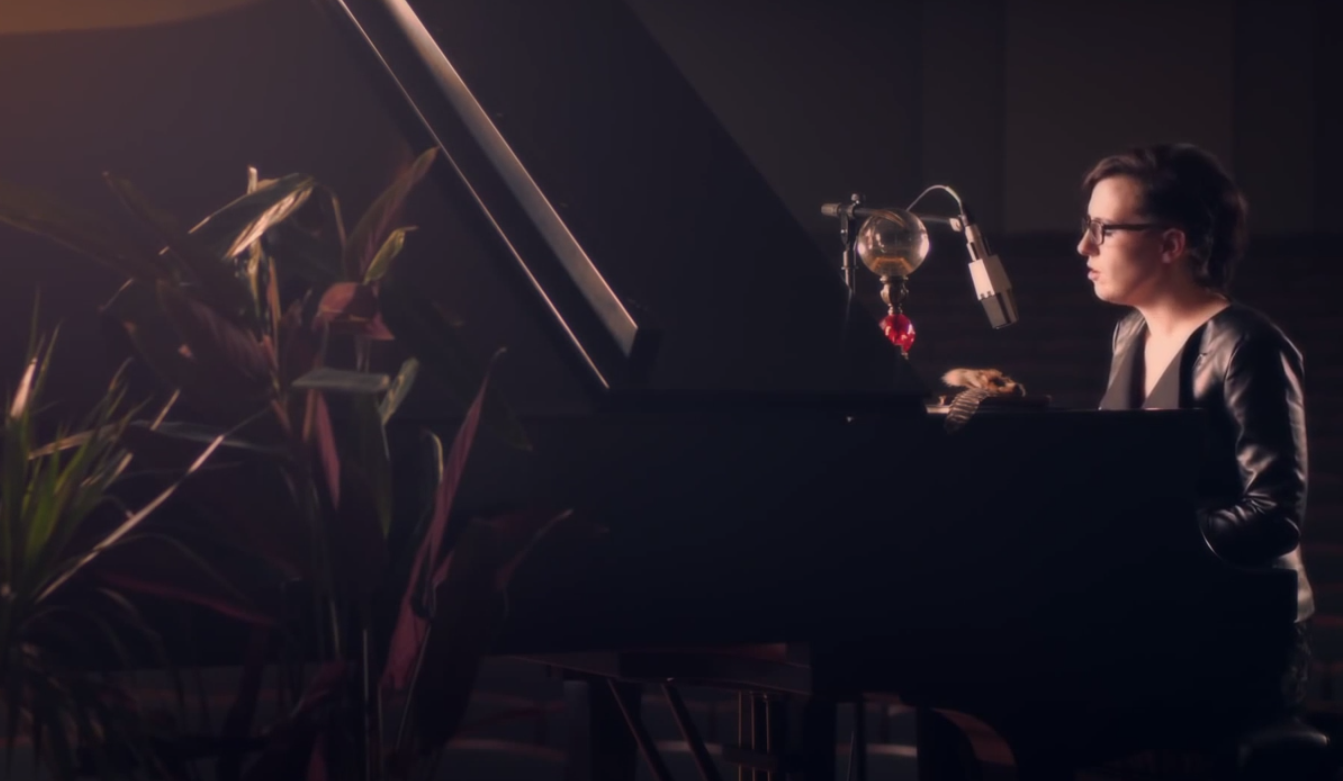
Why? Because she brings a refreshingly Catholic perspective to the story o’ the hour.
Who is Audrey Assad? She’s a singer/songwriter/musician, and Catholic convert from Evangelical Protestantism. Fans of Matt Maher know about her. She’s even performed for the Frannies seeking to renovate a music hall for The Harmonium Project. FYI, the contribution perk awarding contributors her album? Sold out. But you can still sample her style on YouTube, and pick up a copy of her album, Fortunate Fall, either as a CD or in digital format, elsewhere.
But enough about her musical chops. Check out her reasonable thinking chops in a blog post she published yesterday entitled, Personhood, Sexuality, and Phil Robertson. Here’s a snippet to get you started,
Major religions have, many times through the centuries, held certain disagreements with societal thought about sexual morals. This is nothing new. Many of the same questions have been asked for thousands of years, the same conclusions drawn on both “sides” of the questions. As a child of fundamentalist Evangelicalism, I experienced a lot of confusion about this stuff—particularly in the area of sexuality and personhood, and how they integrated or related. Did they? In what ways? To what degree did my sexual attractions define who I was, or how God perceived me? Questions from me on these topics were met by leaders in my community with hushed tones and well-meaning, but severely misguided, instructions “not to wonder about these things.”
As a Catholic Christian at thirty years of age, I counsel myself (and others) very, very differently these days. Do—do wonder. Wonder about your sexuality, your sexual struggles, your sexual desires—about what they all mean in relation to your personhood. Ask, think, research, read. It is not only the answers to these questions that reveal who you are—it’s the questions themselves. It is not a coincidence that dogs and cats don’t look at their genitals and wonder what they’re for and why they were born with this kind as opposed to that kind. It’s no evolutionary hiccup that little rats and raccoons don’t ask their parents where babies come from. We are different. We are beings of reason, of soul. We wonder these things, very early and very often—and this is crucial to understanding who we are. Sex is not just about rubbing body parts together or perpetuating the species, though it encompasses both of those (dare I say?) perks—sex and sexuality are gateways to the truth about who we really are, and we ought to see them as such.
“The fact that theology also considers the body should not astonish or surprise anyone who is aware of the mystery and reality of the Incarnation. Theology is that science whose subject is divinity. Through the fact that the Word of God became flesh, the body entered theology through the main door. The Incarnation and the redemption that springs from it became also the definitive source of the sacramentality of marriage…” (TOB April 2, 1980) p. 88
“Understanding the fundamental meanings contained in the mystery of creation, such as the nuptial meaning of the body…is important. It is indispensable in order to know who man is and who he should be, and therefore how he should mold his own activity.” (TOB Feb. 13, 1980) p. 74
“The body, and it alone, is capable of making visible what is invisible: the spiritual and the divine. It was created to transfer into the visible reality of the world the mystery hidden since time immemorial in God [God’s love for man], and thus to be a sign of it.” (TOB Feb. 20, 1980) p. 76
-the quotes above have been drawn from http://www.jp2.info/Theology_of_the_Body.pdf
This—believing that in the mystery of the physical and sexual makeup of the human body lies deep truths about who we are, who God is, and why He made us—is not to say that sex, gender, or sexuality defines us. If there is any common thread to the collective orthodox and historic Church statements on this topic, it is that these things do not define us completely. They are very closely tied to our core personhood, but they are not quite that. We see this idea lived out in our current society’s admirable fight for gender equality—for example, women are not prohibited from working because they have uteruses and bear children. If sexuality was completely core to our personhood, then gender would be the deciding factor in these issues (as it has been in other cultures, and in our own, in the past)—but, we argue, a person ought not to be reduced to their sexual organs and treated only in consideration of what those organs permit them to do. A man doesn’t bear children, so it’s technically easier for him to work. But even though a woman’s sexual function is different, and presents some obstacles to working outside the home, we argue, it should not prohibit her from achieving similar, and sometimes same, goals and dreams. This is a very good conclusion, because it resists the temptation to reduce each person to his/her sexual makeup and function. And the Church should protect and uphold this objective good in the world, as John Paul II affirms so eloquently in his letter to women.
Read it all. Because Robertson’s off-the-cuff remarks, simplistic language, based on ideas that reduce folks to their body parts (and their attraction to the same), isn’t near enough for what is needed when articulating to the world Christian thoughts on the subject of sexuality.
Previous Post

December 21, 2013
To Leave the Shackles of Human History Behind
Browse Our Archives
Select a Category Blog News Conversion Story Culture Learning Living Nature Prayer Uncategorized Working
Select a Month June 2016 May 2016 August 2015 July 2015 June 2015 May 2015 April 2015 March 2015 February 2015 January 2015 December 2014 November 2014 October 2014 September 2014 August 2014 July 2014 June 2014 May 2014 April 2014 March 2014 February 2014 January 2014 December 2013 November 2013 October 2013 September 2013 August 2013 July 2013 June 2013 May 2013 April 2013 March 2013 February 2013 January 2013 December 2012 November 2012 October 2012 September 2012 August 2012 July 2012 June 2012 May 2012 April 2012 March 2012 February 2012 January 2012 December 2011 November 2011 October 2011 September 2011 August 2011 July 2011 June 2011 May 2011 April 2011 March 2011 February 2011 January 2011 December 2010 November 2010 October 2010 September 2010 August 2010 July 2010 June 2010 May 2010 April 2010 March 2010 February 2010 January 2010 December 2009 November 2009 October 2009 September 2009 August 2009
Follow Us!
TAKE THE
Religious Wisdom Quiz
But the fruit of the Spirit is love, joy, peace, forbearance, kindness, goodness, ____ and self-control.
Select your answer to see how you score.
Faithfulness Charity Hope Gratitude
Related posts from Why I Am Catholic

Belated Happy Birthday To Blaise Pascal, Unofficial Saint...

Because My Brother Imran Yousef Is An American...

Joe Six-Pack, USMC, With A Few Post-Terrorist Attack...

HHS Forced Sex Changes? There Ain't No Fait...
TRENDING AT PATHEOS Catholic

Rejecting Doom: Christian Hope And Human Action
Christianity is a religion of hope. We are to have hope and...

It’s What Comes From Within Which Matters
One of the most difficult things for us to understand is why...

Why I Choose the Eucharist Over the Sermon
Choose the Eucharist, Not the Sermon What are we supposed to get...

5 Design Elements Found in Spiritually Rooted Homes
Putting Spirituality Into Home Decor Our homes are more than our living...

Credo: A Story of God Told with the...
About 10 years ago, I began to imagine a personal "Credo" that...

The Anatomy of Divine Revelation in Catholic Thought
The claim that God has made Himself known to human beings is...
Ad-Free & Subscriber Log-In Subscription Support
- About Us
- 2026 Calendar
- Videos
- Podcasts
- Library of World Religions
- Faith In Media Tracker
- Advertise With Us
- Write for Us
- Privacy Policy
- Terms of Service
- Do Not Sell My Data
- Contact Us
- Radiant Digital
- Manage Newsletter Subscriptions
- Unsubscribe From Notifications
- Sitemap
Copyright 2008-2026, Patheos. All rights reserved.
Subscription Support Ad-Free & Subscriber Log-In
Follow Patheos