
BuddhistCatholicContemplativeEvangelicalGeneral ChristianHinduJewishLatter-day SaintMuslimNew VisionsProgressive Christian
Beliefs
- Buddhist
- Catholic
- Contemplative
- Evangelical
- General Christian
- Hindu
- Jewish
- Latter-day Saint
- More Voices
- Muslim
- New Visions
- Pagan
- Progressive Christian
Topics
- Religion News
- Food and Religion
- Sports and Religion
- Religious Art
- Religious Music and Entertainment
- Religious Events
- History and Religion
- Style and Religion
- Politics and Religion
- Women in Religion
- Recreation Outdoors and Religion
- Business Finance and Religion
- Careers Workplace and Religion
- Education and Religion
- Family Parenting and Religion
- Health Fitness and Religion
- Home and Religion
- Relationships and Religion
- Technology and Religion
- Travel and Religion
Columnists
- Buddhist Columnists
- Business Finance and Religion Columnists
- Careers Workplace and Religion Columnists
- Catholic Columnists
- Contemplative Columnists
- Education and Religion Columnists
- Evangelists Columnists
- Family Parenting and Religion Columnists
- General Christian Columnists
- Health Fitness and Religion Columnists
- Hindu Columnists
- History and Religion Columnists
- Home and Religion Columnists
- Jewish Columnists
- More Voices Columnists
- Latter Day Columnists
- Muslim Columnists
- New Visions Columnists
- Nonreligious Columnists
- Pagan Columnists
- Politics and Religion Columnists
- Progressive Columnists
- Recreation Outdoors and Religion Columnists
- Relationships and Religion Columnists
- Religion News Columnists
- Religious Art Columnists
- Religious Events Columnists
- Religious Music and Entertainment Columnists
- Sports and Religion Columnists
- Style and Religion Columnists
- Technology and Religion Columnists
- Travel and Religion Columnists
- Women in Religion Columnists
Resource Library
- 2026 Calendar
- Library of World Religions
- The 100 Most Holy Places on Earth
- Patheos Answers
- Podcasts
- Videos
- Faith Leaders Database
- Anglican Episcopalian
- Bahai
- Baptist
- Buddhism
- Christianity
- Confucianism
- Eastern Orthodoxy
- Hinduism
- Holiness and Pentecostal
- ISKCON
- Islam
- Judaism
- Lutheran
- Methodist
- The Church of Jesus Christ of Latter-day Saints
- New Age
- Paganism
- Presbytarian and Reformed
- Protestantism
- Religion Behind the Scenes
- Roman Catholic
- Scientology
- Shia Islam
- Sikhism
- Sufism
- Sunni Islam
- Taoism
- Zen
- See all religions
Research Tools
 Ad-Free & Subscriber Log-In Subscription Support
Ad-Free & Subscriber Log-In Subscription Support
Follow Patheos 

- Trending:
- Forgiveness
- |
- Marriage
- |
- Consciousness
- |
- Death Penalty
- |
- Election
- |
- Halloween
 Why I Am Catholic
-
More
- Home
- For Dana Gioia’s Thoughts On The Vocation Of The Catholic Writer
For Dana Gioia’s Thoughts On The Vocation Of The Catholic Writer
Last updated on: June 7, 2015 at 10:39 pm by Frank Weathers
For Dana Gioia’s Thoughts On The Vocation Of The Catholic Writer 2015-06-07T22:39:05-05:00 Frank Weathers
Patheos Explore the world's faith through different perspectives on religion and spirituality! Patheos has the views of the prevalent religions and spiritualities of the world.
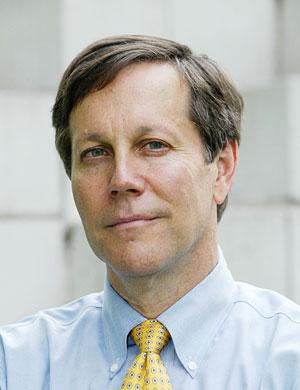
Dana Gioia, formerly chairman of the National Endowment for the Arts. now a professor at that other university in Los Angeles (USC)
Photograph from Wikipedia Commons
A lot of ink has been spilt these last few days since Evangelii Gaudium was published. Much of what has been said about it isn’t worth the pixels that have been wasted so far. The same old tired arguments from the usual suspects seeking to undermine any moral authority that Pope Francis is seeking to wield by his even bothering to publish it.
As the father of three teenagers, I’ve got enough experience to know that the stuff I say to my children isn’t oftentimes the least bit popular with them. I say it anyway, because that’s what I’m called to do. Frankly, I can care less if it’s pleasing to my intended audience, or not.
Good thing Pope Francis is sticking to non-fiction, huh? Not that non-fiction is any less controversial, albeit it’s a more forgiving outlet than fiction is. Pope Francis will healthily be able to eat three squares a day, even if he never writes another word. That’s not the case for most writers.
It being a Saturday, I looked forward to reading something that had nothing to do with the Pope’s latest work. I can handle only so much outrage over nothing (well, it’s only outrage over the Sermon on the Mount, so it is something, just not something worth my time). Again, I’m a dad, so I’ve been there, and I’m doing that.
So as I settled in on the sofa with a big cup of coffee, I was happy to see that First Things has opened up Dana Gioia’s article The Catholic Writer Today: Encouraging Catholic writers to renovate and reoccupy their own tradition. A few weeks back, I’d heard mention of it being behind their pay wall, but being Joe Six-Pack, breadwinner, I had to just make do on a piece written by Matt Emerson in America Magazine.
But now the article is flying free and clear for all to see, and frankly, all of us need to see it. Below, I give you part 1 of the 9 part essay. Put down your sword, pitchfork, or torch, and read about what it means to be a Catholic writer in today’s world, why the vocation is vitally important, and the enormity of the task of engaging the culture that lies before them.
For years I’ve pondered a cultural and social paradox that diminishes the vitality and diversity of the American arts. This cultural conundrum also reveals the intellectual retreat and creative inertia of American religious life. Stated simply, the paradox is that, although Roman Catholicism constitutes the largest religious and cultural group in the United States, Catholicism currently enjoys almost no positive presence in the American fine arts—not in literature, music, sculpture, or painting. This situation not only represents a demographic paradox. It also marks a major historical change—an impoverishment, indeed even a disfigurement—for Catholicism, which has for two millennia played a hugely formative and inspirational role in the arts.
Roman Catholicism now ranks overwhelmingly as the largest religious denomination in the United States, with more than sixty-eight million members. (By contrast, the second largest group, Southern Baptists, has sixteen million members.) Representing almost one-quarter of the American population, Catholics also constitute the largest cultural minority in the nation. Supporting its historical claim of being the “universal” church, American Catholicism displays vast ethnic, national, linguistic, and social diversity. (In my first parish in Washington, D.C., it was not unusual at Mass to see congressional staffers, Central American immigrants, and urban homeless share the same pew.) While most Protestant churches continue to decline, Catholicism has grown steadily for the past two hundred years through a combination of immigration, births, and conversions. On purely demographic grounds, one would expect to see a huge and growing Catholic presence in the American fine arts.
If one asked an arts journalist to identify a major living painter or sculptor, playwright or choreographer, composer or poet, who was a practicing Catholic, the critic, I suspect, would be unable to offer a single name. He or she could surely identify a few ex-Catholics, such as Andres Serrano, Terrence McNally, or Mark Adamo, who use religious subject matter for satire, censure, or shock value. Catholic exposé is now a mainstream literary genre, from the farcical (Sister Mary Ignatius Explains It All for You) to the tendentious(The Gospel of Mary Magdalene). If the question were expanded to include novelists—the most sociological of major art forms—a well-informed literary critic might offer a few names such as Ron Hansen or Alice McDermott, authors whose subject matter is often overtly Catholic. Those few figures would account for most of the Catholic artists visible in our culture. The journalist’s immediate reaction, however, would be to consider the question itself naive or silly. Why would a serious critic even bother to know such cultish trivia? Nowadays the arts and Christianity seem only remotely connected, if at all. Contemporary culture is secular culture, is it not?
No one wants quotas for Catholic artists, but does it not seem newsworthy that the religion of one-quarter of the U.S. population has retreated to the point of invisibility in the fine arts? (Catholicism’s position in popular entertainment is the subject for another essay.) There is a special irony that this disappearance has occurred during a period when celebrating cultural diversity has become an explicit goal across the American arts. Some kinds of diversity are evidently more equal than others. Has the decline generated cultural controversy? Not especially. Neither the arts world nor the Catholic establishment cares much about the issue. There seems to be a tacit agreement on both sides that, in practice, if not in theory, Catholicism and art no longer mix—a consensus that would have surprised not only Dante but also Jack Kerouac. The consequences of this situation are unfortunate—in different ways—for both the culture and the Church.
To begin a responsible examination of this complex topic, it helps to be factual and specific. Although the decline of Catholicism has occurred across the culture, this essay will only discuss literature, which provides a useful perspective on all the arts. Likewise, examining the situation of Catholic writers helps illuminate the current situation of all Christian writers.
From silly devotions, and sour-faced saints,
good Lord, deliver us.
—St. Teresa of Avila
Next Post

December 9, 2013 Wall Street Journal Columnist Backs The "Advent Conspiracy"
Browse Our Archives
Select a Category Blog News Conversion Story Culture Learning Living Nature Prayer Uncategorized Working
Select a Month June 2016 May 2016 August 2015 July 2015 June 2015 May 2015 April 2015 March 2015 February 2015 January 2015 December 2014 November 2014 October 2014 September 2014 August 2014 July 2014 June 2014 May 2014 April 2014 March 2014 February 2014 January 2014 December 2013 November 2013 October 2013 September 2013 August 2013 July 2013 June 2013 May 2013 April 2013 March 2013 February 2013 January 2013 December 2012 November 2012 October 2012 September 2012 August 2012 July 2012 June 2012 May 2012 April 2012 March 2012 February 2012 January 2012 December 2011 November 2011 October 2011 September 2011 August 2011 July 2011 June 2011 May 2011 April 2011 March 2011 February 2011 January 2011 December 2010 November 2010 October 2010 September 2010 August 2010 July 2010 June 2010 May 2010 April 2010 March 2010 February 2010 January 2010 December 2009 November 2009 October 2009 September 2009 August 2009
Follow Us!
TAKE THE
Religious Wisdom Quiz
What does "Gad" mean in Hebrew?
Select your answer to see how you score.
Fortune Joyful Chosen One Warrior
Related posts from Why I Am Catholic

Belated Happy Birthday To Blaise Pascal, Unofficial Saint...

Because My Brother Imran Yousef Is An American...

Joe Six-Pack, USMC, With A Few Post-Terrorist Attack...

This Is Why God Invented YouTube...
TRENDING AT PATHEOS Catholic

Rejecting Doom: Christian Hope And Human Action
Christianity is a religion of hope. We are to have hope and...

It’s What Comes From Within Which Matters
One of the most difficult things for us to understand is why...

Why I Choose the Eucharist Over the Sermon
Choose the Eucharist, Not the Sermon What are we supposed to get...

5 Design Elements Found in Spiritually Rooted Homes
Putting Spirituality Into Home Decor Our homes are more than our living...

Credo: A Story of God Told with the...
About 10 years ago, I began to imagine a personal "Credo" that...

The Anatomy of Divine Revelation in Catholic Thought
The claim that God has made Himself known to human beings is...
Ad-Free & Subscriber Log-In Subscription Support
- About Us
- 2026 Calendar
- Videos
- Podcasts
- Library of World Religions
- Faith In Media Tracker
- Advertise With Us
- Write for Us
- Privacy Policy
- Terms of Service
- Do Not Sell My Data
- Contact Us
- Radiant Digital
- Manage Newsletter Subscriptions
- Unsubscribe From Notifications
- Sitemap
Copyright 2008-2026, Patheos. All rights reserved.
Subscription Support Ad-Free & Subscriber Log-In
Follow Patheos