
BuddhistCatholicContemplativeEvangelicalGeneral ChristianHinduJewishLatter-day SaintMuslimNew VisionsProgressive Christian
Beliefs
- Buddhist
- Catholic
- Contemplative
- Evangelical
- General Christian
- Hindu
- Jewish
- Latter-day Saint
- More Voices
- Muslim
- New Visions
- Pagan
- Progressive Christian
Topics
- Religion News
- Food and Religion
- Sports and Religion
- Religious Art
- Religious Music and Entertainment
- Religious Events
- History and Religion
- Style and Religion
- Politics and Religion
- Women in Religion
- Recreation Outdoors and Religion
- Business Finance and Religion
- Careers Workplace and Religion
- Education and Religion
- Family Parenting and Religion
- Health Fitness and Religion
- Home and Religion
- Relationships and Religion
- Technology and Religion
- Travel and Religion
Columnists
- Buddhist Columnists
- Business Finance and Religion Columnists
- Careers Workplace and Religion Columnists
- Catholic Columnists
- Contemplative Columnists
- Education and Religion Columnists
- Evangelists Columnists
- Family Parenting and Religion Columnists
- General Christian Columnists
- Health Fitness and Religion Columnists
- Hindu Columnists
- History and Religion Columnists
- Home and Religion Columnists
- Jewish Columnists
- More Voices Columnists
- Latter Day Columnists
- Muslim Columnists
- New Visions Columnists
- Nonreligious Columnists
- Pagan Columnists
- Politics and Religion Columnists
- Progressive Columnists
- Recreation Outdoors and Religion Columnists
- Relationships and Religion Columnists
- Religion News Columnists
- Religious Art Columnists
- Religious Events Columnists
- Religious Music and Entertainment Columnists
- Sports and Religion Columnists
- Style and Religion Columnists
- Technology and Religion Columnists
- Travel and Religion Columnists
- Women in Religion Columnists
Resource Library
- 2026 Calendar
- Library of World Religions
- The 100 Most Holy Places on Earth
- Patheos Answers
- Podcasts
- Videos
- Faith Leaders Database
- Anglican Episcopalian
- Bahai
- Baptist
- Buddhism
- Christianity
- Confucianism
- Eastern Orthodoxy
- Hinduism
- Holiness and Pentecostal
- ISKCON
- Islam
- Judaism
- Lutheran
- Methodist
- The Church of Jesus Christ of Latter-day Saints
- New Age
- Paganism
- Presbytarian and Reformed
- Protestantism
- Religion Behind the Scenes
- Roman Catholic
- Scientology
- Shia Islam
- Sikhism
- Sufism
- Sunni Islam
- Taoism
- Zen
- See all religions
Research Tools
 Ad-Free & Subscriber Log-In Subscription Support
Ad-Free & Subscriber Log-In Subscription Support
Follow Patheos 

- Trending:
- Forgiveness
- |
- Marriage
- |
- Consciousness
- |
- Death Penalty
- |
- Election
- |
- Halloween
 Why I Am Catholic
-
More
- Home
- Unpacking Pope Francis’s Interview (Part II) UPDATED
Unpacking Pope Francis’s Interview (Part II) UPDATED
Last updated on: January 24, 2017 at 5:14 pm by Frank Weathers
Unpacking Pope Francis’s Interview (Part II) UPDATED 2017-01-24T17:14:13-05:00 Frank Weathers
Patheos Explore the world's faith through different perspectives on religion and spirituality! Patheos has the views of the prevalent religions and spiritualities of the world.
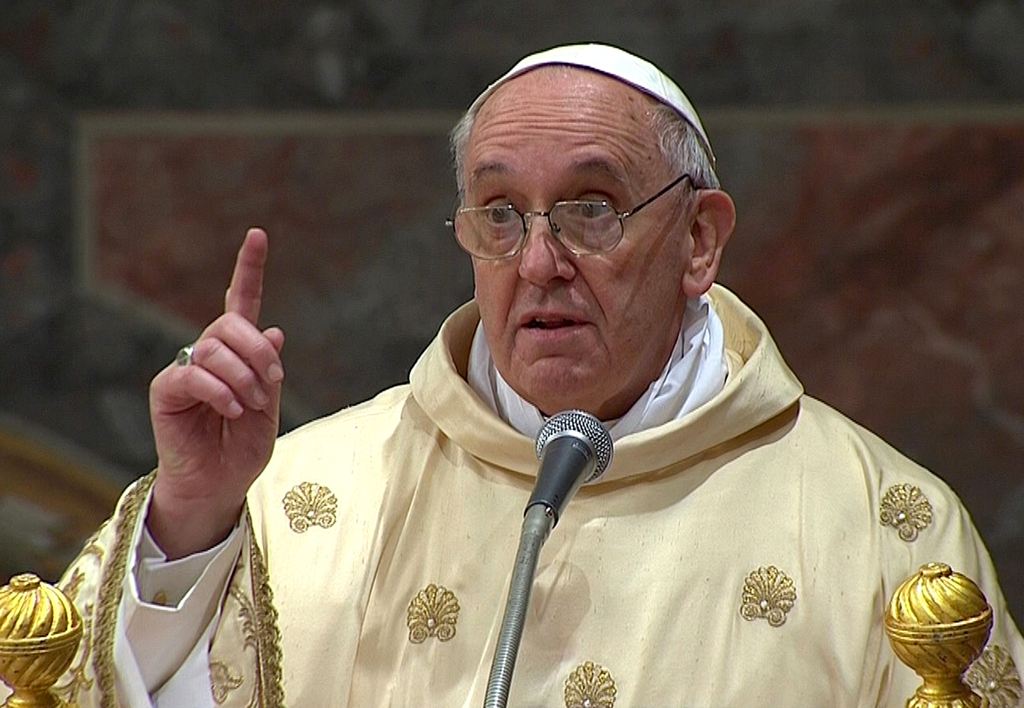
Do you know what the secret of life is? One thing…
I’m back to unpacking Pope Francis’s interview, though the world seems to have moved on. Last time we left off with thoughts on aligning our minds with the mind of the Church, and I’ll will pick up from there.
Someone better informed than I am made the observation that Pope Francis’s comments in the interview made sense really only for those who are immersed in a culture permeated with the Christian ideals that undergird Catholicism. I think that may be true for the most part, although everyone and their brother understands mercy when they read about it. And though the infallibility of the laity on matters of faith was another important point Pope Francis made, it is still one that makes no sense if the laity are ignorant of many basic truths of the faith.
And so I pick up where I left off, with the section from the Catechism subtitled THE CHURCH, MOTHER AND TEACHER, and the homiletic advice of Pope Francis,
“I say this also thinking about the preaching and content of our preaching. A beautiful homily, a genuine sermon must begin with the first proclamation, with the proclamation of salvation. There is nothing more solid, deep and sure than this proclamation. Then you have to do catechesis. Then you can draw even a moral consequence. But the proclamation of the saving love of God comes before moral and religious imperatives.
Pope Francis’s emphasis on the gospel proclamation is the key to making Christ’s message new, for a people who believe they know all about it, but have grown sleepy in their recollection of its clarion call of salvation for many.
And so when Pope Francis cautions to remember, “of course, we must be very careful not to think that this infallibilitas of all the faithful I am talking about in the light of Vatican II is a form of populism. No; it is the experience of ‘holy mother the hierarchical church,’ as St. Ignatius called it, the church as the people of God, pastors and people together. The church is the totality of God’s people,” we can see that this meshes well with the following,
2035 The supreme degree of participation in the authority of Christ is ensured by the charism of infallibility. This infallibility extends as far as does the deposit of divine Revelation; it also extends to all those elements of doctrine, including morals, without which the saving truths of the faith cannot be preserved, explained, or observed.77
In other words, you can’t have this “infallibilitas in credendo, this infallibility in believing,” if we’ve forgotten what we believe. Because blind faith isn’t what Catholics have been called to have. We don’t check our brains at the door. But we don’t leave our hearts at the door either. That said, Our Mother the Church doesn’t want us to stay dependent, or be like suckling babes either. If we believe the saving message of the gospel, we are to embrace it, conform ourselves to it, and proclaim it with all of our heart, mind, and strength to others.
“This church with which we should be thinking is the home of all, not a small chapel that can hold only a small group of selected people. We must not reduce the bosom of the universal church to a nest protecting our mediocrity.
Why protect mediocrity when there is divine excellence to be observed and proclaimed? After all, these concepts, from the life of the mind of the Church, are necessary for salvation when spending a lifetime walking the Way.
2036 The authority of the Magisterium extends also to the specific precepts of the natural law, because their observance, demanded by the Creator, is necessary for salvation. In recalling the prescriptions of the natural law, the Magisterium of the Church exercises an essential part of its prophetic office of proclaiming to men what they truly are and reminding them of what they should be before God.(DH 14)
And so without batting an eye, the very next day after the interview, in which the World Press was waxing euphoric that the Church would lay off of her teaching office, especially around the pelvic matters of contraception, abortion, gay marriage, etc., Pope Francis delivered an anti-abortion message to obstetricians visiting Rome. And here is the obvious reason why.
2037 The law of God entrusted to the Church is taught to the faithful as the way of life and truth. The faithful therefore have the right to be instructed in the divine saving precepts that purify judgment and, with grace, heal wounded human reason.(CIC 213) They have the duty of observing the constitutions and decrees conveyed by the legitimate authority of the Church. Even if they concern disciplinary matters, these determinations call for docility in charity.
Because we have the right to know the truth, and the duty to obey it. “We must walk together: the people, the bishops and the pope.” Thomas Merton said something along these lines in No Man Is An Island,
As soon as truth is in the intellect, the mind is “sanctified” by it. But if the soul is to be sanctified, the will must be purified by this same truth which is in the intelligence. Even though our minds may see the truth, our wills remain free to “change the truth of God into a lie” (Romans 1:25).
There is a way of knowing the truth that makes us true to ourselves and God, and, therefore, makes us more real and holier. But there is another way of receiving the truth that make us untrue, unholy. The difference between these two lies in the action of our will.
And this united body of believers are all responsible for bringing the salvific work of Christ to the world.
2038 In the work of teaching and applying Christian morality, the Church needs the dedication of pastors, the knowledge of theologians, and the contribution of all Christians and men of good will. Faith and the practice of the Gospel provide each person with an experience of life “in Christ,” who enlightens him and makes him able to evaluate the divine and human realities according to the Spirit of God.80 Thus the Holy Spirit can use the humblest to enlighten the learned and those in the highest positions.
A part of the human reality that Pope Francis called for more theological thinking on is that of women withing the Body of Christ. The flag for this comment was picked up by the media and run around as some new thing being championed by Pope Francis. But his predecessors have also called for greater understanding of the complimentarity of the sexes, especially Blessed Pope John Paul II through his teachings around the theology of the body, as well as letters like this one given prior to the UN’s Fourth World Conference on Women back in 1995.
As most women themselves point out, equality of dignity does not mean “sameness with men”. This would only impoverish women and all of society, by deforming or losing the unique richness and the inherent value of femininity. In the Church’s outlook, women and men have been called by the Creator to live in profound communion with one another, with reciprocal knowledge and giving of self, acting together for the common good with the complementary characteristics of that which is feminine and masculine.
At the same time we must not forget that at the personal level one’s dignity is experienced not as a result of the affirmation of rights on the juridical and international planes, but as the natural consequence of the concrete material, emotional and spiritual care received in the heart of one’s family. No response to women’s issues can ignore women’s role in the family or take lightly the fact that every new life is totally entrusted to the protection and care of the woman carrying it in her womb (Cf. John Paul II Evangelium Vitae, 58).
Hence Pope Francis’s remark about being “wary of a solution that can be reduced to a kind of ‘female machismo,’ because a woman has a different make-up than a man.” And when the Church does roll out a proper theology of women, we can rest assured that it will be discussed, argued over, dissected, and finally ignored by the World, for reasons Thomas Merton explained as follows,
Although we still may speak the truth, we are more and more losing our desire to live according to the truth. Our wills are not true, because they refuse to accept the laws of our own being: they fail to work along the lines demanded by our own reality. Our wills are plunged in false values, and they have dragged our minds along with them, and our restless tongues bear constant witness to the disorganization inside our souls—”the tongue no man can tame, an unquiet evil, full of deadly poison. By it we bless God and the Father, and we curse men who are made in the likeness of God…Doth a fountain send forth out of the same hole sweet and bitter water?” (James 3:8-11).
Stay tuned for more unpacking.
RELATED
Terry Mattingly: Pope Francis speaks — this time the media ignore him.
Previous Post

September 25, 2013
Joe Six-Pack Unpacks Pope Francis's Interview (Part I) UPDATED
Next Post
September 28, 2013 Unpacking Pope Francis's Interview (Part III, the Conclusion)
Browse Our Archives
Select a Category Blog News Conversion Story Culture Learning Living Nature Prayer Uncategorized Working
Select a Month June 2016 May 2016 August 2015 July 2015 June 2015 May 2015 April 2015 March 2015 February 2015 January 2015 December 2014 November 2014 October 2014 September 2014 August 2014 July 2014 June 2014 May 2014 April 2014 March 2014 February 2014 January 2014 December 2013 November 2013 October 2013 September 2013 August 2013 July 2013 June 2013 May 2013 April 2013 March 2013 February 2013 January 2013 December 2012 November 2012 October 2012 September 2012 August 2012 July 2012 June 2012 May 2012 April 2012 March 2012 February 2012 January 2012 December 2011 November 2011 October 2011 September 2011 August 2011 July 2011 June 2011 May 2011 April 2011 March 2011 February 2011 January 2011 December 2010 November 2010 October 2010 September 2010 August 2010 July 2010 June 2010 May 2010 April 2010 March 2010 February 2010 January 2010 December 2009 November 2009 October 2009 September 2009 August 2009
Follow Us!
TAKE THE
Religious Wisdom Quiz
Which animal did Jesus ride into Jerusalem on, fulfilling prophecy?
Select your answer to see how you score.
Ox Camel Horse Donkey
Related posts from Why I Am Catholic

Belated Happy Birthday To Blaise Pascal, Unofficial Saint...

Because My Brother Imran Yousef Is An American...

Joe Six-Pack, USMC, With A Few Post-Terrorist Attack...

This Is Why God Invented YouTube...
TRENDING AT PATHEOS Catholic

Rejecting Doom: Christian Hope And Human Action
Christianity is a religion of hope. We are to have hope and...

It’s What Comes From Within Which Matters
One of the most difficult things for us to understand is why...

Why I Choose the Eucharist Over the Sermon
Choose the Eucharist, Not the Sermon What are we supposed to get...

5 Design Elements Found in Spiritually Rooted Homes
Putting Spirituality Into Home Decor Our homes are more than our living...

Credo: A Story of God Told with the...
About 10 years ago, I began to imagine a personal "Credo" that...

The Anatomy of Divine Revelation in Catholic Thought
The claim that God has made Himself known to human beings is...
Ad-Free & Subscriber Log-In Subscription Support
- About Us
- 2026 Calendar
- Videos
- Podcasts
- Library of World Religions
- Faith In Media Tracker
- Advertise With Us
- Write for Us
- Privacy Policy
- Terms of Service
- Do Not Sell My Data
- Contact Us
- Radiant Digital
- Manage Newsletter Subscriptions
- Unsubscribe From Notifications
- Sitemap
Copyright 2008-2026, Patheos. All rights reserved.
Subscription Support Ad-Free & Subscriber Log-In
Follow Patheos