
BuddhistCatholicContemplativeEvangelicalGeneral ChristianHinduJewishLatter-day SaintMuslimNew VisionsProgressive Christian
Beliefs
- Buddhist
- Catholic
- Contemplative
- Evangelical
- General Christian
- Hindu
- Jewish
- Latter-day Saint
- More Voices
- Muslim
- New Visions
- Pagan
- Progressive Christian
Topics
- Religion News
- Food and Religion
- Sports and Religion
- Religious Art
- Religious Music and Entertainment
- Religious Events
- History and Religion
- Style and Religion
- Politics and Religion
- Women in Religion
- Recreation Outdoors and Religion
- Business Finance and Religion
- Careers Workplace and Religion
- Education and Religion
- Family Parenting and Religion
- Health Fitness and Religion
- Home and Religion
- Relationships and Religion
- Technology and Religion
- Travel and Religion
Columnists
- Buddhist Columnists
- Business Finance and Religion Columnists
- Careers Workplace and Religion Columnists
- Catholic Columnists
- Contemplative Columnists
- Education and Religion Columnists
- Evangelists Columnists
- Family Parenting and Religion Columnists
- General Christian Columnists
- Health Fitness and Religion Columnists
- Hindu Columnists
- History and Religion Columnists
- Home and Religion Columnists
- Jewish Columnists
- More Voices Columnists
- Latter Day Columnists
- Muslim Columnists
- New Visions Columnists
- Nonreligious Columnists
- Pagan Columnists
- Politics and Religion Columnists
- Progressive Columnists
- Recreation Outdoors and Religion Columnists
- Relationships and Religion Columnists
- Religion News Columnists
- Religious Art Columnists
- Religious Events Columnists
- Religious Music and Entertainment Columnists
- Sports and Religion Columnists
- Style and Religion Columnists
- Technology and Religion Columnists
- Travel and Religion Columnists
- Women in Religion Columnists
Resource Library
- 2026 Calendar
- Library of World Religions
- The 100 Most Holy Places on Earth
- Patheos Answers
- Podcasts
- Videos
- Faith Leaders Database
- Anglican Episcopalian
- Bahai
- Baptist
- Buddhism
- Christianity
- Confucianism
- Eastern Orthodoxy
- Hinduism
- Holiness and Pentecostal
- ISKCON
- Islam
- Judaism
- Lutheran
- Methodist
- The Church of Jesus Christ of Latter-day Saints
- New Age
- Paganism
- Presbytarian and Reformed
- Protestantism
- Religion Behind the Scenes
- Roman Catholic
- Scientology
- Shia Islam
- Sikhism
- Sufism
- Sunni Islam
- Taoism
- Zen
- See all religions
Research Tools
 Ad-Free & Subscriber Log-In Subscription Support
Ad-Free & Subscriber Log-In Subscription Support
Follow Patheos 

- Trending:
- Forgiveness
- |
- Marriage
- |
- Consciousness
- |
- Death Penalty
- |
- Election
- |
- Halloween
 Why I Am Catholic
-
More
- Home
- Shocking! Pope Francis and I Agree on Politics
Shocking! Pope Francis and I Agree on Politics
Last updated on: April 8, 2015 at 2:12 pm by Frank Weathers
Shocking! Pope Francis and I Agree on Politics 2015-04-08T14:12:30-05:00 Frank Weathers
Patheos Explore the world's faith through different perspectives on religion and spirituality! Patheos has the views of the prevalent religions and spiritualities of the world.
Did you see Pope Francis’s homily yesterday? Therein he said,
“A good Catholic meddles in politics, offering the best of himself, so that those who govern can govern. None of us can say, ‘I have nothing to do with this, they govern.’”
Once again, the Holy Father points us towards being faithful, responsible, engaged, Christians. And the election cycle is getting started early, which is a good reason to pay attention to the coming debt ceiling shenanigans as well as the HHS Mandate machinations.
I once proclaimed that “the Antichrist is politics.” What I meant by that statement is that when we make an idol of politics, political parties, etc., it becomes the antichrist. How could it not? All forms of idolatry separate us from Christ the King, and lead us down paths that are fraught with danger.
Now, Pope Francis isn’t the first pope to note that Catholics can’t just bury their heads in the sand and let politics continue to wreck havoc unchecked by a citizenry that fails to exercise their roles as priests, profits, and kings. Remember those roles? Lumen Gentium break.
(31) The term laity is here understood to mean all the faithful except those in holy orders and those in the state of religious life specially approved by the Church. These faithful are by baptism made one body with Christ and are constituted among the People of God; they are in their own way made sharers in the priestly, prophetical, and kingly functions of Christ; and they carry out for their own part the mission of the whole Christian people in the Church and in the world.
(34) The supreme and eternal Priest, Christ Jesus, since He wills to continue His witness and service also through the laity, vivifies them in this Spirit and increasingly urges them on to every good and perfect work.
For besides intimately linking them to His life and His mission, He also gives them a sharing in His priestly function of offering spiritual worship for the glory of God and the salvation of men. For this reason the laity, dedicated to Christ and anointed by the Holy Spirit, are marvelously called and wonderfully prepared so that ever more abundant fruits of the Spirit may be produced in them. For all their works, prayers and apostolic endeavors, their ordinary married and family life, their daily occupations, their physical and mental relaxation, if carried out in the Spirit, and even the hardships of life, if patiently borne — all these become “spiritual sacrifices acceptable to God through Jesus Christ”. Together with the offering of the Lord’s Body, they are most fittingly offered in the celebration of the Eucharist. Thus, as those everywhere who adore in holy activity, the laity consecrate the world itself to God.
In his homily yesterday, Pope Francis went on to say that “Politics, according to the Social Doctrine of the Church, is one of the highest forms of charity, because it serves the common good. I cannot wash my hands, eh? We all have to give something!”
Why? In his encylical Caritas in veritate, Pope Benedict XVI notes that,
The Christian religion and other religions can offer their contribution to development only if God has a place in the public realm, specifically in regard to its cultural, social, economic, and particularly its political dimensions. The Church’s social doctrine came into being in order to claim “citizenship status” for the Christian religion[135]. Denying the right to profess one’s religion in public and the right to bring the truths of faith to bear upon public life has negative consequences for true development. The exclusion of religion from the public square — and, at the other extreme, religious fundamentalism — hinders an encounter between persons and their collaboration for the progress of humanity. Public life is sapped of its motivation and politics takes on a domineering and aggressive character. Human rights risk being ignored either because they are robbed of their transcendent foundation or because personal freedom is not acknowledged. Secularism and fundamentalism exclude the possibility of fruitful dialogue and effective cooperation between reason and religious faith. Reason always stands in need of being purified by faith: this also holds true for political reason, which must not consider itself omnipotent. For its part, religion always needs to be purified by reason in order to show its authentically human face. Any breach in this dialogue comes only at an enormous price to human development.
Like going back to the good old days that Thomas Hobbes wrote about in Leviathan
And speaking of Pope Benedict’s thoughts on politics, faith and reason, I’m reminded of something written by Fr. John Courtney Murray, SJ, that I shared regarding another reason why I am Catholic: natural law and politics.
Here then in the briefest compass are some of the resources resident in natural law, that would make it the dynamic of a “new age of order.” It does not indeed furnish a detailed blueprint of the order; that is not its function. Nor does it pretend to settle the enormously complicated technical problems, especially in the economic order, that confront us today. It can claim only to be a “skeleton law,” to which flesh and blood must be added by that heart of the political process, the rational activity of man, aided by experience and by high professional competence. But today it is perhaps the skeleton that we mostly need, since it is precisely the structural foundations of the political, social, and economic orders that are being most anxiously questioned. In this situation the doctrine of natural law can claim to offer all that is good and valid in competing systems, at the same time that it avoids all that is weak and false in them.
Its concern for the rights of the individual human person is no less than that shown in the schools of individualist Liberalism (ed. think “Libertarianism”) with its “law of nature” theory of rights, at the same time that its sense of the organic character of community, as the flowering in ascending forms of sociality of the social nature of man, is far greater and more realistic. It can match Marxism in its concern for man as a worker and for the just organization of economic society, at the same time that it forbids the absorption of man in matter and its determinisms.
Finally, it does not bow to the new rationalism in regard of a sense of history and progress, the emerging potentialities of human nature, the value of experience in settling the forms of social life, the relative primacy in certain respects of the empirical fact over the preconceived theory; at the same time it does not succumb to the doctrinaire relativism, or to the narrowing of the object of human intelligence, that cripple at their root the high aspirations of evolutionary scientific humanism. In a word, the doctrine of natural law offers a more profound metaphysic, a more integral humanism, a fuller rationality, a more complete philosophy of man in his nature and history.
I might say, too, that it furnishes the basis for a firmer faith and a more tranquil, because more reasoned, hope in the future. If there is a law immanent in man—a dynamic, constructive force for rationality in human affairs, that works itself out, because it is a natural law, in spite of contravention by passion and evil and all the corruptions of power—one may with sober reason believe in, and hope for, a future of rational progress. And this belief and hope is strengthened when one considers that this dynamic order of reason in man, that clamors for expression with all the imperiousness of law, has its origin and sanction in an eternal order of reason whose fulfillment is the object of God’s majestic will.
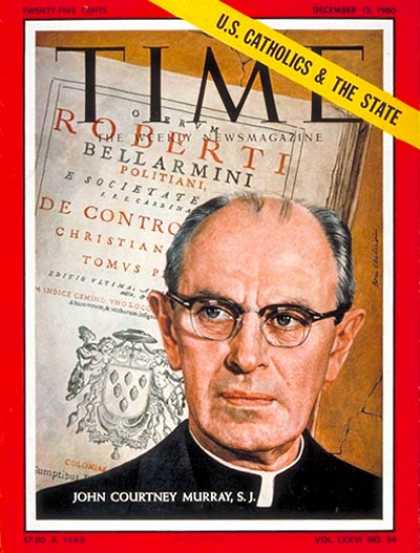
This must have something to do with why God invented popular sovereignty.
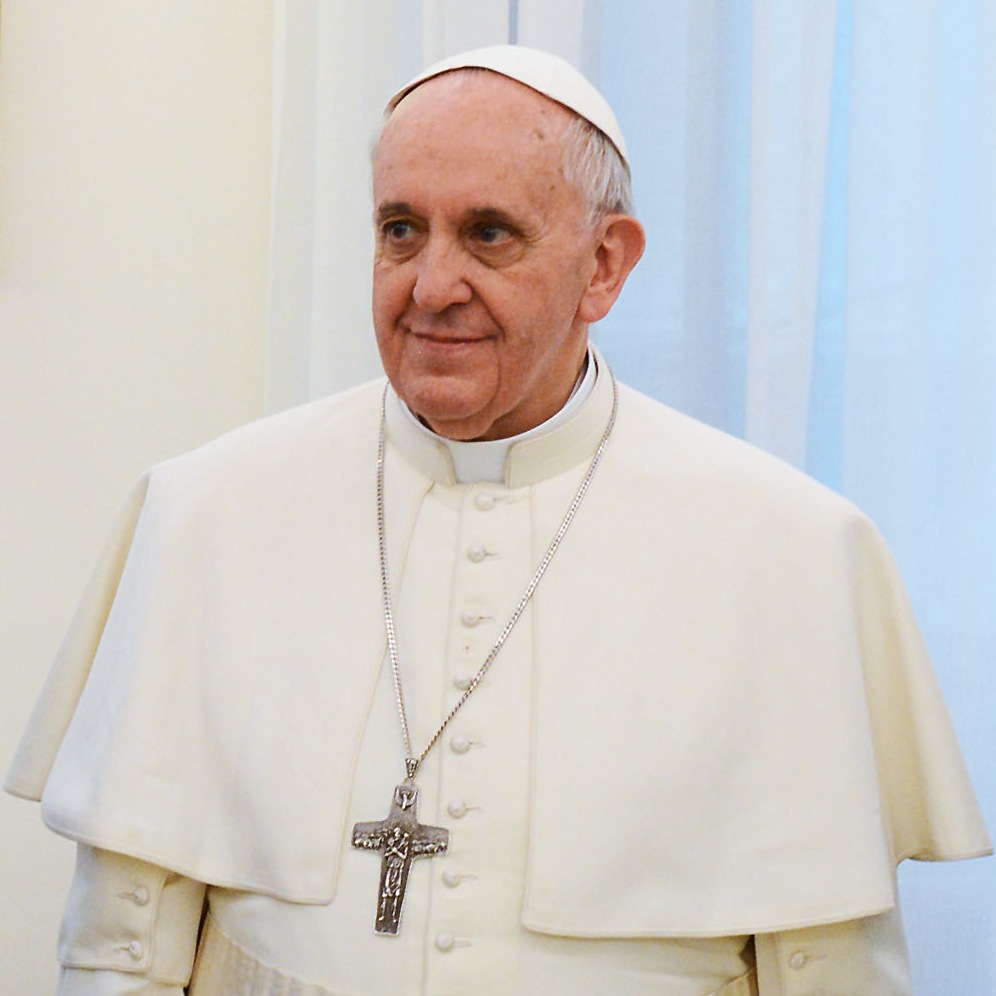
Don’t forget to register to vote.

Browse Our Archives
Select a Category Blog News Conversion Story Culture Learning Living Nature Prayer Uncategorized Working
Select a Month June 2016 May 2016 August 2015 July 2015 June 2015 May 2015 April 2015 March 2015 February 2015 January 2015 December 2014 November 2014 October 2014 September 2014 August 2014 July 2014 June 2014 May 2014 April 2014 March 2014 February 2014 January 2014 December 2013 November 2013 October 2013 September 2013 August 2013 July 2013 June 2013 May 2013 April 2013 March 2013 February 2013 January 2013 December 2012 November 2012 October 2012 September 2012 August 2012 July 2012 June 2012 May 2012 April 2012 March 2012 February 2012 January 2012 December 2011 November 2011 October 2011 September 2011 August 2011 July 2011 June 2011 May 2011 April 2011 March 2011 February 2011 January 2011 December 2010 November 2010 October 2010 September 2010 August 2010 July 2010 June 2010 May 2010 April 2010 March 2010 February 2010 January 2010 December 2009 November 2009 October 2009 September 2009 August 2009
Follow Us!
TAKE THE
Religious Wisdom Quiz
What material was used to make Moses' basket waterproof?
Select your answer to see how you score.
Linen and clay Camel hide Palm leaves Tar and pitch
Related posts from Why I Am Catholic

Belated Happy Birthday To Blaise Pascal, Unofficial Saint...

Because My Brother Imran Yousef Is An American...

Joe Six-Pack, USMC, With A Few Post-Terrorist Attack...

This Is Why God Invented YouTube...
TRENDING AT PATHEOS Catholic

Rejecting Doom: Christian Hope And Human Action
Christianity is a religion of hope. We are to have hope and...

It’s What Comes From Within Which Matters
One of the most difficult things for us to understand is why...

Why I Choose the Eucharist Over the Sermon
Choose the Eucharist, Not the Sermon What are we supposed to get...

5 Design Elements Found in Spiritually Rooted Homes
Putting Spirituality Into Home Decor Our homes are more than our living...

Credo: A Story of God Told with the...
About 10 years ago, I began to imagine a personal "Credo" that...

The Anatomy of Divine Revelation in Catholic Thought
The claim that God has made Himself known to human beings is...
Ad-Free & Subscriber Log-In Subscription Support
- About Us
- 2026 Calendar
- Videos
- Podcasts
- Library of World Religions
- Faith In Media Tracker
- Advertise With Us
- Write for Us
- Privacy Policy
- Terms of Service
- Do Not Sell My Data
- Contact Us
- Radiant Digital
- Manage Newsletter Subscriptions
- Unsubscribe From Notifications
- Sitemap
Copyright 2008-2026, Patheos. All rights reserved.
Subscription Support Ad-Free & Subscriber Log-In
Follow Patheos