
BuddhistCatholicContemplativeEvangelicalGeneral ChristianHinduJewishLatter-day SaintMuslimNew VisionsProgressive Christian
Beliefs
- Buddhist
- Catholic
- Contemplative
- Evangelical
- General Christian
- Hindu
- Jewish
- Latter-day Saint
- More Voices
- Muslim
- New Visions
- Pagan
- Progressive Christian
Topics
- Religion News
- Food and Religion
- Sports and Religion
- Religious Art
- Religious Music and Entertainment
- Religious Events
- History and Religion
- Style and Religion
- Politics and Religion
- Women in Religion
- Recreation Outdoors and Religion
- Business Finance and Religion
- Careers Workplace and Religion
- Education and Religion
- Family Parenting and Religion
- Health Fitness and Religion
- Home and Religion
- Relationships and Religion
- Technology and Religion
- Travel and Religion
Columnists
- Buddhist Columnists
- Business Finance and Religion Columnists
- Careers Workplace and Religion Columnists
- Catholic Columnists
- Contemplative Columnists
- Education and Religion Columnists
- Evangelists Columnists
- Family Parenting and Religion Columnists
- General Christian Columnists
- Health Fitness and Religion Columnists
- Hindu Columnists
- History and Religion Columnists
- Home and Religion Columnists
- Jewish Columnists
- More Voices Columnists
- Latter Day Columnists
- Muslim Columnists
- New Visions Columnists
- Nonreligious Columnists
- Pagan Columnists
- Politics and Religion Columnists
- Progressive Columnists
- Recreation Outdoors and Religion Columnists
- Relationships and Religion Columnists
- Religion News Columnists
- Religious Art Columnists
- Religious Events Columnists
- Religious Music and Entertainment Columnists
- Sports and Religion Columnists
- Style and Religion Columnists
- Technology and Religion Columnists
- Travel and Religion Columnists
- Women in Religion Columnists
Resource Library
- 2026 Calendar
- Library of World Religions
- The 100 Most Holy Places on Earth
- Patheos Answers
- Podcasts
- Videos
- Faith Leaders Database
- Anglican Episcopalian
- Bahai
- Baptist
- Buddhism
- Christianity
- Confucianism
- Eastern Orthodoxy
- Hinduism
- Holiness and Pentecostal
- ISKCON
- Islam
- Judaism
- Lutheran
- Methodist
- The Church of Jesus Christ of Latter-day Saints
- New Age
- Paganism
- Presbytarian and Reformed
- Protestantism
- Religion Behind the Scenes
- Roman Catholic
- Scientology
- Shia Islam
- Sikhism
- Sufism
- Sunni Islam
- Taoism
- Zen
- See all religions
Research Tools
 Ad-Free & Subscriber Log-In Subscription Support
Ad-Free & Subscriber Log-In Subscription Support
Follow Patheos 

- Trending:
- Forgiveness
- |
- Marriage
- |
- Consciousness
- |
- Death Penalty
- |
- Election
- |
- Halloween
 Why I Am Catholic
-
More
- Home
- St. Francis, Poverty, and the Saving Madness of the Gospel…
St. Francis, Poverty, and the Saving Madness of the Gospel…
Last updated on: June 7, 2015 at 10:39 pm by Frank Weathers
St. Francis, Poverty, and the Saving Madness of the Gospel… 2015-06-07T22:39:07-05:00 Frank Weathers
Patheos Explore the world's faith through different perspectives on religion and spirituality! Patheos has the views of the prevalent religions and spiritualities of the world.
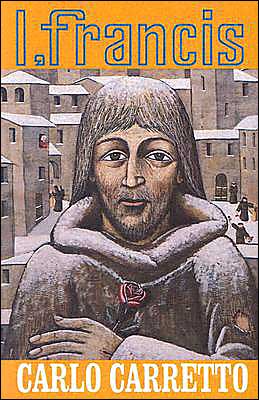
Months and months ago, long before there was an inkling that Pope Benedict XVI would step aside, I came across this little book, titled simply I, Francis
Of course, we now have a Pope who for the first time has taken the name of St. Francis of Assisi, so I figured I should start boning up on this saint from Umbria. Very quickly I realized that Carlo Carretto wasn’t just putting a normal biography down on paper when his mind and heart were called to share Francis’s story. Instead, Caretto was called to bring Francis to life for us in way that is fictional, truthful (based on the facts of the saints life), and beautiful.
He does so by becoming Francis himself.
Earlier this week, I finally began reading the book. Last night, in the quiet of a house that is empty of others ( my family is visiting relatives out of state), I came across the following passage. It is from the start of chapter four, and is simple, yet quite challenging. I transcribe it just as it appears in the book.
The Mystery of Poverty
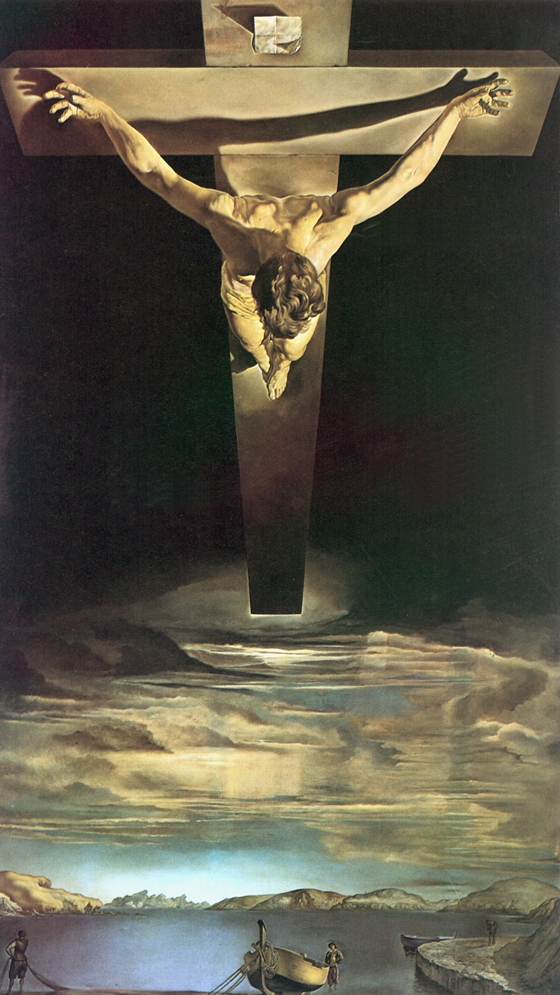
The crucifix of St. Damien had reveled to me something very important, something I tried not to forget. In fact it had become the standard and guide of my life.
Where Francis heard the call…
Poverty did not consist in helping the poor, it consisted in being poor.
Helping the poor was basic. It was basic to charity, and an expression of charity. But being poor was something else.
Jesus had been poor.
I, Francis, wished to be poor.
What it meant to be poor I began to see very clearly. All I had to do was to look at the poor or look at Jesus.
Being poor meant having nothing, or almost nothing, it meant not possessing wealth, not possessing things, not possessing money, not possessing security, just like the poor, just like Jesus. And even this was not everything. Even this was but the external, visible sign of poverty.
True poverty went to the bottom of things, and touched the spirit. For Jesus had said, “Blessed are the poor in spirit, theirs is the kingdom of heaven.”
How these words captivated me! How I sought to grasp their meaning!
Blessed are the poor in spirit!
That meant that not all the poor were equal. That meant that there were those who were poor in spirit, and there were those who were just poor.
And when I thought of the poor that I had met in life, especially in recent years, it was clear that there were poor who were only poor—very sad, often angry, and certainly not blessed.
And then again, I recalled very well, there were poor people who were quite otherwise, poor people who wore their poverty beautifully.
Poor people who had the conviction that they were being guided by God, supported by his Presence.
Poor people who were able to love, in spite of their sudden vexations—poor people who were patient in trial, rich in hope, strong in adversity.
Poor people who were blessed because they could bear witness, every day, that God was present in their lives, and that he provided for them as he did the sparrows of the sky, which possess no granaries.
Yes, this captivated me.
To bear witness, to testify, to myself, and to other human beings, that God alone sufficed for me, and that I did not have to be concerned about anything, anything at all—”think of the flowers of the field; they never have to spin or weave; yet not even Solomon in all his regalia was like one of these (Luke 12:27).”
****
Gethsemani Abbey
My choice to be poor, then, was not a social or political choice, but a mystical one.
There was no lack of social struggles in my time. There were plenty of popular protests against injustices. The country folk were in a continual struggle with the landowners, and free towns like Assisi were constantly on guard against the interference of the feudal ones, against being overpowered by the great cities.
It was right to do this, and people did it.
People have been involved in the struggle for liberation since Adam, and the struggle is never over. It is an obligation on the part of each human being in simple justice, not to mention the perfection of truth and love.
But blessedness was another matter.
When I, Francis, heard the call of the gospel, I did not set about organizing a political pressure-group in Assisi. What I did, I remember very well, I did for love, without expecting anything in return; I did it for the Gospel, without placing myself at odds with the rich, without squabbling with those who preferred to remain rich. And I certainly did it without any class hatred.
I did not challenge the poor people who came with me to fight for their rights, or win salary increases. I only told them that we would be blessed—if also battered, persecuted, or killed. The Gospel taught me to place the emphasis on the mystery of the human being more than on the duty of the human being.
I did not understand duty very well. But how well I understood—precisely because I had come from a life of pleasure—that when a poor person, a suffering person, a sick person, could smile, that was the perfect sign that God existed, and that he was helping the poor person in his or her difficulties.
The social struggle in my day was very lively and intense, almost, I should say, as much so as in your times. Everywhere there arose groups of men and women professing poverty and preaching poverty in the Church and the renewal of society. But nothing changed because these people did not change hearts.
When poor persons are agitators, and their agitating succeeds, and they become rich, they grow arrogant like the rest of the rich, and forget their old companions in misery.
This is what happened then, and this is what is happening among you.
Revolutionaries battle for the freedom of the working classes. But then they come to power, become wealthy, and shoot down the rest of the working class, who think differently from themselves. And then the others feel exploited, taken advantage of.
And what of the union organizers in the rich countries, who are the most intransigent of all in refusing to allow the working people of poor countries to share the common bread?
No, brothers and sisters, it is not enough to change laws. You have to change hearts. Otherwise, when you have completed the journey of your social labors you shall find yourselves right back at the beginning—only this time it is you who will be the arrogant, the rich, and the exploiters of the poor.
This is why I took the Gospel path. For me the Gospel was the sign of liberation, yes, but of true liberation, the liberation of hearts. This was the thrust that lifted me out of the middle-class spirit, which is present to every age, and is known as selfishness, arrogance, pride, idolatry, and slavery.
I knew something about that.
I knew what it meant to be rich, I knew the danger flowing from a life of easy pleasure, and when I heard the text in Luke, “Alas for you, who are rich” my flesh crept. I understood. I had run a mortal risk, by according a value to the idols that filled my house, for they would have cast me in irons had I not fled.
It is not that I did not understand the importance of the various tasks that keep a city running. I understood, but I sought to go beyond.
You can reproach me, go ahead. But I saw, in the Gospel, a road beyond, a path that transcended all cultures, all human constructs, all civilization and conventions.
I felt the Gospel to be eternal; I felt politics and culture, including Christian culture, to be in time.
I was made always to go beyond time.
In the quest of justice and human equality, the Old Testament would have been enough. It would have sufficed to read Deuteronomy, Kings, Leviticus.
There, one is taught to build the State along the lines of good sense, and the old theocratic mentality.
There, one learns to make war, to take captives, to divide booty, to kill, to torture—and all this in the name of God, just as was sometimes done in my day, and is sometimes done in yours.
But the Gospel was another matter.
The Gospel is the insanity of a God who is always losing, who gets himself crucified to save humanity.
The Gospel is the madness of a people who, in the midst of tears, need, and persecution, still cry out that they are blessed.
I had grasped all this, and I understood why the wise and the well-balanced would have destroyed me. So I appealed to insanity in order to save myself. And I was happy to have found true madness, the saving madness of the Gospel.


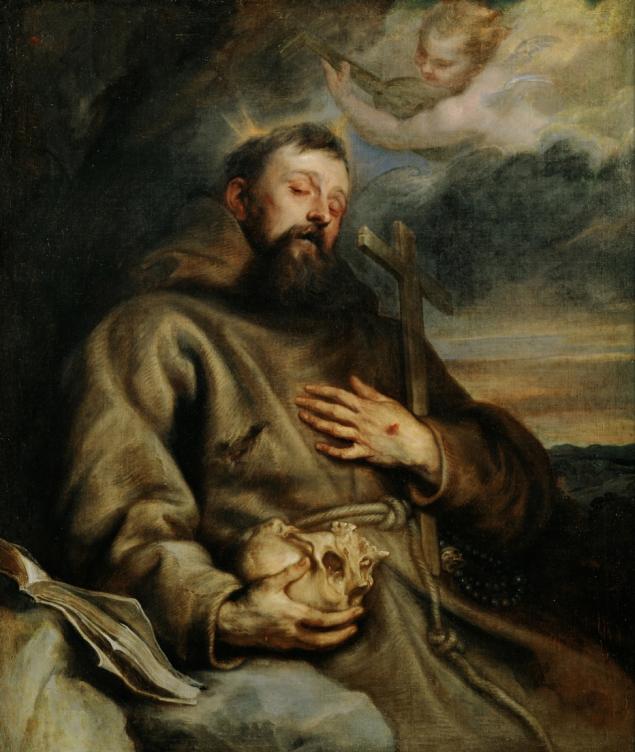
In a way, this section dovetails nicely with what we heard in the readings today at Mass. Especially St. Paul’s clear thoughts on freedom, and from who they come from.
Brothers and sisters: For freedom Christ set us free; so stand firm and do not submit again to the yoke of slavery.
For you were called for freedom, brothers and sisters. But do not use this freedom as an opportunity for the flesh; rather, serve one another through love. For the whole law is fulfilled in one statement, namely, You shall love your neighbor as yourself. But if you go on biting and devouring one another, beware that you are not consumed by one another.
I say, then: live by the Spirit and you will certainly not gratify the desire of the flesh. For the flesh has desires against the Spirit, and the Spirit against the flesh; these are opposed to each other, so that you may not do what you want. But if you are guided by the Spirit, you are not under the law.
Which is exactly the way the poverty loving deacon from Assisi decided to literally live the saving madness of the Gospel. With love for all, and freely bound only to the law of Christ’s love for the world and all who dwell here.
Previous Post

June 29, 2013
Because I’m a Contrarian
Next Post
July 2, 2013 To Pray For the People of Egypt And For Peace in the Middle East
Browse Our Archives
Select a Category Blog News Conversion Story Culture Learning Living Nature Prayer Uncategorized Working
Select a Month June 2016 May 2016 August 2015 July 2015 June 2015 May 2015 April 2015 March 2015 February 2015 January 2015 December 2014 November 2014 October 2014 September 2014 August 2014 July 2014 June 2014 May 2014 April 2014 March 2014 February 2014 January 2014 December 2013 November 2013 October 2013 September 2013 August 2013 July 2013 June 2013 May 2013 April 2013 March 2013 February 2013 January 2013 December 2012 November 2012 October 2012 September 2012 August 2012 July 2012 June 2012 May 2012 April 2012 March 2012 February 2012 January 2012 December 2011 November 2011 October 2011 September 2011 August 2011 July 2011 June 2011 May 2011 April 2011 March 2011 February 2011 January 2011 December 2010 November 2010 October 2010 September 2010 August 2010 July 2010 June 2010 May 2010 April 2010 March 2010 February 2010 January 2010 December 2009 November 2009 October 2009 September 2009 August 2009
Follow Us!
TAKE THE
Religious Wisdom Quiz
Who was the high priest during the boyhood of Samuel?
Select your answer to see how you score.
Ahijah Phinehas Hophni Eli
Related posts from Why I Am Catholic

Belated Happy Birthday To Blaise Pascal, Unofficial Saint...

Because My Brother Imran Yousef Is An American...

Joe Six-Pack, USMC, With A Few Post-Terrorist Attack...

This Is Why God Invented YouTube...
TRENDING AT PATHEOS Catholic

Rejecting Doom: Christian Hope And Human Action
Christianity is a religion of hope. We are to have hope and...

It’s What Comes From Within Which Matters
One of the most difficult things for us to understand is why...

Why I Choose the Eucharist Over the Sermon
Choose the Eucharist, Not the Sermon What are we supposed to get...

5 Design Elements Found in Spiritually Rooted Homes
Putting Spirituality Into Home Decor Our homes are more than our living...

Credo: A Story of God Told with the...
About 10 years ago, I began to imagine a personal "Credo" that...

The Anatomy of Divine Revelation in Catholic Thought
The claim that God has made Himself known to human beings is...
Ad-Free & Subscriber Log-In Subscription Support
- About Us
- 2026 Calendar
- Videos
- Podcasts
- Library of World Religions
- Faith In Media Tracker
- Advertise With Us
- Write for Us
- Privacy Policy
- Terms of Service
- Do Not Sell My Data
- Contact Us
- Radiant Digital
- Manage Newsletter Subscriptions
- Unsubscribe From Notifications
- Sitemap
Copyright 2008-2026, Patheos. All rights reserved.
Subscription Support Ad-Free & Subscriber Log-In
Follow Patheos