
BuddhistCatholicContemplativeEvangelicalGeneral ChristianHinduJewishLatter-day SaintMuslimNew VisionsProgressive Christian
Beliefs
- Buddhist
- Catholic
- Contemplative
- Evangelical
- General Christian
- Hindu
- Jewish
- Latter-day Saint
- More Voices
- Muslim
- New Visions
- Pagan
- Progressive Christian
Topics
- Religion News
- Food and Religion
- Sports and Religion
- Religious Art
- Religious Music and Entertainment
- Religious Events
- History and Religion
- Style and Religion
- Politics and Religion
- Women in Religion
- Recreation Outdoors and Religion
- Business Finance and Religion
- Careers Workplace and Religion
- Education and Religion
- Family Parenting and Religion
- Health Fitness and Religion
- Home and Religion
- Relationships and Religion
- Technology and Religion
- Travel and Religion
Columnists
- Buddhist Columnists
- Business Finance and Religion Columnists
- Careers Workplace and Religion Columnists
- Catholic Columnists
- Contemplative Columnists
- Education and Religion Columnists
- Evangelists Columnists
- Family Parenting and Religion Columnists
- General Christian Columnists
- Health Fitness and Religion Columnists
- Hindu Columnists
- History and Religion Columnists
- Home and Religion Columnists
- Jewish Columnists
- More Voices Columnists
- Latter Day Columnists
- Muslim Columnists
- New Visions Columnists
- Nonreligious Columnists
- Pagan Columnists
- Politics and Religion Columnists
- Progressive Columnists
- Recreation Outdoors and Religion Columnists
- Relationships and Religion Columnists
- Religion News Columnists
- Religious Art Columnists
- Religious Events Columnists
- Religious Music and Entertainment Columnists
- Sports and Religion Columnists
- Style and Religion Columnists
- Technology and Religion Columnists
- Travel and Religion Columnists
- Women in Religion Columnists
Resource Library
- 2026 Calendar
- Library of World Religions
- The 100 Most Holy Places on Earth
- Patheos Answers
- Podcasts
- Videos
- Faith Leaders Database
- Anglican Episcopalian
- Bahai
- Baptist
- Buddhism
- Christianity
- Confucianism
- Eastern Orthodoxy
- Hinduism
- Holiness and Pentecostal
- ISKCON
- Islam
- Judaism
- Lutheran
- Methodist
- The Church of Jesus Christ of Latter-day Saints
- New Age
- Paganism
- Presbytarian and Reformed
- Protestantism
- Religion Behind the Scenes
- Roman Catholic
- Scientology
- Shia Islam
- Sikhism
- Sufism
- Sunni Islam
- Taoism
- Zen
- See all religions
Research Tools
 Ad-Free & Subscriber Log-In Subscription Support
Ad-Free & Subscriber Log-In Subscription Support
Follow Patheos 

- Trending:
- Forgiveness
- |
- Marriage
- |
- Consciousness
- |
- Death Penalty
- |
- Election
- |
- Halloween
 Why I Am Catholic
-
More
- Home
- Liberation Theology Gets the CDF Seal of Approval, and the Rich Act Different…Who Knew? UPDATED
Liberation Theology Gets the CDF Seal of Approval, and the Rich Act Different…Who Knew? UPDATED
Last updated on: June 7, 2015 at 10:39 pm by Frank Weathers
Liberation Theology Gets the CDF Seal of Approval, and the Rich Act Different…Who Knew? UPDATED 2015-06-07T22:39:08-05:00 Frank Weathers
Patheos Explore the world's faith through different perspectives on religion and spirituality! Patheos has the views of the prevalent religions and spiritualities of the world.
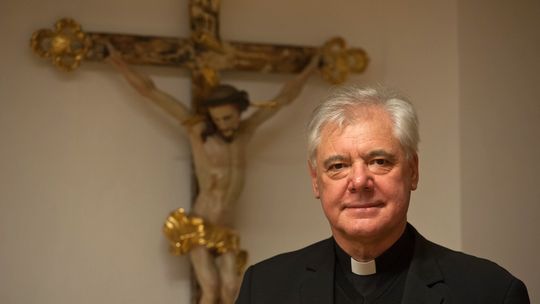
Says who? Says Archbishop Gerhard Ludwig Müller, Prefect of the Congregation for the Doctrine of the Faith, that’s who.
Now before you go off all half-cocked, like a lot of folks did when President Obama made remarks about segregationist tendencies in Northern Ireland (see Bill Donohue’s remarks, please), perhaps it would be prudent to consider some of Pope Francis’s remarks on one of our cultures’ favorite idols: Mammon.
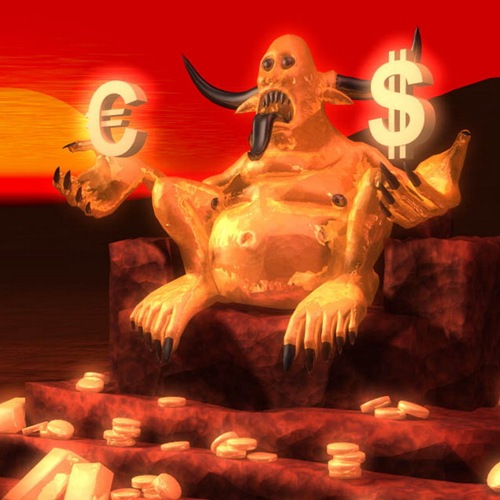
Bwahahahahahaha!
In his daily homily today, for example, he remarked,
“What do I have, a tired heart, that only wants to settle itself, three, four things, a good bank account, this or that thing? This restlessness of the heart always has to be cured.”
I’d give you more, but I’m afraid you might blow a gasket. Keep in mind that the problem isn’t so much wealth as it is putting wealth first. Christ has to come first for the Christian, as Clement of Alexandria makes clear in his “Who Is The Rich ManThat Shall Be Saved?”
So let’s get back to Archbishop Müller and The Vatican Insider article out today that is titled, The War Between The Liberation Theology Movement and Rome Is Over. In the same publication back in 2011, while commenting on the work of Fr. Gustavo Gutiérrez, O.P. (the “father” of Latin-American liberation theology), Archbishop Müller said,
I am not referring to the theology of liberation in an abstract and theoretical form, or in an ideological fashion, to praise the progressive ecclesial group. At the same time I do not even fear that this could be interpreted as a lack of orthodoxy. The theology of Gustavo Gutiérrez, independently of how you look at it, is orthodox because it is orthopractic and it teaches us the correct way of acting in a Christian fashion since it comes from true faith.
Fast forward to today, and here’s what he said that you need to chew on.
The Latin American ecclesial and theological movement known as “Liberation Theology”, which spread to other parts of the world after the Second Vatican Council, should in my opinion be included among the most important currents in 20th century Catholic theology.
Which means that if you think you know everything there is to know about the Liberation Theology movement, you probably need to think again, painful as that may be to your political sensibilities. God, as you’ll recall from the scriptures, shows no partiality towards the wealthy. Not for nothing does the Christ say,
Again I tell you, it is easier for a camel to go through the eye of a needle than for someone who is rich to enter the kingdom of God.
which sort of freaked out the Apostles.
Keep in mind that the original twelve didn’t have access to tools that search out how often the scriptures uphold the cause of the poor. Sure, they heard about it when they heard the scriptures being read, but they probably just didn’t see much evidence of these precepts being carried out, much like many folks today.
So there I was in 1991, a non-Catholic, sitting in my sophomore comparative politics class, discussing something called the “theology of liberation” in regards to the situation in Brazil. Yep, I still have the text book, and it took me only a few minutes to find what I remember reading 22 years ago, a couple of sections after the part about the explosive situation among Brazil’s poor I encountered,
The Church As Opposition
Curiously, the Roman Catholic church was the only large Brazilian group that maintained its autonomy and was in a position to criticize the military regime. We say curiously because typically in Catholic countries the church has been conservative and has favored conservative regimes. We saw the same thing in France how the long fight between clericalism and anticlericalism split society into two camps. The same thing happened in Spain and Italy.
Brazil never had this kind of split. With the 1891 republican constitution, modeled after the United States’, the Brazilian church consented to disestablishment, that is, to losing its special privileges as church and state were separated.
…In 1980, John Paul II visited Brazil. He was visibly shaken by what he saw in the favelas. In one, he removed the ring given him by Pope Paul VI when he became a cardinal and gave it to a local priest as a donation. John Paul seemed to be turning into a bit of an activist himself. In a Rio slum he called to Brazil’s rich:
“Look around a bit. Does it not wound your heart? Do you not feel remorse of conscience because of your riches and abundance?”
But he stopped short of endorsing active church involvement in politics. Church people should guide spiritually but not politically. In Brazil, this middle road is hard to tread because concern for the poor tends to radicalize people.
That was written in 1989 (Countries and Concepts, Roskin, 329-330), but is just as true today. See this is today’s Wall Street Journal?
Anyway, forget my textbook and current events, and lets get back to Archbishop Müller’s thoughts,
Archbishop Müller and Fr. Gustavo Gutiérrez, OP
The Prefect stressed that in recent decades, Latin America’s Liberation Theology movement has been oriented towards the image of Jesus Christ the Redeemer and liberator, an image all genuinely Christian theological currents are oriented towards. This stems from an evangelical inclination towards the poor. Müller affirmed that “poverty in Latin America oppresses children, the elderly and the sick,” to such an extent that many are driven to “contemplate death as the only way out.” Right from the outset, the Liberation Theology movement “forced” theological movements founded elsewhere, not to consider the real living conditions of people and individuals as something abstract. He saw “the body of Christ” in the poor, as Pope Francis does.
The arrival of the Catholic Church’s first Latin American Pope made it possible to look at those years and experience without being conditioned by the controversies that raged at the time. Without the ritualism of the false mea culpas and superficial changes, it is easier today to see that the hostility shown by certain sections of the Church towards the Liberation Theology movement was politically motivated and did not really stem from a desire to preserve and spread the faith of the apostles. Those who paid the price were the theologians and pastors who were completely immersed in the evangelical faith of their people. They either ended up in the mince or faded into the shadows. For a long time, the hostility shown towards the Liberation Theology movement was invaluable factor in helping some climb the ecclesiastical career ladder.
In one of his speeches, Müller (who in an interview on 27 December 2012 suggested it was likely a Latin American would substitute Ratzinger as Pope) did not hesitate to describe the political and geopolitical factors that had influenced certain “crusades” against the Liberation Theology movement: “the satisfaction of depriving the Liberation Theology movement of all meaning was intensified by capitalism’s sense of triumph, which was probably considered to have gained absolute victory. It was seen as an easy target that could be fitted into the same category as revolutionary violence and Marxist terrorism,” Müller said. He referred to a secret document prepared for President Reagan by the Committee of Santa Fé in 1980 (so 4 years before the Vatican’s first Instruction on the Liberation Theology movement), requesting that the U.S. government take aggressive action against the movement, which was accused of transforming the Catholic Church into “a political weapon against private property and productive capitalism by infiltrating the religious community with ideas that are less Christian than communist.” Müller said: “The impertinence shown by the document’s authors, who are themselves guilty of brutal military dictatorships and powerful oligarchies, is disturbing. Their interest in private property and the capitalist production system has replaced Christianity as a criterion.”

Now I’ll risk the shark-invested waters of the genetic fallacy and post this very interesting video from tonight’s PBS News Hour program. It’s a fascinating look at what a couple of professors at UC Berkeley have discovered about the effect wealth has on folks. This is no Jedi mind trick, gang. In fact, it’s something that many a priest who espoused liberation theology would say many, if not most, have been blind to.
Roll clip,
`
`
Watch ‘Pernicious’ Effects of Economic Inequality on PBS. See more from PBS NewsHour.
How about that? Putting yourself in the shoes of the poor actually changes your perspective! Tons of saints tell us the same thing, as would a number of Latin American priests who were martyred for the faith.
Like Mollie Hemingway at Get Religion notes, Pope Francis isn’t necessarily a devotee of liberation theology, or an apologist for the same. But the head of the CDF’s comments mean that Liberation Theology has not been tossed into the dustbin of history either.
UPDATE:
Deacon Scott Dodge’s Liberation Theology: The War That Never Was.
Related:
Sorry, Forbes, But You Can’t Fool Pope Francis.
Capital vs. Labor and the Ruling Class vs. The Rest of Us = The Same Thing.
Would You Believe Because of Crony Capitalism?
Christian Thoughts on Private Property: What Ayn Rand Missed.
Archbishop Gerhard Ludwig Müller
Congregation for the Doctrine of the Faith
Next Post

June 22, 2013 The Martyrdom of Sir Thomas More (For All The Saints) UPDATED
Browse Our Archives
Select a Category Blog News Conversion Story Culture Learning Living Nature Prayer Uncategorized Working
Select a Month June 2016 May 2016 August 2015 July 2015 June 2015 May 2015 April 2015 March 2015 February 2015 January 2015 December 2014 November 2014 October 2014 September 2014 August 2014 July 2014 June 2014 May 2014 April 2014 March 2014 February 2014 January 2014 December 2013 November 2013 October 2013 September 2013 August 2013 July 2013 June 2013 May 2013 April 2013 March 2013 February 2013 January 2013 December 2012 November 2012 October 2012 September 2012 August 2012 July 2012 June 2012 May 2012 April 2012 March 2012 February 2012 January 2012 December 2011 November 2011 October 2011 September 2011 August 2011 July 2011 June 2011 May 2011 April 2011 March 2011 February 2011 January 2011 December 2010 November 2010 October 2010 September 2010 August 2010 July 2010 June 2010 May 2010 April 2010 March 2010 February 2010 January 2010 December 2009 November 2009 October 2009 September 2009 August 2009
Follow Us!
TAKE THE
Religious Wisdom Quiz
Whom did Paul leave sick at Miletus, showing that early Christians sometimes suffered illness?
Select your answer to see how you score.
Barnabas Trophimus Silas Timothy
Related posts from Why I Am Catholic

Belated Happy Birthday To Blaise Pascal, Unofficial Saint...

Because My Brother Imran Yousef Is An American...

Joe Six-Pack, USMC, With A Few Post-Terrorist Attack...

This Is Why God Invented YouTube...
TRENDING AT PATHEOS Catholic

Creation, Preservation, and Teleology in Catholic Theology
As I write this, it is very early Monday morning. Like millions...

The Parable Of The Sower And The Word...
One of Christ’s most famous parables is that of the sower who...

Rejecting Doom: Christian Hope And Human Action
Christianity is a religion of hope. We are to have hope and...

Why I Choose the Eucharist Over the Sermon
Choose the Eucharist, Not the Sermon What are we supposed to get...

5 Design Elements Found in Spiritually Rooted Homes
Putting Spirituality Into Home Decor Our homes are more than our living...

Credo: A Story of God Told with the...
About 10 years ago, I began to imagine a personal "Credo" that...
Ad-Free & Subscriber Log-In Subscription Support
- About Us
- 2026 Calendar
- Videos
- Podcasts
- Library of World Religions
- Faith In Media Tracker
- Advertise With Us
- Write for Us
- Privacy Policy
- Terms of Service
- Do Not Sell My Data
- Contact Us
- Radiant Digital
- Manage Newsletter Subscriptions
- Unsubscribe From Notifications
- Sitemap
Copyright 2008-2026, Patheos. All rights reserved.
Subscription Support Ad-Free & Subscriber Log-In
Follow Patheos