
BuddhistCatholicContemplativeEvangelicalGeneral ChristianHinduJewishLatter-day SaintMuslimNew VisionsProgressive Christian
Beliefs
- Buddhist
- Catholic
- Contemplative
- Evangelical
- General Christian
- Hindu
- Jewish
- Latter-day Saint
- More Voices
- Muslim
- New Visions
- Pagan
- Progressive Christian
Topics
- Religion News
- Food and Religion
- Sports and Religion
- Religious Art
- Religious Music and Entertainment
- Religious Events
- History and Religion
- Style and Religion
- Politics and Religion
- Women in Religion
- Recreation Outdoors and Religion
- Business Finance and Religion
- Careers Workplace and Religion
- Education and Religion
- Family Parenting and Religion
- Health Fitness and Religion
- Home and Religion
- Relationships and Religion
- Technology and Religion
- Travel and Religion
Columnists
- Buddhist Columnists
- Business Finance and Religion Columnists
- Careers Workplace and Religion Columnists
- Catholic Columnists
- Contemplative Columnists
- Education and Religion Columnists
- Evangelists Columnists
- Family Parenting and Religion Columnists
- General Christian Columnists
- Health Fitness and Religion Columnists
- Hindu Columnists
- History and Religion Columnists
- Home and Religion Columnists
- Jewish Columnists
- More Voices Columnists
- Latter Day Columnists
- Muslim Columnists
- New Visions Columnists
- Nonreligious Columnists
- Pagan Columnists
- Politics and Religion Columnists
- Progressive Columnists
- Recreation Outdoors and Religion Columnists
- Relationships and Religion Columnists
- Religion News Columnists
- Religious Art Columnists
- Religious Events Columnists
- Religious Music and Entertainment Columnists
- Sports and Religion Columnists
- Style and Religion Columnists
- Technology and Religion Columnists
- Travel and Religion Columnists
- Women in Religion Columnists
Resource Library
- 2026 Calendar
- Library of World Religions
- The 100 Most Holy Places on Earth
- Patheos Answers
- Podcasts
- Videos
- Faith Leaders Database
- Anglican Episcopalian
- Bahai
- Baptist
- Buddhism
- Christianity
- Confucianism
- Eastern Orthodoxy
- Hinduism
- Holiness and Pentecostal
- ISKCON
- Islam
- Judaism
- Lutheran
- Methodist
- The Church of Jesus Christ of Latter-day Saints
- New Age
- Paganism
- Presbytarian and Reformed
- Protestantism
- Religion Behind the Scenes
- Roman Catholic
- Scientology
- Shia Islam
- Sikhism
- Sufism
- Sunni Islam
- Taoism
- Zen
- See all religions
Research Tools
 Ad-Free & Subscriber Log-In Subscription Support
Ad-Free & Subscriber Log-In Subscription Support
Follow Patheos 

- Trending:
- Forgiveness
- |
- Marriage
- |
- Consciousness
- |
- Death Penalty
- |
- Election
- |
- Halloween
 Why I Am Catholic
-
More
- Home
- Brandon Vogt’s Least Read Blog Post? That Would Be This One…
Brandon Vogt’s Least Read Blog Post? That Would Be This One…
Last updated on: January 24, 2017 at 5:19 pm by Frank Weathers
Brandon Vogt’s Least Read Blog Post? That Would Be This One… 2017-01-24T17:19:21-05:00 Frank Weathers
Patheos Explore the world's faith through different perspectives on religion and spirituality! Patheos has the views of the prevalent religions and spiritualities of the world.
Originally posted on July 15, 2010, almost one year before The Church and New Media burst onto the scene.
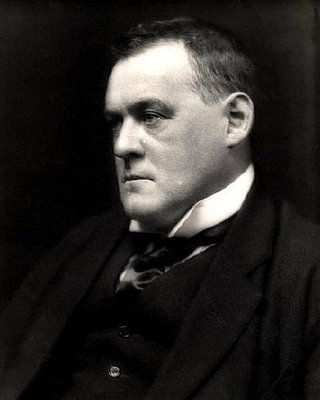
Another week, another pithy review of European History. I have to think that when Belloc wrote this book in 1936, he was at the height of his literary abilities.
Once again there is a lot of events covered in this chapter, and once again “Old Thunder” manages to make it both educational and entertaining. And short too —now that takes skill!
This week, we read “What Was The Reformation?” Did you expect Belloc to minimize the causes that led to the break-up of the Catholic Church? Well he doesn’t do that, but tells it like it was. The Church needed reforming, and he does a great job explaining why. But he also explains what now seems to be a prophetic description of what is occurring within Protestant denominations today.
Before I get carried away, let me drop a few quotes from this chapter that I felt were important and then I’ll turn it over to book clubber and blogger Brandon Vogt to lead the discussion.
First a generalization which I think is on the mark. I was one of these guys once.
They know much less about us than we know about them. That is natural,
because we proceed from older origins, because we are universal while they are regional and because we hold a definite intellectual philosophy whereas they possess rather an emotional and indefinite, though characteristic, spirit.
In the category of “who is in charge here”, it turns out to be “every man for himself.”
while within the Protestant culture, where there was less definite doctrine to challenge, there was less internal division but an increasing general feeling that religious differences must be accepted a feeling which, in a larger and larger number of individuals, grew into the, at first, secret but later avowed attitude of mind that nothing in religion could be certain, and therefore that toleration of all such opinions was reasonable.
One of the reasons I became a Catholic after looking deeply into the scriptures, and early history?
The Papacy ought of its nature to be Universal. That it should be National
was shocking to the western European of that time (before the reformation).
But after the rise of the Nation-State? The new god of patriotism holds a lot of people captive. And my last quote is Belloc’s three stages of change. This could be from Political Change 101:
The first character is this: Change of every kind and every degree is proposed simultaneously, from reforms which are manifestly just and necessary, being reversions to the right order of things, to innovation which are criminal and mad.
The second character is that the thing to be reformed necessarily resists. It has accumulated a vast accretion of custom, vested interests,official organization, etc., each of which, even without direct volition, puts a drag on reform.
Thirdly (and this is much the most important character) there appear among the revolutionaries an increasing number who are not so much concerned to set right the evils which have grown up in the thing to be reformed, as filled with passionate hatred of the thing itself- its essential, its good, that by which it has a right to
survive.
Setting the stage for the next chapter on that one. Now that is enough from me. I now yield the floor to Brandon Vogt,
The Great Heresies: What is Protestantism?
Protestantism was a different beast than the earlier heresies discussed. Though each of the others offered a distinct, doctrinal dispute that could be debated, Protestantism was “not a particular movement, but a general one”. It was a heresy that attacked on many nebulous fronts. Also, Belloc notes that while each of the earlier heresies sought to supplant the existing Catholic Church, Protestantism, especially Calvinism, wanted to destroy the institutional Church in its entirety; eventually, the Reformers didn’t want a “cleaned-up Church”, but its complete demise.
Beginning with Luther’s revolt in 1517, Belloc offers a whirlwind of history and politics, describing the two distinct periods of the Reformation. The first, during the mid-late 16th century, was “a time of universal debate and struggle”. The second, during the next couple centuries, “became as much political as it was religious”, and more and more divisive.
Belloc then explores the extraneous sparks contributing to the Reformation’s birth, including the Black Death, the growth of vernacular literatures, and a “vivid intellectual awakening”. However, he quickly digs into the main causes. Belloc states that at the movement’s beginning, “no one worth consideration would have contested the need for reform.”Everyone, dissident or faithful, saw that something needed to change. Bad traditions (false legends, fake relics, etc.), local customs taking precedence over universal doctrine, and the worldliness of clerics were clear troubles within the Church. (I did find it interesting that the main point of contention in Protestant lore, the selling of indulgences, was mentioned only in passing by Belloc.)
Some apologists today try to minimize the corruption of the 16th-century Catholic Church, but Belloc clearly notes that everyone would agree that serious problems existed. How the problems were to be solved, however, remained a point of disagreement. The Catholics wanted reform, the Protestants wanted revolution.
Belloc describes the three “the concomitants of all revolutions” that arose in
this particular revolt: proposed change of every kind and every degree, resistance from the thing being reformed, and hatred for the thing being reformed. All three of these attitudes were surely at play.After briefly mentioning Martin Luther, Belloc turns his focus to the central cog in the Protestant Reformation, John Calvin. Describing Calvin as a “true heresiarch”, because of his intention to set up a true counter-Church, Belloc weaves financial storylines through the grander Reformation tale. The majority of young Calvin’s income was confiscated by a local bishop after it was discovered that Calvin’s father was embezzling money from the Church.
For Calvin, this likely fostered hatred—or at least serious discontent —for the Church. Along those same lines, a significant reason for the quick growth of the Protestant movement was Calvin’s dispersion of Church loot to the rich, giving them vested interest in the Church’s permanent downfall. With the aristocracy on his side, Calvin’s cause was significantly amplified. As in many revolutions, money and power played major roles.
As Belloc wraps up the Reformation tale, he sees its anti-climactic conclusion as a ‘win’ for Protestantism. As interest in the movement waned, people began taking religion less seriously on the whole. Agnostics and skeptics scandalized Catholic countrymen, while skepticism, doubt, and doctrinal relativism were accepted in the Protestant world, much as they still are today.
Ultimately, Belloc saw the Protestant Reformation as “auto-toxic”—it was created as a self-poison. The Protestant doctrine of solo scriptura—one of the Reformation’s main rallying cries—ultimately ruined Protestantism by dismissing any objective, doctrinal authority. Different biblical interpretations led to unmitigated schisms among Protestant churches.
Today Protestantism is still evident, maybe more so than any of the other heresies so far discussed. Though Belloc may have overstated Protestantism’s demise—as it still flourishes in much of the world—he nonetheless points out its Achilles heel, seeing its fall as eventual.
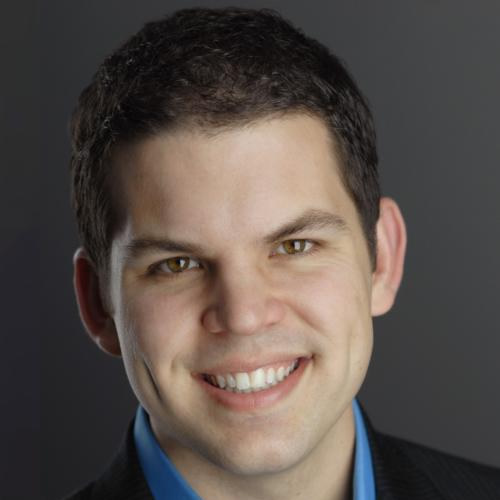
Thanks Brandon! Next week, we wrap it up with the last chapter “The Modern Phase.”

Browse Our Archives
Select a Category Blog News Conversion Story Culture Learning Living Nature Prayer Uncategorized Working
Select a Month June 2016 May 2016 August 2015 July 2015 June 2015 May 2015 April 2015 March 2015 February 2015 January 2015 December 2014 November 2014 October 2014 September 2014 August 2014 July 2014 June 2014 May 2014 April 2014 March 2014 February 2014 January 2014 December 2013 November 2013 October 2013 September 2013 August 2013 July 2013 June 2013 May 2013 April 2013 March 2013 February 2013 January 2013 December 2012 November 2012 October 2012 September 2012 August 2012 July 2012 June 2012 May 2012 April 2012 March 2012 February 2012 January 2012 December 2011 November 2011 October 2011 September 2011 August 2011 July 2011 June 2011 May 2011 April 2011 March 2011 February 2011 January 2011 December 2010 November 2010 October 2010 September 2010 August 2010 July 2010 June 2010 May 2010 April 2010 March 2010 February 2010 January 2010 December 2009 November 2009 October 2009 September 2009 August 2009
Follow Us!
TAKE THE
Religious Wisdom Quiz
What is the name of the second book in the Bible?
Select your answer to see how you score.
Leviticus Exodus Genesis Deuteronomy
Related posts from Why I Am Catholic

Belated Happy Birthday To Blaise Pascal, Unofficial Saint...

Because My Brother Imran Yousef Is An American...

Joe Six-Pack, USMC, With A Few Post-Terrorist Attack...

This Is Why God Invented YouTube...
TRENDING AT PATHEOS Catholic

Rejecting Doom: Christian Hope And Human Action
Christianity is a religion of hope. We are to have hope and...

It’s What Comes From Within Which Matters
One of the most difficult things for us to understand is why...

Why I Choose the Eucharist Over the Sermon
Choose the Eucharist, Not the Sermon What are we supposed to get...

5 Design Elements Found in Spiritually Rooted Homes
Putting Spirituality Into Home Decor Our homes are more than our living...

Credo: A Story of God Told with the...
About 10 years ago, I began to imagine a personal "Credo" that...

The Anatomy of Divine Revelation in Catholic Thought
The claim that God has made Himself known to human beings is...
Ad-Free & Subscriber Log-In Subscription Support
- About Us
- 2026 Calendar
- Videos
- Podcasts
- Library of World Religions
- Faith In Media Tracker
- Advertise With Us
- Write for Us
- Privacy Policy
- Terms of Service
- Do Not Sell My Data
- Contact Us
- Radiant Digital
- Manage Newsletter Subscriptions
- Unsubscribe From Notifications
- Sitemap
Copyright 2008-2026, Patheos. All rights reserved.
Subscription Support Ad-Free & Subscriber Log-In
Follow Patheos