
BuddhistCatholicContemplativeEvangelicalGeneral ChristianHinduJewishLatter-day SaintMuslimNew VisionsProgressive Christian
Beliefs
- Buddhist
- Catholic
- Contemplative
- Evangelical
- General Christian
- Hindu
- Jewish
- Latter-day Saint
- More Voices
- Muslim
- New Visions
- Pagan
- Progressive Christian
Topics
- Religion News
- Food and Religion
- Sports and Religion
- Religious Art
- Religious Music and Entertainment
- Religious Events
- History and Religion
- Style and Religion
- Politics and Religion
- Women in Religion
- Recreation Outdoors and Religion
- Business Finance and Religion
- Careers Workplace and Religion
- Education and Religion
- Family Parenting and Religion
- Health Fitness and Religion
- Home and Religion
- Relationships and Religion
- Technology and Religion
- Travel and Religion
Columnists
- Buddhist Columnists
- Business Finance and Religion Columnists
- Careers Workplace and Religion Columnists
- Catholic Columnists
- Contemplative Columnists
- Education and Religion Columnists
- Evangelists Columnists
- Family Parenting and Religion Columnists
- General Christian Columnists
- Health Fitness and Religion Columnists
- Hindu Columnists
- History and Religion Columnists
- Home and Religion Columnists
- Jewish Columnists
- More Voices Columnists
- Latter Day Columnists
- Muslim Columnists
- New Visions Columnists
- Nonreligious Columnists
- Pagan Columnists
- Politics and Religion Columnists
- Progressive Columnists
- Recreation Outdoors and Religion Columnists
- Relationships and Religion Columnists
- Religion News Columnists
- Religious Art Columnists
- Religious Events Columnists
- Religious Music and Entertainment Columnists
- Sports and Religion Columnists
- Style and Religion Columnists
- Technology and Religion Columnists
- Travel and Religion Columnists
- Women in Religion Columnists
Resource Library
- 2026 Calendar
- Library of World Religions
- The 100 Most Holy Places on Earth
- Patheos Answers
- Podcasts
- Videos
- Faith Leaders Database
- Anglican Episcopalian
- Bahai
- Baptist
- Buddhism
- Christianity
- Confucianism
- Eastern Orthodoxy
- Hinduism
- Holiness and Pentecostal
- ISKCON
- Islam
- Judaism
- Lutheran
- Methodist
- The Church of Jesus Christ of Latter-day Saints
- New Age
- Paganism
- Presbytarian and Reformed
- Protestantism
- Religion Behind the Scenes
- Roman Catholic
- Scientology
- Shia Islam
- Sikhism
- Sufism
- Sunni Islam
- Taoism
- Zen
- See all religions
Research Tools
 Ad-Free & Subscriber Log-In Subscription Support
Ad-Free & Subscriber Log-In Subscription Support
Follow Patheos 

- Trending:
- Forgiveness
- |
- Marriage
- |
- Consciousness
- |
- Death Penalty
- |
- Election
- |
- Halloween
 Why I Am Catholic
-
More
- Home
- The Boston Bombers’ Turning to Religion Caused Them to Murder and Maim Innocents? UPDATED
The Boston Bombers’ Turning to Religion Caused Them to Murder and Maim Innocents? UPDATED
Last updated on: June 7, 2015 at 10:39 pm by Frank Weathers
The Boston Bombers’ Turning to Religion Caused Them to Murder and Maim Innocents? UPDATED 2015-06-07T22:39:09-05:00 Frank Weathers
Patheos Explore the world's faith through different perspectives on religion and spirituality! Patheos has the views of the prevalent religions and spiritualities of the world.
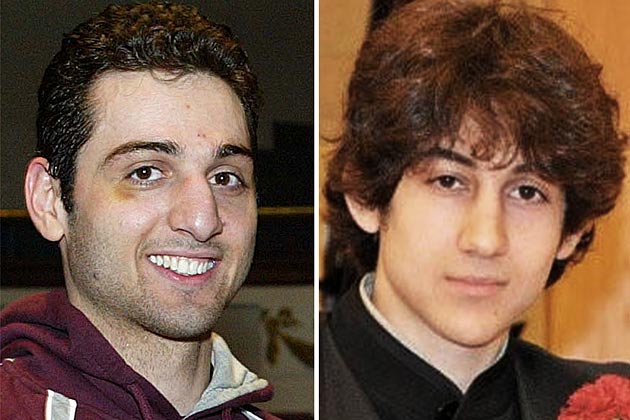
That seems to be the thesis over at the Wall Street Journal.
Once known as a quiet teenager who aspired to be a boxer, Tamerlan Tsarnaev delved deeply into religion in recent years at the urging of his mother, who feared he was slipping into a life of marijuana, girls and alcohol. Tamerlan quit drinking and smoking, gave up boxing because he thought it was in opposition to his religion, and began pushing the rest of his family to pursue stricter ways, his mother recalled.
Tamerlan Tsarnaev was known to visit Al Bara Market and other Cambridge locations prior to his alleged involvement in the Boston Marathon bombing.
“You know how Islam has changed me,” his mother, in an interview with The Wall Street Journal in Makhachkala, Dagestan, says he told her.
The changes drove a wedge through the Tsarnaev home at 410 Norfolk St., in Cambridge, Mass. Tamerlan persuaded his mother to cover herself up, which she says at one point distressed her husband, Anzor. “He said, ‘You are being crazy, covering yourselves,'” she recalled her husband saying. She said that she told him, “This is what Islamic men should want. This is what I am supposed to do.”
The parents’ marriage broke up about two years ago. The father—a former boxer himself who was distraught when Tamerlan gave up the sport—has since moved to Dagestan after falling ill. Both parents believe that their sons are being framed for the Boston attack.
Over the past two years, Tamerlan became more confrontational about his religion, engaging in arguments with other worshipers at a Cambridge mosque he sometimes attended, according to a mosque spokesman and worshipers there.
His growing religious interest coincided with a rocky period in his life during which his boxing career stalled, he drifted in and out of community-college courses, he was charged with assault by a girlfriend who said he slapped her, and a friend of his was murdered.
I can’t help but juxtapose this possibility against what happens when one turns with similar zeal to the teachings of the Catholic Christian religion. For when someone really spends some time with the gospels, really listening to their message, even when they don’t have a pocket sized New Testament, for example, why the next thing you know, they may find themselves working barefoot in the snow outside of Assisi, rebuilding a church, and turning the world on it’s head.
That’s the effect the Christian religion had on St. Francis of Assisi, and all of the rest of the Communion of Saints, come to think of it.
Reading a little about St. Francis in Paul Rout’s Francis and Bonaventure, for the Great Christian Thinkers series published in 1996, I see that contrary to notions of religious zealotry turned violent, and unguided,
It is important to remember that Francis never felt that his belief that God had called him directly justified him in ‘doing his own thing.’ He insisted that his conviction should be tested by the wider community of the Church and he sought
confirmation of his calling from the Church’s representatives —firstly, his local bishop, and later, the Pope in Rome. In 1209, Pope Innocent III approved Francis’ Rule of Life. God may call individuals directly but it is very possible for people to be mistaken about the nature of such a call. In recent years we have seen tragic consequences following the actions of self-labelled “prophets” who were convinced God had called them, but who refused to submit their conviction for the approval of the wider religious or social community. Francis, however, realized that his calling was not meant to make him greater than God’s people, but ever more a part of God’s people. Just as yeast achieves its potential not by being separated from the dough, but by being immersed in it, Francis immersed himself in the community of the Church and brought it new life.
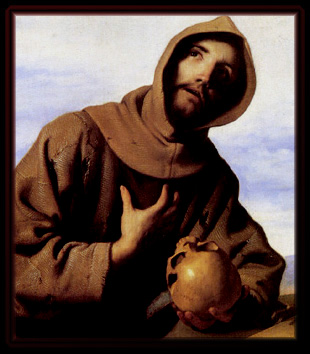
St. Francis, and all Christians who put their heart, mind, and soul in learning the ways of the Church, understand the following truths from the earliest days of her inception, before all of the Gospels had been written.
There are two ways, one of life and one of death; but a great difference between the two ways. The way of life, then, is this:
First, you shall love God who made you; second, your neighbour as yourself; and all things whatsoever you would should not occur to you, do not also do to another. And of these sayings the teaching is this: Bless those who curse you, and pray for your enemies, and fast for those who persecute you. For what reward is there, if you love those who love you? Do not also the Gentiles do the same? But love those whohate you, and you shall not have an enemy. Abstain from fleshly and worldly lusts. If someone gives you a blow upon your right cheek, turn to him the other also, and you shall be perfect. If someone impresses you for one mile, go with him two. If someone takes away your cloak, give him also your coat. If someone takes from you what is yours, ask it not back, for indeed you are not able. Give to every one that asks you, and ask it not back; for the Father wills that to all should be given of our own blessings (free gifts). Happy is he that gives according to the commandment; for he is guiltless. Woe to him that receives; for if one having need receives, he is guiltless; but he that receives not having need, shall pay the penalty, why he received and for what, and, coming into straits (confinement), he shall be examined concerning the things which he has done, and he shall not escape thence until he pay back the last farthing. But also now concerning this, it has been said, “Let your alms sweat in your hands, until you know to whom you should give.”
Which explains why I keep returning to the Sermon on the Mount, time and time again.
UPDATES:
Fr. Dwight Longenecker on the difference between religion and ideology.
Michael Gerson on being tied in knots by radical Islam.
Previous Post

April 21, 2013
Because the Church is the Port in the Storm
Next Post
April 24, 2013 The Archdiocese of New York Withdraws Subpoena Served on the White House...
Browse Our Archives
Select a Category Blog News Conversion Story Culture Learning Living Nature Prayer Uncategorized Working
Select a Month June 2016 May 2016 August 2015 July 2015 June 2015 May 2015 April 2015 March 2015 February 2015 January 2015 December 2014 November 2014 October 2014 September 2014 August 2014 July 2014 June 2014 May 2014 April 2014 March 2014 February 2014 January 2014 December 2013 November 2013 October 2013 September 2013 August 2013 July 2013 June 2013 May 2013 April 2013 March 2013 February 2013 January 2013 December 2012 November 2012 October 2012 September 2012 August 2012 July 2012 June 2012 May 2012 April 2012 March 2012 February 2012 January 2012 December 2011 November 2011 October 2011 September 2011 August 2011 July 2011 June 2011 May 2011 April 2011 March 2011 February 2011 January 2011 December 2010 November 2010 October 2010 September 2010 August 2010 July 2010 June 2010 May 2010 April 2010 March 2010 February 2010 January 2010 December 2009 November 2009 October 2009 September 2009 August 2009
Follow Us!
TAKE THE
Religious Wisdom Quiz
What did the disciples do when Jesus asked them to stay awake in the garden?
Select your answer to see how you score.
They fell asleep They sang They left They prayed
Related posts from Why I Am Catholic

Belated Happy Birthday To Blaise Pascal, Unofficial Saint...

Because My Brother Imran Yousef Is An American...

Joe Six-Pack, USMC, With A Few Post-Terrorist Attack...

This Is Why God Invented YouTube...
TRENDING AT PATHEOS Catholic

Creation, Preservation, and Teleology in Catholic Theology
As I write this, it is very early Monday morning. Like millions...

The Parable Of The Sower And The Word...
One of Christ’s most famous parables is that of the sower who...

Rejecting Doom: Christian Hope And Human Action
Christianity is a religion of hope. We are to have hope and...

Why I Choose the Eucharist Over the Sermon
Choose the Eucharist, Not the Sermon What are we supposed to get...

5 Design Elements Found in Spiritually Rooted Homes
Putting Spirituality Into Home Decor Our homes are more than our living...

Credo: A Story of God Told with the...
About 10 years ago, I began to imagine a personal "Credo" that...
Ad-Free & Subscriber Log-In Subscription Support
- About Us
- 2026 Calendar
- Videos
- Podcasts
- Library of World Religions
- Faith In Media Tracker
- Advertise With Us
- Write for Us
- Privacy Policy
- Terms of Service
- Do Not Sell My Data
- Contact Us
- Radiant Digital
- Manage Newsletter Subscriptions
- Unsubscribe From Notifications
- Sitemap
Copyright 2008-2026, Patheos. All rights reserved.
Subscription Support Ad-Free & Subscriber Log-In
Follow Patheos