
BuddhistCatholicContemplativeEvangelicalGeneral ChristianHinduJewishLatter-day SaintMuslimNew VisionsProgressive Christian
Beliefs
- Buddhist
- Catholic
- Contemplative
- Evangelical
- General Christian
- Hindu
- Jewish
- Latter-day Saint
- More Voices
- Muslim
- New Visions
- Pagan
- Progressive Christian
Topics
- Religion News
- Food and Religion
- Sports and Religion
- Religious Art
- Religious Music and Entertainment
- Religious Events
- History and Religion
- Style and Religion
- Politics and Religion
- Women in Religion
- Recreation Outdoors and Religion
- Business Finance and Religion
- Careers Workplace and Religion
- Education and Religion
- Family Parenting and Religion
- Health Fitness and Religion
- Home and Religion
- Relationships and Religion
- Technology and Religion
- Travel and Religion
Columnists
- Buddhist Columnists
- Business Finance and Religion Columnists
- Careers Workplace and Religion Columnists
- Catholic Columnists
- Contemplative Columnists
- Education and Religion Columnists
- Evangelists Columnists
- Family Parenting and Religion Columnists
- General Christian Columnists
- Health Fitness and Religion Columnists
- Hindu Columnists
- History and Religion Columnists
- Home and Religion Columnists
- Jewish Columnists
- More Voices Columnists
- Latter Day Columnists
- Muslim Columnists
- New Visions Columnists
- Nonreligious Columnists
- Pagan Columnists
- Politics and Religion Columnists
- Progressive Columnists
- Recreation Outdoors and Religion Columnists
- Relationships and Religion Columnists
- Religion News Columnists
- Religious Art Columnists
- Religious Events Columnists
- Religious Music and Entertainment Columnists
- Sports and Religion Columnists
- Style and Religion Columnists
- Technology and Religion Columnists
- Travel and Religion Columnists
- Women in Religion Columnists
Resource Library
- 2026 Calendar
- Library of World Religions
- The 100 Most Holy Places on Earth
- Patheos Answers
- Podcasts
- Videos
- Faith Leaders Database
- Anglican Episcopalian
- Bahai
- Baptist
- Buddhism
- Christianity
- Confucianism
- Eastern Orthodoxy
- Hinduism
- Holiness and Pentecostal
- ISKCON
- Islam
- Judaism
- Lutheran
- Methodist
- The Church of Jesus Christ of Latter-day Saints
- New Age
- Paganism
- Presbytarian and Reformed
- Protestantism
- Religion Behind the Scenes
- Roman Catholic
- Scientology
- Shia Islam
- Sikhism
- Sufism
- Sunni Islam
- Taoism
- Zen
- See all religions
Research Tools
 Ad-Free & Subscriber Log-In Subscription Support
Ad-Free & Subscriber Log-In Subscription Support
Follow Patheos 

- Trending:
- Forgiveness
- |
- Marriage
- |
- Consciousness
- |
- Death Penalty
- |
- Election
- |
- Halloween
 Why I Am Catholic
-
More
- Home
- Because the Church is the Port in the Storm
Because the Church is the Port in the Storm
Last updated on: April 1, 2015 at 9:22 am by Frank Weathers
Because the Church is the Port in the Storm 2015-04-01T09:22:17-05:00 Frank Weathers
Patheos Explore the world's faith through different perspectives on religion and spirituality! Patheos has the views of the prevalent religions and spiritualities of the world.
I remember well how it felt when I first came across these words written by Blaise Pascal. It was like reading the story of my life. It was as if I was the character Neo in movie The Matrix and I had unwittingly taken the red pill that Morpheus promised would lift the veil.
What on earth am I talking about? If you haven’t seen the movie, here is the clip I’m referring to.
And these are the words that Blaise Pascal writes in the beginning of Section VII of the Pensées,
That man without faith cannot know the true good, nor justice.
All men seek happiness. This is without exception. Whatever different means they employ, they all tend to this end. The cause of some going to war, and of others avoiding it, is the same desire in both, attended with different views. The will never takes the least step but to this object. This is the motive of every action of every man, even of those who hang themselves.
Remember, Blaise wrote this in the year 1660, so whenever you see the word man or men, you should be reading persons or people. And as such, this paragraph is abundantly clear isn’t it? The pursuit of happiness drives our decision processes. Or as those who make a living in the dismal science (economics) put it, utility is the driver. And yet, chasing happiness is like being on a treadmill to oblivion. Like being on those people-mover-walkways in an airport, yet never getting nearer to your gate. At least that has been my experience.
And yet after such a great number of years, no one without faith has reached the point to which all continually look. All complain, princes and subjects, noblemen and commoners, old and young, strong and weak, learned and ignorant, healthy and sick, of all countries, all times, all ages, and all conditions.
Hey, where is happiness? I don’t seem any nearer to it! I think I know what happiness is, and I don’t have it yet. Our elected leaders promised it to us! And even worse, hope springs eternal that this time is different. Despite every time we have tried to find happiness on our own before, no matter where it is we looked for it, we wind up with the same result: dissatisfaction and melancholy feelings of frustration.
A trial so long, so continuous, and so uniform, should certainly convince us of our inability to reach the good by our own efforts. But example teaches us little. No resemblance is ever so perfect that there is not some slight difference; and hence we expect that our hope will not be deceived on this occasion as before. And thus, while the present never satisfies us, experience dupes us, and from misfortune to misfortune leads us to death, their eternal crown.
But what if your experience has been really good so far? You were born into royalty, for example, and you don’t struggle with problems that we of the hoi polloi face? Oh, you’ll stub your toe, if you don’t break your neck looking for the meaning of life first. Or maybe you’ll just deny your mortality and keep reading all the self-help books that guarantee long life if you take the right vitamins and eat the right foods, as CS Lewis alludes to in Mere Christianity. Isn’t this how our culture today treats death? As if it is avoidable? Or that when it occurs there must have been an accident or a problem with that particular person? As if it is their own fault?

What is it then that this desire and this inability proclaim to us, but that there was once in man a true happiness of which there now remain to him only the mark and empty trace, which he in vain tries to fill from all his surroundings, seeking from things absent the help he does not obtain in things present? But these are all inadequate, because the infinite abyss can only be filled by an infinite and immutable object, that is to say, only by God Himself.
And here then is the Eureka moment. At least it was in my case. The recognition of that splinter in my mind. That there was a better way and that there is a path to a better way. This longing can only be filled by God. He is greater than all other things and,
He only is our true good, and since we have forsaken Him, it is a strange thing that there is nothing in nature which has not been serviceable in taking His place; the stars, the heavens, earth, the elements, plants, cabbages, leeks, animals, insects, calves, serpents, fever, pestilence, war, famine, vices, adultery, incest. And since man has lost the true good, everything can appear equally good to him, even his own destruction, though so opposed to God, to reason, and to the whole course of nature.
Feel like you are facing 100 mph fastballs on the inside corner of the plate yet? Or like you are a passenger and the driver plants the accelerator to the floor and starts flinging the sports car you are riding along in around blind curves on a mountain road in the middle of the night? Blaise can have that effect on you. And listen how the child prodigy who died at the age of 39 winds this section up:
Some seek good in authority, others in scientific research, others in pleasure. Others, who are in fact nearer the truth, have considered it necessary that the universal good, which all men desire, should not consist in any of the particular things which can only be possessed by one man, and which, when shared, afflict their possessor more by the want of the part he has not, than they please him by the possession of what he has. They have learned that the true good should be such as all can possess at once, without diminution and without envy, and which no one can lose against his will. And their reason is that this desire being natural to man, since it is necessarily in all, and that it is impossible not to have it, they infer from it…
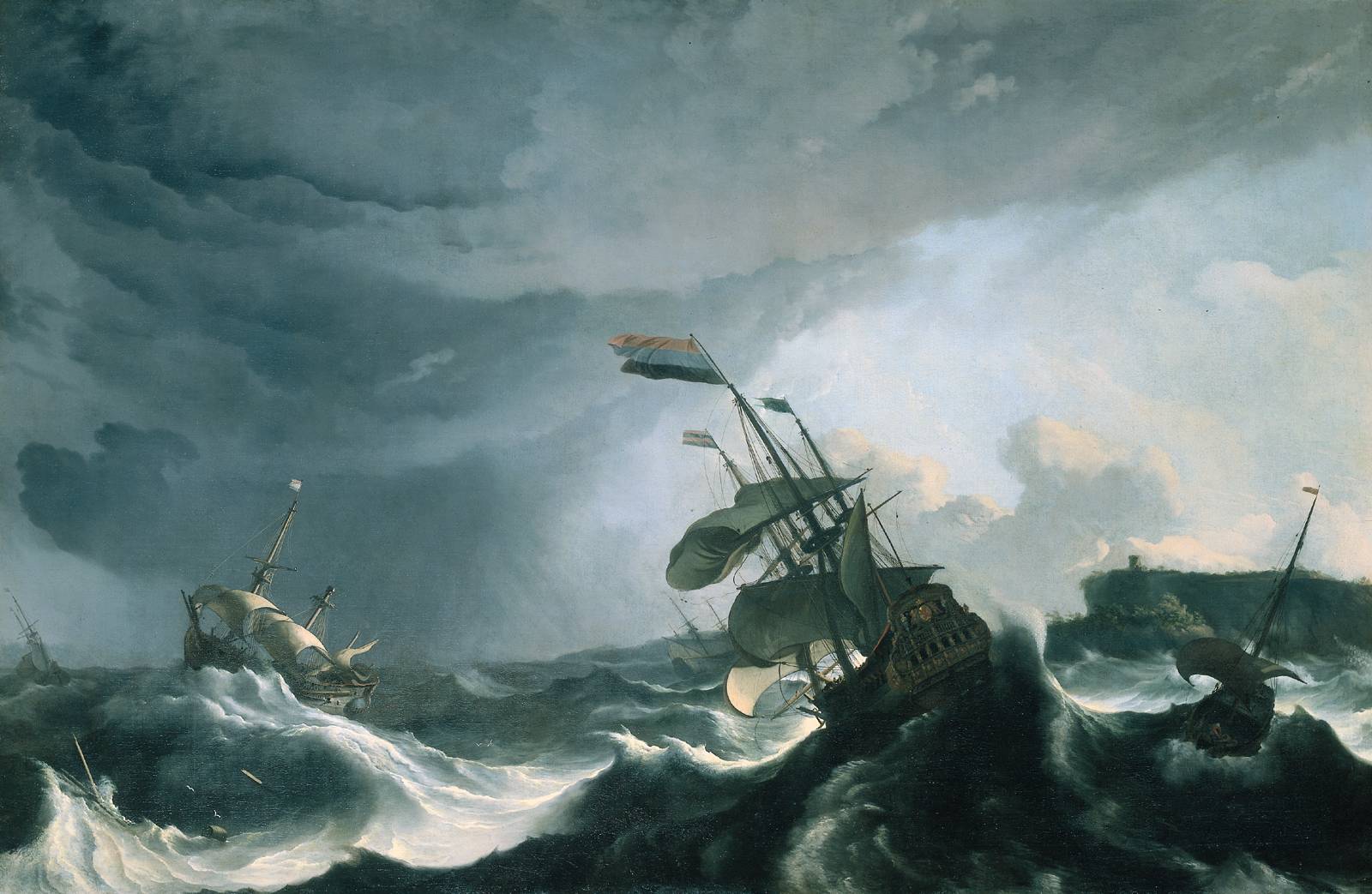
This is where thought (pensée) #425 ends. But I can tell you what I inferred from it. Because thoughts like these pointed me towards the only real port in the storm of life that rages within and around me—to the Catholic Church and her Seven Sacraments, and the graces that they grant us and the healing from what ails us. When I think of the Church, I keep in mind this quote of St. Joan of Arc,
About Jesus Christ and the Church I simply know they’re just one thing, and we shouldn’t complicate the matter.
A little further on Blaise reinforces this:
After having understood the whole nature of man.—That a religion may be true, it must have knowledge of our nature. It ought to know its greatness and littleness, and the reason of both. What religion but the Christian has known this? Know then, proud man, what a paradox you are to yourself. Humble yourself, weak reason; be silent, foolish nature; learn that man infinitely transcends man, and learn from your Master your true condition, of which you are ignorant. Hear God.
Amen to that, brother Blaise. Amen.


Browse Our Archives
Select a Category Blog News Conversion Story Culture Learning Living Nature Prayer Uncategorized Working
Select a Month June 2016 May 2016 August 2015 July 2015 June 2015 May 2015 April 2015 March 2015 February 2015 January 2015 December 2014 November 2014 October 2014 September 2014 August 2014 July 2014 June 2014 May 2014 April 2014 March 2014 February 2014 January 2014 December 2013 November 2013 October 2013 September 2013 August 2013 July 2013 June 2013 May 2013 April 2013 March 2013 February 2013 January 2013 December 2012 November 2012 October 2012 September 2012 August 2012 July 2012 June 2012 May 2012 April 2012 March 2012 February 2012 January 2012 December 2011 November 2011 October 2011 September 2011 August 2011 July 2011 June 2011 May 2011 April 2011 March 2011 February 2011 January 2011 December 2010 November 2010 October 2010 September 2010 August 2010 July 2010 June 2010 May 2010 April 2010 March 2010 February 2010 January 2010 December 2009 November 2009 October 2009 September 2009 August 2009
Follow Us!
TAKE THE
Religious Wisdom Quiz
Which Jewish festival commemorates the defeat of Haman?
Select your answer to see how you score.
Booths Purim Passover Pentecost
Related posts from Why I Am Catholic

Belated Happy Birthday To Blaise Pascal, Unofficial Saint...

Because My Brother Imran Yousef Is An American...

Joe Six-Pack, USMC, With A Few Post-Terrorist Attack...

This Is Why God Invented YouTube...
TRENDING AT PATHEOS Catholic

Rejecting Doom: Christian Hope And Human Action
Christianity is a religion of hope. We are to have hope and...

It’s What Comes From Within Which Matters
One of the most difficult things for us to understand is why...

Why I Choose the Eucharist Over the Sermon
Choose the Eucharist, Not the Sermon What are we supposed to get...

5 Design Elements Found in Spiritually Rooted Homes
Putting Spirituality Into Home Decor Our homes are more than our living...

Credo: A Story of God Told with the...
About 10 years ago, I began to imagine a personal "Credo" that...

The Anatomy of Divine Revelation in Catholic Thought
The claim that God has made Himself known to human beings is...
Ad-Free & Subscriber Log-In Subscription Support
- About Us
- 2026 Calendar
- Videos
- Podcasts
- Library of World Religions
- Faith In Media Tracker
- Advertise With Us
- Write for Us
- Privacy Policy
- Terms of Service
- Do Not Sell My Data
- Contact Us
- Radiant Digital
- Manage Newsletter Subscriptions
- Unsubscribe From Notifications
- Sitemap
Copyright 2008-2026, Patheos. All rights reserved.
Subscription Support Ad-Free & Subscriber Log-In
Follow Patheos