
BuddhistCatholicContemplativeEvangelicalGeneral ChristianHinduJewishLatter-day SaintMuslimNew VisionsProgressive Christian
Beliefs
- Buddhist
- Catholic
- Contemplative
- Evangelical
- General Christian
- Hindu
- Jewish
- Latter-day Saint
- More Voices
- Muslim
- New Visions
- Pagan
- Progressive Christian
Topics
- Religion News
- Food and Religion
- Sports and Religion
- Religious Art
- Religious Music and Entertainment
- Religious Events
- History and Religion
- Style and Religion
- Politics and Religion
- Women in Religion
- Recreation Outdoors and Religion
- Business Finance and Religion
- Careers Workplace and Religion
- Education and Religion
- Family Parenting and Religion
- Health Fitness and Religion
- Home and Religion
- Relationships and Religion
- Technology and Religion
- Travel and Religion
Columnists
- Buddhist Columnists
- Business Finance and Religion Columnists
- Careers Workplace and Religion Columnists
- Catholic Columnists
- Contemplative Columnists
- Education and Religion Columnists
- Evangelists Columnists
- Family Parenting and Religion Columnists
- General Christian Columnists
- Health Fitness and Religion Columnists
- Hindu Columnists
- History and Religion Columnists
- Home and Religion Columnists
- Jewish Columnists
- More Voices Columnists
- Latter Day Columnists
- Muslim Columnists
- New Visions Columnists
- Nonreligious Columnists
- Pagan Columnists
- Politics and Religion Columnists
- Progressive Columnists
- Recreation Outdoors and Religion Columnists
- Relationships and Religion Columnists
- Religion News Columnists
- Religious Art Columnists
- Religious Events Columnists
- Religious Music and Entertainment Columnists
- Sports and Religion Columnists
- Style and Religion Columnists
- Technology and Religion Columnists
- Travel and Religion Columnists
- Women in Religion Columnists
Resource Library
- 2026 Calendar
- Library of World Religions
- The 100 Most Holy Places on Earth
- Patheos Answers
- Podcasts
- Videos
- Faith Leaders Database
- Anglican Episcopalian
- Bahai
- Baptist
- Buddhism
- Christianity
- Confucianism
- Eastern Orthodoxy
- Hinduism
- Holiness and Pentecostal
- ISKCON
- Islam
- Judaism
- Lutheran
- Methodist
- The Church of Jesus Christ of Latter-day Saints
- New Age
- Paganism
- Presbytarian and Reformed
- Protestantism
- Religion Behind the Scenes
- Roman Catholic
- Scientology
- Shia Islam
- Sikhism
- Sufism
- Sunni Islam
- Taoism
- Zen
- See all religions
Research Tools
 Ad-Free & Subscriber Log-In Subscription Support
Ad-Free & Subscriber Log-In Subscription Support
Follow Patheos 

- Trending:
- Forgiveness
- |
- Marriage
- |
- Consciousness
- |
- Death Penalty
- |
- Election
- |
- Halloween
 Why I Am Catholic
-
More
- Home
- For the Faith of St. Paul Miki, and Companions (For All the Saints)
For the Faith of St. Paul Miki, and Companions (For All the Saints)
Last updated on: May 1, 2015 at 1:59 pm by Frank Weathers
For the Faith of St. Paul Miki, and Companions (For All the Saints) 2015-05-01T13:59:43-05:00 Frank Weathers
Patheos Explore the world's faith through different perspectives on religion and spirituality! Patheos has the views of the prevalent religions and spiritualities of the world.
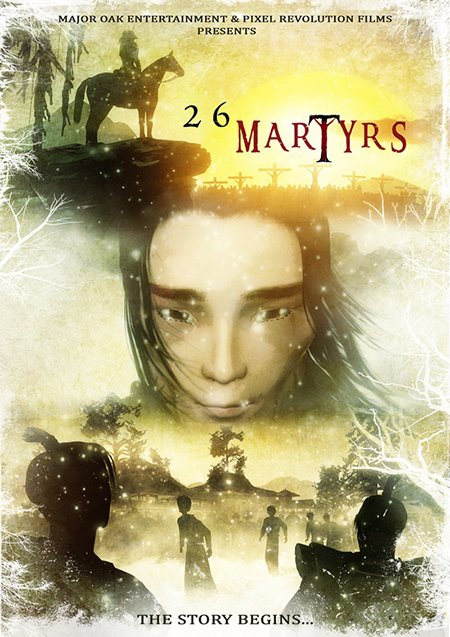
Today is the feast day of St. Paul Miki and his companions. They were martyred in Nagasaki on February 5th in the year 1597.
The story of the martyrs has been made into a film and it’s title is 26 Martyrs. It’s an animated short that will serve as a companion piece to the docu-drama that a number of you have helped to fund: All That Remains. I think you’ll agree that it looks like a “must see” film.
I think Ian and Dominic Higgins are putting some serious work into this project. And I’m not just saying that because they have made me one of the honorary producers either. They share a behind the scenes look on how this animated feature was made on their blog.
In an effort to learn more about this particular story, I found a great article on the 26 Martyrs written by Diego R. Yuki, SJ. It’s a gripping story.
February 5, 1597. Very few history books will mention this date, although it should appear in all of them. It opens a new chapter in the history of the Japanese Church, a chapter written with blood by the 26 Martyrs on the rock of this hill in Nagasaki. It only took a few hours to write this page, but the message is still alive, after almost four hundred years.
Let us first introduce the main characters in the play. The one to pass sentence on the martyrs is Toyotomi Hideyoshi, better known as Taikosama, absolute ruler of Japan and living at Osaka Castle. On Nishizaka Hill, Terazawa Hanzaburo, brother of the governor of Nagasaki, performs the execution. Leading actors in this drama are the 26 men doomed to die, worn out after a grueling thirty day march. And with them, sharing the tension of their last hours, the common folk of Nagasaki, Jesuit missionaries and Spanish seamen, traders from Macao, soldiers, executioners.
It is ten o’clock in the morning. The place, the high-way to Tokitsu and Omura, next to the gate of Nagasaki. All around us the surging crowds, a swelling rumble of distant thunder, tense with uneasiness and expectation.
Mt. Mubonzan–or Kompira as it is called today–towers over Nagasaki City, coming down to meet her in a descending pattern of undulating hills. Nishizaka, the lowest hill, resembled a galleon’s prow jutting into Nagasaki Bay.
The road to Omura cut right through the hill. On that day the traveler from Nagasaki could see a field of wheat on his left. Part of the hill was facing the city and Nagasaki Bay, the other looked out on a murky place, a ravine scattered with human remains, a haunt for wild dogs and birds of prey. Common criminals were executed there.
It was in such a place that the martyrs’ crosses had been hoisted but some influential Portuguese prevailed on Terazawa Hanzaburo, the Governor’s brother not to deal with the martyrs as common criminals and suggested the field of wheat on the other side of the road as a better place for execution. Terazawa Hanzaburo was happy to oblige.
Terazawa was already there waiting for the 26 condemned to die. It was a painful task to perform. One of the martyrs Paul Miki was a close friend of his and he had often listened to his sermons. These men were guilty of no crime, and Terazawa Hazaburo knew it. Therefore much as he was afraid of Taikosama, he was willing to make concessions on minor points. One of them was to allow two Jesuits, Frs. Pasio and Rodriguez, to minister to the martyrs.
It was half past ten when the long procession finally reached Nishizaka. First, an escort of soldiers pushing their way through the waiting crowds. After them, the martyrs, divided into three groups each of them headed by Franciscans saying the rosary. They had been walking all the way from Urakami–the old road is still in use at some places–their hands tightly bound, their feet leaving a trail of blood along the road.
You can read the whole account over at the 26 Martyrs Museum Homepage.
You can find the films’ Facebook page here. Please go “Like” it if you haven’t already.
UPDATE:
Fr. Dwight Longenecker: To Emulate the Lion and the Lamb.
Next Post

February 7, 2013 Whom Shall We Obey? (The Quotable St. Thomas Aquinas)
Browse Our Archives
Select a Category Blog News Conversion Story Culture Learning Living Nature Prayer Uncategorized Working
Select a Month June 2016 May 2016 August 2015 July 2015 June 2015 May 2015 April 2015 March 2015 February 2015 January 2015 December 2014 November 2014 October 2014 September 2014 August 2014 July 2014 June 2014 May 2014 April 2014 March 2014 February 2014 January 2014 December 2013 November 2013 October 2013 September 2013 August 2013 July 2013 June 2013 May 2013 April 2013 March 2013 February 2013 January 2013 December 2012 November 2012 October 2012 September 2012 August 2012 July 2012 June 2012 May 2012 April 2012 March 2012 February 2012 January 2012 December 2011 November 2011 October 2011 September 2011 August 2011 July 2011 June 2011 May 2011 April 2011 March 2011 February 2011 January 2011 December 2010 November 2010 October 2010 September 2010 August 2010 July 2010 June 2010 May 2010 April 2010 March 2010 February 2010 January 2010 December 2009 November 2009 October 2009 September 2009 August 2009
Follow Us!
TAKE THE
Religious Wisdom Quiz
What vision did Daniel have of four beasts representing empires?
Select your answer to see how you score.
Four dragons Horse, eagle, serpent, leopard Ox, ram, goat, lion Lion, bear, leopard, terrifying beast
Related posts from Why I Am Catholic

Belated Happy Birthday To Blaise Pascal, Unofficial Saint...

Because My Brother Imran Yousef Is An American...

Joe Six-Pack, USMC, With A Few Post-Terrorist Attack...

This Is Why God Invented YouTube...
TRENDING AT PATHEOS Catholic

Rejecting Doom: Christian Hope And Human Action
Christianity is a religion of hope. We are to have hope and...

It’s What Comes From Within Which Matters
One of the most difficult things for us to understand is why...

Why I Choose the Eucharist Over the Sermon
Choose the Eucharist, Not the Sermon What are we supposed to get...

5 Design Elements Found in Spiritually Rooted Homes
Putting Spirituality Into Home Decor Our homes are more than our living...

Credo: A Story of God Told with the...
About 10 years ago, I began to imagine a personal "Credo" that...

The Anatomy of Divine Revelation in Catholic Thought
The claim that God has made Himself known to human beings is...
Ad-Free & Subscriber Log-In Subscription Support
- About Us
- 2026 Calendar
- Videos
- Podcasts
- Library of World Religions
- Faith In Media Tracker
- Advertise With Us
- Write for Us
- Privacy Policy
- Terms of Service
- Do Not Sell My Data
- Contact Us
- Radiant Digital
- Manage Newsletter Subscriptions
- Unsubscribe From Notifications
- Sitemap
Copyright 2008-2026, Patheos. All rights reserved.
Subscription Support Ad-Free & Subscriber Log-In
Follow Patheos