
BuddhistCatholicContemplativeEvangelicalGeneral ChristianHinduJewishLatter-day SaintMuslimNew VisionsProgressive Christian
Beliefs
- Buddhist
- Catholic
- Contemplative
- Evangelical
- General Christian
- Hindu
- Jewish
- Latter-day Saint
- More Voices
- Muslim
- New Visions
- Pagan
- Progressive Christian
Topics
- Religion News
- Food and Religion
- Sports and Religion
- Religious Art
- Religious Music and Entertainment
- Religious Events
- History and Religion
- Style and Religion
- Politics and Religion
- Women in Religion
- Recreation Outdoors and Religion
- Business Finance and Religion
- Careers Workplace and Religion
- Education and Religion
- Family Parenting and Religion
- Health Fitness and Religion
- Home and Religion
- Relationships and Religion
- Technology and Religion
- Travel and Religion
Columnists
- Buddhist Columnists
- Business Finance and Religion Columnists
- Careers Workplace and Religion Columnists
- Catholic Columnists
- Contemplative Columnists
- Education and Religion Columnists
- Evangelists Columnists
- Family Parenting and Religion Columnists
- General Christian Columnists
- Health Fitness and Religion Columnists
- Hindu Columnists
- History and Religion Columnists
- Home and Religion Columnists
- Jewish Columnists
- More Voices Columnists
- Latter Day Columnists
- Muslim Columnists
- New Visions Columnists
- Nonreligious Columnists
- Pagan Columnists
- Politics and Religion Columnists
- Progressive Columnists
- Recreation Outdoors and Religion Columnists
- Relationships and Religion Columnists
- Religion News Columnists
- Religious Art Columnists
- Religious Events Columnists
- Religious Music and Entertainment Columnists
- Sports and Religion Columnists
- Style and Religion Columnists
- Technology and Religion Columnists
- Travel and Religion Columnists
- Women in Religion Columnists
Resource Library
- 2026 Calendar
- Library of World Religions
- The 100 Most Holy Places on Earth
- Patheos Answers
- Podcasts
- Videos
- Faith Leaders Database
- Anglican Episcopalian
- Bahai
- Baptist
- Buddhism
- Christianity
- Confucianism
- Eastern Orthodoxy
- Hinduism
- Holiness and Pentecostal
- ISKCON
- Islam
- Judaism
- Lutheran
- Methodist
- The Church of Jesus Christ of Latter-day Saints
- New Age
- Paganism
- Presbytarian and Reformed
- Protestantism
- Religion Behind the Scenes
- Roman Catholic
- Scientology
- Shia Islam
- Sikhism
- Sufism
- Sunni Islam
- Taoism
- Zen
- See all religions
Research Tools
 Ad-Free & Subscriber Log-In Subscription Support
Ad-Free & Subscriber Log-In Subscription Support
Follow Patheos 

- Trending:
- Forgiveness
- |
- Marriage
- |
- Consciousness
- |
- Death Penalty
- |
- Election
- |
- Halloween
 Why I Am Catholic
-
More
- Home
- Because of Dorothy Day (November 8, 1897 – November 29, 1980) UPDATED
Because of Dorothy Day (November 8, 1897 – November 29, 1980) UPDATED
Last updated on: January 24, 2017 at 5:54 pm by Webster Bull
Because of Dorothy Day (November 8, 1897 – November 29, 1980) UPDATED 2017-01-24T17:54:05-05:00 Webster Bull
Patheos Explore the world's faith through different perspectives on religion and spirituality! Patheos has the views of the prevalent religions and spiritualities of the world.
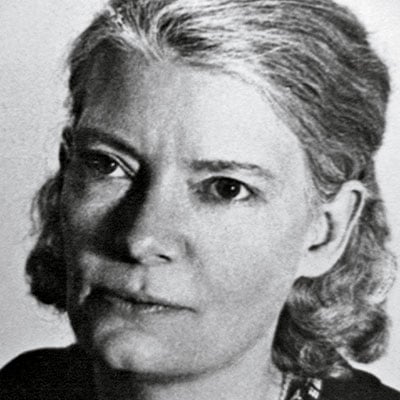
This was written three years ago by my (then) blogging partner, Webster Bull. Given all the excitement about her cause for sainthood, I think it’s a good time to take a look at Dorothy Day not only from Webster’s viewpoint, but in her own words too.
So sit back, relax, and meet Dorothy Day (and Peter Maurin) and come to know why an encounter with her helps lead us to Christ.
****
Today is the anniversary of the death of a great Catholic. A one-time radical, a sinner, a convert, a courageous pacifist (no, that is not an oxymoron), not yet a saint—she gets my vote for most compelling American Catholic of the 20th century. Her name? Dorothy Day. She died 29 (ed. 32) years ago today.
Let’s begin with three quotes:
“Dorothy Day has been described as a very erratic and irresponsible person. She has engaged in activities which strongly suggest that she is consciously or unconsciously being used by communist groups. From past experience with her it is obvious she maintains a very hostile and belligerent attitude towards the Bureau and makes every effort to castigate the Bureau whenever she feels so inclined.”—J. Edgar Hoover
“I write to initiate the canonization process of Dorothy Day. To be sure, her life is a model for all in the third millennium, but especially for women who have had or are considering abortions. . . . I contend that her abortion should not preclude her cause, but intensifies it.”—John Cardinal O’Conner
“Don’t call me a saint. I don’t want to be dismissed that easily.”—Dorothy Day
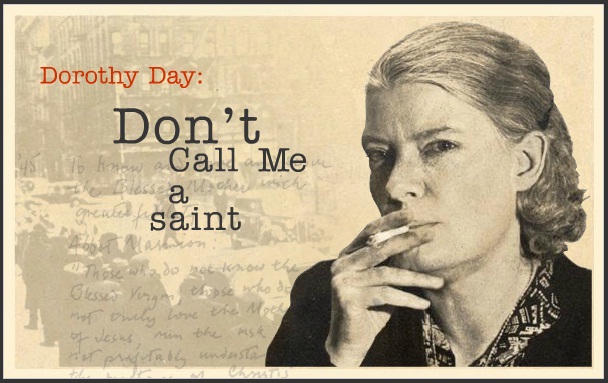
Coolest.Dorothy Day.Photograph.Ever.
Despite her concern, Dorothy Day is difficult to dismiss. Yet she is dismissed, or overlooked by mainstream Catholicism. I prepared a talk on her for men’s group about a year ago, and more than half the guys admitted that they knew little or nothing about her. Amazing but true: I was a self-described Vietnam era peacenik, but I never learned about Dorothy until I became a Catholic two years ago (ed. See? Saints are obscure.) Unlike the Berrigan brothers or Father Drinan, more Catholics who came out against that war, Dorothy was too busy helping the poor to steal the headlines.
Born in Brooklyn in 1897, she was the daughter of a non-believing journalist father whose beat was horse-racing. He apparently spent quality time at the track. Dorothy lived through the San Francisco earthquake of 1908 and remembered it vividly in her memoir The Long Loneliness. Her family soon moved to Chicago, where she had her first prolonged exposure to poverty. She enrolled at the University of Illinois but left after two years, moved to New York City, and became a freelance journalist, principally for socialist, communist, and anarchist periodicals. In 1917 she joined a suffragist rally outside the White House, was jailed with other female demonstrators, and went on a hunger strike. She was 20.
In 1924, she published her first book, an autobiographical novel called The Eleventh Virgin. It was based on her own bohemian life and would be the only writing in a lifetime of writing in which she would refer to her own abortion. Soon she had moved into a beach house on Staten Island with her common-law husband, Forster Batterham, a confirmed atheist. She seems to have adored him, though he spent most of the weeks in Manhattan and was with her just on weekends.
Thinking she could no longer have children, she became pregnant by Batterham in 1926 and gave birth to a daughter, Tamar Teresa. She asked a nun about baptizing her daughter. The nun said, “Fine,” but Dorothy should consider becoming a Catholic herself. And knowing that it would mean losing her atheist “husband,” she did just that. Dorothy lived alone with Tamar as a single Catholic mother for six years, torn between the Church and her vision of social justice. She believed, not without justification, that the Church talked about caring for the poor while catering to the non-poor.
In 1932, Dorothy joined a hunger march in Washington (it was the Great Depression, folks). She prayed at the National Shrine of the Immaculate Conception that “some way would open up for me to use what talents I possessed for my fellow workers.” When she returned home to New York, she found Peter Maurin on her doorstep. (She told the story this way; others say Maurin appeared within a few days or weeks of her return.)
Maurin was an itinerant preacher in old beat-up clothes. He proposed to Dorothy a three-part plan: what he called round-table discussions, houses of hospitality, and agronomic universities. For the rest of her life (until 1980), Dorothy put this plan in action. The first issue of The Catholic Worker, a newspaper that sold for one penny a copy, was distributed at a Communist rally in Union Square. I like to think of that paper as Dorothy’s blog. She wrote for it constantly. And when she, or the paper, or her Houses of Hospitality (a string of homeless shelters founded in 1935) ran out of money, she wrote a front-page plea for funds, and the funds invariably arrived.
In 1936 civil war erupted in Spain. The Church supported Franco. The left supported the Communists. Dorothy Day outraged them all by remaining neutral. In 1939, alert to the threat of Nazism before many other intellectuals, she founded the Committee of Catholics to Fight Anti-Semitism. Despite her critique of Hitler’s regime, she espoused pacifism when the US entered the war following Pearl Harbor.
In the 1960s, Dorothy would join campaigns for nuclear disarmament and civil rights, and she would oppose the war in Vietnam. A Catholic Worker staffer would be the first personal jailed for burning his draft card. Another committed suicide by setting himself on fire in front of the US mission to the UN. (Dorothy’s CW editorial the following day is heart-breaking.) In 1973, she was arrested for the last time, on a United Farm Workers picket line in California.
In 2000, the cause for her beatification was formally opened with Vatican approval.
Without question, the most challenging fact of Dorothy Day’s life is her adamant pacifism. Here, I know I cannot speak more eloquently than Dorothy herself, so I’ll end with the most challenging thought of all: remaining pacifist in the face of Nazism.
Our Country Passes from Undeclared to Declared War; We Continue Our Christian Pacifist Stand (CW 1942)
Dear Fellow Workers in Christ,
Lord God, merciful God, our Father, shall we keep silent, or shall we speak? And if we speak, what shall we say?
I am sitting here in the church on Mott Street writing this in Your presence. Out on the streets it is quiet, but You are there, too, in the Chinese, in the Italians, these neighbors we love. We love them because they are our brothers, as Christ is our Brother, and God our Father. But we have forgotten so much. We have all forgotten. . . .
Seventy-five thousand copies of The Catholic Worker go out every month. What shall we print? . . . We will print the words of Christ, who is with us always, even to the end of the world. “Love your enemies, do good to those who hate you, and pray for those who persecute and calumniate you, so that you may be children of your Father in heaven, who makes His sun to rise on the good and the evil, and sends rain on the just and the unjust.”
We are at war, a declared war, with Japan, Germany, and Italy, But still we can repeat Christ’s words, each day, holding them close in our hearts, each month printing them in the paper. In times past Europe has been a battlefield. But let us remember St. Francis, who spoke of peace, and we will remind our readers of him, too, so they will not forget.
In The Catholic Worker we will quote our Pope, our saints, our priests. We will go on printing the articles of Father Hugo, who reminds us today that we are all “called to be saints,” that we are other Christs, reminding us of the priesthood of the laity.
We are still pacifists. Our manifesto is the Sermon on the Mount, which means that we will try to be peacemakers. Speaking for many of our conscientious objectors, we will not participate in armed warfare or in making munitions, or by buying government bonds to prosecute the war, or in urging others to these efforts.But neither will we be carping in our criticism. We love our country and we love our President. We have been the only country in the world where men and women of all nations have taken refuge from oppression. We recognize that while in the order of intention we have tried to stand for peace, for love of our brothers and sisters, in the order of execution we have failed as Americans in living up to our principles.
[Dorothy urges daily, hourly prayer for an end to the war, along with acts of mercy.]
Because of our refusal to assist in the prosecution of war and our insistence that our collaboration be one for peace, we may find ourselves in difficulties. But we trust in the generosity and understanding of our government and our friends, to permit us to continue to use our paper to “preach Christ crucified.”
And may the Blessed Mary, Mother of beautiful love, and of fear, and of knowledge, and of holy hope, pray for us.
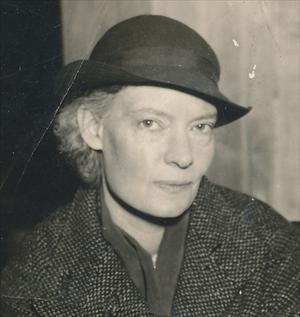
Amen. Say a prayer for us when you can.
UPDATE:
A documentary to see! Check out the trailer.
UPDATE II:
How prayer helped her give up smoking.

Previous Post

November 27, 2012
A Prayer For A Friend In Need
Next Post
December 1, 2012 "All That Remains" Praise Report
Browse Our Archives
Select a Category Blog News Conversion Story Culture Learning Living Nature Prayer Uncategorized Working
Select a Month June 2016 May 2016 August 2015 July 2015 June 2015 May 2015 April 2015 March 2015 February 2015 January 2015 December 2014 November 2014 October 2014 September 2014 August 2014 July 2014 June 2014 May 2014 April 2014 March 2014 February 2014 January 2014 December 2013 November 2013 October 2013 September 2013 August 2013 July 2013 June 2013 May 2013 April 2013 March 2013 February 2013 January 2013 December 2012 November 2012 October 2012 September 2012 August 2012 July 2012 June 2012 May 2012 April 2012 March 2012 February 2012 January 2012 December 2011 November 2011 October 2011 September 2011 August 2011 July 2011 June 2011 May 2011 April 2011 March 2011 February 2011 January 2011 December 2010 November 2010 October 2010 September 2010 August 2010 July 2010 June 2010 May 2010 April 2010 March 2010 February 2010 January 2010 December 2009 November 2009 October 2009 September 2009 August 2009
Follow Us!
TAKE THE
Religious Wisdom Quiz
Which principle does the "Golden Rule" teach?
Select your answer to see how you score.
Spread the Gospel Rest on the Sabbath Treat others as you want to be treated Pray aloud
Related posts from Why I Am Catholic

Belated Happy Birthday To Blaise Pascal, Unofficial Saint...

Because My Brother Imran Yousef Is An American...

Joe Six-Pack, USMC, With A Few Post-Terrorist Attack...

This Is Why God Invented YouTube...
TRENDING AT PATHEOS Catholic

Rejecting Doom: Christian Hope And Human Action
Christianity is a religion of hope. We are to have hope and...

It’s What Comes From Within Which Matters
One of the most difficult things for us to understand is why...

Why I Choose the Eucharist Over the Sermon
Choose the Eucharist, Not the Sermon What are we supposed to get...

5 Design Elements Found in Spiritually Rooted Homes
Putting Spirituality Into Home Decor Our homes are more than our living...

Credo: A Story of God Told with the...
About 10 years ago, I began to imagine a personal "Credo" that...

The Anatomy of Divine Revelation in Catholic Thought
The claim that God has made Himself known to human beings is...
Ad-Free & Subscriber Log-In Subscription Support
- About Us
- 2026 Calendar
- Videos
- Podcasts
- Library of World Religions
- Faith In Media Tracker
- Advertise With Us
- Write for Us
- Privacy Policy
- Terms of Service
- Do Not Sell My Data
- Contact Us
- Radiant Digital
- Manage Newsletter Subscriptions
- Unsubscribe From Notifications
- Sitemap
Copyright 2008-2026, Patheos. All rights reserved.
Subscription Support Ad-Free & Subscriber Log-In
Follow Patheos