
BuddhistCatholicContemplativeEvangelicalGeneral ChristianHinduJewishLatter-day SaintMuslimNew VisionsProgressive Christian
Beliefs
- Buddhist
- Catholic
- Contemplative
- Evangelical
- General Christian
- Hindu
- Jewish
- Latter-day Saint
- More Voices
- Muslim
- New Visions
- Pagan
- Progressive Christian
Topics
- Religion News
- Food and Religion
- Sports and Religion
- Religious Art
- Religious Music and Entertainment
- Religious Events
- History and Religion
- Style and Religion
- Politics and Religion
- Women in Religion
- Recreation Outdoors and Religion
- Business Finance and Religion
- Careers Workplace and Religion
- Education and Religion
- Family Parenting and Religion
- Health Fitness and Religion
- Home and Religion
- Relationships and Religion
- Technology and Religion
- Travel and Religion
Columnists
- Buddhist Columnists
- Business Finance and Religion Columnists
- Careers Workplace and Religion Columnists
- Catholic Columnists
- Contemplative Columnists
- Education and Religion Columnists
- Evangelists Columnists
- Family Parenting and Religion Columnists
- General Christian Columnists
- Health Fitness and Religion Columnists
- Hindu Columnists
- History and Religion Columnists
- Home and Religion Columnists
- Jewish Columnists
- More Voices Columnists
- Latter Day Columnists
- Muslim Columnists
- New Visions Columnists
- Nonreligious Columnists
- Pagan Columnists
- Politics and Religion Columnists
- Progressive Columnists
- Recreation Outdoors and Religion Columnists
- Relationships and Religion Columnists
- Religion News Columnists
- Religious Art Columnists
- Religious Events Columnists
- Religious Music and Entertainment Columnists
- Sports and Religion Columnists
- Style and Religion Columnists
- Technology and Religion Columnists
- Travel and Religion Columnists
- Women in Religion Columnists
Resource Library
- 2026 Calendar
- Library of World Religions
- The 100 Most Holy Places on Earth
- Patheos Answers
- Podcasts
- Videos
- Faith Leaders Database
- Anglican Episcopalian
- Bahai
- Baptist
- Buddhism
- Christianity
- Confucianism
- Eastern Orthodoxy
- Hinduism
- Holiness and Pentecostal
- ISKCON
- Islam
- Judaism
- Lutheran
- Methodist
- The Church of Jesus Christ of Latter-day Saints
- New Age
- Paganism
- Presbytarian and Reformed
- Protestantism
- Religion Behind the Scenes
- Roman Catholic
- Scientology
- Shia Islam
- Sikhism
- Sufism
- Sunni Islam
- Taoism
- Zen
- See all religions
Research Tools
 Ad-Free & Subscriber Log-In Subscription Support
Ad-Free & Subscriber Log-In Subscription Support
Follow Patheos 

- Trending:
- Forgiveness
- |
- Marriage
- |
- Consciousness
- |
- Death Penalty
- |
- Election
- |
- Halloween
 Why I Am Catholic
-
More
- Home
- What If God Was One of Us, and Drove a Race Car?
What If God Was One of Us, and Drove a Race Car?
Last updated on: June 21, 2016 at 12:51 pm by Frank Weathers
What If God Was One of Us, and Drove a Race Car? 2016-06-21T12:51:27-05:00 Frank Weathers
Patheos Explore the world's faith through different perspectives on religion and spirituality! Patheos has the views of the prevalent religions and spiritualities of the world.

Ayrton would not approve of that typo!
Today is the 20th anniversary of the passing on to God of this legendary racing driver. As such, I’m republishing this post.
I would wager that the answer to my title question would be that if this ever happened, it would look a lot like Ayrton Senna da Silva dominating Formula One circuits.
Who is Ayrton Senna? A race car driver who died eighteen years ago. Prepare for a gearhead hagiography post of sorts.
“But Frank, I’m not interested in race cars, race car drivers, or any other feats of daring do and the daring folks that do them.”
Too bad, dear reader. For as Ed Hinton over at ESPN writes,
It’s hard to compare the life, career and style of Senna to those of any other racing driver, anywhere, anytime.
Better to imagine some hybrid of Mozart and St. Paul, and add the reflexes of a supercomputer — that supercomputer being God Himself along for the ride, as Senna firmly believed.
Look, it’s funny as I sometimes wonder about the gifts God has given me. Most of them are quite odd to most folks, and I really can only say that the fact that God works through us fallible human beings at all is amazing in and of itself. So can God work through a race car driver? Absolutely. The fact that Senna had a “dangerous job,” makes his story even more intriguing to me.
Imagine telling Kobe Bryant that he couldn’t play basketball because it was too dangerous. Too far fetched? Okay then, tell Tim Tebow that football is too dangerous so you can’t pursue your dream now because too many people get hurt at this game. But back to autoracing, consider these words that Oscar winning actor Paul Newman said about his love for automobile racing. You did know that Paul Newman was an outstanding race car driver, didn’t you?
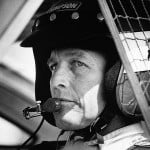 His ability to drive a race car, and drive it very well, was discovered when he was making the film, Winning, in 1969. Here’s what he said about the discovery. It was, “the first thing that I ever found I had any grace in.” The same can be said for many who have died practicing their callings.
While I was on the road into the Catholic Church, see, I learned a lot about prayer. The most interesting, and unexpected, thing about prayer I learned was that by doing your chosen work, that from which you earn your livelihood, to the absolute best of your ability, is a way of prayer recognized by the Church. As someone who was on fire to make his mark in the world (as one of the best at whatever I happened to turn my limited abilities towards), this idea was something I was very happy to learn of.
Now, as a racing fan, I had heard of Ayrton Senna, and knew of his immense skills as a driver. But during his peak years in Formula One, I was either overseas helping to keep the world safe for democracy, or in college, getting married, and trying to make a career for myself. So I missed most of his story. As a resident of the United States, Formula One coverage was sketchy anyway, and I was too busy following American racing series like CART and IndyCar, you know, when I could find the time.
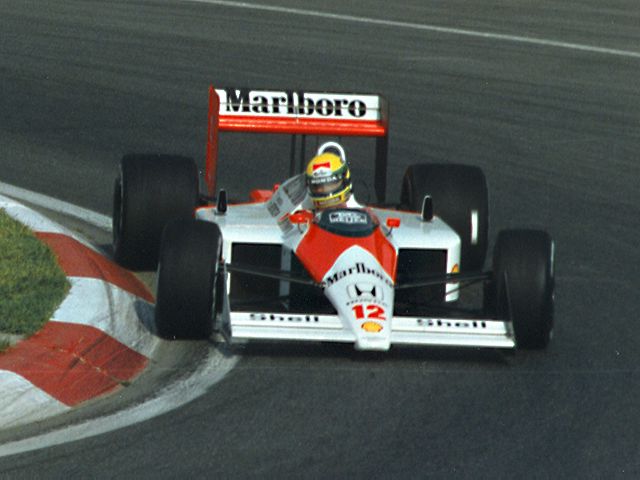 Earlier this week, one of the Patheos movie blogs, Shaeffer’s Ghost ran a review on the documentary film on Senna’s life. I read it with interest, especially because Senna’s faith seemed to be an underlying theme of the film. Ayrton was a Brazilian, so I figured he was a Catholic, as turns out to be the case.
Last August, when the film Senna hit the theaters after winning an award at the Sundance Film Festival, Mannish Pandey, writer and executive producer of the film, shared his thoughts on his subject in an article on Huffington Post.
“Just because I believe in God, just because I have faith in God, it doesn’t mean that I’m immune. It doesn’t mean that I’m immortal.” —Ayrton Senna, 1989.
Back in 2004, when James Gay-Rees and I started out on our journey to bring Ayrton’s story to the big screen, we were both certain on one aspect of his life (and death) that we needed to underpin that story: Ayrton’s spirituality. He was a devout Catholic, something which neither James (an Anglican at school) nor I (a Hindu) shared. Yet we both felt deeply that Ayrton’s story would be incomplete without this monumental pillar in his life — a pillar upon which he stood and reached heights that few mortals ever dream of; but also a pillar which was often misunderstood and used, like a club, to beat him by cynical opponents and press (‘disbelievers’ as I call them).
Ayrton’s early Catholicism was like that of other young Brazilians in the 1980’s — more heritage than practicality, more Sunday morning than something which defined him at work. It took the pressure cooker of Formula One, of a life lived at 200mph on racetracks around the world — of failure rather than victory — to bring God into his daily life.
With super-yachts bobbing in the harbour, champagne on ice and 24 hour parties, the Monaco Grand Prix should have been amongst the most unlikely places for Ayrton to have had a deeply profound spiritual experience — yet it was here in 1988 when such a ‘miracle’, in his eyes, occurred …
His qualifying sessions at that race are still spoken of in awe by anyone lucky enough to have seen them. Ayrton took his car, a car designed around his team-mate double world champion Alain Prost, the best driver in the world (perhaps of all time, until then) and lapped the principality faster and faster until — at one point — Ayrton was two seconds faster. Ayrton, it seemed, was visibly bending the car and the track to his will. He had transcended what was physically possible and was exploring limits that no-one had ever dared to reach: he was inhabiting places so far beyond normal human experience, that even the disbelievers were left flabbergasted as they looked at the time sheets.
“Suddenly, I realised that I was no longer driving consciously and I was kind of driving by instinct only, I was in a different dimension … I was so over the limit but still able to go even more … I realised that I was in a very different atmosphere … I was well beyond my conscious understanding.”
It’s time for a video break. Jeremy Clarkson of Top Gear will show you in fewer words, backed by clips from the film, examples of Senna’s masterful driving abilities. Ever seen a dancing race car? Prepare to be amazed,
Senna gave 100% every single time he was on the track. Was he a visionary though? Maybe. Maybe he was like Blaise Pascal, another genius who also saw a vision. Back to Mannish Pandey’s HuffPost piece,
In the shallow, commercial, fast-paced world of the Formula One paddock, Ayrton was the exception. He had, in the words of Professor Sid Watkins, the Formula One doctor and father-figure to all the drivers ‘a kind of tranquillity — he was a very tranquil person.’
‘When you talk about religion, it’s a touching point, very easy to be misunderstood … But I try hard — as hard as I can to understand life through God. And that means everyday of my life — not only when I’m home but when I’m doing my work too.’
When he won his first championship in 1988, Ayrton claimed he saw God.
Ayrton took his first world championship at the Suzuka Circuit in October 1988. The conditions were damp, the air heavy with droplets of rain which split the light like tiny prisms. As he crossed the start-finish line, both hands waving wildly, the steering wheel between his knees at 150mph, his mechanics heard a kind of crying and laughter, they heard screaming and singing — language that they could not describe — and Ayrton, after he stopped the car, calmly admitted to seeing a vision of God as he took the championship.
The accident that killed him 5 years later was mysterious, unexpected, and maybe miraculous. Pandey reports that on that fateful day in May of 1994,
‘On that final morning, he woke and opened his bible and read a text,’ explained Viviane, Ayrton’s sister, ‘that he would receive the greatest gift of all which was God, himself.’ From the moment Ayrton’s car plunged off the road to his brain death was less than two seconds and the sequence of events, though violent, were so complicated, they seemed to defy probability.
Ayrton’s car left the circuit, not only at the fastest corner but at the corner with no run-off area in which to brake, in which to react. The car hit the outer concrete wall at the exact angle which caused his front right tyre and suspension assembly to be thrown back at the car. Ayrton’s head was flexed forward the exact moment that the assembly hit him — and a piece found its way through the tiny aperture of his visor, causing fatal head injuries. It was an unprecedented, fantastic series of events. In the words of insurance companies, the most rational entities on earth who sift through data and find patterns where there are none, Ayrton’s death ‘was an act of God.’
Three million people lined the streets of Sao Paulo for his funeral whilst one hundred million watched on television, united by Ayrton, once again — but this time in grief. And it is that union which Ayrton could forge in human beings upon which I reflect, seventeen years after his death. Ayrton’s spirituality, his faith, and his religion brought people together — as faith and religions should.
Asif, our director, is a Muslim; James, our producer, was brought up a Christian; Eric, our other producer, a Jew — and I am a Hindu — all brought together by the intense power of a great human being, who transcended his sport, and whose spirit now transcends his death.
You’re going to want to read his entire article. As Clarkson makes clear in the clip above, the F-1 cars Senna drove were barely bridled, fire breathing, dragons. But after 1988, turbos were banned and the formula rewritten, knocking horsepower down to around 775. But there were other improvements coming. In 1992, two years before Senna’s death, the teams with the biggest checkbooks got an altogether different advantage though. Hinton from ESPN explains,
In 1992 came the most sophisticated racing car ever to touch tires to the face of the earth, the Williams FW14. In the garage, when engineers tested the active suspension, the car looked alive — like a manta ray moving at the bottom of the sea.
Senna never drove it. The rough-driving Englishman Nigel Mansell was winning in the FW14, almost in spite of himself, and there was a rumor that Senna had said, “even a monkey could drive that car.”
He never said that. But he might well have thought it. Many of us thought Senna, still with McLaren, might have won every race that season if he’d been in the FW14.
Once I pressed him about it. What would Senna and the FW14 be like together?
He pondered, sniffled, thought some more, sighed.
“That’s ridiculous,” he said. “It’s out of the question.”
I thought he meant that both contractually and for reasons of Williams secrecy, the McLaren driver could not be allowed even to sit in the FW14.
The film yields the real answer: his contempt for the car itself and what it took away from the art of F1 driving.
“No matter who you put in the car,” he says, “the electronics will do the work, and not the driver.”
Watch this film. Happily, it is streaming on Netflix and at Amazon. And though I’ve been castigated in the past for coming down hard on films that mean well, but are inferior, that is not the case here. Senna won the Audience Award for a documentary at the 2011 Suncance Film Festival, and a whole host of other awards. And my main go-to source, Metacritic, scores it solidly in the green with a score of 79 out of 100.
So do yourself a favor and learn a little bit about the very fallible man who drove like that was his mission from God. A man of faith who quietly practiced his faith, on the track and off. As Hinton of ESPN reports,
Once on an overseas flight just days after Senna’s death, I encountered an attendant who had served Senna several times in first class. He said Senna would go for eight or nine hours “without saying a word, just sitting there reading his Bible.”
What you see time and again in the film is what I saw face to face — Senna always hesitating for several seconds, thinking, carefully considering, before answering a question. Often he sniffles, as if he has a cold or allergy…Those of us who failed to crack the enigma all those years needn’t feel so bad now. The film is a compilation of complete access the likes of which we never had. The full cooperation of the Senna da Silva family, and of the Formula One hierarchy, is evident.
It’s good that “Senna” will play first in theaters in this country. Director Asif Kapadia’s first 12 minutes are not for beginners on the subject of Senna, and mightn’t hold a general American TV audience. They’d likely click away before this piece develops into what is, on the whole, the best film ever made about any racing driver.
See it. You won’t be disappointed. Here’s the trailer.
Previous Post

October 17, 2012
Work of Mercy: Why Not Give Alms to Syrian Refugees?
Browse Our Archives
Select a Category Blog News Conversion Story Culture Learning Living Nature Prayer Uncategorized Working
Select a Month June 2016 May 2016 August 2015 July 2015 June 2015 May 2015 April 2015 March 2015 February 2015 January 2015 December 2014 November 2014 October 2014 September 2014 August 2014 July 2014 June 2014 May 2014 April 2014 March 2014 February 2014 January 2014 December 2013 November 2013 October 2013 September 2013 August 2013 July 2013 June 2013 May 2013 April 2013 March 2013 February 2013 January 2013 December 2012 November 2012 October 2012 September 2012 August 2012 July 2012 June 2012 May 2012 April 2012 March 2012 February 2012 January 2012 December 2011 November 2011 October 2011 September 2011 August 2011 July 2011 June 2011 May 2011 April 2011 March 2011 February 2011 January 2011 December 2010 November 2010 October 2010 September 2010 August 2010 July 2010 June 2010 May 2010 April 2010 March 2010 February 2010 January 2010 December 2009 November 2009 October 2009 September 2009 August 2009
Follow Us!
TAKE THE
Religious Wisdom Quiz
What does "Jehovah Nissi" mean?
Select your answer to see how you score.
The Lord is My Banner The Lord is My Provider The Lord is Holy The Lord Saves
Related posts from Why I Am Catholic

Belated Happy Birthday To Blaise Pascal, Unofficial Saint...

Because My Brother Imran Yousef Is An American...

Joe Six-Pack, USMC, With A Few Post-Terrorist Attack...

This Is Why God Invented YouTube...
TRENDING AT PATHEOS Catholic

Creation, Preservation, and Teleology in Catholic Theology
As I write this, it is very early Monday morning. Like millions...

The Parable Of The Sower And The Word...
One of Christ’s most famous parables is that of the sower who...

Rejecting Doom: Christian Hope And Human Action
Christianity is a religion of hope. We are to have hope and...

Why I Choose the Eucharist Over the Sermon
Choose the Eucharist, Not the Sermon What are we supposed to get...

5 Design Elements Found in Spiritually Rooted Homes
Putting Spirituality Into Home Decor Our homes are more than our living...

Credo: A Story of God Told with the...
About 10 years ago, I began to imagine a personal "Credo" that...
Ad-Free & Subscriber Log-In Subscription Support
- About Us
- 2026 Calendar
- Videos
- Podcasts
- Library of World Religions
- Faith In Media Tracker
- Advertise With Us
- Write for Us
- Privacy Policy
- Terms of Service
- Do Not Sell My Data
- Contact Us
- Radiant Digital
- Manage Newsletter Subscriptions
- Unsubscribe From Notifications
- Sitemap
Copyright 2008-2026, Patheos. All rights reserved.
Subscription Support Ad-Free & Subscriber Log-In
Follow Patheos