
BuddhistCatholicContemplativeEvangelicalGeneral ChristianHinduJewishLatter-day SaintMuslimNew VisionsProgressive Christian
Beliefs
- Buddhist
- Catholic
- Contemplative
- Evangelical
- General Christian
- Hindu
- Jewish
- Latter-day Saint
- More Voices
- Muslim
- New Visions
- Pagan
- Progressive Christian
Topics
- Religion News
- Food and Religion
- Sports and Religion
- Religious Art
- Religious Music and Entertainment
- Religious Events
- History and Religion
- Style and Religion
- Politics and Religion
- Women in Religion
- Recreation Outdoors and Religion
- Business Finance and Religion
- Careers Workplace and Religion
- Education and Religion
- Family Parenting and Religion
- Health Fitness and Religion
- Home and Religion
- Relationships and Religion
- Technology and Religion
- Travel and Religion
Columnists
- Buddhist Columnists
- Business Finance and Religion Columnists
- Careers Workplace and Religion Columnists
- Catholic Columnists
- Contemplative Columnists
- Education and Religion Columnists
- Evangelists Columnists
- Family Parenting and Religion Columnists
- General Christian Columnists
- Health Fitness and Religion Columnists
- Hindu Columnists
- History and Religion Columnists
- Home and Religion Columnists
- Jewish Columnists
- More Voices Columnists
- Latter Day Columnists
- Muslim Columnists
- New Visions Columnists
- Nonreligious Columnists
- Pagan Columnists
- Politics and Religion Columnists
- Progressive Columnists
- Recreation Outdoors and Religion Columnists
- Relationships and Religion Columnists
- Religion News Columnists
- Religious Art Columnists
- Religious Events Columnists
- Religious Music and Entertainment Columnists
- Sports and Religion Columnists
- Style and Religion Columnists
- Technology and Religion Columnists
- Travel and Religion Columnists
- Women in Religion Columnists
Resource Library
- 2026 Calendar
- Library of World Religions
- The 100 Most Holy Places on Earth
- Patheos Answers
- Podcasts
- Videos
- Faith Leaders Database
- Anglican Episcopalian
- Bahai
- Baptist
- Buddhism
- Christianity
- Confucianism
- Eastern Orthodoxy
- Hinduism
- Holiness and Pentecostal
- ISKCON
- Islam
- Judaism
- Lutheran
- Methodist
- The Church of Jesus Christ of Latter-day Saints
- New Age
- Paganism
- Presbytarian and Reformed
- Protestantism
- Religion Behind the Scenes
- Roman Catholic
- Scientology
- Shia Islam
- Sikhism
- Sufism
- Sunni Islam
- Taoism
- Zen
- See all religions
Research Tools
 Ad-Free & Subscriber Log-In Subscription Support
Ad-Free & Subscriber Log-In Subscription Support
Follow Patheos 

- Trending:
- Forgiveness
- |
- Marriage
- |
- Consciousness
- |
- Death Penalty
- |
- Election
- |
- Halloween
 Why I Am Catholic
-
More
- Home
- Public Prayer at University of Tennessee, Revisited
Public Prayer at University of Tennessee, Revisited
Last updated on: January 24, 2017 at 5:56 pm by Frank Weathers
Public Prayer at University of Tennessee, Revisited 2017-01-24T17:56:18-05:00 Frank Weathers
Patheos Explore the world's faith through different perspectives on religion and spirituality! Patheos has the views of the prevalent religions and spiritualities of the world.
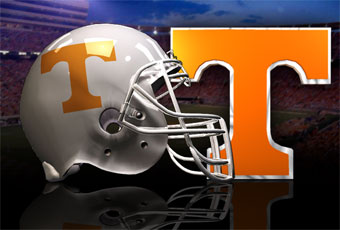
The other day I shared the story about the Freedom From Religion Foundation’s letter to the University of Tennessee regarding prayer before events. The University has stated that they will continue to allow “non-sectarian” prayer before sporting events, etc., and the FFRF has said they will not pursue further legal action, but that they will continue to monitor the situation.
As the clip below reports, the FFRF is on the march throughout the state of Tennessee, doing what they can to free the masses from what they consider to be an exclusive practice, and one that violates the separation of church and state. Roll tape,
Hey, lookee! Special appearance by one of the Paulist Fathers who pastors the Blessed John XXIII University Parish Center, right on campus. As reported above, Fr. Charlie Donohue has given an invocation at three events since his assignment at U.T. He shared the following wise thoughts on his Facebook page earlier today as well,
Many in Knoxville and in the UT family have been following the discussions regarding prayers at Football Games and other Campus events.
I have the honor of serving as Chair this year of the UTK-CMC Campus Ministers’ Council at the University of Tennessee KnoxviT-K and have been, with the other members of that Council, involved in being a resource for the University Administration for this and other issues.
While this (non-sectarian prayer at public events) is a more complicated issue than many different commentators have suggested, there remains a commitment by the Campus Ministers’ Council to offer non-sectarian, inclusive, authentic, and welcoming expressions of prayer.
At the same time, that same inclusive, authentic and welcoming attitude must also be extended to any who may disagree with the University’s policy. Please keep everybody involved in your prayers as dialogue continues and we all learn from one another!
From the earlier post, recall the court case that found (in 1997) that non-sectarian prayer does not violate the Constitution’s Establishment Clause. I had a reader write,
What is a secular prayer? Who would you be praying to? Any prayer constitutes an affirmation that there is a conscious supernatural force in control of everything. There is no logical way that the UT official policy of praying at state sponsored events is in keeping with the separation of church and state. Justice Hugo Black wrote: “In the words of Thomas Jefferson, the clause against establishment of religion by law was intended to erect a wall of separation between church and state.” Muslim countries have no problem mixing religion and government. Fortunately our founding father’s feared the danger of that as well as the tyranny of the majority.
I think they meant “non-sectarian prayer,” but the court’s findings stand in refutation to the complaint. Also, there is a profound difference between thinking there is a “supernatural force in control of everything,” vs. recognizing the knowledge that free will is the true condition of mankind. Also, the commenter’s plea for “logic” is interesting, as there are plenty (if not a surfeit!) of things that aren’t logical but that are very definitely “legal.” Take the legality of abortion as Exhibit A for example (if all life is held equal, and dignified), and the Tax Code, with all of its twists, turns, loop-holes, and gotchas as Exhibit B. On top of all this, the current Administration “gets” non-sectarian prayer, and encourages it.
No, the truth seems to be that the problem FFRF, and similar groups, have is that prayer of any type is abhorrent to them, even if the rest of us can tune them out (or in) at our leisure.

I hope they understand that not all religions take a dim view of science, or even of the theory of evolution. Dipping into the Ray Bradbury quote pool again,
“Science and religion have to go hand in hand with the mystery, because there’s a certain point beyond which you have to say, ‘There are no answers.'”
Taking Fr. Charlie’s advice, though, I agree that the school, the courts, and the rest of us, should be willing to hear their reasoned arguments. I find that often these groups appeal to the Founding Fathers for guidance, a favorite being Thomas Jefferson, who said in a letter to the Danbury Baptist Association in 1802,
I contemplate with sovereign reverence that act of the whole American people which declared that their legislature should “make no law respecting an establishment of religion, or prohibiting the free exercise thereof,” thus building a wall of separation between Church & State.
I admit, though, that in some cases liberty has been taken with President Jefferson’s words, and they have truncated his remarks as follows,
I contemplate with sovereign reverence that act of the whole American people which [built]…a wall of separation between Church & State.
And his closing lines are completely omitted, due to the inconvenient nature of them,
I reciprocate your kind prayers for the protection & blessing of the common father and creator of man, and tender you for yourselves & your religious association assurances of my high respect & esteem.
For you see, what President Jefferson, and all of the Founding Fathers knew, was that unlike the European Powers, whose heads-of-state were also the heads-of-the-national-church, it wasn’t like that in the United States. By design. Religious liberty from the Church of England was one of the principal reasons the colonies were founded. Look where England is today.
You may recall the fact that, for all intents and purposes, Christendom died ten days before Christmas, in the year 1791, when the Bill of Rights was amended to the Constitution of the United States. We forget this because as bishop, and constitutional historian, Thomas J. Curry reminds us, “the interpretation of…the First Amendment, has reached a point of deep crisis.” And that is because,
Modern Church-State discussion has been based on the following misassumptions: that the free exercise of religion is the equivalent of religious toleration; that members of the First Congress disputed the definition of establishment of religion; that the Free Exercise and No Establishment provisions of the First Amendment serve differing purposes and exist in tension to each other; that the amendment deals with government aid to or hinderance of religion; and that it requires government to maintain a neutral stance between assisting or impeding religion, between religion and nonreligion, and between differing religions.
And guess where the roots of these problems lie?
These misassumptions proceed from a mindset essentially derived from Christendom. Modern attempts to build a wall, to draw a line, to define a boundary between Church and State replicate the perennial struggle of Christendom to separate the secular and the sacred into their proper spheres, even though the First Amendment was designed to end that conflict by proclaiming the end of Christendom in America.
That last bold highlight is mine. Because Bishop Curry shows convincingly, by tracing the history of religion in the colonies, how the two main approaches on the issue of religious freedom were worked out by the Framers and that the “religious liberty” approach was the one that was decided upon, and not the “religious toleration” approach. The reason why comes down to the fact that the Constitution and the Bill of Rights were written in a manner that limited the powers of the federal government especially in regards to religion.
If the Framers had decided in favor of the “religious toleration” approach, it is likely that state religions would have been established, as in the model that was followed in Massachusetts, for example. And the result would be like what you have in Germany today, tax-tithes gathered by the government on behalf of churches. No, you can’t imagine it happening here. The Framers, see, steered away from those rocks because they did not want the government to have to “maintain a neutral stance between assisting or impeding religion, between religion and nonreligion, and between differing religions.” What they wanted instead was,
a self-limiting, self-denying ordinance restraining government, a mandate that the State will exercise no power in religious questions, that “Congress shall make no law” in that domain of human experience. Religious freedom proceeds from government’s leaving people to decide on their own religious beliefs and practices…
In reality, the First Amendment is about government’s lack of power. It is no more a mandate to promote religion than it is one to create a boundary defining the sphere and activity of religion. Rather, it embodies a new way of arranging government, the full understanding of which is still emerging.
He can say that again. In fact,
…the great American experiment still challenges religious believers to realize that the denial of government power over the Church resulted not from deprecation of religious belief, but from a profound appreciation that religion was too important to be left to politicians, too precious and necessary to a vibrant society to be made a tool of government manipulation. The following pages are offered as a guide to that developing understanding and to the realization that the limited, secular, non-ideological government mandated by the Constitution and the First Amendment provides the best hope for Church and State in the new millennium.
The feat now is to get our non-religious, non-believing, brethren to see the truths of these arguments as well. For the fact is, the Wall of Separation was destroyed before it could ever be built (though some of the original states tried their best to build it), as the Chief Executive of our Federal Government, the President of the United States, was never, and never will be, the head of a National Church of the United States.
For as one of our modern Chief Executives said, that wouldn’t be prudent. Roll clip,
Previous Post

September 21, 2012
The Two Most Important Pundits Weigh In On "My Wife..." UPDATED
Next Post
September 24, 2012 For Solid Food Like This (Hold the Milk)
Browse Our Archives
Select a Category Blog News Conversion Story Culture Learning Living Nature Prayer Uncategorized Working
Select a Month June 2016 May 2016 August 2015 July 2015 June 2015 May 2015 April 2015 March 2015 February 2015 January 2015 December 2014 November 2014 October 2014 September 2014 August 2014 July 2014 June 2014 May 2014 April 2014 March 2014 February 2014 January 2014 December 2013 November 2013 October 2013 September 2013 August 2013 July 2013 June 2013 May 2013 April 2013 March 2013 February 2013 January 2013 December 2012 November 2012 October 2012 September 2012 August 2012 July 2012 June 2012 May 2012 April 2012 March 2012 February 2012 January 2012 December 2011 November 2011 October 2011 September 2011 August 2011 July 2011 June 2011 May 2011 April 2011 March 2011 February 2011 January 2011 December 2010 November 2010 October 2010 September 2010 August 2010 July 2010 June 2010 May 2010 April 2010 March 2010 February 2010 January 2010 December 2009 November 2009 October 2009 September 2009 August 2009
Follow Us!
TAKE THE
Religious Wisdom Quiz
Which book has the famous phrase, "For everything there is a season"?
Select your answer to see how you score.
Proverbs Ecclesiastes Lamentations Psalms
Related posts from Why I Am Catholic

Belated Happy Birthday To Blaise Pascal, Unofficial Saint...

Because My Brother Imran Yousef Is An American...

Joe Six-Pack, USMC, With A Few Post-Terrorist Attack...

This Is Why God Invented YouTube...
TRENDING AT PATHEOS Catholic

Rejecting Doom: Christian Hope And Human Action
Christianity is a religion of hope. We are to have hope and...

It’s What Comes From Within Which Matters
One of the most difficult things for us to understand is why...

Why I Choose the Eucharist Over the Sermon
Choose the Eucharist, Not the Sermon What are we supposed to get...

5 Design Elements Found in Spiritually Rooted Homes
Putting Spirituality Into Home Decor Our homes are more than our living...

Credo: A Story of God Told with the...
About 10 years ago, I began to imagine a personal "Credo" that...

The Anatomy of Divine Revelation in Catholic Thought
The claim that God has made Himself known to human beings is...
Ad-Free & Subscriber Log-In Subscription Support
- About Us
- 2026 Calendar
- Videos
- Podcasts
- Library of World Religions
- Faith In Media Tracker
- Advertise With Us
- Write for Us
- Privacy Policy
- Terms of Service
- Do Not Sell My Data
- Contact Us
- Radiant Digital
- Manage Newsletter Subscriptions
- Unsubscribe From Notifications
- Sitemap
Copyright 2008-2026, Patheos. All rights reserved.
Subscription Support Ad-Free & Subscriber Log-In
Follow Patheos