
BuddhistCatholicContemplativeEvangelicalGeneral ChristianHinduJewishLatter-day SaintMuslimNew VisionsProgressive Christian
Beliefs
- Buddhist
- Catholic
- Contemplative
- Evangelical
- General Christian
- Hindu
- Jewish
- Latter-day Saint
- More Voices
- Muslim
- New Visions
- Pagan
- Progressive Christian
Topics
- Religion News
- Food and Religion
- Sports and Religion
- Religious Art
- Religious Music and Entertainment
- Religious Events
- History and Religion
- Style and Religion
- Politics and Religion
- Women in Religion
- Recreation Outdoors and Religion
- Business Finance and Religion
- Careers Workplace and Religion
- Education and Religion
- Family Parenting and Religion
- Health Fitness and Religion
- Home and Religion
- Relationships and Religion
- Technology and Religion
- Travel and Religion
Columnists
- Buddhist Columnists
- Business Finance and Religion Columnists
- Careers Workplace and Religion Columnists
- Catholic Columnists
- Contemplative Columnists
- Education and Religion Columnists
- Evangelists Columnists
- Family Parenting and Religion Columnists
- General Christian Columnists
- Health Fitness and Religion Columnists
- Hindu Columnists
- History and Religion Columnists
- Home and Religion Columnists
- Jewish Columnists
- More Voices Columnists
- Latter Day Columnists
- Muslim Columnists
- New Visions Columnists
- Nonreligious Columnists
- Pagan Columnists
- Politics and Religion Columnists
- Progressive Columnists
- Recreation Outdoors and Religion Columnists
- Relationships and Religion Columnists
- Religion News Columnists
- Religious Art Columnists
- Religious Events Columnists
- Religious Music and Entertainment Columnists
- Sports and Religion Columnists
- Style and Religion Columnists
- Technology and Religion Columnists
- Travel and Religion Columnists
- Women in Religion Columnists
Resource Library
- 2026 Calendar
- Library of World Religions
- The 100 Most Holy Places on Earth
- Patheos Answers
- Podcasts
- Videos
- Faith Leaders Database
- Anglican Episcopalian
- Bahai
- Baptist
- Buddhism
- Christianity
- Confucianism
- Eastern Orthodoxy
- Hinduism
- Holiness and Pentecostal
- ISKCON
- Islam
- Judaism
- Lutheran
- Methodist
- The Church of Jesus Christ of Latter-day Saints
- New Age
- Paganism
- Presbytarian and Reformed
- Protestantism
- Religion Behind the Scenes
- Roman Catholic
- Scientology
- Shia Islam
- Sikhism
- Sufism
- Sunni Islam
- Taoism
- Zen
- See all religions
Research Tools
 Ad-Free & Subscriber Log-In Subscription Support
Ad-Free & Subscriber Log-In Subscription Support
Follow Patheos 

- Trending:
- Forgiveness
- |
- Marriage
- |
- Consciousness
- |
- Death Penalty
- |
- Election
- |
- Halloween
 Why I Am Catholic
-
More
- Home
- For “the Didache” Voters’ Guide
For “the Didache” Voters’ Guide
Last updated on: January 24, 2017 at 5:56 pm by Frank Weathers
For “the Didache” Voters’ Guide 2017-01-24T17:56:36-05:00 Frank Weathers
Patheos Explore the world's faith through different perspectives on religion and spirituality! Patheos has the views of the prevalent religions and spiritualities of the world.
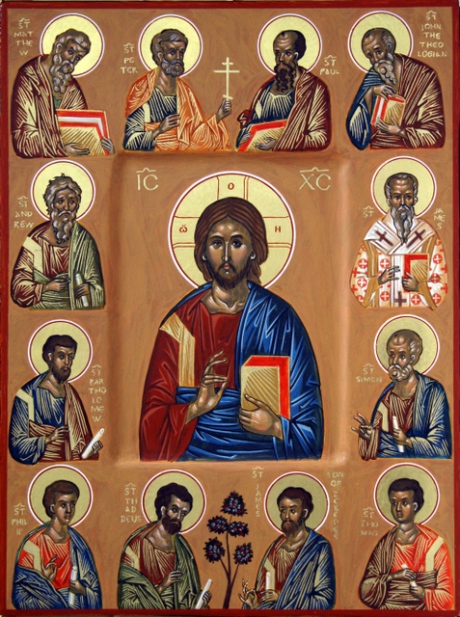
As the presidential election starts looming large on the horizon, it’s time to dust off the voters’ guide I wrote about last November. As such, I’m relaunching this post on the handy little guide from one of the earliest of all Christian writings.
I’m not really big on following politics nowadays. You could call me a bad Catholic for that, but I would argue that I have a million other more important things to do with my time than keep my fingers on the pulse of the American political scene.
To name the first couple, how about saving my own soul and the souls of my family? Besides, once you inform yourself on Catholic teachings, it’s pretty easy to skip most of the phoney-baloney electioneering and make informed Catholic decisions in the ballot box. And if you can’t remember them all, you can find the highlights to help you out in a trusted source from the early Church: the Didache.
Written sometime between 60 and 90 AD, the Didache is the earliest catechism of the faith, as Rod Bennett explains in his excellent book Four Witnesses, The Early Church in Her Own Words. Look at the dates above again and you’ll notice that this tract was written long before the New Testament Canon was completed. As a matter of fact, it was probably written around the same time that St. Paul was writing his letters to the various churches (or shortly thereafter), which again are prior to the Gospels having been written.
The full title of the tract is The Teaching of the Lord to the Gentiles through the Twelve Apostles, which points to the primary sources as being the Apostles, who as you know were taught directly by Our Lord and the Holy Spirit. So how can they help you muddle through the current political season? May I suggest by not voting for candidates that support what the Church Fathers note in the Didache as being intrinsically evil?
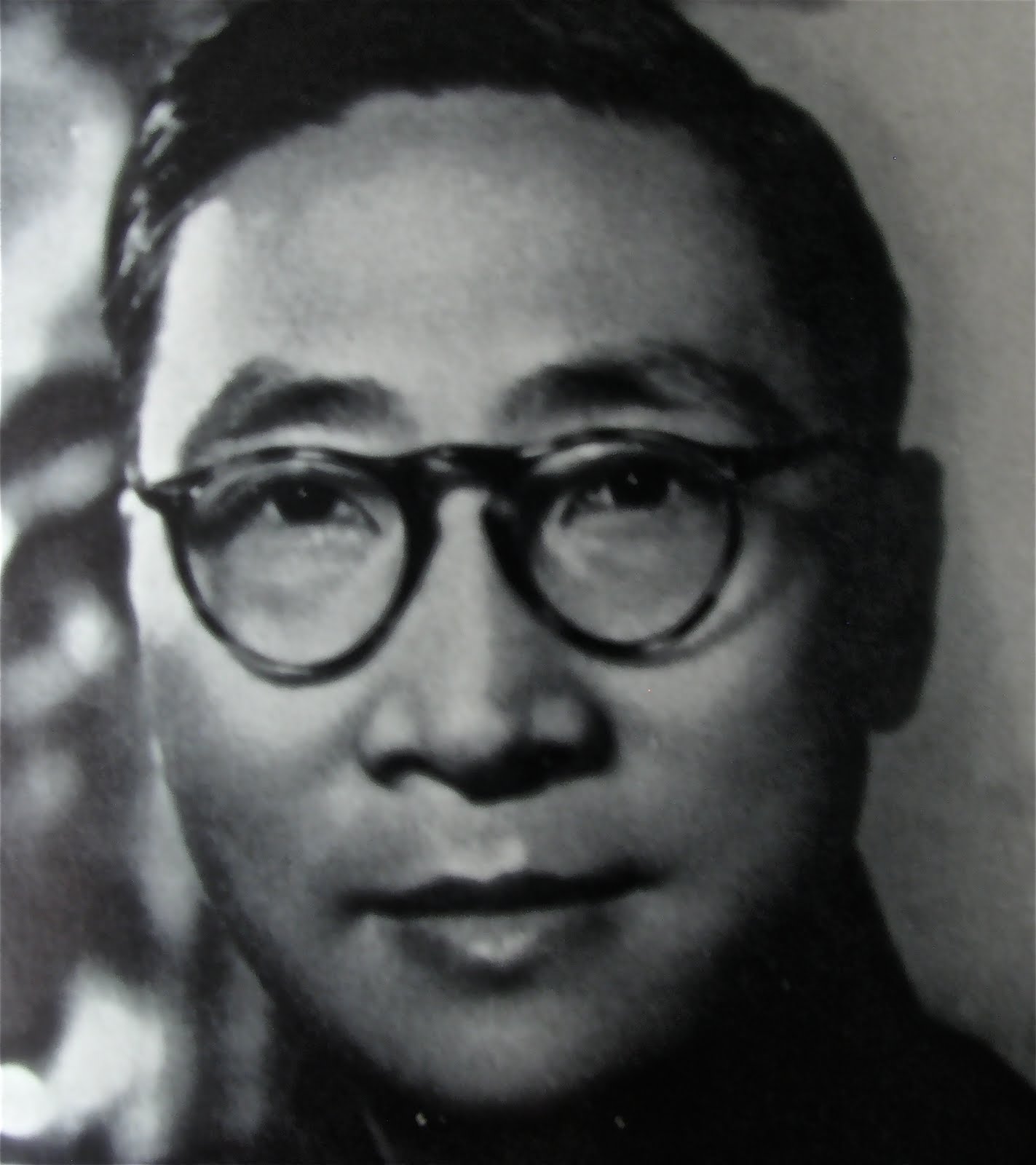
John Wu, the “Chinese Chesterton”
You see, the Didache describes “two Ways,” the Way of Life, and the Way of Death. I bet my learned Chinese friend, John C.H. Wu, Catholic convert and translator (into Mandarin) of the Psalms, the New Testament, and (into English) Lao Tzu’s Tao teh Ching, turned a somersault when he came across the teachings of the Apostles described as the Way. Of course, he would have seen Christianity described as such in the early letters of St. Peter (our first Pope) as well. For example (bold is my emphasis),
St. Peter:
2 Peter 2:1-2
But there were also false prophets among the people, even as there shall be among you lying teachers, who shall bring in sects of perdition, and deny the Lord who bought them: bringing upon themselves swift destruction.
And many shall follow their riotousnesses, through whom the way of truth shall be evil spoken of.
2 Peter 2:21-22
For it had been better for them not to have known the way of justice, than after they have known it, to turn back from that holy commandment which was delivered to them.
For, that of the true proverb has happened to them: The dog is returned to his vomit: and, The sow that was washed, to her wallowing in the mire.
My suggestion then is to vote in the manner that follows the Way of Life, and avoid voting in a manner that supports the Way of Death. How will you know the one from the other? I’ll let the anonymous writer of this ancient tract explain (bold emphasis is mine),
And the way of death is this:
First of all it is evil and full of curse: murders, adulteries, lusts, fornications, thefts, idolatries, magic arts, witchcrafts, rapines, false witnessings, hypocrisies, double-heartedness, deceit, haughtiness, depravity, self-will, greediness, filthy talking, jealousy, over-confidence, loftiness, boastfulness; persecutors of the good, hating truth, loving a lie, not knowing a reward for righteousness, not cleaving to good nor to righteous judgment, watching not for that which is good, but for that which is evil; from whom meekness and endurance are far, loving vanities, pursuing requital, not pitying a poor man, not labouring for the afflicted, not knowing Him that made them, murderers of children, destroyers of the handiwork of God, turning away from him that is in want, afflicting him that is distressed, advocates of the rich, lawless judges of the poor, utter sinners.
Be delivered, children, from all these.
Sounds like a good idea to me. And avoiding those who follow these precepts has the added benefit of freeing up my time for more profitable endeavors, such as the ones recommended in the Way of Life. It also is pretty short, and can easily be compared to any sample ballot that I need to consult with when I’m at the polls.
You can find the Didache and its full description of the two Ways over at New Advent.
Oh, and before you ask, “must I vote and stuff?,” see the Catechism.
From the CCC, have a look at the duties of citizens.
The duties of citizens
2238 Those subject to authority should regard those in authority as representatives of God, who has made them stewards of his gifts:43 “Be subject for the Lord’s sake to every human institution. . . . Live as free men, yet without using your freedom as a pretext for evil; but live as servants of God.”44 Their loyal collaboration includes the right, and at times the duty, to voice their just criticisms of that which seems harmful to the dignity of persons and to the good of the community.
2239 It is the duty of citizens to contribute along with the civil authorities to the good of society in a spirit of truth, justice, solidarity, and freedom. The love and service of one’s country follow from the duty of gratitude and belong to the order of charity. Submission to legitimate authorities and service of the common good require citizens to fulfill their roles in the life of the political community.
Regarding voting,
2240 Submission to authority and co-responsibility for the common good make it morally obligatory to pay taxes, to exercise the right to vote, and to defend one’s country:
Pay to all of them their dues, taxes to whom taxes are due, revenue to whom revenue is due, respect to whom respect is due, honor to whom honor is due.
[Christians] reside in their own nations, but as resident aliens. They participate in all things as citizens and endure all things as foreigners. . . . They obey the established laws and their way of life surpasses the laws. . . . So noble is the position to which God has assigned them that they are not allowed to desert it. (This is from the Epistle to Diognetus)
The Apostle exhorts us to offer prayers and thanksgiving for kings and all who exercise authority, “that we may lead a quiet and peaceable life, godly and respectful in every way.”
As for voting for any certain party, there is (of course) no specific injunction, except to vote with an informed conscience.
For another voting guide a little more up to date, see this post from the “democracy of the dead” as well.
Next Post

September 17, 2012 "We Stand for Religious Freedom..."
Browse Our Archives
Select a Category Blog News Conversion Story Culture Learning Living Nature Prayer Uncategorized Working
Select a Month June 2016 May 2016 August 2015 July 2015 June 2015 May 2015 April 2015 March 2015 February 2015 January 2015 December 2014 November 2014 October 2014 September 2014 August 2014 July 2014 June 2014 May 2014 April 2014 March 2014 February 2014 January 2014 December 2013 November 2013 October 2013 September 2013 August 2013 July 2013 June 2013 May 2013 April 2013 March 2013 February 2013 January 2013 December 2012 November 2012 October 2012 September 2012 August 2012 July 2012 June 2012 May 2012 April 2012 March 2012 February 2012 January 2012 December 2011 November 2011 October 2011 September 2011 August 2011 July 2011 June 2011 May 2011 April 2011 March 2011 February 2011 January 2011 December 2010 November 2010 October 2010 September 2010 August 2010 July 2010 June 2010 May 2010 April 2010 March 2010 February 2010 January 2010 December 2009 November 2009 October 2009 September 2009 August 2009
Follow Us!
TAKE THE
Religious Wisdom Quiz
What does "Bethsaida" mean in Hebrew?
Select your answer to see how you score.
God’s Dwelling Place of Bread City of Refuge House of Fishing
Related posts from Why I Am Catholic

Belated Happy Birthday To Blaise Pascal, Unofficial Saint...

Because My Brother Imran Yousef Is An American...

Joe Six-Pack, USMC, With A Few Post-Terrorist Attack...

This Is Why God Invented YouTube...
TRENDING AT PATHEOS Catholic

Rejecting Doom: Christian Hope And Human Action
Christianity is a religion of hope. We are to have hope and...

It’s What Comes From Within Which Matters
One of the most difficult things for us to understand is why...

Why I Choose the Eucharist Over the Sermon
Choose the Eucharist, Not the Sermon What are we supposed to get...

5 Design Elements Found in Spiritually Rooted Homes
Putting Spirituality Into Home Decor Our homes are more than our living...

Credo: A Story of God Told with the...
About 10 years ago, I began to imagine a personal "Credo" that...

The Anatomy of Divine Revelation in Catholic Thought
The claim that God has made Himself known to human beings is...
Ad-Free & Subscriber Log-In Subscription Support
- About Us
- 2026 Calendar
- Videos
- Podcasts
- Library of World Religions
- Faith In Media Tracker
- Advertise With Us
- Write for Us
- Privacy Policy
- Terms of Service
- Do Not Sell My Data
- Contact Us
- Radiant Digital
- Manage Newsletter Subscriptions
- Unsubscribe From Notifications
- Sitemap
Copyright 2008-2026, Patheos. All rights reserved.
Subscription Support Ad-Free & Subscriber Log-In
Follow Patheos