
BuddhistCatholicContemplativeEvangelicalGeneral ChristianHinduJewishLatter-day SaintMuslimNew VisionsProgressive Christian
Beliefs
- Buddhist
- Catholic
- Contemplative
- Evangelical
- General Christian
- Hindu
- Jewish
- Latter-day Saint
- More Voices
- Muslim
- New Visions
- Pagan
- Progressive Christian
Topics
- Religion News
- Food and Religion
- Sports and Religion
- Religious Art
- Religious Music and Entertainment
- Religious Events
- History and Religion
- Style and Religion
- Politics and Religion
- Women in Religion
- Recreation Outdoors and Religion
- Business Finance and Religion
- Careers Workplace and Religion
- Education and Religion
- Family Parenting and Religion
- Health Fitness and Religion
- Home and Religion
- Relationships and Religion
- Technology and Religion
- Travel and Religion
Columnists
- Buddhist Columnists
- Business Finance and Religion Columnists
- Careers Workplace and Religion Columnists
- Catholic Columnists
- Contemplative Columnists
- Education and Religion Columnists
- Evangelists Columnists
- Family Parenting and Religion Columnists
- General Christian Columnists
- Health Fitness and Religion Columnists
- Hindu Columnists
- History and Religion Columnists
- Home and Religion Columnists
- Jewish Columnists
- More Voices Columnists
- Latter Day Columnists
- Muslim Columnists
- New Visions Columnists
- Nonreligious Columnists
- Pagan Columnists
- Politics and Religion Columnists
- Progressive Columnists
- Recreation Outdoors and Religion Columnists
- Relationships and Religion Columnists
- Religion News Columnists
- Religious Art Columnists
- Religious Events Columnists
- Religious Music and Entertainment Columnists
- Sports and Religion Columnists
- Style and Religion Columnists
- Technology and Religion Columnists
- Travel and Religion Columnists
- Women in Religion Columnists
Resource Library
- 2026 Calendar
- Library of World Religions
- The 100 Most Holy Places on Earth
- Patheos Answers
- Podcasts
- Videos
- Faith Leaders Database
- Anglican Episcopalian
- Bahai
- Baptist
- Buddhism
- Christianity
- Confucianism
- Eastern Orthodoxy
- Hinduism
- Holiness and Pentecostal
- ISKCON
- Islam
- Judaism
- Lutheran
- Methodist
- The Church of Jesus Christ of Latter-day Saints
- New Age
- Paganism
- Presbytarian and Reformed
- Protestantism
- Religion Behind the Scenes
- Roman Catholic
- Scientology
- Shia Islam
- Sikhism
- Sufism
- Sunni Islam
- Taoism
- Zen
- See all religions
Research Tools
 Ad-Free & Subscriber Log-In Subscription Support
Ad-Free & Subscriber Log-In Subscription Support
Follow Patheos 

- Trending:
- Forgiveness
- |
- Marriage
- |
- Consciousness
- |
- Death Penalty
- |
- Election
- |
- Halloween
 Why I Am Catholic
-
More
- Home
- Thoughts on the Role of the Laity on this Feast of St. Joan of Arc UPDATED
Thoughts on the Role of the Laity on this Feast of St. Joan of Arc UPDATED
Last updated on: June 7, 2015 at 10:39 pm by Frank Weathers
Thoughts on the Role of the Laity on this Feast of St. Joan of Arc UPDATED 2015-06-07T22:39:15-05:00 Frank Weathers
Patheos Explore the world's faith through different perspectives on religion and spirituality! Patheos has the views of the prevalent religions and spiritualities of the world.
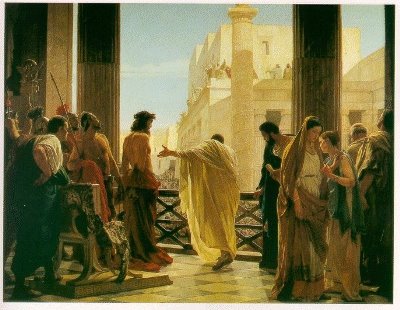
And so we leave Eastertide behind. Before we move on into “Ordinary Time”, recall the events of Holy Week with me. During that week, way back in the year 33 AD, the forces of human justice, lobbied aggressively by the interested parties of the Pharisees and Sadducees, convinced the Roman procurator, Pontius Pilate, to sentence Jesus to death on a cross. And though the whole mess was a tragic setup, it was all done officially and legally.
I can think of many things today that are both official and legal and still very tragic. Here’s an example. A friend of mine who is serving in the Army in Afghanistan sent me this message recently:
Just finished a ceremony for 6 soldiers we lost to a suicide bomber this weekend. Say a prayer for their family and friends when you lay down tonight.
And I will pray for their souls too. But I can’t do much more than that. In fact, in order to avoid being sucked into the vortex of despair, I try to pay attention to that which I can have an impact on more than on that which I cannot. I have to filter out much of what goes on in the world to do that. And paradoxically, that is one of the reasons why I am a Catholic today. Not that I shun the world, or anything. ‘Tis a paradox, I know. One that this post cannot explain in any meaningful way.
 Sts. Anthony the Great
and Paul of Thebes
Or maybe it can. In the past I’ve written about the saints known as the Desert Fathers and Mothers. They were hermits, and yet they got together with their brethren for Mass. Now I’m not sure how often they did this (once a week? once a month? whenever they ran low on water?) but I’m pretty sure it wasn’t daily. Then, after celebrating the Eucharist, they headed back to their respective cells or wherever it was that they holed up. Back to making baskets, or mats, and back to praying and studying the scriptures. And back to their own battles against the wiles of the devil.
In other words, they went about their business in a solitary fashion in the way that each one of us must do as well. Perhaps the word “must” is too strong, but I don’t really see any other way. Because hanging with the popular crowd, or the world-at-large, isn’t going to provide you with the opportunities to “work out your salvation with fear and trembling.” Being carried along with the world, see, you’ll forget that the reason Christ allowed Himself to be crucified was so that you could inherit eternal life. God became a man and died so that we could be redeemed.
But none of that makes sense to the world, because it admires strength, fears death, and abhors weakness. As the Holy Spirit reminds us through the words of St. Paul,
The message of the cross is foolishness to those who are perishing, but to us who are being saved it is the power of God. For it is written: “I will destroy the wisdom of the wise, and the learning of the learned I will set aside.” (1 Corinthians 1:18-19)
I recently saw something that St. Thérèse of Lisieux said that illustrates the love God has for us and why the world doesn’t understand it,

Thérèse as Joan of Arc
Let us suppose that the son of a very clever doctor, stumbling over a stone on the road, falls and breaks his leg. His father hastens to his aid, and binds up the fractured limb with all the skill at his command. When cured, the son shows the utmost gratitude…and with good reason.
This must have been how the Apostles felt after Our Lord’s Resurrection. She continues the story,
But, on the other hand, suppose that the father, knowing that a large stone lies on his son’s path, anticipates the danger, and, unseen by anyone, hastens to remove it. Unconscious of the accident from which such tender forethought has saved him, the son will not show any mark of gratitude for it, or feel the same love for his father as he would have done had he been cured of some grievous wound.
And neither will you or the world. But the Little Flower goes on to say,
But if he came to learn the whole truth, would he not love his father all the more?
And that “whole truth,” the Good News, is what the apostles gave their lives up for, dying deaths as martyrs while sharing Christ’s message with the whole world. But that message didn’t go with them to their graves because the Church Christ started, and the one he vouchsafed to them, continues on to carry out the work of salvation until the end of time. Thanks be to God.
But the work does not belong only to the apostles, nor to their successors, the bishops. As the editors of the National Catholic Register remind us today, which happens also to be the Feast of St. Joan of Arc, patroness of this blog, it’s time for the laity to do our part as well. From their editorial entitled The Hour of the Laity, we learn that,
The Church in America now faces a challenge that demands the laity exercise their role as Vatican II saw it. What began as an apparently well-intentioned effort to serve justice by helping everyone have “affordable access to health care” (a concern of the Catholic bishops for the longest time, by the way) is turning out to be a grave encroachment on the religious liberty of millions of Americans.
In carrying out their ordinary duties of everyday life — striving to live according to the Gospel while raising families and making a living, contributing to the common good by doing their jobs well — Christians are being asked to carry an extra burden.
It is the burden of knowing that part of what they have earned will be set aside, through the premiums they pay for their health insurance, to pay for products and procedures that they know are morally illicit. Companies and organizations — even those with official ties to the Church or those that are animated by Catholic principles — will be asked to facilitate this transfer of funds, or to stand by quietly as others do it for them, a reality that forces them to cooperate with the sinful practices to which they object.
The Church per se will not be made to participate, it is true, but that is only because the Church falls within a very narrow definition of religion that has been devised by the state: To be considered an exempt religious organization, its primary animus must be conversion of others to its faith; it must employ and serve primarily members of that faith. That itself is part of the reason for the present controversy — that the state may dictate what constitutes religion.
The bishops have taken the lead in the current battle — speaking out and inspiring the faithful — and that’s great. We are blessed to have men like New York’s Cardinal Timothy Dolan, Baltimore’s Archbishop William Lori and many others who are putting their talents at the service of the true and the just — and what is in the best interest of the laity’s ultimate goal of salvation.
They are doing their job — protecting the flock they are called on to shepherd. But some supporters of the Obama administration’s efforts to broadly provide contraception, sterilization and abortion-causing drugs are happy to allow the “bishops’ war on women” narrative to stand.
Anyone who looks a little deeper will see that this is an unjust caricature. Fifty years after the opening of the Council that so clearly defined the role of the laity in the Church and the modern world, “The Hour of the Laity” has surely come. The laity must stand up and let it be known that it is their fight, and it is their religious liberty they are defending. They must not let the bishops stand alone.
Read the rest to learn ways to answer our call.
http://www.youtube.com/watch?v=OMNPMjsM_Yo&feature=related
UPDATES:
Joanne McPortland remembers her namesake in Hearing Voices.
St. Joan of Arc haunts the modern mind in music.
Remembering St. Joan on her birthday.

Previous Post

May 28, 2012
For A Few Thoughts On Memorial Day UPDATED
Next Post
May 31, 2012 When Galaxies Collide! Perhaps We Should Start Panicking Now?
Browse Our Archives
Select a Category Blog News Conversion Story Culture Learning Living Nature Prayer Uncategorized Working
Select a Month June 2016 May 2016 August 2015 July 2015 June 2015 May 2015 April 2015 March 2015 February 2015 January 2015 December 2014 November 2014 October 2014 September 2014 August 2014 July 2014 June 2014 May 2014 April 2014 March 2014 February 2014 January 2014 December 2013 November 2013 October 2013 September 2013 August 2013 July 2013 June 2013 May 2013 April 2013 March 2013 February 2013 January 2013 December 2012 November 2012 October 2012 September 2012 August 2012 July 2012 June 2012 May 2012 April 2012 March 2012 February 2012 January 2012 December 2011 November 2011 October 2011 September 2011 August 2011 July 2011 June 2011 May 2011 April 2011 March 2011 February 2011 January 2011 December 2010 November 2010 October 2010 September 2010 August 2010 July 2010 June 2010 May 2010 April 2010 March 2010 February 2010 January 2010 December 2009 November 2009 October 2009 September 2009 August 2009
Follow Us!
TAKE THE
Religious Wisdom Quiz
Who was the Roman centurion first baptized into the Christian faith?
Select your answer to see how you score.
Gallio Cornelius Felix Festus
Related posts from Why I Am Catholic

Belated Happy Birthday To Blaise Pascal, Unofficial Saint...

Because My Brother Imran Yousef Is An American...

Joe Six-Pack, USMC, With A Few Post-Terrorist Attack...

This Is Why God Invented YouTube...
TRENDING AT PATHEOS Catholic

The Parable Of The Sower And The Word...
One of Christ’s most famous parables is that of the sower who...

Rejecting Doom: Christian Hope And Human Action
Christianity is a religion of hope. We are to have hope and...

Why I Choose the Eucharist Over the Sermon
Choose the Eucharist, Not the Sermon What are we supposed to get...

5 Design Elements Found in Spiritually Rooted Homes
Putting Spirituality Into Home Decor Our homes are more than our living...

Credo: A Story of God Told with the...
About 10 years ago, I began to imagine a personal "Credo" that...

The Anatomy of Divine Revelation in Catholic Thought
The claim that God has made Himself known to human beings is...
Ad-Free & Subscriber Log-In Subscription Support
- About Us
- 2026 Calendar
- Videos
- Podcasts
- Library of World Religions
- Faith In Media Tracker
- Advertise With Us
- Write for Us
- Privacy Policy
- Terms of Service
- Do Not Sell My Data
- Contact Us
- Radiant Digital
- Manage Newsletter Subscriptions
- Unsubscribe From Notifications
- Sitemap
Copyright 2008-2026, Patheos. All rights reserved.
Subscription Support Ad-Free & Subscriber Log-In
Follow Patheos