
BuddhistCatholicContemplativeEvangelicalGeneral ChristianHinduJewishLatter-day SaintMuslimNew VisionsProgressive Christian
Beliefs
- Buddhist
- Catholic
- Contemplative
- Evangelical
- General Christian
- Hindu
- Jewish
- Latter-day Saint
- More Voices
- Muslim
- New Visions
- Pagan
- Progressive Christian
Topics
- Religion News
- Food and Religion
- Sports and Religion
- Religious Art
- Religious Music and Entertainment
- Religious Events
- History and Religion
- Style and Religion
- Politics and Religion
- Women in Religion
- Recreation Outdoors and Religion
- Business Finance and Religion
- Careers Workplace and Religion
- Education and Religion
- Family Parenting and Religion
- Health Fitness and Religion
- Home and Religion
- Relationships and Religion
- Technology and Religion
- Travel and Religion
Columnists
- Buddhist Columnists
- Business Finance and Religion Columnists
- Careers Workplace and Religion Columnists
- Catholic Columnists
- Contemplative Columnists
- Education and Religion Columnists
- Evangelists Columnists
- Family Parenting and Religion Columnists
- General Christian Columnists
- Health Fitness and Religion Columnists
- Hindu Columnists
- History and Religion Columnists
- Home and Religion Columnists
- Jewish Columnists
- More Voices Columnists
- Latter Day Columnists
- Muslim Columnists
- New Visions Columnists
- Nonreligious Columnists
- Pagan Columnists
- Politics and Religion Columnists
- Progressive Columnists
- Recreation Outdoors and Religion Columnists
- Relationships and Religion Columnists
- Religion News Columnists
- Religious Art Columnists
- Religious Events Columnists
- Religious Music and Entertainment Columnists
- Sports and Religion Columnists
- Style and Religion Columnists
- Technology and Religion Columnists
- Travel and Religion Columnists
- Women in Religion Columnists
Resource Library
- 2026 Calendar
- Library of World Religions
- The 100 Most Holy Places on Earth
- Patheos Answers
- Podcasts
- Videos
- Faith Leaders Database
- Anglican Episcopalian
- Bahai
- Baptist
- Buddhism
- Christianity
- Confucianism
- Eastern Orthodoxy
- Hinduism
- Holiness and Pentecostal
- ISKCON
- Islam
- Judaism
- Lutheran
- Methodist
- The Church of Jesus Christ of Latter-day Saints
- New Age
- Paganism
- Presbytarian and Reformed
- Protestantism
- Religion Behind the Scenes
- Roman Catholic
- Scientology
- Shia Islam
- Sikhism
- Sufism
- Sunni Islam
- Taoism
- Zen
- See all religions
Research Tools
 Ad-Free & Subscriber Log-In Subscription Support
Ad-Free & Subscriber Log-In Subscription Support
Follow Patheos 

- Trending:
- Forgiveness
- |
- Marriage
- |
- Consciousness
- |
- Death Penalty
- |
- Election
- |
- Halloween
 Why I Am Catholic
-
More
- Home
- The Problem With the “Status Quo” in the Holy Places
The Problem With the “Status Quo” in the Holy Places
Last updated on: January 24, 2017 at 6:15 pm by Frank Weathers
The Problem With the “Status Quo” in the Holy Places 2017-01-24T18:15:27-05:00 Frank Weathers
Patheos Explore the world's faith through different perspectives on religion and spirituality! Patheos has the views of the prevalent religions and spiritualities of the world.
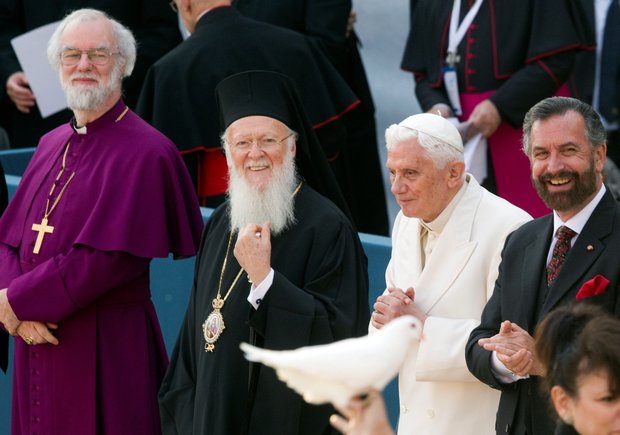
Is summed up nicely by St. John in his first letter.
Beloved: The way we may be sure that we know Jesus is to keep his commandments. Whoever says, “I know him,” but does not keep his commandments is a liar, and the truth is not in him. But whoever keeps his word, the love of God is truly perfected in him. This is the way we may know that we are in union with him: whoever claims to abide in him ought to walk just as he walked.
Beloved, I am writing no new commandment to you but an old commandment that you had from the beginning. The old commandment is the word that you have heard. And yet I do write a new commandment to you, which holds true in him and among you, for the darkness is passing away, and the true light is already shining. Whoever says he is in the light, yet hates his brother, is still in the darkness. Whoever loves his brother remains in the light, and there is nothing in him to cause a fall. Whoever hates his brother is in darkness; he walks in darkness and does not know where he is going because the darkness has blinded his eyes.
The “status quo” in the Holy Places really does need to go, in this case. The “shackles of human history,” that have ensnared the parties involved there since 1853 (and even earlier), need to be left behind.
Perhaps it’s time that the Catholic contingent, represented by the Franciscans, sharing the sites with the Eastern Orthodox and Armenian Apostolic churches, do what the first of these two desert fathers did a long time ago, with wisdom, foresight, and agape:
Two old men had lived together for many years and they had never fought with one another. The first said to the other, “Let us also have a fight like other men.” The other replied, “I do not know how to fight.” The first said to him, “Look, I will put a brick between us and I will say: it is mine; and you will reply: no, it is mine; and so the fight will begin.” So they put a brick between them and the first said, “No, it is mine”, and the other said, “No, it is mine.” And the first replied, “If it is yours, take it and go.” So they gave it up without being able to find a cause for an argument.
Get along, or move along. Because we’ve been warned of the fruitlessness of banging gongs and clashing cymbals.
Just a few minutes ago, for reasons that I don’t even pretend to know, I picked up a book a friend had sent me two years ago. I had not opened it since setting it down shortly after it had first arrived as a gift. Just now, I opened it to where I had left my book mark and this is what I saw,
The practice of virtue means working from and strengthening the capacity for doing good deeds with ease. To do so we have to be constant in our religious observance and obedient to God’s will in each situation. One way to practice virtue—a way Christ taught by word and deed—is to try to take the lowest place so as not to be preferred in things that bring comfort, honor, and ease. We facilitate this practice by doing what we do for God and not looking at the satisfaction we may attain (and do it for that alone) or the dissatisfaction that is bound to come (and omit it for that reason only). In order to promote this doing of what we do for God and not looking at the satisfaction or dissatisfaction we derive, we should be more inclined to do the difficult rather than the easy, the rugged rather than the soft, the distasteful rather than the delightful.
I think I’ll go finish reading that old book after all. And I’ll keep reading another old book, with precepts like these, as well.
you should put away the old self of your former way of life, corrupted through deceitful desires, and be renewed in the spirit of your minds, and put on the new self, created in God’s way in righteousness and holiness of truth.
Amen.
Previous Post

December 30, 2011
Cheap Speed for the Land-Locked Masses!
Next Post
January 2, 2012 Three New Years Resolutions in Song and Truth
Browse Our Archives
Select a Category Blog News Conversion Story Culture Learning Living Nature Prayer Uncategorized Working
Select a Month June 2016 May 2016 August 2015 July 2015 June 2015 May 2015 April 2015 March 2015 February 2015 January 2015 December 2014 November 2014 October 2014 September 2014 August 2014 July 2014 June 2014 May 2014 April 2014 March 2014 February 2014 January 2014 December 2013 November 2013 October 2013 September 2013 August 2013 July 2013 June 2013 May 2013 April 2013 March 2013 February 2013 January 2013 December 2012 November 2012 October 2012 September 2012 August 2012 July 2012 June 2012 May 2012 April 2012 March 2012 February 2012 January 2012 December 2011 November 2011 October 2011 September 2011 August 2011 July 2011 June 2011 May 2011 April 2011 March 2011 February 2011 January 2011 December 2010 November 2010 October 2010 September 2010 August 2010 July 2010 June 2010 May 2010 April 2010 March 2010 February 2010 January 2010 December 2009 November 2009 October 2009 September 2009 August 2009
Follow Us!
TAKE THE
Religious Wisdom Quiz
What food was eaten during the first Passover?
Select your answer to see how you score.
Fish and figs Unleavened bread, bitter herbs, and lamb Barley and honey Roasted quail and dates
Related posts from Why I Am Catholic

Belated Happy Birthday To Blaise Pascal, Unofficial Saint...

Because My Brother Imran Yousef Is An American...

Joe Six-Pack, USMC, With A Few Post-Terrorist Attack...

This Is Why God Invented YouTube...
TRENDING AT PATHEOS Catholic

Rejecting Doom: Christian Hope And Human Action
Christianity is a religion of hope. We are to have hope and...

It’s What Comes From Within Which Matters
One of the most difficult things for us to understand is why...

Why I Choose the Eucharist Over the Sermon
Choose the Eucharist, Not the Sermon What are we supposed to get...

5 Design Elements Found in Spiritually Rooted Homes
Putting Spirituality Into Home Decor Our homes are more than our living...

Credo: A Story of God Told with the...
About 10 years ago, I began to imagine a personal "Credo" that...

The Anatomy of Divine Revelation in Catholic Thought
The claim that God has made Himself known to human beings is...
Ad-Free & Subscriber Log-In Subscription Support
- About Us
- 2026 Calendar
- Videos
- Podcasts
- Library of World Religions
- Faith In Media Tracker
- Advertise With Us
- Write for Us
- Privacy Policy
- Terms of Service
- Do Not Sell My Data
- Contact Us
- Radiant Digital
- Manage Newsletter Subscriptions
- Unsubscribe From Notifications
- Sitemap
Copyright 2008-2026, Patheos. All rights reserved.
Subscription Support Ad-Free & Subscriber Log-In
Follow Patheos