
BuddhistCatholicContemplativeEvangelicalGeneral ChristianHinduJewishLatter-day SaintMuslimNew VisionsProgressive Christian
Beliefs
- Buddhist
- Catholic
- Contemplative
- Evangelical
- General Christian
- Hindu
- Jewish
- Latter-day Saint
- More Voices
- Muslim
- New Visions
- Pagan
- Progressive Christian
Topics
- Religion News
- Food and Religion
- Sports and Religion
- Religious Art
- Religious Music and Entertainment
- Religious Events
- History and Religion
- Style and Religion
- Politics and Religion
- Women in Religion
- Recreation Outdoors and Religion
- Business Finance and Religion
- Careers Workplace and Religion
- Education and Religion
- Family Parenting and Religion
- Health Fitness and Religion
- Home and Religion
- Relationships and Religion
- Technology and Religion
- Travel and Religion
Columnists
- Buddhist Columnists
- Business Finance and Religion Columnists
- Careers Workplace and Religion Columnists
- Catholic Columnists
- Contemplative Columnists
- Education and Religion Columnists
- Evangelists Columnists
- Family Parenting and Religion Columnists
- General Christian Columnists
- Health Fitness and Religion Columnists
- Hindu Columnists
- History and Religion Columnists
- Home and Religion Columnists
- Jewish Columnists
- More Voices Columnists
- Latter Day Columnists
- Muslim Columnists
- New Visions Columnists
- Nonreligious Columnists
- Pagan Columnists
- Politics and Religion Columnists
- Progressive Columnists
- Recreation Outdoors and Religion Columnists
- Relationships and Religion Columnists
- Religion News Columnists
- Religious Art Columnists
- Religious Events Columnists
- Religious Music and Entertainment Columnists
- Sports and Religion Columnists
- Style and Religion Columnists
- Technology and Religion Columnists
- Travel and Religion Columnists
- Women in Religion Columnists
Resource Library
- 2026 Calendar
- Library of World Religions
- The 100 Most Holy Places on Earth
- Patheos Answers
- Podcasts
- Videos
- Faith Leaders Database
- Anglican Episcopalian
- Bahai
- Baptist
- Buddhism
- Christianity
- Confucianism
- Eastern Orthodoxy
- Hinduism
- Holiness and Pentecostal
- ISKCON
- Islam
- Judaism
- Lutheran
- Methodist
- The Church of Jesus Christ of Latter-day Saints
- New Age
- Paganism
- Presbytarian and Reformed
- Protestantism
- Religion Behind the Scenes
- Roman Catholic
- Scientology
- Shia Islam
- Sikhism
- Sufism
- Sunni Islam
- Taoism
- Zen
- See all religions
Research Tools
 Ad-Free & Subscriber Log-In Subscription Support
Ad-Free & Subscriber Log-In Subscription Support
Follow Patheos 

- Trending:
- Forgiveness
- |
- Marriage
- |
- Consciousness
- |
- Death Penalty
- |
- Election
- |
- Halloween
 Why I Am Catholic
-
More
- Home
- Suminagashi! Gesundheit?
Suminagashi! Gesundheit?
Last updated on: January 24, 2017 at 6:16 pm by Frank Weathers
Suminagashi! Gesundheit? 2017-01-24T18:16:23-05:00 Frank Weathers
Patheos Explore the world's faith through different perspectives on religion and spirituality! Patheos has the views of the prevalent religions and spiritualities of the world.
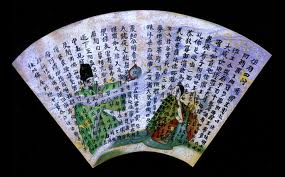
No! It’s an ancient Japanese art form of painting in water and transferring the results to paper. Really. Check this out!
http://www.youtube.com/watch?v=tCamx8vzyCw
Whew! I’m sure glad I don’t know everything. Isn’t that awesome? Dr. Google did a web search and found this too:
The origin and development of marbling was practiced in Japan as early as the 12th century. The first forms of Japanese marbling were called suminagashi, or ink floating. Delicate, swirled patterns were produced on paper when colors of ink were floated on the surface of the water. The artist would drop circles of black and indigo blue ink into the water, then blow on the surface of the water to produce smoke-like patterns. Marbling later became popular with members of the Japanese royal court. They used a slightly different technique to produce suminagashi. They would decorate paper with sumi-ink then immerse the paper in water. As the inks floated to the surface, a beautiful pattern would appear.
During the 15th century, other types of marbling were developed in Turkey and Persia. A type of marbling called Ebru, or cloud art, was practiced. Instead of floating inks on the water, they used paints made of oil or gouache. They also added a thickened medium called size to the water before they began marbling. The addition of size gave the marbler more control over color movement and the creation of patterns. After the paint was dropped into the water, a stylus or comb was used to create patterns.
The art of marbling spread throughout Europe and by the 17th century, England, France, Germany, Holland, and Italy produced marbled papers. However, few people knew how to marble paper and marblers were reluctant to share their knowledge. Various formulas and marbling techniques became guarded secrets. As demand for marbled paper grew, marble guilds were introduced. Master marblers trained apprentices in the various techniques, being careful not to share secret formulas and techniques. English bookbinders were not familiar with the techniques of paper marbling so they imported marbled paper from Holland and Germany. However, the English were reluctant to pay taxes on the paper so the clever Dutch disguised it as wrapping paper for toys that were shipped to England. Although it may have been time consuming, the English book binders pressed the wrinkled sheets of paper in order to use them as endpapers for their books.
In 1853, an English master marbler, Charles Woolnough, revealed the secrets of paper marbling in his book The Art of Marbling. This angered the community of master marblers because it revealed the secrets of the trade. However, once the secrets of paper marbling were made known, his principal rival, James Sumner, published Marbler, or the Mystery Unfolded: Showing How Every Bookbinder May Become a Marbler. In 1894, The Progress of the Marbling Art, written by Joseph Halfer, was printed in America. It gained an enthusiastic following because it simplified the art of paper marbling. Unfortunately, hand binders were replaced by binding machines and the art of paper marbling became an obscure art.
Bibliography: Maurer, Diane. Marbling: A Complete Guide to Creating Beautiful Patterned Papers and Fabrics. New York: Friedman/Fairfax Publishers, 1959.
God made people, and people make art. Thanks be to God.
Previous Post

December 8, 2011
Lines on Pride from Alexander Pope's An Essay On Man
Next Post
December 9, 2011 This Novel By Johnny Cash Helped Me Become Catholic
Browse Our Archives
Select a Category Blog News Conversion Story Culture Learning Living Nature Prayer Uncategorized Working
Select a Month June 2016 May 2016 August 2015 July 2015 June 2015 May 2015 April 2015 March 2015 February 2015 January 2015 December 2014 November 2014 October 2014 September 2014 August 2014 July 2014 June 2014 May 2014 April 2014 March 2014 February 2014 January 2014 December 2013 November 2013 October 2013 September 2013 August 2013 July 2013 June 2013 May 2013 April 2013 March 2013 February 2013 January 2013 December 2012 November 2012 October 2012 September 2012 August 2012 July 2012 June 2012 May 2012 April 2012 March 2012 February 2012 January 2012 December 2011 November 2011 October 2011 September 2011 August 2011 July 2011 June 2011 May 2011 April 2011 March 2011 February 2011 January 2011 December 2010 November 2010 October 2010 September 2010 August 2010 July 2010 June 2010 May 2010 April 2010 March 2010 February 2010 January 2010 December 2009 November 2009 October 2009 September 2009 August 2009
Follow Us!
TAKE THE
Religious Wisdom Quiz
Which Psalm is famous as the "Shepherd's Psalm"?
Select your answer to see how you score.
Psalm 119 Psalm 1 Psalm 23 Psalm 51
Related posts from Why I Am Catholic

Belated Happy Birthday To Blaise Pascal, Unofficial Saint...

Because My Brother Imran Yousef Is An American...

Joe Six-Pack, USMC, With A Few Post-Terrorist Attack...

This Is Why God Invented YouTube...
TRENDING AT PATHEOS Catholic

Rejecting Doom: Christian Hope And Human Action
Christianity is a religion of hope. We are to have hope and...

It’s What Comes From Within Which Matters
One of the most difficult things for us to understand is why...

Why I Choose the Eucharist Over the Sermon
Choose the Eucharist, Not the Sermon What are we supposed to get...

5 Design Elements Found in Spiritually Rooted Homes
Putting Spirituality Into Home Decor Our homes are more than our living...

Credo: A Story of God Told with the...
About 10 years ago, I began to imagine a personal "Credo" that...

The Anatomy of Divine Revelation in Catholic Thought
The claim that God has made Himself known to human beings is...
Ad-Free & Subscriber Log-In Subscription Support
- About Us
- 2026 Calendar
- Videos
- Podcasts
- Library of World Religions
- Faith In Media Tracker
- Advertise With Us
- Write for Us
- Privacy Policy
- Terms of Service
- Do Not Sell My Data
- Contact Us
- Radiant Digital
- Manage Newsletter Subscriptions
- Unsubscribe From Notifications
- Sitemap
Copyright 2008-2026, Patheos. All rights reserved.
Subscription Support Ad-Free & Subscriber Log-In
Follow Patheos