
BuddhistCatholicContemplativeEvangelicalGeneral ChristianHinduJewishLatter-day SaintMuslimNew VisionsProgressive Christian
Beliefs
- Buddhist
- Catholic
- Contemplative
- Evangelical
- General Christian
- Hindu
- Jewish
- Latter-day Saint
- More Voices
- Muslim
- New Visions
- Pagan
- Progressive Christian
Topics
- Religion News
- Food and Religion
- Sports and Religion
- Religious Art
- Religious Music and Entertainment
- Religious Events
- History and Religion
- Style and Religion
- Politics and Religion
- Women in Religion
- Recreation Outdoors and Religion
- Business Finance and Religion
- Careers Workplace and Religion
- Education and Religion
- Family Parenting and Religion
- Health Fitness and Religion
- Home and Religion
- Relationships and Religion
- Technology and Religion
- Travel and Religion
Columnists
- Buddhist Columnists
- Business Finance and Religion Columnists
- Careers Workplace and Religion Columnists
- Catholic Columnists
- Contemplative Columnists
- Education and Religion Columnists
- Evangelists Columnists
- Family Parenting and Religion Columnists
- General Christian Columnists
- Health Fitness and Religion Columnists
- Hindu Columnists
- History and Religion Columnists
- Home and Religion Columnists
- Jewish Columnists
- More Voices Columnists
- Latter Day Columnists
- Muslim Columnists
- New Visions Columnists
- Nonreligious Columnists
- Pagan Columnists
- Politics and Religion Columnists
- Progressive Columnists
- Recreation Outdoors and Religion Columnists
- Relationships and Religion Columnists
- Religion News Columnists
- Religious Art Columnists
- Religious Events Columnists
- Religious Music and Entertainment Columnists
- Sports and Religion Columnists
- Style and Religion Columnists
- Technology and Religion Columnists
- Travel and Religion Columnists
- Women in Religion Columnists
Resource Library
- 2026 Calendar
- Library of World Religions
- The 100 Most Holy Places on Earth
- Patheos Answers
- Podcasts
- Videos
- Faith Leaders Database
- Anglican Episcopalian
- Bahai
- Baptist
- Buddhism
- Christianity
- Confucianism
- Eastern Orthodoxy
- Hinduism
- Holiness and Pentecostal
- ISKCON
- Islam
- Judaism
- Lutheran
- Methodist
- The Church of Jesus Christ of Latter-day Saints
- New Age
- Paganism
- Presbytarian and Reformed
- Protestantism
- Religion Behind the Scenes
- Roman Catholic
- Scientology
- Shia Islam
- Sikhism
- Sufism
- Sunni Islam
- Taoism
- Zen
- See all religions
Research Tools
 Ad-Free & Subscriber Log-In Subscription Support
Ad-Free & Subscriber Log-In Subscription Support
Follow Patheos 

- Trending:
- Forgiveness
- |
- Marriage
- |
- Consciousness
- |
- Death Penalty
- |
- Election
- |
- Halloween
 Why I Am Catholic
-
More
- Home
- For Thoughts on Faith Like These by Thomas Merton
For Thoughts on Faith Like These by Thomas Merton
Last updated on: April 30, 2015 at 11:26 pm by Frank Weathers
For Thoughts on Faith Like These by Thomas Merton 2015-04-30T23:26:34-05:00 Frank Weathers
Patheos Explore the world's faith through different perspectives on religion and spirituality! Patheos has the views of the prevalent religions and spiritualities of the world.
“Holy God, Holy Mighty One, Holy Immortal One, have mercy on us and on the whole world.”
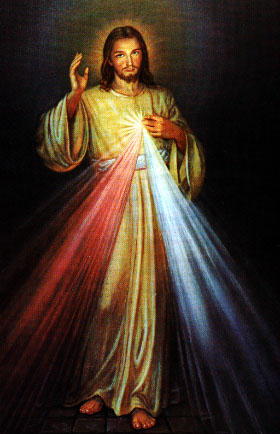
Now, as Pope Benedict has declared the coming year as the Year of Faith, Fr. Louis explains clearly and simply what faith means. What follows are thoughts from the prologue of his “The Silent Life,” published in 1957.
I came across these words a few years ago, when I was reading all I could that Merton had written. When I read them, I couldn’t help changing the words “monk” and “monasticism” to “Catholic” and “Catholicism”, because when I did, they helped answer the statement “Why I Am Catholic” very effectively. Fr. Louis has the floor,
Let us face the fact that the monastic vocation tends to present itself to the modern world as a problem and as a scandal.
In a basically religious culture, like that of India, or of Japan, the monk is more or less taken for granted. When all society is oriented beyond the mere transient quest of business and pleasure, no one is surprised that men should devote their lives to an invisible God.
In a materialistic culture, which is fundamentally irreligious, the monk is incomprehensible because he “produces nothing.” His life appears to be completely useless. Not even Christians have been exempt from anxiety over this apparent “uselessness” of the monk, and we are familiar with the argument that the monastery is a kind of dynamo which, though it does not “produce” grace, procures this infinitely precious spiritual commodity for the world.
The first Fathers of monasticism were concerned with no such arguments, valid though they may be in their proper context. The Fathers did not feel that the search for God was something that needed to be defended. Or rather, they saw that if men did not realize in the first place that God was to be sought, no other defence of monasticism would avail them.
The deepest law in man’s being is his need for God, for life. God is Life. “In Him was life, and the life was the light of men, and the light shineth in the darkness and the darkness comprehended it not” (John 1:5). The deepest need of our darkness is to comprehend the light which shines in the midst of it. Therefore God has given us his first commandment:
Thou shalt love the Lord thy God with thy whole heart, and with thy whole soul, and with all thy strength.
The monastic life is nothing but the life of those who have taken the first commandment in deadly earnest, and have, in the words of St. Benedict, “preferred nothing to the love of Christ.”
But Who is God? Where is He? Is Christian monasticism a search for some pure intuition of the Absolute? A cult of supreme Good? A worship of perfect and changeless Beauty? The very emptiness of such abstractions strikes the heart cold. The Holy One, the Invisible, the Almighty is infinitely greater and more real than any abstraction of man’s devising. But he has said: “No one shall see me and live” (Exodus 33:20). Yet the monk persists in crying out with Moses: “Show me Thy face” (Exodus 33:13).
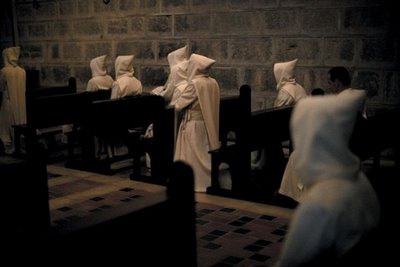
The monk, then, is one who is so intent upon the search for God that he is ready to die in order to see Him. That is why monastic life is a “martyrdom” as well as a “paradise,” a life that is at once “angelic” and “crucified.”
St. Paul resolves the problem: “God who commanded the light to shine out of darkness, hath shined in our hearts to give the light of the knowledge of the glory of God, in the face of Christ Jesus” (2 Corinthians 4:6).
The monastic life is the rejection of all that obstructs the spiritual rays of this mysterious light. The monk is one who leaves behind the fictions and illusions of a merely human spirituality in order to plunge himself in the faith of Christ. Faith is the light which illumines him in mystery. Faith is the power which seizes upon the inner depths of his souls and delivers him up to the action of the divine Spirit, the Spirit of liberty, the Spirit of love. Faith takes him, as the power of God took the ancient prophets, and “stands him upon his feet” (Ezekiel 2:2) before the Lord. The monastic life is the life in the Spirit of Christ, a life in which the Christian gives himself entirely to the love of God which transforms him in the light of Christ.
“The Lord is a Spirit, and where the Spirit of the Lord is, there is liberty. But we all, beholding the glory of the Lord with open face, are transformed into the same image from glory to glory, as by the Spirit of the Lord” (2 Corinthians 3: 17-18).
What St. Paul has said of the inner life of every Christian becomes in all truth the main objective of the monk, living in his solitary cloister. In seeking Christian perfection the monk seeks the fullness of the Christian life, the complete maturity of the Christian faith. For him, “to live is Christ.”
Amen. It’s time to harness our inner monks and crank up the dynamo of prayer.
Previous Post

October 22, 2011
Jackson Pollock Meets Christ?
Next Post
October 24, 2011 Air America, Downey Jr., Gibson & Friends (Music for Mondays)
Browse Our Archives
Select a Category Blog News Conversion Story Culture Learning Living Nature Prayer Uncategorized Working
Select a Month June 2016 May 2016 August 2015 July 2015 June 2015 May 2015 April 2015 March 2015 February 2015 January 2015 December 2014 November 2014 October 2014 September 2014 August 2014 July 2014 June 2014 May 2014 April 2014 March 2014 February 2014 January 2014 December 2013 November 2013 October 2013 September 2013 August 2013 July 2013 June 2013 May 2013 April 2013 March 2013 February 2013 January 2013 December 2012 November 2012 October 2012 September 2012 August 2012 July 2012 June 2012 May 2012 April 2012 March 2012 February 2012 January 2012 December 2011 November 2011 October 2011 September 2011 August 2011 July 2011 June 2011 May 2011 April 2011 March 2011 February 2011 January 2011 December 2010 November 2010 October 2010 September 2010 August 2010 July 2010 June 2010 May 2010 April 2010 March 2010 February 2010 January 2010 December 2009 November 2009 October 2009 September 2009 August 2009
Follow Us!
TAKE THE
Religious Wisdom Quiz
What empire destroyed the Second Temple in Jerusalem?
Select your answer to see how you score.
Roman Assyrian Babylonian Greek
Related posts from Why I Am Catholic

Belated Happy Birthday To Blaise Pascal, Unofficial Saint...

Because My Brother Imran Yousef Is An American...

Joe Six-Pack, USMC, With A Few Post-Terrorist Attack...

This Is Why God Invented YouTube...
TRENDING AT PATHEOS Catholic

Rejecting Doom: Christian Hope And Human Action
Christianity is a religion of hope. We are to have hope and...

It’s What Comes From Within Which Matters
One of the most difficult things for us to understand is why...

Why I Choose the Eucharist Over the Sermon
Choose the Eucharist, Not the Sermon What are we supposed to get...

5 Design Elements Found in Spiritually Rooted Homes
Putting Spirituality Into Home Decor Our homes are more than our living...

Credo: A Story of God Told with the...
About 10 years ago, I began to imagine a personal "Credo" that...

The Anatomy of Divine Revelation in Catholic Thought
The claim that God has made Himself known to human beings is...
Ad-Free & Subscriber Log-In Subscription Support
- About Us
- 2026 Calendar
- Videos
- Podcasts
- Library of World Religions
- Faith In Media Tracker
- Advertise With Us
- Write for Us
- Privacy Policy
- Terms of Service
- Do Not Sell My Data
- Contact Us
- Radiant Digital
- Manage Newsletter Subscriptions
- Unsubscribe From Notifications
- Sitemap
Copyright 2008-2026, Patheos. All rights reserved.
Subscription Support Ad-Free & Subscriber Log-In
Follow Patheos