
BuddhistCatholicContemplativeEvangelicalGeneral ChristianHinduJewishLatter-day SaintMuslimNew VisionsProgressive Christian
Beliefs
- Buddhist
- Catholic
- Contemplative
- Evangelical
- General Christian
- Hindu
- Jewish
- Latter-day Saint
- More Voices
- Muslim
- New Visions
- Pagan
- Progressive Christian
Topics
- Religion News
- Food and Religion
- Sports and Religion
- Religious Art
- Religious Music and Entertainment
- Religious Events
- History and Religion
- Style and Religion
- Politics and Religion
- Women in Religion
- Recreation Outdoors and Religion
- Business Finance and Religion
- Careers Workplace and Religion
- Education and Religion
- Family Parenting and Religion
- Health Fitness and Religion
- Home and Religion
- Relationships and Religion
- Technology and Religion
- Travel and Religion
Columnists
- Buddhist Columnists
- Business Finance and Religion Columnists
- Careers Workplace and Religion Columnists
- Catholic Columnists
- Contemplative Columnists
- Education and Religion Columnists
- Evangelists Columnists
- Family Parenting and Religion Columnists
- General Christian Columnists
- Health Fitness and Religion Columnists
- Hindu Columnists
- History and Religion Columnists
- Home and Religion Columnists
- Jewish Columnists
- More Voices Columnists
- Latter Day Columnists
- Muslim Columnists
- New Visions Columnists
- Nonreligious Columnists
- Pagan Columnists
- Politics and Religion Columnists
- Progressive Columnists
- Recreation Outdoors and Religion Columnists
- Relationships and Religion Columnists
- Religion News Columnists
- Religious Art Columnists
- Religious Events Columnists
- Religious Music and Entertainment Columnists
- Sports and Religion Columnists
- Style and Religion Columnists
- Technology and Religion Columnists
- Travel and Religion Columnists
- Women in Religion Columnists
Resource Library
- 2026 Calendar
- Library of World Religions
- The 100 Most Holy Places on Earth
- Patheos Answers
- Podcasts
- Videos
- Faith Leaders Database
- Anglican Episcopalian
- Bahai
- Baptist
- Buddhism
- Christianity
- Confucianism
- Eastern Orthodoxy
- Hinduism
- Holiness and Pentecostal
- ISKCON
- Islam
- Judaism
- Lutheran
- Methodist
- The Church of Jesus Christ of Latter-day Saints
- New Age
- Paganism
- Presbytarian and Reformed
- Protestantism
- Religion Behind the Scenes
- Roman Catholic
- Scientology
- Shia Islam
- Sikhism
- Sufism
- Sunni Islam
- Taoism
- Zen
- See all religions
Research Tools
 Ad-Free & Subscriber Log-In Subscription Support
Ad-Free & Subscriber Log-In Subscription Support
Follow Patheos 

- Trending:
- Forgiveness
- |
- Marriage
- |
- Consciousness
- |
- Death Penalty
- |
- Election
- |
- Halloween
 Why I Am Catholic
-
More
- Home
- For Thoughts On Being a Christian by the “Chinese Chesterton”
For Thoughts On Being a Christian by the “Chinese Chesterton”
Last updated on: June 7, 2015 at 10:39 pm by Frank Weathers
For Thoughts On Being a Christian by the “Chinese Chesterton” 2015-06-07T22:39:18-05:00 Frank Weathers
Patheos Explore the world's faith through different perspectives on religion and spirituality! Patheos has the views of the prevalent religions and spiritualities of the world.
All wisdom is from the Lord God, and hath been always with him, and is before all time. —Sirach 1:1
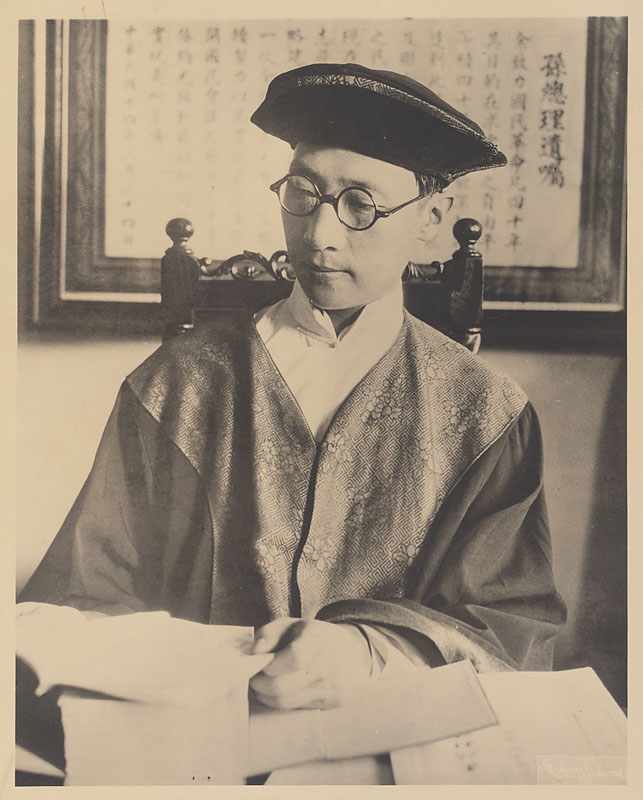
I came across the following thoughts in my friend John C.H. Wu’s book The Interior Carmel: The Threefold Way of Love. Author Frank Sheed called John, a Benedictine Oblate, “the Chinese Chesterton.” The following selection may help you understand why.
I have shared John’s conversion story here before.
What I enjoy about his writing is that he synthesizes the thoughts of many great Christian and Catholic saints, from both scriptural sources as well as from their own written works, with those of other writers from Chinese tradition. Lao Tzu, and Confucius, for example.
John, see, agrees with these thoughts penned by Jacques Maritain, who reminds us that,
All truth belongs of right to Christian thought, as the spoils of the Egyptians to the Hebrews. “Whatever has been well said anywhere belongs to us who are Christians” — because according to that saying of St. Ambrose, which St. Thomas (Aquinas) delighted to quote, “every truth, whoever said it, comes from the Holy Spirit.”
And of St. Paul, who inspired by the Holy Spirit writes,
I became all things to all, to save at least some (1 Corinthians 9:22).
John was an accomplished lawyer and had served as a judge too. So when it comes to the subject of justice, he has a practical leg to stand on. Here are his thoughts, and the thoughts of others, on how mercy is actually justice fulfilled,
from Chapter Five: The Practice of Fraternal Charity,
Mercy as the Fulfillment of Justice

When one realizes the great mission of a Christian, one’s heart cannot help leaping for joy and awe. To be a Christian is to be another Christ, and to be another Christ is to bring good news to the poor, to proclaim release to the captives, to give sight to the blind, to set at liberty the oppressed, and to announce the acceptable year of the Lord.
When I think of the saints, I am often reminded of the following verses of Psalm 83:
Blessed is the man whose help is from Thee,
When he has pilgrimages in his heart.
Passing across a parched valley, they shall make
it a source of wells.
And the first rain shall clothe it with blessings.
They shall go from strength to strength:
They shall see the God of gods in Sion.
Like another Christ, they pass through life doing good.
Sister Elizabeth of the Trinity uttered this prayer: “May I be another humanity added to His own!” I think it is not far from the truth to say that this has been the wish of all the saints throughout the ages, and their lives have been marvelous fulfillments of this single wish.
But this does not mean that their wish has been fulfilled by dint of their efforts alone; the grace of God has aided them. God had mercy on them for their mercifulness to others, and this is why their mercifulness has blossomed forth into such splendid flowers and borne such rich fruits.
Even in this life, only the saints are happy, because they alone have found the home for their souls during their very pilgrimage. The more they love others, the more they are loved by God. They alone enjoy the life of prayer which is “a bath of love into which the soul plunges,” as St. John Vianney of Ars puts it. “God holds the interior soul as a mother holds the the head of her child in her hand to cover it with kisses and caresses.”
Although externally they may suffer all kinds of hardships and afflictions, internally they are being renewed every day. I can never forget this supremely beautiful expression: “good measure, pressed down, shaken together, running over, shall they pour into your lap.” But who are “they?” Not human beings, but the Holy Trinity! The source of their blessings is inexhaustible. This is why it can truly be said of the saints that,
The more they live for others,
the more they have;
The more they give,
the more they receive
(Lao Tse, 81)
There is a great deal of wisdom in the proverb: “To give to the poor is to lend to God.” In fact, Christ has expressly indentified Himself with each and every one of our neighbors, so that to serve our neighbor is, not figuratively but actually, to serve Christ Himself. In the remarkable words of St. John Chrysostom, every neighbor of ours is a living altar of Christ,
This altar you can see everywhere, in the streets and in the market-place, and at any hour you may offer sacrifice thereon; for it too is a place of sacrifice.
To him,
the stone altar is august because of the Victim that rests upon it; but the altar of almsgiving is more so because it is made of this very Victim. The former is august because, though made of stone, it is sanctified by contact with the body of Christ; the latter, because it is the body of Christ.
A similar idea is expressed in the Chinese proverb, “it is better to be kind at home than to burn incense in a distant temple.” In the Buddhist classic, The Dhammapada, I have found an aphorism which it is well for us to take to heart,
The thoughtless man, even if he can recite a large portion of the law, but is not a doer of it, has no share in the priesthood, but is like a cowherd counting the cows of others.
The subtle and organic relations between love of God and love of our neighbor have been brought out in The Dialogue of St. Catherine of Siena, is which God is reported as saying to the saint,
I require that you should love Me with the same love with which I love you. This indeed you cannot do, because I loved you without being loved. All the love you have for Me you owe to Me, so that it is not of grace that you love Me, but because you ought to do so. While I love you with grace, and not because I owe you My love.
Therefore, to Me, in person, you cannot repay the love which I require of you, and I have placed you in the midst of your fellows, that you may do to them that which you cannot do to Me, that is to say, that you may love your neighbor as of free grace, without expecting any return from him, and what you do to him, I count as done to Me, which My Truth showed forth when He said to Paul, My persecutor, “Saul, Saul why persecutest thou Me?” This He said, judging that Paul persecuted Him in His faithful.
This is one of the highest flights in the firmament of Christian mysticism. The lesson is clearly brought home to us. That to be just to God, we must be merciful to men. Our fraternal charity is the fulfillment of our filial piety towards God. When a mother sees her children quarrel with one another, what is more natural than for her to say, “My dear children, if you love me, don’t quarrel like this, for it rends my heart to see you hate each other.”
Now the heart of God is more merciful than the heart of a mother. Did He not say through Isaiah, “Can a woman forget her infant, so as not to have pity on the son of her womb? And if she should forget, yet not will I forget thee (Isaiah 49.15). How indispensible the practice of fraternal charity is to the attainment of union with the will of God.
This is clearly brought out by St. Teresa of Avila in her treatment of the Fifth Mansions, which seem to me to correspond to the Beatitude of mercifulness. She says,
When I see people very diligently trying to discover what kind of prayer they are experiencing and so completely wrapped up in their prayers that they seem afraid to stir, or to indulge in a moment’s thought, lest they should lose the slightest degree of the tenderness and devotion which they have been feeling, I realize how little they understand of the road to attainment of union. They think the whole thing consists in this.
But no, sisters, no; what the Lord desires is works. If you see a sick woman to whom you can give some help, never be affected by the fear that your devotion will suffer, but take pity on her. If she is in pain, you should feel pain too. If necessary, fast so that she may have your food, not so much for her sake as because you know it to be your Lord’s will.
This is true union with His will. Again, if you hear someone being highly praised, be much more pleased than if they were praising you; this is really easy if you have humility, for in that case you will be sorry to hear yourself praised.

Previous Post

August 31, 2011
To Help Make A Movie? Why Not!
Next Post
September 1, 2011 The Fig Harvest Begins!
Browse Our Archives
Select a Category Blog News Conversion Story Culture Learning Living Nature Prayer Uncategorized Working
Select a Month June 2016 May 2016 August 2015 July 2015 June 2015 May 2015 April 2015 March 2015 February 2015 January 2015 December 2014 November 2014 October 2014 September 2014 August 2014 July 2014 June 2014 May 2014 April 2014 March 2014 February 2014 January 2014 December 2013 November 2013 October 2013 September 2013 August 2013 July 2013 June 2013 May 2013 April 2013 March 2013 February 2013 January 2013 December 2012 November 2012 October 2012 September 2012 August 2012 July 2012 June 2012 May 2012 April 2012 March 2012 February 2012 January 2012 December 2011 November 2011 October 2011 September 2011 August 2011 July 2011 June 2011 May 2011 April 2011 March 2011 February 2011 January 2011 December 2010 November 2010 October 2010 September 2010 August 2010 July 2010 June 2010 May 2010 April 2010 March 2010 February 2010 January 2010 December 2009 November 2009 October 2009 September 2009 August 2009
Follow Us!
TAKE THE
Religious Wisdom Quiz
In the Parable of the Wise and Foolish Virgins, what did the wise bring?
Select your answer to see how you score.
Wine Bread Extra oil New clothes
Related posts from Why I Am Catholic

Belated Happy Birthday To Blaise Pascal, Unofficial Saint...

Because My Brother Imran Yousef Is An American...

Joe Six-Pack, USMC, With A Few Post-Terrorist Attack...

This Is Why God Invented YouTube...
TRENDING AT PATHEOS Catholic

Rejecting Doom: Christian Hope And Human Action
Christianity is a religion of hope. We are to have hope and...

It’s What Comes From Within Which Matters
One of the most difficult things for us to understand is why...

Why I Choose the Eucharist Over the Sermon
Choose the Eucharist, Not the Sermon What are we supposed to get...

5 Design Elements Found in Spiritually Rooted Homes
Putting Spirituality Into Home Decor Our homes are more than our living...

Credo: A Story of God Told with the...
About 10 years ago, I began to imagine a personal "Credo" that...

The Anatomy of Divine Revelation in Catholic Thought
The claim that God has made Himself known to human beings is...
Ad-Free & Subscriber Log-In Subscription Support
- About Us
- 2026 Calendar
- Videos
- Podcasts
- Library of World Religions
- Faith In Media Tracker
- Advertise With Us
- Write for Us
- Privacy Policy
- Terms of Service
- Do Not Sell My Data
- Contact Us
- Radiant Digital
- Manage Newsletter Subscriptions
- Unsubscribe From Notifications
- Sitemap
Copyright 2008-2026, Patheos. All rights reserved.
Subscription Support Ad-Free & Subscriber Log-In
Follow Patheos