
BuddhistCatholicContemplativeEvangelicalGeneral ChristianHinduJewishLatter-day SaintMuslimNew VisionsProgressive Christian
Beliefs
- Buddhist
- Catholic
- Contemplative
- Evangelical
- General Christian
- Hindu
- Jewish
- Latter-day Saint
- More Voices
- Muslim
- New Visions
- Pagan
- Progressive Christian
Topics
- Religion News
- Food and Religion
- Sports and Religion
- Religious Art
- Religious Music and Entertainment
- Religious Events
- History and Religion
- Style and Religion
- Politics and Religion
- Women in Religion
- Recreation Outdoors and Religion
- Business Finance and Religion
- Careers Workplace and Religion
- Education and Religion
- Family Parenting and Religion
- Health Fitness and Religion
- Home and Religion
- Relationships and Religion
- Technology and Religion
- Travel and Religion
Columnists
- Buddhist Columnists
- Business Finance and Religion Columnists
- Careers Workplace and Religion Columnists
- Catholic Columnists
- Contemplative Columnists
- Education and Religion Columnists
- Evangelists Columnists
- Family Parenting and Religion Columnists
- General Christian Columnists
- Health Fitness and Religion Columnists
- Hindu Columnists
- History and Religion Columnists
- Home and Religion Columnists
- Jewish Columnists
- More Voices Columnists
- Latter Day Columnists
- Muslim Columnists
- New Visions Columnists
- Nonreligious Columnists
- Pagan Columnists
- Politics and Religion Columnists
- Progressive Columnists
- Recreation Outdoors and Religion Columnists
- Relationships and Religion Columnists
- Religion News Columnists
- Religious Art Columnists
- Religious Events Columnists
- Religious Music and Entertainment Columnists
- Sports and Religion Columnists
- Style and Religion Columnists
- Technology and Religion Columnists
- Travel and Religion Columnists
- Women in Religion Columnists
Resource Library
- 2026 Calendar
- Library of World Religions
- The 100 Most Holy Places on Earth
- Patheos Answers
- Podcasts
- Videos
- Faith Leaders Database
- Anglican Episcopalian
- Bahai
- Baptist
- Buddhism
- Christianity
- Confucianism
- Eastern Orthodoxy
- Hinduism
- Holiness and Pentecostal
- ISKCON
- Islam
- Judaism
- Lutheran
- Methodist
- The Church of Jesus Christ of Latter-day Saints
- New Age
- Paganism
- Presbytarian and Reformed
- Protestantism
- Religion Behind the Scenes
- Roman Catholic
- Scientology
- Shia Islam
- Sikhism
- Sufism
- Sunni Islam
- Taoism
- Zen
- See all religions
Research Tools
 Ad-Free & Subscriber Log-In Subscription Support
Ad-Free & Subscriber Log-In Subscription Support
Follow Patheos 

- Trending:
- Forgiveness
- |
- Marriage
- |
- Consciousness
- |
- Death Penalty
- |
- Election
- |
- Halloween
 Why I Am Catholic
-
More
- Home
- Because it is Only Rational That One Should Submit to Guidance
Because it is Only Rational That One Should Submit to Guidance
Last updated on: June 7, 2015 at 10:39 pm by Frank Weathers
Because it is Only Rational That One Should Submit to Guidance 2015-06-07T22:39:20-05:00 Frank Weathers
Patheos Explore the world's faith through different perspectives on religion and spirituality! Patheos has the views of the prevalent religions and spiritualities of the world.
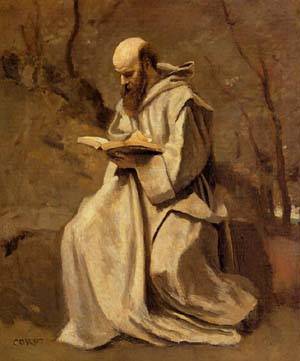
I’ve shared in this space thoughts on private interpretation of the scriptures before. Stuff from the Treasure Chest, like the article written by Father Bampfield for the Catholic Truth Society. I’ve even shared my own thoughts on this subject by way of my experience with land navigation and map reading skills.
I’ve been flipping through my new favorite classic, The Catholic’s Ready Answer, which I introduced to you this morning. Here again are Jesuit Fathers Michael P. Hill, and F. X. Brors (how is that surname pronounced?!), using their god-given ability to reason, along with God’s grace-filled gift of faith, to explain clearly, succinctly, and definitively, the Catholic approach to interpreting the Bible.
Think, “The Church interprets the Bible, as the Supreme Court of the United States interprets the Constitution”, and you’ll understand the Catholic position in a New York minute. First up? How I was taught as a child, followed by what I learned as a man (and by faith and reason knew what must be true). Common sense, and clear teaching, is coming your way.
BIBLE INTERPRETATIONS
Protestant Position:
—The Bible teaches all necessary truth to all who approach the study of it in the right spirit. In the Scriptures God speaks to the human soul, and no interpreter of His words is needed but the soul itself, enlightened by the Holy Spirit.
Catholic Position:
—The above, if we mistake not, is a fair statement of the Protestant view of private interpretation. It differs essentially from the Catholic principle, according to which private interpretation is controlled by the authority of a divinely established Church.
But now a question: What are the grounds of the Protestant position? As the Bible is the Protestant’s final rule of faith, he should be able to quote chapter and verse for this as well as for any other article of his faith. Where in the whole compass of the sacred writings is there a passage enunciating the principle of private and independent interpretation? There are passages in abundance setting forth the benefits resulting from a reading of the Word of God, but none which declare that the individual reader is independent of all control in his interpretation of it.

In opposing such independence we do not mean to imply that the Bible is simply an unintelligible book. Quite the contrary, many parts of Scripture are plain narratives of matters of fact, and the more obvious sense of the text is the true one, or at least one true one. But other parts of the Bible abound in mysteries, or in other obscurities of one kind or another. This was doubtless the case even in the original version of the several books; but what shall we say of the modern translations—the imperfect medium through which all but a few readers get a glimpse of the revealed truth?
Now, is it likely that every chance reader, however good his disposition, possesses a “key to the Scriptures” and sees his way through all their obscurity of thought and expression? Is it not to be feared that the assumption of such power of interpretation will have injurious, and in some cases even disastrous, effects upon the reader? St. Peter the apostle, speaking of the epistles of St. Paul, says of them that they “contain certain things hard to be understood, which the unlearned and unstable wrest, as they do also the other Scriptures, to their own destruction” (2 Peter iii. 16). If this declaration, made by no less an authority than St. Peter, and to the very people to whom the epistles of St. Paul were addressed, was justified at the time, is it not to be feared that now, after twenty centuries, the same causes are producing even worse effects?
The Apostle here mentions two effects which he traces to three causes. The two effects are: 1. The wresting— that is to say, the twisting or distorting—of the meaning of Scripture; 2. The spiritual self-destruction of the reader. The causes are: 1. The intrinsic difficulties of the text; 2. Ignorance; 3. Instability (unsteadfastness, as it reads in the Revised Version). The same three causes are in operation to-day, and doubtless tend, in varying degrees, to produce the same effects. The text, with its intrinsic difficulties, remains. Ignorance remains; for the three R’s are the highest reach of knowledge for millions; and what special insight into Scripture is furnished by the three R’s?
But have not some gone much farther than the three R’s? Surely; they have learned their chemistry, or their physics, or their mathematics. But none of these sciences furnish a key to the obscurities of St. Paul. But have we no theologians or exegetes? Certainly we have; and they have helped us not a little to understand the sacred volume; but if we may believe Dr. Littledale it was just from this class that most of the ancient heresies took their rise; and all the theology in the world can not, of itself, secure a man from that instability of which St. Paul speaks—that is to say, from that intellectual and moral giddiness which often accompanies the greatest learning.
But, our opponents will tell us, at least let a man approach the reading of the Scriptures in a prayerful spirit, and he may expect to receive interior illumination. Doubtless a prayerful reading of Scripture has produced much insight into the meaning of the sacred text. But let us not mistake the issue in the present discussion. We do not deny the possibility of personal illumination. God, from the beginning, has deigned to speak to the individual soul. But—and this is the most important thing we have to say in the present article—there is nothing more illusory than the impression of having been enlightened from on high; and in the whole course of religious history nothing has proved more pernicious than the seeing in supposed illumination a practical rule of faith or of conduct.
Where God does really enlighten, no one can enlighten so well; but it is one thing to be enlightened, another to think one is enlightened. Many of our Catholic saints have received what they have described as marvelous illumination, but none were more distrustful of such illumination than the very recipients of it. And yet just the contrary has been the case with those leaders of men from Luther to Mrs. Eddy who have confidently proclaimed a special illumination in their interpretation of Scripture. And when we see the number of such claimants to inspirationand compare their clashing creeds—all based on the same Word of God—and listen to the war of words in which each denounces all the others, we begin to see the utter hollowness of the theory of private interpretation.
Religious chaos was never intended to be the result of the preaching of the Christian revelation. And yet chaos is the necessary result of Christian preaching when it is based on private interpretation. But worse than chaos are the ultimate logical consequences of the theory, for amidst the chaos at least some fragments of the truth remain; but even these are destined to disappear under the powerful solvent of independent judgment. The principle of private judgment is to-day working itself out most consistently in the land of its origin. In Germany individual judgment, even amongst the ministers of religion, who are supposed to have committed themselves to a fixed creed, is rapidly dissolving the fabric of Christianity itself.
Personal illumination is, therefore, in no absolute sense a safe guide. In one’s meditation on Scripture one may, of course, feel that reflection throws some light upon words or sentences heretofore obscure; many sound conclusions may be drawn; spiritual insight may increase; but still, considering that there are many things in Scripture “hard to be understood,” and that so many readers of Scripture have been mistaken in their interpretations, it is only rational that one should submit to guidance, if a guide can be found. And that a guide has been provided by a kind Providence can not be matter of doubt when one reflects on the unspeakable wisdom displayed in all God’s works and, on the other hand, on the sad consequences which are seen to follow the rejection of authority in so important a matter as the interpretation of the word of God.
Evidently, then, there is an infallible interpreter appointed by God Himself; and that infallible interpreter can be no other than the Church of Christ, which St. Paul tells us is “the pillar and ground of truth.” (1 Tim. iii. 15.)
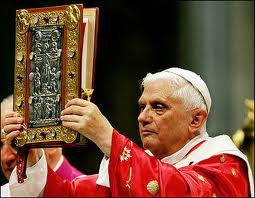
If that sounds sort of like “We Hold These Truths to be Self-Evident: no one person can interpret Scriptures,” then so be it. Because the Holy Father wants you to read the Bible.

Previous Post

July 11, 2011
For Books By Dead Jesuits, Like The Catholic's Ready Answer
Next Post
July 12, 2011 Thoughts on Obedience and Reading Maps without Guidance
Browse Our Archives
Select a Category Blog News Conversion Story Culture Learning Living Nature Prayer Uncategorized Working
Select a Month June 2016 May 2016 August 2015 July 2015 June 2015 May 2015 April 2015 March 2015 February 2015 January 2015 December 2014 November 2014 October 2014 September 2014 August 2014 July 2014 June 2014 May 2014 April 2014 March 2014 February 2014 January 2014 December 2013 November 2013 October 2013 September 2013 August 2013 July 2013 June 2013 May 2013 April 2013 March 2013 February 2013 January 2013 December 2012 November 2012 October 2012 September 2012 August 2012 July 2012 June 2012 May 2012 April 2012 March 2012 February 2012 January 2012 December 2011 November 2011 October 2011 September 2011 August 2011 July 2011 June 2011 May 2011 April 2011 March 2011 February 2011 January 2011 December 2010 November 2010 October 2010 September 2010 August 2010 July 2010 June 2010 May 2010 April 2010 March 2010 February 2010 January 2010 December 2009 November 2009 October 2009 September 2009 August 2009
Follow Us!
TAKE THE
Religious Wisdom Quiz
Who said, "Choose for yourselves this day whom you will serve"?
Select your answer to see how you score.
Gideon Solomon Joshua Moses
Related posts from Why I Am Catholic

Belated Happy Birthday To Blaise Pascal, Unofficial Saint...

Because My Brother Imran Yousef Is An American...

Because of G.K. Chesterton (29 May, 1874 – 14 June, 1936)

Joe Six-Pack, USMC, With A Few Post-Terrorist Attack...
TRENDING AT PATHEOS Catholic

Rejecting Doom: Christian Hope And Human Action
Christianity is a religion of hope. We are to have hope and...

It’s What Comes From Within Which Matters
One of the most difficult things for us to understand is why...

Why I Choose the Eucharist Over the Sermon
Choose the Eucharist, Not the Sermon What are we supposed to get...

5 Design Elements Found in Spiritually Rooted Homes
Putting Spirituality Into Home Decor Our homes are more than our living...

Credo: A Story of God Told with the...
About 10 years ago, I began to imagine a personal "Credo" that...

The Anatomy of Divine Revelation in Catholic Thought
The claim that God has made Himself known to human beings is...
Ad-Free & Subscriber Log-In Subscription Support
- About Us
- 2026 Calendar
- Videos
- Podcasts
- Library of World Religions
- Faith In Media Tracker
- Advertise With Us
- Write for Us
- Privacy Policy
- Terms of Service
- Do Not Sell My Data
- Contact Us
- Radiant Digital
- Manage Newsletter Subscriptions
- Unsubscribe From Notifications
- Sitemap
Copyright 2008-2026, Patheos. All rights reserved.
Subscription Support Ad-Free & Subscriber Log-In
Follow Patheos