
BuddhistCatholicContemplativeEvangelicalGeneral ChristianHinduJewishLatter-day SaintMuslimNew VisionsProgressive Christian
Beliefs
- Buddhist
- Catholic
- Contemplative
- Evangelical
- General Christian
- Hindu
- Jewish
- Latter-day Saint
- More Voices
- Muslim
- New Visions
- Pagan
- Progressive Christian
Topics
- Religion News
- Food and Religion
- Sports and Religion
- Religious Art
- Religious Music and Entertainment
- Religious Events
- History and Religion
- Style and Religion
- Politics and Religion
- Women in Religion
- Recreation Outdoors and Religion
- Business Finance and Religion
- Careers Workplace and Religion
- Education and Religion
- Family Parenting and Religion
- Health Fitness and Religion
- Home and Religion
- Relationships and Religion
- Technology and Religion
- Travel and Religion
Columnists
- Buddhist Columnists
- Business Finance and Religion Columnists
- Careers Workplace and Religion Columnists
- Catholic Columnists
- Contemplative Columnists
- Education and Religion Columnists
- Evangelists Columnists
- Family Parenting and Religion Columnists
- General Christian Columnists
- Health Fitness and Religion Columnists
- Hindu Columnists
- History and Religion Columnists
- Home and Religion Columnists
- Jewish Columnists
- More Voices Columnists
- Latter Day Columnists
- Muslim Columnists
- New Visions Columnists
- Nonreligious Columnists
- Pagan Columnists
- Politics and Religion Columnists
- Progressive Columnists
- Recreation Outdoors and Religion Columnists
- Relationships and Religion Columnists
- Religion News Columnists
- Religious Art Columnists
- Religious Events Columnists
- Religious Music and Entertainment Columnists
- Sports and Religion Columnists
- Style and Religion Columnists
- Technology and Religion Columnists
- Travel and Religion Columnists
- Women in Religion Columnists
Resource Library
- 2026 Calendar
- Library of World Religions
- The 100 Most Holy Places on Earth
- Patheos Answers
- Podcasts
- Videos
- Faith Leaders Database
- Anglican Episcopalian
- Bahai
- Baptist
- Buddhism
- Christianity
- Confucianism
- Eastern Orthodoxy
- Hinduism
- Holiness and Pentecostal
- ISKCON
- Islam
- Judaism
- Lutheran
- Methodist
- The Church of Jesus Christ of Latter-day Saints
- New Age
- Paganism
- Presbytarian and Reformed
- Protestantism
- Religion Behind the Scenes
- Roman Catholic
- Scientology
- Shia Islam
- Sikhism
- Sufism
- Sunni Islam
- Taoism
- Zen
- See all religions
Research Tools
 Ad-Free & Subscriber Log-In Subscription Support
Ad-Free & Subscriber Log-In Subscription Support
Follow Patheos 

- Trending:
- Forgiveness
- |
- Marriage
- |
- Consciousness
- |
- Death Penalty
- |
- Election
- |
- Halloween
 Why I Am Catholic
-
More
- Home
- Because of Christian Monasticism
Because of Christian Monasticism
Last updated on: June 7, 2015 at 10:39 pm by Frank Weathers
Because of Christian Monasticism 2015-06-07T22:39:22-05:00 Frank Weathers
Patheos Explore the world's faith through different perspectives on religion and spirituality! Patheos has the views of the prevalent religions and spiritualities of the world.
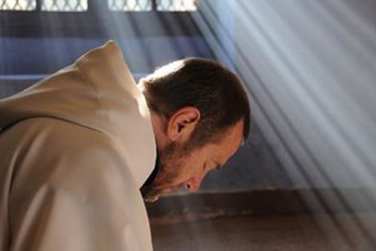
—Feast of St. Benedict the African
I’ve written here before that one of the many reasons that I became a Catholic was because of the Desert Fathers and Mothers. But the reason goes deeper than just this historical one-off.
You see, one of the reasons that I became a Catholic was because of monks and nuns who have given up everything to follow Christ and God and still do so to this day. I admit that I used to think folks who did this were nuts. But a close reading of scriptures show that it isn’t.
Recently, I found a book written by a Paulist Father named Bertrand Louis Conway that helps explain the reasons why this practice isn’t strange, but very Christian. Fr. Conway called his book Studies in Church History and he wrote it in response to questions from non-Catholics that came up all the time while he was conducting missions in the Paulist’s missionary field. In case you didn’t know, that field is here in the United States only.
The excerpt below is from the first chapter of the book. This will get you started,
from Studies in Church History
Christian Asceticism in the First Three Centuries
It is true that the ascetic teaching of Jesus does not hold the predominant place in the Gospels which our rationalistic critics think necessary for our defense of monasticism. But Our Lord did not come to establish a community of monks pledged to the highest degree of perfection, but to found a Church for all men. Our Lord’s general moral teaching was undoubtedly most sublime. Christians are to be perfect as their Heavenly Father is perfect; they are all called upon to live a life of self-denial, sacrifice, renouncement, and suffering.
His words are: “I came not to send peace but the sword. … He that taketh not up his cross is not worthy of Me.” “He that shall lose his life for My sake shall find it.” “If any man come to Me and hate not his father and mother, and wife, and children, and brethren, and sisters, yea, and his own life also, he cannot be My disciple.” Self-denial is an essential characteristic of the true follower of Jesus, and in times of persecution, such as He evidently had in mind in the above texts, this self-denial was to be heroic even unto death.
But there are other teachings of our Savior intended only for an elite few. They are in no sense commandments for the multitude, but counsels left to the free choice of those who were to follow Him more intimately in the way of perfection. Protestantism, cursed with the worldly taint of a merely human gospel, has ever ignored Our Lord’s teaching on the counsels. That is the chief reason of its bitter hatred of monasticism and the religious life. That is why the liberal Protestants of today do their utmost to trace the origin of asceticism to a pagan philosophy or a pagan religion.
Jesus mentioned the counsel of chastity in the nineteenth chapter of St. Matthew’s Gospel. He was restoring marriage to its primitive purity, and prohibiting divorce even in the case of adultery. When, in view of this strict teaching, the disciples declared: “It is not expedient to marry,” Jesus took occasion of their remonstrance to set forth clearly the practice of celibacy “for the kingdom of heaven.” The prohibition of divorce is a commandment for all Christians;he practice of celibacy is a counsel for the elite few. “He that can take, let him take it.”
Some nonCatholic scholars arbitrarily try to show that these last words of Our Lord refer to the indissolubility of marriage, while others think it strange that our Lord should recommend celibacy while extolling marriage. The first theory does violence to the context, while the second sees opposition where in reality none exists. It is unquestionably true that Our Lord’s counsel of celibacy marks the beginnings of asceticism, for virginity is its basic and essential element. Asceticism is possible even when the other practices that generally accompany virginity are absent; but without virginity it does not and cannot exist.
Jesus counseled poverty even more explicitly. He said: “Do not possess gold, nor silver, nor money in your purses.” “Take nothing for your journey, neither staff, nor scrip, nor bread, nor money.” “Sell what you possess and give alms.” “Every one that doth not renounce all that he possesseth cannot be My disciple.” “If thou wilt be perfect, go sell what thou hast, and give to the poor.”
He did not give a command to the rich young man, but clearly made an appeal to his generosity: “If thou wilt be perfect” are His words. Finally, Jesus asked His chosen ones to renounce their own wills, “to deny themselves and to take up their cross.” Harnack ( a Protestant author) is wrong in declaring that the Catholic Church teaches two different moral codes, one for the multitude, and another for the monk who stands for a higher type of perfection. The difference between them is merely a difference of degree, or rather of means. Both have the same end in view, viz., the love of God and the love of the neighbor for God’s sake.
Read the rest, with all the footnotes, at the YIMCatholic Bookshelf.

Previous Post

April 2, 2011
To Give Thanks to the Life of My Aunt Dora
Next Post
April 4, 2011 For All The Saints: Isidore of Seville (Once Again)
Browse Our Archives
Select a Category Blog News Conversion Story Culture Learning Living Nature Prayer Uncategorized Working
Select a Month June 2016 May 2016 August 2015 July 2015 June 2015 May 2015 April 2015 March 2015 February 2015 January 2015 December 2014 November 2014 October 2014 September 2014 August 2014 July 2014 June 2014 May 2014 April 2014 March 2014 February 2014 January 2014 December 2013 November 2013 October 2013 September 2013 August 2013 July 2013 June 2013 May 2013 April 2013 March 2013 February 2013 January 2013 December 2012 November 2012 October 2012 September 2012 August 2012 July 2012 June 2012 May 2012 April 2012 March 2012 February 2012 January 2012 December 2011 November 2011 October 2011 September 2011 August 2011 July 2011 June 2011 May 2011 April 2011 March 2011 February 2011 January 2011 December 2010 November 2010 October 2010 September 2010 August 2010 July 2010 June 2010 May 2010 April 2010 March 2010 February 2010 January 2010 December 2009 November 2009 October 2009 September 2009 August 2009
Follow Us!
TAKE THE
Religious Wisdom Quiz
Who was the Roman governor who sentenced Jesus to be crucified?
Select your answer to see how you score.
Felix Herod Pontius Pilate Agrippa
Related posts from Why I Am Catholic

Belated Happy Birthday To Blaise Pascal, Unofficial Saint...

Because My Brother Imran Yousef Is An American...

Because of G.K. Chesterton (29 May, 1874 – 14 June, 1936)

Joe Six-Pack, USMC, With A Few Post-Terrorist Attack...
TRENDING AT PATHEOS Catholic

Rejecting Doom: Christian Hope And Human Action
Christianity is a religion of hope. We are to have hope and...

It’s What Comes From Within Which Matters
One of the most difficult things for us to understand is why...

Why I Choose the Eucharist Over the Sermon
Choose the Eucharist, Not the Sermon What are we supposed to get...

5 Design Elements Found in Spiritually Rooted Homes
Putting Spirituality Into Home Decor Our homes are more than our living...

Credo: A Story of God Told with the...
About 10 years ago, I began to imagine a personal "Credo" that...

The Anatomy of Divine Revelation in Catholic Thought
The claim that God has made Himself known to human beings is...
Ad-Free & Subscriber Log-In Subscription Support
- About Us
- 2026 Calendar
- Videos
- Podcasts
- Library of World Religions
- Faith In Media Tracker
- Advertise With Us
- Write for Us
- Privacy Policy
- Terms of Service
- Do Not Sell My Data
- Contact Us
- Radiant Digital
- Manage Newsletter Subscriptions
- Unsubscribe From Notifications
- Sitemap
Copyright 2008-2026, Patheos. All rights reserved.
Subscription Support Ad-Free & Subscriber Log-In
Follow Patheos