
BuddhistCatholicContemplativeEvangelicalGeneral ChristianHinduJewishLatter-day SaintMuslimNew VisionsProgressive Christian
Beliefs
- Buddhist
- Catholic
- Contemplative
- Evangelical
- General Christian
- Hindu
- Jewish
- Latter-day Saint
- More Voices
- Muslim
- New Visions
- Pagan
- Progressive Christian
Topics
- Religion News
- Food and Religion
- Sports and Religion
- Religious Art
- Religious Music and Entertainment
- Religious Events
- History and Religion
- Style and Religion
- Politics and Religion
- Women in Religion
- Recreation Outdoors and Religion
- Business Finance and Religion
- Careers Workplace and Religion
- Education and Religion
- Family Parenting and Religion
- Health Fitness and Religion
- Home and Religion
- Relationships and Religion
- Technology and Religion
- Travel and Religion
Columnists
- Buddhist Columnists
- Business Finance and Religion Columnists
- Careers Workplace and Religion Columnists
- Catholic Columnists
- Contemplative Columnists
- Education and Religion Columnists
- Evangelists Columnists
- Family Parenting and Religion Columnists
- General Christian Columnists
- Health Fitness and Religion Columnists
- Hindu Columnists
- History and Religion Columnists
- Home and Religion Columnists
- Jewish Columnists
- More Voices Columnists
- Latter Day Columnists
- Muslim Columnists
- New Visions Columnists
- Nonreligious Columnists
- Pagan Columnists
- Politics and Religion Columnists
- Progressive Columnists
- Recreation Outdoors and Religion Columnists
- Relationships and Religion Columnists
- Religion News Columnists
- Religious Art Columnists
- Religious Events Columnists
- Religious Music and Entertainment Columnists
- Sports and Religion Columnists
- Style and Religion Columnists
- Technology and Religion Columnists
- Travel and Religion Columnists
- Women in Religion Columnists
Resource Library
- 2026 Calendar
- Library of World Religions
- The 100 Most Holy Places on Earth
- Patheos Answers
- Podcasts
- Videos
- Faith Leaders Database
- Anglican Episcopalian
- Bahai
- Baptist
- Buddhism
- Christianity
- Confucianism
- Eastern Orthodoxy
- Hinduism
- Holiness and Pentecostal
- ISKCON
- Islam
- Judaism
- Lutheran
- Methodist
- The Church of Jesus Christ of Latter-day Saints
- New Age
- Paganism
- Presbytarian and Reformed
- Protestantism
- Religion Behind the Scenes
- Roman Catholic
- Scientology
- Shia Islam
- Sikhism
- Sufism
- Sunni Islam
- Taoism
- Zen
- See all religions
Research Tools
 Ad-Free & Subscriber Log-In Subscription Support
Ad-Free & Subscriber Log-In Subscription Support
Follow Patheos 

- Trending:
- Forgiveness
- |
- Marriage
- |
- Consciousness
- |
- Death Penalty
- |
- Election
- |
- Halloween
 Why I Am Catholic
-
More
- Home
- For All the Sacramentals: Crosses and Crucifixes
For All the Sacramentals: Crosses and Crucifixes
Last updated on: January 24, 2017 at 6:28 pm by Frank Weathers
For All the Sacramentals: Crosses and Crucifixes 2017-01-24T18:28:53-05:00 Frank Weathers
Patheos Explore the world's faith through different perspectives on religion and spirituality! Patheos has the views of the prevalent religions and spiritualities of the world.
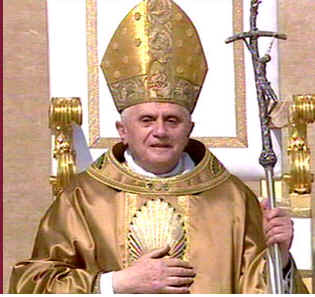
Today I’m sharing more on sacramentals from Fr. John F. Sullivan’s little text book called The Visible Church. What is a sacramental? They are “objects set apart and blessed by the Church to excite good thoughts and to increase devotion, and through these movements of the heart to remit venial sin.”
Today we turn to the symbol that all Christians know, love, and revere.
It is the Cross, the instrument that was used to kill the Son of God. And in this lesson, Fr. John explains the history of crosses, their types, both pagan and Christian, and even the difference between crosses and crucifixes.
The Cross and the Crucifix
The Cross is the most important of Catholic emblems. It symbolizes the redemption of mankind and our holy faith, because Jesus Christ, our Redeemer and our God, died on a cross. It is used on our churches, schools, institutions, altars, vestments, etc., as a symbolic ornament; and when blessed, either as a cross or a crucifix, it becomes a great sacramental of our religion.
Among many nations, in ancient times, crosses were used for the execution of criminals. But even among pagan nations the cross was held in religious honor. The most ancient form was the swastika, emblematic of the revolutions of the sun, and consequently of life. In Egypt and Assyria the cross typified creative power; the Egyptian gods are often represented holding a crux ansata, or cross with a handle, an emblem of the reproductive powers of Nature. In India, Mexico and Peru, crosses were in use with the same symbolic meaning.
The True Cross, on which our Saviour died, is said to have been discovered by St. Helena, the mother of the Emperor Constantine, at Jerusalem, in the year 326, and the Church celebrates this by a festival, the Finding of the Holy Cross, on the third of May. There is also a feast of the Exaltation of the Holy Cross on the fourteenth of September.
A part of the True Cross is said to be preserved in the Church of Santa Croce (the Holy Cross), in Rome, and various other places claim to possess fragments of it or the nails used at the crucifixion.
The Kinds of Crosses

The principal varieties of crosses used in Christian art and architecture are as follows:
1. The ordinary form, called the Latin cross, or crux capitata (headed cross).
2. The Greek cross, having the four limbs of equal length—so named because it was much used in later Greek architecture.
3. The St. Andrew’s cross, in the form of the letter X; that Apostle is said to have been crucified on one of that description.
4. The Maltese cross, having four equal limbs of spreading or triangular form; it was the badge of the military and religious order of the Knights of Malta.
5. The Celtic cross, common in ancient Irish architecture, having the arms connected by a circle.
6. The Tau cross, so called from the Greek name of the letter T, which it resembles in shape.
7. The Egyptian crux ansata, mentioned above. It consists of a cross with a ring or handle.
8. A cross with two cross-bars is sometimes called an archipiscopal cross, or a patriarchal cross, being used in the heraldic arms of these dignitaries.
The Crucifix

There is a difference between a cross and a crucifix. A cross becomes a crucifix only when it bears an image of our Lord’s Sacred Body. The word “crucifix” is from the Latin crud fixus, fixed to a cross.
The Church requires that a crucifix be placed over an altar on which Mass is to be offered; and during the Sacrifice the priest bows towards it several times. It is used in solemn ceremonies as a processional cross, being carried at the head of the line of the clergy. The faithful are urged to have crucifixes in their homes, and the same, blessed symbol is usually attached to rosaries.
The tablet bearing the letters I N R I at the top of a crucifix is called the “title,” and these letters are the initials of the words “Jesus Nazarenus, Rex Judaeorum” (Jesus of Nazareth, King of the Jews)—the letters I and J being the same in ancient Latin.
On some crucifixes a skull and bones are shown at the foot—reminding us that Golgotha, the place of the crucifixion (Mount Calvary), signified a skull (from its shape or because it was a burialplace)—or possibly from a fanciful legend that in the hole dug for our Lord’s cross was found the skull of Adam!
In our churches, from Passion Sunday to Good Friday, all crucifixes are veiled; and after the unveiling on the latter day the clergy and laity devoutly kiss the feet of the image of our Blessed Lord, to express contrition and gratitude. This ceremony is known as the “Adoration” of the Cross, though we really give adoration only to God. The term is sanctioned by long usage.
To all who after a worthy Communion recite before a crucifix or a picture of our crucified Saviour the prayer beginning “0 Good and most sweet Jesus,” a plenary indulgence is granted, applicable to the souls in Purgatory.
Next time, Part I (of three) on Vestments.

Previous Post

February 19, 2011
For Faith in Action: Live Action and the Lord of the Rings
Next Post
February 20, 2011 Because We Are His Folk: Reflections on Matthew 5:44
Browse Our Archives
Select a Category Blog News Conversion Story Culture Learning Living Nature Prayer Uncategorized Working
Select a Month June 2016 May 2016 August 2015 July 2015 June 2015 May 2015 April 2015 March 2015 February 2015 January 2015 December 2014 November 2014 October 2014 September 2014 August 2014 July 2014 June 2014 May 2014 April 2014 March 2014 February 2014 January 2014 December 2013 November 2013 October 2013 September 2013 August 2013 July 2013 June 2013 May 2013 April 2013 March 2013 February 2013 January 2013 December 2012 November 2012 October 2012 September 2012 August 2012 July 2012 June 2012 May 2012 April 2012 March 2012 February 2012 January 2012 December 2011 November 2011 October 2011 September 2011 August 2011 July 2011 June 2011 May 2011 April 2011 March 2011 February 2011 January 2011 December 2010 November 2010 October 2010 September 2010 August 2010 July 2010 June 2010 May 2010 April 2010 March 2010 February 2010 January 2010 December 2009 November 2009 October 2009 September 2009 August 2009
Follow Us!
TAKE THE
Religious Wisdom Quiz
What did Ezekiel cook his food over as a sign of coming judgment?
Select your answer to see how you score.
Wood Cow dung Ashes Stones
Related posts from Why I Am Catholic

Belated Happy Birthday To Blaise Pascal, Unofficial Saint...

Because My Brother Imran Yousef Is An American...

Because of G.K. Chesterton (29 May, 1874 – 14 June, 1936)

Joe Six-Pack, USMC, With A Few Post-Terrorist Attack...
TRENDING AT PATHEOS Catholic

Rejecting Doom: Christian Hope And Human Action
Christianity is a religion of hope. We are to have hope and...

It’s What Comes From Within Which Matters
One of the most difficult things for us to understand is why...

Why I Choose the Eucharist Over the Sermon
Choose the Eucharist, Not the Sermon What are we supposed to get...

5 Design Elements Found in Spiritually Rooted Homes
Putting Spirituality Into Home Decor Our homes are more than our living...

Credo: A Story of God Told with the...
About 10 years ago, I began to imagine a personal "Credo" that...

The Anatomy of Divine Revelation in Catholic Thought
The claim that God has made Himself known to human beings is...
Ad-Free & Subscriber Log-In Subscription Support
- About Us
- 2026 Calendar
- Videos
- Podcasts
- Library of World Religions
- Faith In Media Tracker
- Advertise With Us
- Write for Us
- Privacy Policy
- Terms of Service
- Do Not Sell My Data
- Contact Us
- Radiant Digital
- Manage Newsletter Subscriptions
- Unsubscribe From Notifications
- Sitemap
Copyright 2008-2026, Patheos. All rights reserved.
Subscription Support Ad-Free & Subscriber Log-In
Follow Patheos