
BuddhistCatholicContemplativeEvangelicalGeneral ChristianHinduJewishLatter-day SaintMuslimNew VisionsProgressive Christian
Beliefs
- Buddhist
- Catholic
- Contemplative
- Evangelical
- General Christian
- Hindu
- Jewish
- Latter-day Saint
- More Voices
- Muslim
- New Visions
- Pagan
- Progressive Christian
Topics
- Religion News
- Food and Religion
- Sports and Religion
- Religious Art
- Religious Music and Entertainment
- Religious Events
- History and Religion
- Style and Religion
- Politics and Religion
- Women in Religion
- Recreation Outdoors and Religion
- Business Finance and Religion
- Careers Workplace and Religion
- Education and Religion
- Family Parenting and Religion
- Health Fitness and Religion
- Home and Religion
- Relationships and Religion
- Technology and Religion
- Travel and Religion
Columnists
- Buddhist Columnists
- Business Finance and Religion Columnists
- Careers Workplace and Religion Columnists
- Catholic Columnists
- Contemplative Columnists
- Education and Religion Columnists
- Evangelists Columnists
- Family Parenting and Religion Columnists
- General Christian Columnists
- Health Fitness and Religion Columnists
- Hindu Columnists
- History and Religion Columnists
- Home and Religion Columnists
- Jewish Columnists
- More Voices Columnists
- Latter Day Columnists
- Muslim Columnists
- New Visions Columnists
- Nonreligious Columnists
- Pagan Columnists
- Politics and Religion Columnists
- Progressive Columnists
- Recreation Outdoors and Religion Columnists
- Relationships and Religion Columnists
- Religion News Columnists
- Religious Art Columnists
- Religious Events Columnists
- Religious Music and Entertainment Columnists
- Sports and Religion Columnists
- Style and Religion Columnists
- Technology and Religion Columnists
- Travel and Religion Columnists
- Women in Religion Columnists
Resource Library
- 2026 Calendar
- Library of World Religions
- The 100 Most Holy Places on Earth
- Patheos Answers
- Podcasts
- Videos
- Faith Leaders Database
- Anglican Episcopalian
- Bahai
- Baptist
- Buddhism
- Christianity
- Confucianism
- Eastern Orthodoxy
- Hinduism
- Holiness and Pentecostal
- ISKCON
- Islam
- Judaism
- Lutheran
- Methodist
- The Church of Jesus Christ of Latter-day Saints
- New Age
- Paganism
- Presbytarian and Reformed
- Protestantism
- Religion Behind the Scenes
- Roman Catholic
- Scientology
- Shia Islam
- Sikhism
- Sufism
- Sunni Islam
- Taoism
- Zen
- See all religions
Research Tools
 Ad-Free & Subscriber Log-In Subscription Support
Ad-Free & Subscriber Log-In Subscription Support
Follow Patheos 

- Trending:
- Forgiveness
- |
- Marriage
- |
- Consciousness
- |
- Death Penalty
- |
- Election
- |
- Halloween
 Why I Am Catholic
-
More
- Home
- Because His Real Presence Cannot Be Destroyed
Because His Real Presence Cannot Be Destroyed
Last updated on: January 24, 2017 at 6:29 pm by Allison Salerno
Because His Real Presence Cannot Be Destroyed 2017-01-24T18:29:45-05:00 Allison Salerno
Patheos Explore the world's faith through different perspectives on religion and spirituality! Patheos has the views of the prevalent religions and spiritualities of the world.
 During a recent family tour of colleges in the Carolinas, it became clear that Duke University isn’t exactly a center of Catholic culture. The interdenominational chapel at this university founded by Methodists features statues (I found that deliciously ironic), including one of John Wyclif, who, in 1380 attacked the Eucharist by calling it merely “an effectual sign.” The chapel crypt is where they bury dead university presidents and their wives. The God worshiped here feels distinctly different to me.
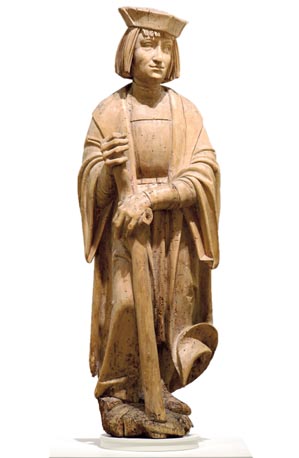
During the same visit of Duke, we stumbled on a lovely trove of medieval art at the Nasher Art Museum. The Duke University Art Museum began in 1969 when members of the Brummer family donated their extensive collection of medieval art to the university. The Nasher Art Museum, an architectural showpiece which opened in 2005, is a great place to explore. I was particularly provoked by the beauty of the medieval art in the collection. (Such as the statue of martyr Saint Sebastian, pictured here.)
Among the collection’s treasures are portions of the abbey of Saint Martin, Savigny. The Huguenots sacked this abbey in 1562, destroying or removing many valuable manuscripts. The abbey once was the largest church in the world and was destroyed in the aftermath of the French Revolution. Statues were scattered or mutilated.
More grievous than the destruction of Christian art, it is almost overwhelming for me to reflect on the millions of Christians throughout history who have willingly separated themselves from the Real Presence of Our Lord.
As I strolled through the Nasher Art Museum, I was at once saddened and reassured to see pieces of the abbey and other medieval Catholic churches displayed on the wall in fragments – part of a statue here, an altar piece there. How distressing to reflect on how the Church has been broken – both spiritually and physically – by so-called reformers and by the relentless secularization of Western culture. Taking another view, however, I meditated that people had seen it important to preserve these fragments. This made me consider that Christ’s body is everywhere. No matter what physically happens or happened to our churches, the Body of Christ and His Real Presence cannot be destroyed.
Father John A. Hardon, S.J. says it better than I can. “We are to believe that the Eucharist is Jesus Christ – simply, without qualification. It is God become man in the fullness of His divine nature, in the fullness of His human nature, in the fullness of His body and soul, in the fullness of everything that makes Jesus Jesus. He is in the Eucharist with His human mind and will united with the Divinity, with His hands and feet, His face and features, with His eyes and lips and ears and nostrils, with His affections and emotions and, with emphasis, with His living, pulsating, physical Sacred Heart. That is what our Catholic Faith demands of us that we believe. If we believe this, we are Catholic. If we do not, we are not, no matter what people may think we are.”
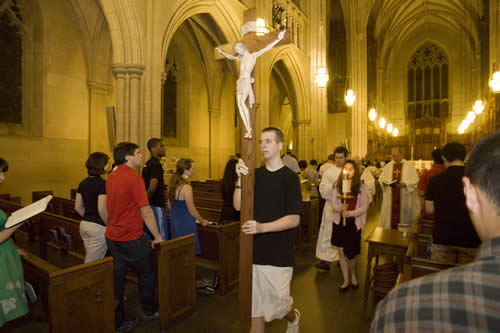
And then, after our visit to Durham, I was profoundly moved to learn the Duke Catholic Center is located in the basement of this very same chapel and that priests and students celebrate Mass upstairs every Sunday night.

Previous Post

December 29, 2010
For New Years Resolutions Like This: Choose A Patron Saint for 2011
Next Post
January 2, 2011 Thanks to Little Christmas
Browse Our Archives
Select a Category Blog News Conversion Story Culture Learning Living Nature Prayer Uncategorized Working
Select a Month June 2016 May 2016 August 2015 July 2015 June 2015 May 2015 April 2015 March 2015 February 2015 January 2015 December 2014 November 2014 October 2014 September 2014 August 2014 July 2014 June 2014 May 2014 April 2014 March 2014 February 2014 January 2014 December 2013 November 2013 October 2013 September 2013 August 2013 July 2013 June 2013 May 2013 April 2013 March 2013 February 2013 January 2013 December 2012 November 2012 October 2012 September 2012 August 2012 July 2012 June 2012 May 2012 April 2012 March 2012 February 2012 January 2012 December 2011 November 2011 October 2011 September 2011 August 2011 July 2011 June 2011 May 2011 April 2011 March 2011 February 2011 January 2011 December 2010 November 2010 October 2010 September 2010 August 2010 July 2010 June 2010 May 2010 April 2010 March 2010 February 2010 January 2010 December 2009 November 2009 October 2009 September 2009 August 2009
Follow Us!
TAKE THE
Religious Wisdom Quiz
Who was Aquila's wife?
Select your answer to see how you score.
Lydia Priscilla Mary Ruth
Related posts from Why I Am Catholic

Belated Happy Birthday To Blaise Pascal, Unofficial Saint...

Because My Brother Imran Yousef Is An American...

Because of G.K. Chesterton (29 May, 1874 – 14 June, 1936)

Joe Six-Pack, USMC, With A Few Post-Terrorist Attack...
TRENDING AT PATHEOS Catholic

Creation, Preservation, and Teleology in Catholic Theology
As I write this, it is very early Monday morning. Like millions...

The Parable Of The Sower And The Word...
One of Christ’s most famous parables is that of the sower who...

Rejecting Doom: Christian Hope And Human Action
Christianity is a religion of hope. We are to have hope and...

Why I Choose the Eucharist Over the Sermon
Choose the Eucharist, Not the Sermon What are we supposed to get...

5 Design Elements Found in Spiritually Rooted Homes
Putting Spirituality Into Home Decor Our homes are more than our living...

Credo: A Story of God Told with the...
About 10 years ago, I began to imagine a personal "Credo" that...
Ad-Free & Subscriber Log-In Subscription Support
- About Us
- 2026 Calendar
- Videos
- Podcasts
- Library of World Religions
- Faith In Media Tracker
- Advertise With Us
- Write for Us
- Privacy Policy
- Terms of Service
- Do Not Sell My Data
- Contact Us
- Radiant Digital
- Manage Newsletter Subscriptions
- Unsubscribe From Notifications
- Sitemap
Copyright 2008-2026, Patheos. All rights reserved.
Subscription Support Ad-Free & Subscriber Log-In
Follow Patheos