
BuddhistCatholicContemplativeEvangelicalGeneral ChristianHinduJewishLatter-day SaintMuslimNew VisionsProgressive Christian
Beliefs
- Buddhist
- Catholic
- Contemplative
- Evangelical
- General Christian
- Hindu
- Jewish
- Latter-day Saint
- More Voices
- Muslim
- New Visions
- Pagan
- Progressive Christian
Topics
- Religion News
- Food and Religion
- Sports and Religion
- Religious Art
- Religious Music and Entertainment
- Religious Events
- History and Religion
- Style and Religion
- Politics and Religion
- Women in Religion
- Recreation Outdoors and Religion
- Business Finance and Religion
- Careers Workplace and Religion
- Education and Religion
- Family Parenting and Religion
- Health Fitness and Religion
- Home and Religion
- Relationships and Religion
- Technology and Religion
- Travel and Religion
Columnists
- Buddhist Columnists
- Business Finance and Religion Columnists
- Careers Workplace and Religion Columnists
- Catholic Columnists
- Contemplative Columnists
- Education and Religion Columnists
- Evangelists Columnists
- Family Parenting and Religion Columnists
- General Christian Columnists
- Health Fitness and Religion Columnists
- Hindu Columnists
- History and Religion Columnists
- Home and Religion Columnists
- Jewish Columnists
- More Voices Columnists
- Latter Day Columnists
- Muslim Columnists
- New Visions Columnists
- Nonreligious Columnists
- Pagan Columnists
- Politics and Religion Columnists
- Progressive Columnists
- Recreation Outdoors and Religion Columnists
- Relationships and Religion Columnists
- Religion News Columnists
- Religious Art Columnists
- Religious Events Columnists
- Religious Music and Entertainment Columnists
- Sports and Religion Columnists
- Style and Religion Columnists
- Technology and Religion Columnists
- Travel and Religion Columnists
- Women in Religion Columnists
Resource Library
- 2026 Calendar
- Library of World Religions
- The 100 Most Holy Places on Earth
- Patheos Answers
- Podcasts
- Videos
- Faith Leaders Database
- Anglican Episcopalian
- Bahai
- Baptist
- Buddhism
- Christianity
- Confucianism
- Eastern Orthodoxy
- Hinduism
- Holiness and Pentecostal
- ISKCON
- Islam
- Judaism
- Lutheran
- Methodist
- The Church of Jesus Christ of Latter-day Saints
- New Age
- Paganism
- Presbytarian and Reformed
- Protestantism
- Religion Behind the Scenes
- Roman Catholic
- Scientology
- Shia Islam
- Sikhism
- Sufism
- Sunni Islam
- Taoism
- Zen
- See all religions
Research Tools
 Ad-Free & Subscriber Log-In Subscription Support
Ad-Free & Subscriber Log-In Subscription Support
Follow Patheos 

- Trending:
- Forgiveness
- |
- Marriage
- |
- Consciousness
- |
- Death Penalty
- |
- Election
- |
- Halloween
 Why I Am Catholic
-
More
- Home
- Because the Church Helps Us Discern a Solution to the Immigration Question
Because the Church Helps Us Discern a Solution to the Immigration Question
Last updated on: January 24, 2017 at 6:30 pm by Allison Salerno
Because the Church Helps Us Discern a Solution to the Immigration Question 2017-01-24T18:30:46-05:00 Allison Salerno
Patheos Explore the world's faith through different perspectives on religion and spirituality! Patheos has the views of the prevalent religions and spiritualities of the world.
Guest Post by James P. McCollum Jr.
Mr. McCollum is a Houston lawyer who mostly practices immigration law. He is a graduate of The University of Texas Law School and a graduate of Duke University. I grew up with him in suburban New York, where we called him “Jimmy.” In recent months, we have reconnected in cyberspace and it has been wonderful to share thoughts about our faith.
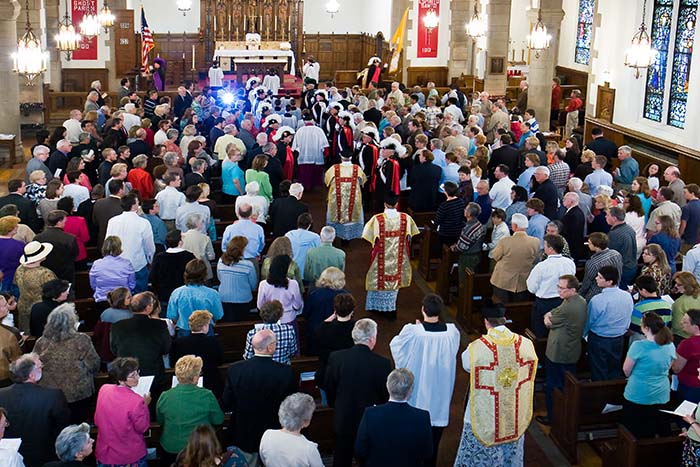 The Catechism of the Catholic Church teaches that prudence is the “charioteer” of the four “cardinal” virtues. Prudence is the virtue that enables a person to discern true good and the right way to achieve the true good.
Webster’s Dictionary teaches us that the word “cardinal” is derived from the Latin cardo, meaning hinge. Therefore, Webster’s first definition of “cardinal” is: 1. on which something hinges or depends; fundamental; principal; chief.
St. Anthony the Great defined intelligence as the quality that permits a person to judge what is good and what is evil. An intelligent person thus avoids what is evil and harms the soul and cares for and practices what is good and profits the soul, greatly thanking God. St. Anthony the Great was a “Desert Father.” He lived as a monk in Egypt in 250-350 AD.
The word “discern” may be specially used to describe a process of thought, analysis, meditation, contemplation, and prayer in arriving at a solution to a question. One supposes that any larger question in one’s life may be “discerned.” It goes without saying that in the process of the discernment, you seek the counsel of others. But ultimately it is the one person who discerns God’s will in arriving at an answer, or, in secular terms, in discerning the truth.
In contemporary society, the agnostic questions the notion that there is a “true good” or that one may distinguish “good” from “evil.” This notion that there is no “true good” may be disproven in the way people deal with the very tribulations that befall us every day. Peace arrives through an ordered and reasoned response to these perceived difficulties. A virtuous person is equipped to meet these challenges with equanimity.
Prudence guides the judgment of our conscience and enable us to act accordingly. A hallmark of prudence is the lack of timidity or fear in applying moral principles to particular cases for the good.
But how does one arrive at the right thing?
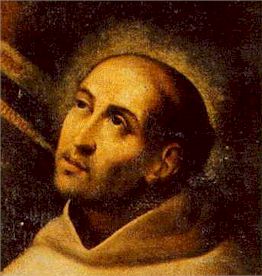
St. John of the Cross, the Spanish mystic of the 15th century, teaches in “The Ascent of Mt. Carmel” that if you do a good action, you must do it for the glory of God in order for it to be truly good. If you are aware of yourself doing a good action; or if you are doing a good action so that others may see you do a good action; then the action is not perfect.
Why is it that some people are so aware of this larger perspective and are great humanitarians and others are not? Why is it that some great social problems go unsolved year after year? Is it because prudence cannot be discussed in a sound-bite?
In the Civil Rights movement, great Americans took courageous action on behalf of African-Americans. Bobby Kennedy, for example, spoke as no other politician since Lincoln in framing contemporary problems in a larger perspective.
The alien has no vote and no influence. Where will we find the leader who stands up for the impolitic?
The United States is a deeply religious country. And even where there is no stated religion, there are deeply spiritual forces at work. The Congress may yet find the courage and farsightedness to discern a solution to the question of immigration. It would be refreshing to hear a leader speak in terms of the four cardinal virtues as Bobby Kennedy spoke unabashedly of love.
“For the LORD, your God, is the God of gods, the LORD of lords, the great God, mighty and awesome, who has no favorites, accepts no bribes; who executes justice for the orphan and the widow, and befriends the alien, feeding and clothing him. So you too must befriend the alien, for you were once aliens yourselves in the land of Egypt.”

Previous Post

November 18, 2010
To Send Supplies to the Christians in Iraq
Next Post
November 21, 2010 Because of the King on the Cross
Browse Our Archives
Select a Category Blog News Conversion Story Culture Learning Living Nature Prayer Uncategorized Working
Select a Month June 2016 May 2016 August 2015 July 2015 June 2015 May 2015 April 2015 March 2015 February 2015 January 2015 December 2014 November 2014 October 2014 September 2014 August 2014 July 2014 June 2014 May 2014 April 2014 March 2014 February 2014 January 2014 December 2013 November 2013 October 2013 September 2013 August 2013 July 2013 June 2013 May 2013 April 2013 March 2013 February 2013 January 2013 December 2012 November 2012 October 2012 September 2012 August 2012 July 2012 June 2012 May 2012 April 2012 March 2012 February 2012 January 2012 December 2011 November 2011 October 2011 September 2011 August 2011 July 2011 June 2011 May 2011 April 2011 March 2011 February 2011 January 2011 December 2010 November 2010 October 2010 September 2010 August 2010 July 2010 June 2010 May 2010 April 2010 March 2010 February 2010 January 2010 December 2009 November 2009 October 2009 September 2009 August 2009
Follow Us!
TAKE THE
Religious Wisdom Quiz
In Hebrews, what did Moses consider more valuable than the treasures of Egypt?
Select your answer to see how you score.
The promised land Disgrace for the sake of Christ God's covenant Eternal life
Related posts from Why I Am Catholic

Belated Happy Birthday To Blaise Pascal, Unofficial Saint...

Because My Brother Imran Yousef Is An American...

Because of G.K. Chesterton (29 May, 1874 – 14 June, 1936)

Joe Six-Pack, USMC, With A Few Post-Terrorist Attack...
TRENDING AT PATHEOS Catholic

Creation, Preservation, and Teleology in Catholic Theology
As I write this, it is very early Monday morning. Like millions...

The Parable Of The Sower And The Word...
One of Christ’s most famous parables is that of the sower who...

Rejecting Doom: Christian Hope And Human Action
Christianity is a religion of hope. We are to have hope and...

Why I Choose the Eucharist Over the Sermon
Choose the Eucharist, Not the Sermon What are we supposed to get...

5 Design Elements Found in Spiritually Rooted Homes
Putting Spirituality Into Home Decor Our homes are more than our living...

Credo: A Story of God Told with the...
About 10 years ago, I began to imagine a personal "Credo" that...
Ad-Free & Subscriber Log-In Subscription Support
- About Us
- 2026 Calendar
- Videos
- Podcasts
- Library of World Religions
- Faith In Media Tracker
- Advertise With Us
- Write for Us
- Privacy Policy
- Terms of Service
- Do Not Sell My Data
- Contact Us
- Radiant Digital
- Manage Newsletter Subscriptions
- Unsubscribe From Notifications
- Sitemap
Copyright 2008-2026, Patheos. All rights reserved.
Subscription Support Ad-Free & Subscriber Log-In
Follow Patheos