
BuddhistCatholicContemplativeEvangelicalGeneral ChristianHinduJewishLatter-day SaintMuslimNew VisionsProgressive Christian
Beliefs
- Buddhist
- Catholic
- Contemplative
- Evangelical
- General Christian
- Hindu
- Jewish
- Latter-day Saint
- More Voices
- Muslim
- New Visions
- Pagan
- Progressive Christian
Topics
- Religion News
- Food and Religion
- Sports and Religion
- Religious Art
- Religious Music and Entertainment
- Religious Events
- History and Religion
- Style and Religion
- Politics and Religion
- Women in Religion
- Recreation Outdoors and Religion
- Business Finance and Religion
- Careers Workplace and Religion
- Education and Religion
- Family Parenting and Religion
- Health Fitness and Religion
- Home and Religion
- Relationships and Religion
- Technology and Religion
- Travel and Religion
Columnists
- Buddhist Columnists
- Business Finance and Religion Columnists
- Careers Workplace and Religion Columnists
- Catholic Columnists
- Contemplative Columnists
- Education and Religion Columnists
- Evangelists Columnists
- Family Parenting and Religion Columnists
- General Christian Columnists
- Health Fitness and Religion Columnists
- Hindu Columnists
- History and Religion Columnists
- Home and Religion Columnists
- Jewish Columnists
- More Voices Columnists
- Latter Day Columnists
- Muslim Columnists
- New Visions Columnists
- Nonreligious Columnists
- Pagan Columnists
- Politics and Religion Columnists
- Progressive Columnists
- Recreation Outdoors and Religion Columnists
- Relationships and Religion Columnists
- Religion News Columnists
- Religious Art Columnists
- Religious Events Columnists
- Religious Music and Entertainment Columnists
- Sports and Religion Columnists
- Style and Religion Columnists
- Technology and Religion Columnists
- Travel and Religion Columnists
- Women in Religion Columnists
Resource Library
- 2026 Calendar
- Library of World Religions
- The 100 Most Holy Places on Earth
- Patheos Answers
- Podcasts
- Videos
- Faith Leaders Database
- Anglican Episcopalian
- Bahai
- Baptist
- Buddhism
- Christianity
- Confucianism
- Eastern Orthodoxy
- Hinduism
- Holiness and Pentecostal
- ISKCON
- Islam
- Judaism
- Lutheran
- Methodist
- The Church of Jesus Christ of Latter-day Saints
- New Age
- Paganism
- Presbytarian and Reformed
- Protestantism
- Religion Behind the Scenes
- Roman Catholic
- Scientology
- Shia Islam
- Sikhism
- Sufism
- Sunni Islam
- Taoism
- Zen
- See all religions
Research Tools
 Ad-Free & Subscriber Log-In Subscription Support
Ad-Free & Subscriber Log-In Subscription Support
Follow Patheos 

- Trending:
- Forgiveness
- |
- Marriage
- |
- Consciousness
- |
- Death Penalty
- |
- Election
- |
- Halloween
 Why I Am Catholic
-
More
- Home
- From the Treasure Chest: “Difficulties of Private Interpretation”
From the Treasure Chest: “Difficulties of Private Interpretation”
Last updated on: June 9, 2015 at 2:22 pm by Frank Weathers
From the Treasure Chest: “Difficulties of Private Interpretation” 2015-06-09T14:22:30-05:00 Frank Weathers
Patheos Explore the world's faith through different perspectives on religion and spirituality! Patheos has the views of the prevalent religions and spiritualities of the world.
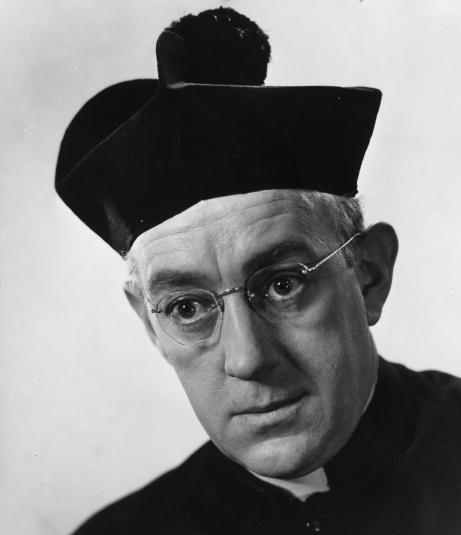
Alec Guinness (as Chesterton’s Fr. Brown) stands in for Fr. Bampfield
A few weeks ago, I happened upon a lengthy essay by Reverend George Bampfield entitled “Cannot.” Yesterday, I posted a little note on the Bible, and today Reverend Bampfield will help me explain something else that helped me decide to become a Catholic. I don’t know what Father George looks like so I have borrowed Sir Alec Guinness in the role of Chesterton’s Father Brown as a proxy.
The reason, or answer if you will, is right there in the title of this new Bampfield gem that I discovered today, by searching the YIM Catholic Bookself with the word “scripture.” I think you will enjoy what my friend Father George has to say on this matter.
Considering that I used to work on aircraft at one point in my Marine Corps career, I didn’t have the luxury of interpreting the NAVSEASYSCOM technical pubs on the aircraft I was tasked to repair, nor should I have been allowed to either. As such, this essay makes nothing but sense to me. Take it away Father George,
Difficulties of Private Interpretation
I was a young man when my inquiry into truth began. I wished to save my soul—to know the truth and do the right; I asked myself and others how I was to find the truth ; the answer was ever the same, “Search the Scriptures.”
But here came a difficulty.
I knew that the Scriptures were the Word of God ; but I knew also that God’s Writings are then only of use to us when we know what God meant by that which He wrote. God’s Word, if we put to it the devil’s meaning or man’s meaning, is not God’s Word at all. “The letter killeth;” it is “the spirit” which “quickeneth.” What we need is God’s meaning of God’s Word. The same Holy Ghost who wrote the Scriptures, He only can interpret them.
Was it possible for me to miss this meaning? I read in the gospels that the Scriptures could be so misused. The devil tempted our Lord with Scripture texts, using God’s Word with the devil’s meaning (St. Matthew iv.); the Pharisees rejected our Lord by Scripture: “Search the Scriptures, and see that out of Galilee a prophet riseth not” (St. John vii. 52), using God’s Word, indeed, but perverted by man’s sin: of the Sadducees our Lord said, that though they read the Scriptures, they knew them not (St. Mark xii. 24); and the Apostles were “foolish and slow of heart to believe all the things which the prophets have spoken.” (St. Luke xxiv. 25.) It was not the multitude who “knew not the law” who condemned our dearest Lord, but the Pharisee, the scribe, and the lawyer, whose whole study was in the Sacred Writ.
Nay, the Scriptures themselves told me plainly, “that no prophecy of the Scripture is made by private interpretation.” (2 St. Peter i. 20.) And, again, that in St. Paul’s epistles, at least, there “are certain things hard to be understood, which the unlearned and unstable wrest, as they do also the other Scriptures, to their destruction.” (2 St. Peter iii. 16.) The Scriptures, then, can be used to our destruction, and who was I that I should think myself learned or stable? “Thinkest thou,” said Philip to Queen Candace’s chamberlain, “that thou understandest what thou readest?” who said “How can I, unless some one show me?” (Acts viii.30, 31)
It was, then, I concluded, possible for me to miss the true meaning of God’s Word; and if I missed it, I missed it to my “own destruction.” The fault lay not in the Scriptures, which are holy, but in my wretchedness, who misinterpreted.
When I stated this difficulty to others, I received always the same answer, “Pray to God the Holy Ghost, and He will guide you.” But here arose two or three difficulties.
(a) I knew that without God’s help, no man can understand the Scriptures; but I knew also, that God’s help is given more or less in proportion to the fervency of prayer and the righteousness of him who prays. It is the “continual prayer of a just man;” or, as the Protestant translation renders it, “the effectual fervent prayer of the righteous man” (St. James v. 16), not the lukewarm prayer of the unrighteous, that “availeth much.” Dared I “trust in myself that I was righteous?” (Luke xviii. 9)—my prayer “fervent and effectual?” If conscience did not compel, humility would exhort me to think otherwise; and, if so, how could I tell that the true meaning of Scripture was given me in answer to such worthless prayers as mine? The fault lay not in God, who is ever ready to give to them that ask, but in the poverty of the asking and the asker.
(b) But I found that, on this view, not only must I trust in myself that I was righteous, but also despise others. (St. Luke xviii. 9.) For I found that others did the very same thing which I did—namely, pray to the Holy Ghost, and yet explained Scripture in a sense wholly opposite to mine. If I learned from the Scripture that baptism was necessary to salvation, another from the very same Scripture would teach that baptism was not necessary to salvation, and that my doctrine was soul-destroying and hateful to God. If I prayed to the Holy Spirit, so did he; if I was fully convinced, so was he ; if to my spirit I hoped that “the Holy Spirit gave testimony that I was a child of God” (Rom. viii. 16), the same claim also did he make. How could I tell that he was wrong and I right? My prayers answered and his not? Was I holier than he? I dared not think so.
Of one thing I was certain, that the Holy Ghost could not teach to me that a doctrine was true and to him that the same doctrine was not true. One of us was wrong, and teaching, what God hates, a lie; but by what sure sign could I say what was wrong ?
Sometimes I was told that these differences were not essential points; but I could not understand this. Men certainly differ, for example, on the question whether baptism is necessary to salvation or not. Surely a debate about a necessity is an essential point. In no worldly business, I am certain, in no question about the life of our bodies should we say, “Such a thing may be necessary, but it is not essential for us to know whether it is necessary or not.”
Moreover, who would dare to tell us which part of our Lord’s teaching was essential and which not? “Such a truth will save us, but such another truth He need not have brought from heaven.” This I knew, that not one jot or one tittle of His words shall pass away (St. Matt. v. 18; St. Matt. xxiv. 35), and that we dare not add to nor take from His words (Rev. xxii. 18, 19), but I knew not who was to be the judge of our Lord’s teaching, and tell us which part we must believe and which we might reject.
It is a marvel to me how men can believe that Christ, who is love, has so left Christianity in the world, that nearly nineteen centuries have passed away, and men are still in doubt about the very necessities of salvation. In the Catholic Church alone is no doubt.
(c) The third difficulty which came to me, when I was told to pray to the Holy Ghost and He would guide me, was this. “But then,” was my reply, “if I can be mistaken when I interpret Scripture, how am I to tell when I am mistaken, and when not?” To this question I have to this day been unable to obtain an answer, except in the Catholic Church. I propose it once more for solution.
The answer which I made to myself was that if our interpretations of Scripture are little more than guesses, in which we might be mistaken, we could never tell if we were right or not; and that, as a result, the possession of truth was to us impossible; if we once admit doubt we cease to know it as a truth. Most of all should this be the case with religious truth. If heaven is not a certainty it were hard to struggle for it; if it be doubtful that there are three persons in God, who could worship them? What martyr would bleed for an opinion which was possibly false?
Our interpretations are fallible opinions; and opinions, however probable, are not certain truth. It seemed to me, then, that we had the choice of two evils, either to hold that each individual interpreter of Scripture is infallible, or to acknowledge that all interpretations of Scripture are fallible, and therefore all religious doctrines uncertain.
I need not show the absurdity of the first alternative; for the upholders of private judgment are the very men who deny infallibility. I fear, then, we must accept the second, and own that there is no certain religious truth on earth, unless, indeed, the Catholic Church be right, and God has provided, in his mercy, a guide whom he has made infallible.
Looks like checkmate again for the good Reverend Bampfield. You can read the original article at the YIMCatholic Bookshelf.


Previous Post

August 30, 2010
Because I Love the Bible
Next Post
September 1, 2010 For Peace While Suffering (A Few Words for Wednesday)
Browse Our Archives
Select a Category Blog News Conversion Story Culture Learning Living Nature Prayer Uncategorized Working
Select a Month June 2016 May 2016 August 2015 July 2015 June 2015 May 2015 April 2015 March 2015 February 2015 January 2015 December 2014 November 2014 October 2014 September 2014 August 2014 July 2014 June 2014 May 2014 April 2014 March 2014 February 2014 January 2014 December 2013 November 2013 October 2013 September 2013 August 2013 July 2013 June 2013 May 2013 April 2013 March 2013 February 2013 January 2013 December 2012 November 2012 October 2012 September 2012 August 2012 July 2012 June 2012 May 2012 April 2012 March 2012 February 2012 January 2012 December 2011 November 2011 October 2011 September 2011 August 2011 July 2011 June 2011 May 2011 April 2011 March 2011 February 2011 January 2011 December 2010 November 2010 October 2010 September 2010 August 2010 July 2010 June 2010 May 2010 April 2010 March 2010 February 2010 January 2010 December 2009 November 2009 October 2009 September 2009 August 2009
Follow Us!
TAKE THE
Religious Wisdom Quiz
Which giant Philistine did David defeat with a sling and a stone?
Select your answer to see how you score.
Goliath Agag Ishbi-Benob Og
Related posts from Why I Am Catholic

Belated Happy Birthday To Blaise Pascal, Unofficial Saint...

Because My Brother Imran Yousef Is An American...

Joe Six-Pack, USMC, With A Few Post-Terrorist Attack...

This Is Why God Invented YouTube...
TRENDING AT PATHEOS Catholic

Rejecting Doom: Christian Hope And Human Action
Christianity is a religion of hope. We are to have hope and...

It’s What Comes From Within Which Matters
One of the most difficult things for us to understand is why...

Why I Choose the Eucharist Over the Sermon
Choose the Eucharist, Not the Sermon What are we supposed to get...

5 Design Elements Found in Spiritually Rooted Homes
Putting Spirituality Into Home Decor Our homes are more than our living...

Credo: A Story of God Told with the...
About 10 years ago, I began to imagine a personal "Credo" that...

The Anatomy of Divine Revelation in Catholic Thought
The claim that God has made Himself known to human beings is...
Ad-Free & Subscriber Log-In Subscription Support
- About Us
- 2026 Calendar
- Videos
- Podcasts
- Library of World Religions
- Faith In Media Tracker
- Advertise With Us
- Write for Us
- Privacy Policy
- Terms of Service
- Do Not Sell My Data
- Contact Us
- Radiant Digital
- Manage Newsletter Subscriptions
- Unsubscribe From Notifications
- Sitemap
Copyright 2008-2026, Patheos. All rights reserved.
Subscription Support Ad-Free & Subscriber Log-In
Follow Patheos