
BuddhistCatholicContemplativeEvangelicalGeneral ChristianHinduJewishLatter-day SaintMuslimNew VisionsProgressive Christian
Beliefs
- Buddhist
- Catholic
- Contemplative
- Evangelical
- General Christian
- Hindu
- Jewish
- Latter-day Saint
- More Voices
- Muslim
- New Visions
- Pagan
- Progressive Christian
Topics
- Religion News
- Food and Religion
- Sports and Religion
- Religious Art
- Religious Music and Entertainment
- Religious Events
- History and Religion
- Style and Religion
- Politics and Religion
- Women in Religion
- Recreation Outdoors and Religion
- Business Finance and Religion
- Careers Workplace and Religion
- Education and Religion
- Family Parenting and Religion
- Health Fitness and Religion
- Home and Religion
- Relationships and Religion
- Technology and Religion
- Travel and Religion
Columnists
- Buddhist Columnists
- Business Finance and Religion Columnists
- Careers Workplace and Religion Columnists
- Catholic Columnists
- Contemplative Columnists
- Education and Religion Columnists
- Evangelists Columnists
- Family Parenting and Religion Columnists
- General Christian Columnists
- Health Fitness and Religion Columnists
- Hindu Columnists
- History and Religion Columnists
- Home and Religion Columnists
- Jewish Columnists
- More Voices Columnists
- Latter Day Columnists
- Muslim Columnists
- New Visions Columnists
- Nonreligious Columnists
- Pagan Columnists
- Politics and Religion Columnists
- Progressive Columnists
- Recreation Outdoors and Religion Columnists
- Relationships and Religion Columnists
- Religion News Columnists
- Religious Art Columnists
- Religious Events Columnists
- Religious Music and Entertainment Columnists
- Sports and Religion Columnists
- Style and Religion Columnists
- Technology and Religion Columnists
- Travel and Religion Columnists
- Women in Religion Columnists
Resource Library
- 2026 Calendar
- Library of World Religions
- The 100 Most Holy Places on Earth
- Patheos Answers
- Podcasts
- Videos
- Faith Leaders Database
- Anglican Episcopalian
- Bahai
- Baptist
- Buddhism
- Christianity
- Confucianism
- Eastern Orthodoxy
- Hinduism
- Holiness and Pentecostal
- ISKCON
- Islam
- Judaism
- Lutheran
- Methodist
- The Church of Jesus Christ of Latter-day Saints
- New Age
- Paganism
- Presbytarian and Reformed
- Protestantism
- Religion Behind the Scenes
- Roman Catholic
- Scientology
- Shia Islam
- Sikhism
- Sufism
- Sunni Islam
- Taoism
- Zen
- See all religions
Research Tools
 Ad-Free & Subscriber Log-In Subscription Support
Ad-Free & Subscriber Log-In Subscription Support
Follow Patheos 

- Trending:
- Forgiveness
- |
- Marriage
- |
- Consciousness
- |
- Death Penalty
- |
- Election
- |
- Halloween
 Why I Am Catholic
-
More
- Home
- YIMC Bookclub, “The Great Heresies,” Chapter 4
YIMC Bookclub, “The Great Heresies,” Chapter 4
Last updated on: January 24, 2017 at 7:00 pm by Frank Weathers
YIMC Bookclub, “The Great Heresies,” Chapter 4 2017-01-24T19:00:00-05:00 Frank Weathers
Patheos Explore the world's faith through different perspectives on religion and spirituality! Patheos has the views of the prevalent religions and spiritualities of the world.

“Why should we suffer? Why should we die?”
Ah, the eternal question. And in this chapter “The Albigensian Attack“, Belloc gets to the heart of the matter of why the Incarnation came about, Christianity was founded, and why the Catholic Church exists. Because as we know, we are mere human beings. We die. And since the beginning, mankind has wanted to know “why?”
And in this chapter, Belloc synthesizes the ideas that we have formed in an attempt to come to terms with this truth. He touches on Manicheanism, Stoicism, and heck, even Buddism. For example he writes,
Various ways out of the torturing enigma have been proposed. The simplest and basest is not to face it at all…another way less base, but equally contemptible intellectually, is to say there is no problem because we are all part of a meaningless dead thing with no creative God behind it… another nobler way, which was the favourite way of the high pagan civilization from which we sprang, the way of the great Romans and the great Greeks, is the way of Stoicism. This might vulgarly be termed “The philosophy of grin-and-bear-it”… another way is the profound but despairing way of Asia, of which the greatest example is Buddhism: the philosophy which calls the individual an illusion, bids us get rid of the desire for immortality and look forward to being merged in the impersonal life of the universe. What the Catholic solution is we all know.
Or hopefully you do. If you didn’t before reading this chapter, you know now. A lot of ground is covered here. Heck, you might want to let your children read this chapter so they will understand what all the fuss is about regarding being a practicing Catholic. What’s the deal? Well,
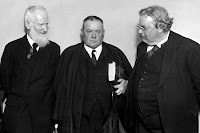
the Catholic Church has on this particular problem a very definite answer within the field of her own action. She says, first, that man’s nature is immortal, and made for beatitude; next, that mortality and pain are the result of his Fall, that is, of his rebellion against the will of God. She says that since the fall our mortal life is an ordeal or test, according to our behavior, in which we regain (but through the merits of our Savior) that immortal beatitude which we had lost.
And then he proceeds to discuss and explain the various manifestations of this particular heresy. First up is Manicheanism. Have you ever seen Star Wars and it’s various sequels and prequels? May the Force be with you? The Dark Side of the Force and the good side? Now you know where George Lucas got that idea. Remember in The Empire Strikes Back when Yoda is training the young Jedi(the Good Side) Luke Skywalker and he punches Luke in the shoulder and says “not this crude matter” referring to his human body? Hmmm, sounds like,
But one thing the Manichean of every shade has always felt, and that is, that “matter” belongs to the evil side of things. Though there may be plenty of evil of a spiritual kind yet good must be “wholly” spiritual.
You’ve probably heard, or maybe even experienced, Christianity of some stripe that treats matter and the human body like this. Not to mention any other religions out there, or new age thinking, that does the same. I know I’ve bumped into people who have said exactly what Belloc says when he describes the human body and its characteristics as follows:
That is something you find not only in the early Manichean, not only in the Albigensian of the Middle Ages, but even in the most modern of the remaining Puritans. It seems indissolubly connected with the Manichean temper in every form. Matter is subject to decay and is therefore evil. Our bodies are evil. Their appetites are evil. This idea ramifies into all sorts of absurd details. Wine is evil. Pretty well any physical pleasure, or half-physical pleasure, is evil. Joy is evil. Beauty is evil. Amusements are evil, and so on. Anyone who will read the details of the Albigensian story will be struck over and over again by the singularly modern attitude of these ancient heretics, because they had the same root as the Puritans who still, unhappily, survive among us.

I’m glad I’m a Catholic now because finally the world makes some sense! And I’m glad I’m a Marine too, because there is a lot of warfare in this chapter. But before I continue, I’m going to hand the reins over to Jason, one of our YIMC Book Club volunteers has these words to say about this chapter:
The Albigensian heresy today is also known as the Cathar heresy. Belloc points out that this heresy is actually a form of Manicheanism. Belloc connects the rise of the Albigensian/Cathar heresy as an attempt of answering the “the problem of evil”. Why are there evil, suffering, and death?
Atheists propose the solution that there is no God. Stoics grin and bear it. Buddists claim individual existence is an illusion.
The Albigensians/Cathars resorted to dualism, that is that God is good but not omnipotent. And that goodness is opposed by evil that was equally as powerful. God the Father is no more powerful than Satan. Furthermore, all matter (being subject to decay) was of evil and good was only spiritual.
The conclusions based on that claim are far-reaching. If matter is evil and God is good, then Jesus could not have been human (no Incarnation), could not have suffered, and was not resurrected. If matter is evil, then the sacraments are false being present in matter. How can Jesus be present in evil matter? Thus no Eucharist.
The heresy divided France. The southern lords embraced the heresy in opposition of the King of France in the north. Belloc isn’t explicit about this but we can see the violent conflict had significant political aspects. Both England and Spain (neither of which embraced the heresy) supported the heretics in hopes of weakening the French.
Belloc shows his bias in his historical account of the battles between the northern and southern French factions.
Of course, Belloc is many things but unbiased is probably not one of them. Not for the purpose of this book anyway. Jason, and probably others, have questions about the historical accuracy of Belloc’s accounts. Footnotes would have been nice here, but perhaps the best thing to do is to consider this chapter as a springboard for following your own curiosity regarding the historical facts surrounding the conflicts that ensued as a result of this movement. A preview of The Inquisition – A Political and Military Study of Its Establishment is available on Google Books.
But as an overview of an erroneous idea that just keeps cropping up over and over, I found this chapter to be very helpful. How about the rest of you? Share your thoughts with us in the comment box.

Previous Post

July 7, 2010
Because I Cannot
Next Post
July 8, 2010 Because Living in Hope Beats Living in Fear
Browse Our Archives
Select a Category Blog News Conversion Story Culture Learning Living Nature Prayer Uncategorized Working
Select a Month June 2016 May 2016 August 2015 July 2015 June 2015 May 2015 April 2015 March 2015 February 2015 January 2015 December 2014 November 2014 October 2014 September 2014 August 2014 July 2014 June 2014 May 2014 April 2014 March 2014 February 2014 January 2014 December 2013 November 2013 October 2013 September 2013 August 2013 July 2013 June 2013 May 2013 April 2013 March 2013 February 2013 January 2013 December 2012 November 2012 October 2012 September 2012 August 2012 July 2012 June 2012 May 2012 April 2012 March 2012 February 2012 January 2012 December 2011 November 2011 October 2011 September 2011 August 2011 July 2011 June 2011 May 2011 April 2011 March 2011 February 2011 January 2011 December 2010 November 2010 October 2010 September 2010 August 2010 July 2010 June 2010 May 2010 April 2010 March 2010 February 2010 January 2010 December 2009 November 2009 October 2009 September 2009 August 2009
Follow Us!
TAKE THE
Religious Wisdom Quiz
Which Old Testament prophet's book has the most chapters?
Select your answer to see how you score.
Jeremiah Ezekiel Isaiah Daniel
Related posts from Why I Am Catholic

Belated Happy Birthday To Blaise Pascal, Unofficial Saint...

This Is Why God Invented YouTube...

Apparently, There USED to be Secrets of Fatima
For What Happens To Our Bodies When We...
TRENDING AT PATHEOS Catholic

Rejecting Doom: Christian Hope And Human Action
Christianity is a religion of hope. We are to have hope and...

It’s What Comes From Within Which Matters
One of the most difficult things for us to understand is why...

Why I Choose the Eucharist Over the Sermon
Choose the Eucharist, Not the Sermon What are we supposed to get...

5 Design Elements Found in Spiritually Rooted Homes
Putting Spirituality Into Home Decor Our homes are more than our living...

Credo: A Story of God Told with the...
About 10 years ago, I began to imagine a personal "Credo" that...

The Anatomy of Divine Revelation in Catholic Thought
The claim that God has made Himself known to human beings is...
Ad-Free & Subscriber Log-In Subscription Support
- About Us
- 2026 Calendar
- Videos
- Podcasts
- Library of World Religions
- Faith In Media Tracker
- Advertise With Us
- Write for Us
- Privacy Policy
- Terms of Service
- Do Not Sell My Data
- Contact Us
- Radiant Digital
- Manage Newsletter Subscriptions
- Unsubscribe From Notifications
- Sitemap
Copyright 2008-2026, Patheos. All rights reserved.
Subscription Support Ad-Free & Subscriber Log-In
Follow Patheos