
BuddhistCatholicContemplativeEvangelicalGeneral ChristianHinduJewishLatter-day SaintMuslimNew VisionsProgressive Christian
Beliefs
- Buddhist
- Catholic
- Contemplative
- Evangelical
- General Christian
- Hindu
- Jewish
- Latter-day Saint
- More Voices
- Muslim
- New Visions
- Pagan
- Progressive Christian
Topics
- Religion News
- Food and Religion
- Sports and Religion
- Religious Art
- Religious Music and Entertainment
- Religious Events
- History and Religion
- Style and Religion
- Politics and Religion
- Women in Religion
- Recreation Outdoors and Religion
- Business Finance and Religion
- Careers Workplace and Religion
- Education and Religion
- Family Parenting and Religion
- Health Fitness and Religion
- Home and Religion
- Relationships and Religion
- Technology and Religion
- Travel and Religion
Columnists
- Buddhist Columnists
- Business Finance and Religion Columnists
- Careers Workplace and Religion Columnists
- Catholic Columnists
- Contemplative Columnists
- Education and Religion Columnists
- Evangelists Columnists
- Family Parenting and Religion Columnists
- General Christian Columnists
- Health Fitness and Religion Columnists
- Hindu Columnists
- History and Religion Columnists
- Home and Religion Columnists
- Jewish Columnists
- More Voices Columnists
- Latter Day Columnists
- Muslim Columnists
- New Visions Columnists
- Nonreligious Columnists
- Pagan Columnists
- Politics and Religion Columnists
- Progressive Columnists
- Recreation Outdoors and Religion Columnists
- Relationships and Religion Columnists
- Religion News Columnists
- Religious Art Columnists
- Religious Events Columnists
- Religious Music and Entertainment Columnists
- Sports and Religion Columnists
- Style and Religion Columnists
- Technology and Religion Columnists
- Travel and Religion Columnists
- Women in Religion Columnists
Resource Library
- 2026 Calendar
- Library of World Religions
- The 100 Most Holy Places on Earth
- Patheos Answers
- Podcasts
- Videos
- Faith Leaders Database
- Anglican Episcopalian
- Bahai
- Baptist
- Buddhism
- Christianity
- Confucianism
- Eastern Orthodoxy
- Hinduism
- Holiness and Pentecostal
- ISKCON
- Islam
- Judaism
- Lutheran
- Methodist
- The Church of Jesus Christ of Latter-day Saints
- New Age
- Paganism
- Presbytarian and Reformed
- Protestantism
- Religion Behind the Scenes
- Roman Catholic
- Scientology
- Shia Islam
- Sikhism
- Sufism
- Sunni Islam
- Taoism
- Zen
- See all religions
Research Tools
 Ad-Free & Subscriber Log-In Subscription Support
Ad-Free & Subscriber Log-In Subscription Support
Follow Patheos 

- Trending:
- Forgiveness
- |
- Marriage
- |
- Consciousness
- |
- Death Penalty
- |
- Election
- |
- Halloween
 Why I Am Catholic
-
More
- Home
- For All the Saints: Ignatius of Loyola
For All the Saints: Ignatius of Loyola
Last updated on: January 24, 2017 at 6:59 pm by Webster Bull
For All the Saints: Ignatius of Loyola 2017-01-24T18:59:26-05:00 Webster Bull
Patheos Explore the world's faith through different perspectives on religion and spirituality! Patheos has the views of the prevalent religions and spiritualities of the world.
 In Congregational Sunday School as a child, I used to sing, “Jesus loves me, yes I know, for the Bible tells me so.” Today, I have a dear friend who signs his e-mails, “If the Catholic Church teaches it, it must be true.” This moves the argument from Protestant to Catholic terms: I know what I know, not because the Bible tells me but because the Church does.
But there’s really only one thing that can convince me of the Truth, or of Jesus’s love. If I am going to be a free and reasoning human being, the only thing that tells is my experience. I want to experience Jesus as intimately as that little child in the picture.
This is what touches me in today’s reading from the Office about St. Ignatius of Loyola. The excerpt is an anecdote from the life of the founder of the Jesuits that is recycled in Fr. James Martin’s book My Life with the Saints, which was so instrumental in my conversion. I know next to nothing about St. Ignatius or the Jesuits—I think of him as a sort of Don Quixote who woke up; I think of the Jesuits as really smart guys in black who, like me, may sometimes be too smart for their own good—but I think I understand the anecdote.
Bedridden and in search of something to read, Ignatius asked for tales of knight-errantry, but none were available. So, in spite of himself, he read “a life of Christ and a collection of the lives of saints written in Spanish.”
When Ignatius reflected on worldly thoughts, he felt intense pleasure; but when he gave them up out of weariness, he felt dry and depressed. Yet when he thought of living the rigorous sort of life he knew the saints had lived, he not only experienced pleasure when he actually thought about it, but even after he dismissed these thoughts, he still experienced great joy.
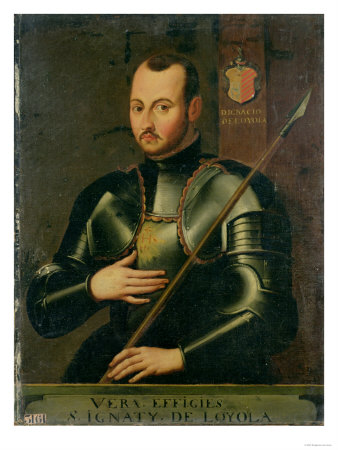 Yet he did not pay attention to this, nor did he appreciate it until one day, in a moment of insight, he began to marvel at the difference. Then he understood his experience: thoughts of one kind left him sad, the others full of joy. And this was the first time he applied a process of reasoning to his religious experience. Later on, when he began to formulate his spiritual exercies, he used this experience as an illustration to explain the doctrine he taught his disciples on the discernment of spirits.
“He understood his experience.” One of our great saints converted because of experience. Ignatius’s spiritual readings, unlike tales of knights and romance, corresponded to the deepest needs of his heart, leaving him not dry but joyful.
I am undertaking a book purge in my house. Now that I’ve entered my 60th year, I realize that I will never read all of the books I have accumulated around me, like boxes of Topps baseball cards from my youth. So I am giving them away, or selling them for pennies to the dollar where I can. Slowly the pile is dwindling down to a couple hundred or so, and maybe finally it will come down to a few dozen. I’m pretty sure that when the dwindling is done, the flashy Folio Society editions that I collected during a misspent youth will all have vanished. Popular novels by Cormac McCarthy and Tony Hillerman will be gone too. I’m not sure what will be left exactly, but I’m sure the saints will figure highly on the remaining list, as well as a few secular works that have always moved me, including Norman MacLean’s Young Men and Fire.
If I remain true to the impulse that’s working now, I will hold on to those few books that correspond most deeply to the needs of my heart, the books that leave me anything but dry. I will do my best to be guided by experience.
There is a paradox waiting here, however, as our dear guest priest, Fr. Dan Hennessey suggested this morning. In his homily, he read us a prayer of St. Ignatius that I had never heard. (Repeat: I know very little about the guy.) The prayer is as follows:
Take, O Lord, and receive my entire liberty, my memory, my understanding and my whole will. All that I am and all that I possess You have given me: I surrender it all to You to be disposed of according to Your will. Give me only Your love and Your grace; with these I will be rich enough, and will desire nothing more.
As a human being, I want to—I must—preserve and enhance my freedom and reason. I want my faith to remain solidly founded on experience. But St. Ignatius invites me to give up “my entire liberty . . . my whole will.” It’s no contradiction. When I have met Jesus as surely as that child in the picture, I will—from freedom as from reason—give him my whole will too. Or so I can pray.

Previous Post

July 29, 2010
For All the Saints: Martha
Next Post
August 1, 2010 Because Most Time is Ordinary
Browse Our Archives
Select a Category Blog News Conversion Story Culture Learning Living Nature Prayer Uncategorized Working
Select a Month June 2016 May 2016 August 2015 July 2015 June 2015 May 2015 April 2015 March 2015 February 2015 January 2015 December 2014 November 2014 October 2014 September 2014 August 2014 July 2014 June 2014 May 2014 April 2014 March 2014 February 2014 January 2014 December 2013 November 2013 October 2013 September 2013 August 2013 July 2013 June 2013 May 2013 April 2013 March 2013 February 2013 January 2013 December 2012 November 2012 October 2012 September 2012 August 2012 July 2012 June 2012 May 2012 April 2012 March 2012 February 2012 January 2012 December 2011 November 2011 October 2011 September 2011 August 2011 July 2011 June 2011 May 2011 April 2011 March 2011 February 2011 January 2011 December 2010 November 2010 October 2010 September 2010 August 2010 July 2010 June 2010 May 2010 April 2010 March 2010 February 2010 January 2010 December 2009 November 2009 October 2009 September 2009 August 2009
Follow Us!
TAKE THE
Religious Wisdom Quiz
Who was the Roman emperor when Jesus was crucified?
Select your answer to see how you score.
Caligula Tiberius Nero Augustus
Related posts from Why I Am Catholic

Belated Happy Birthday To Blaise Pascal, Unofficial Saint...

Because My Brother Imran Yousef Is An American...

Because of G.K. Chesterton (29 May, 1874 – 14 June, 1936)

Joe Six-Pack, USMC, With A Few Post-Terrorist Attack...
TRENDING AT PATHEOS Catholic

Rejecting Doom: Christian Hope And Human Action
Christianity is a religion of hope. We are to have hope and...

It’s What Comes From Within Which Matters
One of the most difficult things for us to understand is why...

Why I Choose the Eucharist Over the Sermon
Choose the Eucharist, Not the Sermon What are we supposed to get...

5 Design Elements Found in Spiritually Rooted Homes
Putting Spirituality Into Home Decor Our homes are more than our living...

Credo: A Story of God Told with the...
About 10 years ago, I began to imagine a personal "Credo" that...

The Anatomy of Divine Revelation in Catholic Thought
The claim that God has made Himself known to human beings is...
Ad-Free & Subscriber Log-In Subscription Support
- About Us
- 2026 Calendar
- Videos
- Podcasts
- Library of World Religions
- Faith In Media Tracker
- Advertise With Us
- Write for Us
- Privacy Policy
- Terms of Service
- Do Not Sell My Data
- Contact Us
- Radiant Digital
- Manage Newsletter Subscriptions
- Unsubscribe From Notifications
- Sitemap
Copyright 2008-2026, Patheos. All rights reserved.
Subscription Support Ad-Free & Subscriber Log-In
Follow Patheos