
BuddhistCatholicContemplativeEvangelicalGeneral ChristianHinduJewishLatter-day SaintMuslimNew VisionsProgressive Christian
Beliefs
- Buddhist
- Catholic
- Contemplative
- Evangelical
- General Christian
- Hindu
- Jewish
- Latter-day Saint
- More Voices
- Muslim
- New Visions
- Pagan
- Progressive Christian
Topics
- Religion News
- Food and Religion
- Sports and Religion
- Religious Art
- Religious Music and Entertainment
- Religious Events
- History and Religion
- Style and Religion
- Politics and Religion
- Women in Religion
- Recreation Outdoors and Religion
- Business Finance and Religion
- Careers Workplace and Religion
- Education and Religion
- Family Parenting and Religion
- Health Fitness and Religion
- Home and Religion
- Relationships and Religion
- Technology and Religion
- Travel and Religion
Columnists
- Buddhist Columnists
- Business Finance and Religion Columnists
- Careers Workplace and Religion Columnists
- Catholic Columnists
- Contemplative Columnists
- Education and Religion Columnists
- Evangelists Columnists
- Family Parenting and Religion Columnists
- General Christian Columnists
- Health Fitness and Religion Columnists
- Hindu Columnists
- History and Religion Columnists
- Home and Religion Columnists
- Jewish Columnists
- More Voices Columnists
- Latter Day Columnists
- Muslim Columnists
- New Visions Columnists
- Nonreligious Columnists
- Pagan Columnists
- Politics and Religion Columnists
- Progressive Columnists
- Recreation Outdoors and Religion Columnists
- Relationships and Religion Columnists
- Religion News Columnists
- Religious Art Columnists
- Religious Events Columnists
- Religious Music and Entertainment Columnists
- Sports and Religion Columnists
- Style and Religion Columnists
- Technology and Religion Columnists
- Travel and Religion Columnists
- Women in Religion Columnists
Resource Library
- 2026 Calendar
- Library of World Religions
- The 100 Most Holy Places on Earth
- Patheos Answers
- Podcasts
- Videos
- Faith Leaders Database
- Anglican Episcopalian
- Bahai
- Baptist
- Buddhism
- Christianity
- Confucianism
- Eastern Orthodoxy
- Hinduism
- Holiness and Pentecostal
- ISKCON
- Islam
- Judaism
- Lutheran
- Methodist
- The Church of Jesus Christ of Latter-day Saints
- New Age
- Paganism
- Presbytarian and Reformed
- Protestantism
- Religion Behind the Scenes
- Roman Catholic
- Scientology
- Shia Islam
- Sikhism
- Sufism
- Sunni Islam
- Taoism
- Zen
- See all religions
Research Tools
 Ad-Free & Subscriber Log-In Subscription Support
Ad-Free & Subscriber Log-In Subscription Support
Follow Patheos 

- Trending:
- Forgiveness
- |
- Marriage
- |
- Consciousness
- |
- Death Penalty
- |
- Election
- |
- Halloween
 Why I Am Catholic
-
More
- Home
- Because of The Stations of the Cross
Because of The Stations of the Cross
Last updated on: June 7, 2015 at 11:36 pm by Frank Weathers
Because of The Stations of the Cross 2015-06-07T23:36:20-05:00 Frank Weathers
Patheos Explore the world's faith through different perspectives on religion and spirituality! Patheos has the views of the prevalent religions and spiritualities of the world.
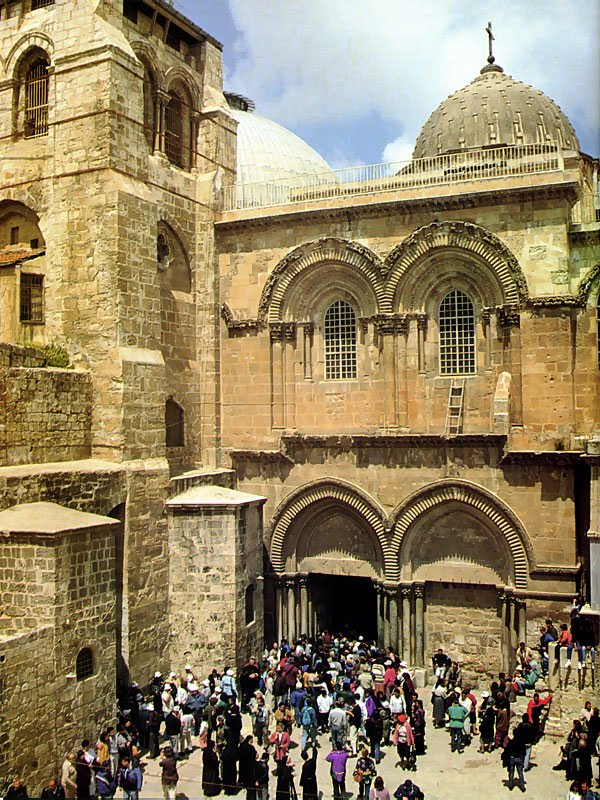
One of the dreams my wife and I have is to go on a tour of the Holy Land. We want to make a pilgrimage there and see the sights and holy places where the greatest story ever told took place. That is a trip we are really looking forward to.
There are many sites outside of the Holy Land to make a pilgrimage to as well. Lourdes, Fatima, and Guadalupe come to mind. So many places, so little time, and dare I say it, so little cash. But there is a way to go to the Holy Land this week right in your local parish.
How? Via the devotional of The Stations of the Cross, also known as The Way of the Cross. The Stations of the Cross are a Catholic devotion that commemorates the Passion and death of our Lord Jesus Christ. Each of the stations represents an event that occurred during Jesus’ Passion and death at Calvary on Good Friday.

The Stations were originally performed many centuries ago by Christian pilgrims who visited the Holy Land and the sites of Jesus’ Passion. Promotion of the devotion to the Stations began in earnest with the Franciscans, who were given custody of the Holy Places in Palestine in the 1300s. Countless Catholic Christians have enriched their spiritual lives with this powerful devotion, and I am happy to be included in their number now.
In a nutshell, The Stations is a devotion to the Passion of Our Lord consisting of prayers and meditations on the fourteen events experienced by Jesus on His way to and during the Crucifixion. The devotion originated in the late 4th century when pilgrims flocked to the Holy Land from all parts of the world to visit the land of Jesus. Heading the list of places they visited was the Church of the Holy Sepulcher, which was built by the Emperor Constantine in 325-335 AD atop Calvary, as well as the tomb of Jesus. Processions of pilgrims to this church were common then and now.
During the time of the crusades (1095–1270), it became popular for pilgrims in the Holy Land to walk in the footsteps of Jesus to Calvary. After the Moslems recaptured the Holy Land, pilgrimages became too dangerous. As a result, the Stations of the Cross became a popular substitute pilgrimage throughout Europe.
Originally done only outdoors, the Stations were allowed inside churches in the mid-18th century. Eventually fixed at fourteen, the Stations soon became a familiar feature in all Catholic churches. They place you at the scene of Our Lord’s Crucifixion much as the old You Are There television series did for historical events.
The devotion may be conducted personally by an individual, making their way from one station to another and saying the prayers, or by having an officiating celebrant move from cross to cross while the faithful make the responses. I heartily recommend this second method, with your parish priest as celebrant and like-minded parishioners in attendance. And the kids? Bring them if you have them! Just as Webster experienced when he was teaching his CCD class how to pray the Rosary, your children will amaze you with their recognition of the holiness of this devotion.
In our parish, the Stations are conducted every Friday evening during Lent after the Lenten Dinner. The dinner and the devotion are hosted by a different parish ministry each week. I served in the scullery when the Men’s Ministry hosted the dinner, and I was one of the readers of the devotion (the 13th Station) as well.
One of the reasons I became a Catholic is that I want to live my faith life out not only in a spiritual way, but in a physical way as well. This is especially true during the Lenten season, when we are fasting. Devotions such as this are one of the defining differences in my life that I desired when I became a Catholic Christian. This devotion in particular has deepened my understanding and appreciation for what Our Lord endured for the benefit of all mankind.
In the long run, my wife and I will keep saving a little bit here and there for that chance to make a pilgrimage to Israel in the future. In the short run, we’ll be heading to the Holy Land via our parish church. I hope you will take advantage of this opportunity too.
For more on the Stations of the Cross, go to New Advent.

Previous Post

March 8, 2010
Because Breast is Best (in honor of International Women’s Day)
Next Post
March 9, 2010 Because Catholics Can Take a Joke
Browse Our Archives
Select a Category Blog News Conversion Story Culture Learning Living Nature Prayer Uncategorized Working
Select a Month June 2016 May 2016 August 2015 July 2015 June 2015 May 2015 April 2015 March 2015 February 2015 January 2015 December 2014 November 2014 October 2014 September 2014 August 2014 July 2014 June 2014 May 2014 April 2014 March 2014 February 2014 January 2014 December 2013 November 2013 October 2013 September 2013 August 2013 July 2013 June 2013 May 2013 April 2013 March 2013 February 2013 January 2013 December 2012 November 2012 October 2012 September 2012 August 2012 July 2012 June 2012 May 2012 April 2012 March 2012 February 2012 January 2012 December 2011 November 2011 October 2011 September 2011 August 2011 July 2011 June 2011 May 2011 April 2011 March 2011 February 2011 January 2011 December 2010 November 2010 October 2010 September 2010 August 2010 July 2010 June 2010 May 2010 April 2010 March 2010 February 2010 January 2010 December 2009 November 2009 October 2009 September 2009 August 2009
Follow Us!
TAKE THE
Religious Wisdom Quiz
Who is credited with writing much of Proverbs?
Select your answer to see how you score.
Hezekiah Agur David Solomon
Related posts from Why I Am Catholic

Belated Happy Birthday To Blaise Pascal, Unofficial Saint...

Because My Brother Imran Yousef Is An American...

Joe Six-Pack, USMC, With A Few Post-Terrorist Attack...

This Is Why God Invented YouTube...
TRENDING AT PATHEOS Catholic

The Parable Of The Sower And The Word...
One of Christ’s most famous parables is that of the sower who...

Rejecting Doom: Christian Hope And Human Action
Christianity is a religion of hope. We are to have hope and...

Why I Choose the Eucharist Over the Sermon
Choose the Eucharist, Not the Sermon What are we supposed to get...

5 Design Elements Found in Spiritually Rooted Homes
Putting Spirituality Into Home Decor Our homes are more than our living...

Credo: A Story of God Told with the...
About 10 years ago, I began to imagine a personal "Credo" that...

The Anatomy of Divine Revelation in Catholic Thought
The claim that God has made Himself known to human beings is...
Ad-Free & Subscriber Log-In Subscription Support
- About Us
- 2026 Calendar
- Videos
- Podcasts
- Library of World Religions
- Faith In Media Tracker
- Advertise With Us
- Write for Us
- Privacy Policy
- Terms of Service
- Do Not Sell My Data
- Contact Us
- Radiant Digital
- Manage Newsletter Subscriptions
- Unsubscribe From Notifications
- Sitemap
Copyright 2008-2026, Patheos. All rights reserved.
Subscription Support Ad-Free & Subscriber Log-In
Follow Patheos