
BuddhistCatholicContemplativeEvangelicalGeneral ChristianHinduJewishLatter-day SaintMuslimNew VisionsProgressive Christian
Beliefs
- Buddhist
- Catholic
- Contemplative
- Evangelical
- General Christian
- Hindu
- Jewish
- Latter-day Saint
- More Voices
- Muslim
- New Visions
- Pagan
- Progressive Christian
Topics
- Religion News
- Food and Religion
- Sports and Religion
- Religious Art
- Religious Music and Entertainment
- Religious Events
- History and Religion
- Style and Religion
- Politics and Religion
- Women in Religion
- Recreation Outdoors and Religion
- Business Finance and Religion
- Careers Workplace and Religion
- Education and Religion
- Family Parenting and Religion
- Health Fitness and Religion
- Home and Religion
- Relationships and Religion
- Technology and Religion
- Travel and Religion
Columnists
- Buddhist Columnists
- Business Finance and Religion Columnists
- Careers Workplace and Religion Columnists
- Catholic Columnists
- Contemplative Columnists
- Education and Religion Columnists
- Evangelists Columnists
- Family Parenting and Religion Columnists
- General Christian Columnists
- Health Fitness and Religion Columnists
- Hindu Columnists
- History and Religion Columnists
- Home and Religion Columnists
- Jewish Columnists
- More Voices Columnists
- Latter Day Columnists
- Muslim Columnists
- New Visions Columnists
- Nonreligious Columnists
- Pagan Columnists
- Politics and Religion Columnists
- Progressive Columnists
- Recreation Outdoors and Religion Columnists
- Relationships and Religion Columnists
- Religion News Columnists
- Religious Art Columnists
- Religious Events Columnists
- Religious Music and Entertainment Columnists
- Sports and Religion Columnists
- Style and Religion Columnists
- Technology and Religion Columnists
- Travel and Religion Columnists
- Women in Religion Columnists
Resource Library
- 2026 Calendar
- Library of World Religions
- The 100 Most Holy Places on Earth
- Patheos Answers
- Podcasts
- Videos
- Faith Leaders Database
- Anglican Episcopalian
- Bahai
- Baptist
- Buddhism
- Christianity
- Confucianism
- Eastern Orthodoxy
- Hinduism
- Holiness and Pentecostal
- ISKCON
- Islam
- Judaism
- Lutheran
- Methodist
- The Church of Jesus Christ of Latter-day Saints
- New Age
- Paganism
- Presbytarian and Reformed
- Protestantism
- Religion Behind the Scenes
- Roman Catholic
- Scientology
- Shia Islam
- Sikhism
- Sufism
- Sunni Islam
- Taoism
- Zen
- See all religions
Research Tools
 Ad-Free & Subscriber Log-In Subscription Support
Ad-Free & Subscriber Log-In Subscription Support
Follow Patheos 

- Trending:
- Forgiveness
- |
- Marriage
- |
- Consciousness
- |
- Death Penalty
- |
- Election
- |
- Halloween
 Why I Am Catholic
-
More
- Home
- YIMC Book Club, “Orthodoxy,” Chapter 7
YIMC Book Club, “Orthodoxy,” Chapter 7
Last updated on: January 24, 2017 at 7:14 pm by Webster Bull
YIMC Book Club, “Orthodoxy,” Chapter 7 2017-01-24T19:14:04-05:00 Webster Bull
Patheos Explore the world's faith through different perspectives on religion and spirituality! Patheos has the views of the prevalent religions and spiritualities of the world.
Posted by Webster
This is my favorite chapter in the book, partly because it highlights two things that are important to me, even if they are often opposed: levity and marriage. Let me begin with levity and end with marriage.
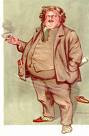
Anyone who has ever been a stage actor, as I was in my youth and still am in both my dreams and my nightmares, knows that no truer words were ever written:
Pride is the downward drag of all things into an easy solemnity. One “settles down” into a sort of selfish seriousness; but one has to rise to a gay self-forgetfulness. . . . It is much easier to write a good Times leading article than a good joke in Punch. For solemnity flows out of men naturally; but laughter is a leap. It is easy to be heavy: hard to be light. Satan fell by the force of gravity.
If you ever took part in a dreary high school production of Macbeth or The Death of a Salesman, as I did (I was Malcolm in the Shakespeare, the ironically named Happy in Arthur Miller’s modern tragedy), you know how easy it is to play “serious.” But have you ever tried reading a script by Molière or Neil Simon and making it funny? It’s the hardest thing in the world.
Now, how does Chesterton get here, and what the heck does this have to do with Orthodoxy, Christianity, or our obsession, Catholicism? Good question. I’m not entirely sure I can answer this cogently. So I’ll just offer a few bullet thoughts, then turn over the mic to commenters.
Continuing his tactic of defining a complete and perfect system of values—only to find that Christianity defined the system 2,000 years ago—Chesterton says that true progress or reform, which we all think we want, must be defined by three qualities:
1. There must be a fixed ideal for our final state of perfection, happiness, Utopia. The modern tendency is to change our ideals every five minutes.
2. The ideal state must be “composite,” a state in which things are in the right proportion and not all this or that. We do not want a painting that is all black or all white; we want a harmonious composition.
3. The ideal state can be reached and, especially, safeguarded only through watchfulness, vigilance. Here, two-thirds of the way through the chapter, Chesterton gives the most compelling explanation of original sin, the Fall, that I have ever read.
At the end of the chapter, Chesterton proposes Christian marriage as another element of his Utopia—one that he could have invented himself, except that Christianity already did so. The key Utopian principle defining marriage is, it matters, it’s for keeps. In one of his most beautiful paradoxes, Chesterton writes that marriage is the paramount example of a man, me, exercising “the liberty to bind myself.”
Christian marriage is the great example of a real and irrevocable result; and that is why it is the chief subject and centre of all our romantic writing. And this is my last instance of the things that I should ask, and ask imperatively, of any social paradise; I should ask to be kept to my bargain, to have my oaths and engagements taken seriously; I should ask Utopia to avenge my honour on myself.
I think I’ll go ask Katie if she’d like to go for a walk.

Previous Post

January 1, 2010
Because of the Pleasure of Finding Things Out
Next Post
January 2, 2010 For All the Saints: Basil and Gregory
Browse Our Archives
Select a Category Blog News Conversion Story Culture Learning Living Nature Prayer Uncategorized Working
Select a Month June 2016 May 2016 August 2015 July 2015 June 2015 May 2015 April 2015 March 2015 February 2015 January 2015 December 2014 November 2014 October 2014 September 2014 August 2014 July 2014 June 2014 May 2014 April 2014 March 2014 February 2014 January 2014 December 2013 November 2013 October 2013 September 2013 August 2013 July 2013 June 2013 May 2013 April 2013 March 2013 February 2013 January 2013 December 2012 November 2012 October 2012 September 2012 August 2012 July 2012 June 2012 May 2012 April 2012 March 2012 February 2012 January 2012 December 2011 November 2011 October 2011 September 2011 August 2011 July 2011 June 2011 May 2011 April 2011 March 2011 February 2011 January 2011 December 2010 November 2010 October 2010 September 2010 August 2010 July 2010 June 2010 May 2010 April 2010 March 2010 February 2010 January 2010 December 2009 November 2009 October 2009 September 2009 August 2009
Follow Us!
TAKE THE
Religious Wisdom Quiz
Who is credited with predicting Cyrus by name, who would rebuild Jerusalem?
Select your answer to see how you score.
Isaiah Zechariah Ezekiel Jeremiah
Related posts from Why I Am Catholic

Belated Happy Birthday To Blaise Pascal, Unofficial Saint...

Because My Brother Imran Yousef Is An American...

Because of G.K. Chesterton (29 May, 1874 – 14 June, 1936)

Joe Six-Pack, USMC, With A Few Post-Terrorist Attack...
TRENDING AT PATHEOS Catholic

Rejecting Doom: Christian Hope And Human Action
Christianity is a religion of hope. We are to have hope and...

It’s What Comes From Within Which Matters
One of the most difficult things for us to understand is why...

Why I Choose the Eucharist Over the Sermon
Choose the Eucharist, Not the Sermon What are we supposed to get...

5 Design Elements Found in Spiritually Rooted Homes
Putting Spirituality Into Home Decor Our homes are more than our living...

Credo: A Story of God Told with the...
About 10 years ago, I began to imagine a personal "Credo" that...

The Anatomy of Divine Revelation in Catholic Thought
The claim that God has made Himself known to human beings is...
Ad-Free & Subscriber Log-In Subscription Support
- About Us
- 2026 Calendar
- Videos
- Podcasts
- Library of World Religions
- Faith In Media Tracker
- Advertise With Us
- Write for Us
- Privacy Policy
- Terms of Service
- Do Not Sell My Data
- Contact Us
- Radiant Digital
- Manage Newsletter Subscriptions
- Unsubscribe From Notifications
- Sitemap
Copyright 2008-2026, Patheos. All rights reserved.
Subscription Support Ad-Free & Subscriber Log-In
Follow Patheos