
BuddhistCatholicContemplativeEvangelicalGeneral ChristianHinduJewishLatter-day SaintMuslimNew VisionsProgressive Christian
Beliefs
- Buddhist
- Catholic
- Contemplative
- Evangelical
- General Christian
- Hindu
- Jewish
- Latter-day Saint
- More Voices
- Muslim
- New Visions
- Pagan
- Progressive Christian
Topics
- Religion News
- Food and Religion
- Sports and Religion
- Religious Art
- Religious Music and Entertainment
- Religious Events
- History and Religion
- Style and Religion
- Politics and Religion
- Women in Religion
- Recreation Outdoors and Religion
- Business Finance and Religion
- Careers Workplace and Religion
- Education and Religion
- Family Parenting and Religion
- Health Fitness and Religion
- Home and Religion
- Relationships and Religion
- Technology and Religion
- Travel and Religion
Columnists
- Buddhist Columnists
- Business Finance and Religion Columnists
- Careers Workplace and Religion Columnists
- Catholic Columnists
- Contemplative Columnists
- Education and Religion Columnists
- Evangelists Columnists
- Family Parenting and Religion Columnists
- General Christian Columnists
- Health Fitness and Religion Columnists
- Hindu Columnists
- History and Religion Columnists
- Home and Religion Columnists
- Jewish Columnists
- More Voices Columnists
- Latter Day Columnists
- Muslim Columnists
- New Visions Columnists
- Nonreligious Columnists
- Pagan Columnists
- Politics and Religion Columnists
- Progressive Columnists
- Recreation Outdoors and Religion Columnists
- Relationships and Religion Columnists
- Religion News Columnists
- Religious Art Columnists
- Religious Events Columnists
- Religious Music and Entertainment Columnists
- Sports and Religion Columnists
- Style and Religion Columnists
- Technology and Religion Columnists
- Travel and Religion Columnists
- Women in Religion Columnists
Resource Library
- 2026 Calendar
- Library of World Religions
- The 100 Most Holy Places on Earth
- Patheos Answers
- Podcasts
- Videos
- Faith Leaders Database
- Anglican Episcopalian
- Bahai
- Baptist
- Buddhism
- Christianity
- Confucianism
- Eastern Orthodoxy
- Hinduism
- Holiness and Pentecostal
- ISKCON
- Islam
- Judaism
- Lutheran
- Methodist
- The Church of Jesus Christ of Latter-day Saints
- New Age
- Paganism
- Presbytarian and Reformed
- Protestantism
- Religion Behind the Scenes
- Roman Catholic
- Scientology
- Shia Islam
- Sikhism
- Sufism
- Sunni Islam
- Taoism
- Zen
- See all religions
Research Tools
 Ad-Free & Subscriber Log-In Subscription Support
Ad-Free & Subscriber Log-In Subscription Support
Follow Patheos 

- Trending:
- Forgiveness
- |
- Marriage
- |
- Consciousness
- |
- Death Penalty
- |
- Election
- |
- Halloween
 Why I Am Catholic
-
More
- Home
- To Teach Fourth-Graders the Fourth Commandment
To Teach Fourth-Graders the Fourth Commandment
Last updated on: January 24, 2017 at 7:13 pm by Webster Bull
To Teach Fourth-Graders the Fourth Commandment 2017-01-24T19:13:22-05:00 Webster Bull
Patheos Explore the world's faith through different perspectives on religion and spirituality! Patheos has the views of the prevalent religions and spiritualities of the world.
Posted by Webster
My religious ed class was more unruly than ever yesterday afternoon; every minute I had to shush and beg thirteen 9-10-year-olds to listen to one another. But there was one moment of silence near the end of the class that I will not forget soon. It had to do with the Fourth Commandment.
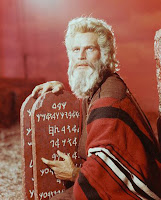
Don’t kill anyone. Good, “You shall not kill.” Who else?
Don’t take anything from someone. Excellent, “You shall not steal.” How about another Commandment?
Don’t get divorced. . . .
I felt a preliminary tug at my heart from these words. They were offered sotto voce by a child whose parents may be separated. I acknowledged that this was a correct answer, although I rephrased it: “You shall not commit adultery.” We talked about this for a bit and what it meant.
K., a boy whose Attitude is as big as he is small, nailed the next one: Don’t take God’s name in vain, and C., another boy, clearly understood Respect your mother and father. We talked of “honoring” not only parents but priests, teachers, mentors, elders.
Then came another S. moment. S. is a pale, thin girl whom I have described before. I usually have to ask her questions three or four times, walking closer each time until, my ear virtually on her lips, I hear what she has to say, and it’s always on the money. I told the class that getting Five Commandments was stellar, that I didn’t expect them to remember any more, that I would be amazed if anyone could come up with Number Six—whereupon S.’s hand went up, haltingly, meekly, her gaze barely grazing my own. I asked my four questions, moved closer, and finally heard: Don’t believe in other gods.
Which is, of course, the big Number One: “I am the Lord your God, who brought you out of the land of Egypt, out of the house of bondage. You shall have no other gods before me. . . . ” I congratulated S., and she shrugged, lapsing back into body language that usually seems to say, I have nothing to say and even if I did, so what?
I had Six of Ten, and that was enough. I congratulated the class and began building the list backward from Number Ten, “You shall not covet your neighbor’s goods,” and Number Nine, “Ditto your neighbor’s wife.” We discussed the meaning of covet and that other odd term, bear false witness, in Number Eight. Stealing, adultery, and killing were a quick Seven, Six, and Five. We came then to Number Four, “Honor your Father and Mother.”
I said, as delicately as I knew how, that this could be a tough Commandment for some people to follow, that not every parent is perfect, that I have a friend who had a mean parent, that there may even be some of us in this room whose parents do things we can’t understand. Not all Catholic parents are like Frank, I would think later yesterday, when I read his latest post. But God wants us to honor our parents anyway. A boy looked at me wide-eyed and asked, Even parents who aren’t nice? Even them. The room was silent for the first time. Every pair of eyes was looking at me.
Honestly, I know nothing about the personal lives of virtually any of my students, and I really don’t want to know. It’s not my business. I have met almost none of their parents, and the ones I have met are nice enough, and I am sure there are many happy family times for the children in my class. But I know what the statistics say: that half of all marriages in our country are in enough trouble to end sooner or later. I know that Catholics are not exempt from such statistics, no matter what the Church teaches. Logic tells me that six, seven, eight or even more of the children in my class will have genuine difficulty putting the Fourth Commandment into practice. I felt helpless in the face of this, but went on gamely to talk about the first three Commandments, including the one no one had mentioned: “Observe the sabbath day, to keep it holy.” I urged them to ask their parents to take them to Mass.
I told Katie about the class at dinner. She made several good points, and this was one of them: Whether or not there are any troubled families involved here, the fact is, the parents of these children are all sending them to religious ed class. Perhaps, Katie said, in some cases, they are sending them to religious ed because they know they are inadequate as parents (as Katie and I know we are sometimes inadequate), and yet these parents still want what’s right for their children. Even though they themselves probably see their own contradictions, they send their children to your class, Webster, in the hopes that the children will bring something good home with them, something that will stay with them for the rest of their lives.
I was very touched by this observation from my wife, who is in many ways a better Catholic than I am.

Previous Post

January 13, 2010
Because Being a Parent is a Vocation
Next Post
January 14, 2010 To Defend My Faith
Browse Our Archives
Select a Category Blog News Conversion Story Culture Learning Living Nature Prayer Uncategorized Working
Select a Month June 2016 May 2016 August 2015 July 2015 June 2015 May 2015 April 2015 March 2015 February 2015 January 2015 December 2014 November 2014 October 2014 September 2014 August 2014 July 2014 June 2014 May 2014 April 2014 March 2014 February 2014 January 2014 December 2013 November 2013 October 2013 September 2013 August 2013 July 2013 June 2013 May 2013 April 2013 March 2013 February 2013 January 2013 December 2012 November 2012 October 2012 September 2012 August 2012 July 2012 June 2012 May 2012 April 2012 March 2012 February 2012 January 2012 December 2011 November 2011 October 2011 September 2011 August 2011 July 2011 June 2011 May 2011 April 2011 March 2011 February 2011 January 2011 December 2010 November 2010 October 2010 September 2010 August 2010 July 2010 June 2010 May 2010 April 2010 March 2010 February 2010 January 2010 December 2009 November 2009 October 2009 September 2009 August 2009
Follow Us!
TAKE THE
Religious Wisdom Quiz
True or False: Solomon asked God for wisdom rather than wealth or long life.
Select your answer to see how you score.
FALSE TRUE
Related posts from Why I Am Catholic

Belated Happy Birthday To Blaise Pascal, Unofficial Saint...

Because My Brother Imran Yousef Is An American...

Because of G.K. Chesterton (29 May, 1874 – 14 June, 1936)

Joe Six-Pack, USMC, With A Few Post-Terrorist Attack...
TRENDING AT PATHEOS Catholic

Rejecting Doom: Christian Hope And Human Action
Christianity is a religion of hope. We are to have hope and...

It’s What Comes From Within Which Matters
One of the most difficult things for us to understand is why...

Why I Choose the Eucharist Over the Sermon
Choose the Eucharist, Not the Sermon What are we supposed to get...

5 Design Elements Found in Spiritually Rooted Homes
Putting Spirituality Into Home Decor Our homes are more than our living...

Credo: A Story of God Told with the...
About 10 years ago, I began to imagine a personal "Credo" that...

The Anatomy of Divine Revelation in Catholic Thought
The claim that God has made Himself known to human beings is...
Ad-Free & Subscriber Log-In Subscription Support
- About Us
- 2026 Calendar
- Videos
- Podcasts
- Library of World Religions
- Faith In Media Tracker
- Advertise With Us
- Write for Us
- Privacy Policy
- Terms of Service
- Do Not Sell My Data
- Contact Us
- Radiant Digital
- Manage Newsletter Subscriptions
- Unsubscribe From Notifications
- Sitemap
Copyright 2008-2026, Patheos. All rights reserved.
Subscription Support Ad-Free & Subscriber Log-In
Follow Patheos