
BuddhistCatholicContemplativeEvangelicalGeneral ChristianHinduJewishLatter-day SaintMuslimNew VisionsProgressive Christian
Beliefs
- Buddhist
- Catholic
- Contemplative
- Evangelical
- General Christian
- Hindu
- Jewish
- Latter-day Saint
- More Voices
- Muslim
- New Visions
- Pagan
- Progressive Christian
Topics
- Religion News
- Food and Religion
- Sports and Religion
- Religious Art
- Religious Music and Entertainment
- Religious Events
- History and Religion
- Style and Religion
- Politics and Religion
- Women in Religion
- Recreation Outdoors and Religion
- Business Finance and Religion
- Careers Workplace and Religion
- Education and Religion
- Family Parenting and Religion
- Health Fitness and Religion
- Home and Religion
- Relationships and Religion
- Technology and Religion
- Travel and Religion
Columnists
- Buddhist Columnists
- Business Finance and Religion Columnists
- Careers Workplace and Religion Columnists
- Catholic Columnists
- Contemplative Columnists
- Education and Religion Columnists
- Evangelists Columnists
- Family Parenting and Religion Columnists
- General Christian Columnists
- Health Fitness and Religion Columnists
- Hindu Columnists
- History and Religion Columnists
- Home and Religion Columnists
- Jewish Columnists
- More Voices Columnists
- Latter Day Columnists
- Muslim Columnists
- New Visions Columnists
- Nonreligious Columnists
- Pagan Columnists
- Politics and Religion Columnists
- Progressive Columnists
- Recreation Outdoors and Religion Columnists
- Relationships and Religion Columnists
- Religion News Columnists
- Religious Art Columnists
- Religious Events Columnists
- Religious Music and Entertainment Columnists
- Sports and Religion Columnists
- Style and Religion Columnists
- Technology and Religion Columnists
- Travel and Religion Columnists
- Women in Religion Columnists
Resource Library
- 2026 Calendar
- Library of World Religions
- The 100 Most Holy Places on Earth
- Patheos Answers
- Podcasts
- Videos
- Faith Leaders Database
- Anglican Episcopalian
- Bahai
- Baptist
- Buddhism
- Christianity
- Confucianism
- Eastern Orthodoxy
- Hinduism
- Holiness and Pentecostal
- ISKCON
- Islam
- Judaism
- Lutheran
- Methodist
- The Church of Jesus Christ of Latter-day Saints
- New Age
- Paganism
- Presbytarian and Reformed
- Protestantism
- Religion Behind the Scenes
- Roman Catholic
- Scientology
- Shia Islam
- Sikhism
- Sufism
- Sunni Islam
- Taoism
- Zen
- See all religions
Research Tools
 Ad-Free & Subscriber Log-In Subscription Support
Ad-Free & Subscriber Log-In Subscription Support
Follow Patheos 

- Trending:
- Forgiveness
- |
- Marriage
- |
- Consciousness
- |
- Death Penalty
- |
- Election
- |
- Halloween
 Why I Am Catholic
-
More
- Home
- YIMC Book Club, “Orthodoxy,” Chapter 6
YIMC Book Club, “Orthodoxy,” Chapter 6
Last updated on: January 24, 2017 at 7:14 pm by Webster Bull
YIMC Book Club, “Orthodoxy,” Chapter 6 2017-01-24T19:14:38-05:00 Webster Bull
Patheos Explore the world's faith through different perspectives on religion and spirituality! Patheos has the views of the prevalent religions and spiritualities of the world.
Guest post by EPG
(With Webster on vacation, one of our more dedicated YIMCBC members has offered these excellent notes. If you are just coming aboard, you can catch up with our discussion by clicking on—Chapter 1, Chapter 2, Chapter 3, Chapter 4, and Chapter 5.)
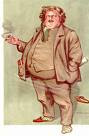
In the first five chapters, Chesterton described the development of his personal creed, and how he gradually began to see that the things that he came to believe on his own (a sort of “natural theology”) ran parallel to what the Church has taught throughout history.
(It’s worth remembering here that, when he wrote Orthodoxy, Chesterton was not yet a Catholic, but still an Anglican. The Christian orthodoxy that Chesterton describes in this volume is probably best understood as that which all Christians at all times could reasonably be expected to agree upon—what C.S. Lewis a few decades later described as “mere” Christianity.)
In Chapter 6, after a few pages of preamble, Chesterton assesses certain arguments against the Church. Although he was initially inclined to accept those arguments, he found the Church’s critics essentially canceling each other out, hence the “paradoxes” of which he writes.
Before we move to the main part of the chapter, however, it is worth pausing to consider his appreciation of the eccentricity of life: “Life is not an illogicality; yet it is a trap for logicians.” Life is not a mathematical construct: everything, although constructed within the scope of the overall order, contains surprises. “An apple or an orange is round enough to get itself called round, and yet is not round after all.” The Creator, it appears, is not coldly playing with geometry, but instead creates with love, with attention not only to the platonic ideal of apple, but to each individual apple.
Chesterton reviews the paradoxical complaints against Christianity: Christianity is too pessimistic, Christianity is too optimistic; Christianity, by drawing some to the cloister, is anti-family, but Christianity also relegates women to the hearth and home; Christianity, in urging its members to turn the other cheek, is too pacifistic, Christianity has caused untold wars and suffering. Chesterton does it much better than I could, so I don’t intend to summarize farther.
Chesterton then gets to the main point: The Church somehow holds all these extremes, the warrior and the pacifist, the contemplative and the activist, the ascetic and the esthetic, within itself. Not in a watered down sense, with each component averaging out with the others into a uniform gray. Not even in tension, although that is closer to the truth. Instead, it appears that each component is allowed full rein to follow its vocation. The contemplatives are supposed to contemplate. The pacifists urge peace; the warriors (within their proper scope) fight “like thunderbolts.” Or, as he observes, the Church “has at once . . . been fiercely for having children and fiercely for not having children. It has kept them side by side like two strong colors.”
Perhaps these differences could be described in terms of vocation. Some are called to one thing, some to its apparent opposite. Each vocation reflects the individual qualities with which we are endowed, and each (properly exercised) has its role in the whole. We are not all geometrically perfect apples, we all vary from the pattern, and vary just enough not to be quite “round.” But we each have our place within the larger pattern, as individuals.
C.S. Lewis wrote something to the effect that the saints are not all alike. As we progress toward holiness, we (each of us) become more like ourselves (our selves as God intended them to be). Our union with God is not like the Borg of the Star Trek series, in which the components lose their individuality. Similarly, under Chesterton’s vision of orthodoxy, each of us is given room to be a stripe in the pattern—existing side by side with the lion and the lamb, in that miracle where the lion lays down with the lamb, and yet retains his “royal ferocity.”

Previous Post

December 24, 2009
Because Going To Mass On Vacation Is Easy II
Next Post
December 26, 2009 Because of Priests Young and Old
Browse Our Archives
Select a Category Blog News Conversion Story Culture Learning Living Nature Prayer Uncategorized Working
Select a Month June 2016 May 2016 August 2015 July 2015 June 2015 May 2015 April 2015 March 2015 February 2015 January 2015 December 2014 November 2014 October 2014 September 2014 August 2014 July 2014 June 2014 May 2014 April 2014 March 2014 February 2014 January 2014 December 2013 November 2013 October 2013 September 2013 August 2013 July 2013 June 2013 May 2013 April 2013 March 2013 February 2013 January 2013 December 2012 November 2012 October 2012 September 2012 August 2012 July 2012 June 2012 May 2012 April 2012 March 2012 February 2012 January 2012 December 2011 November 2011 October 2011 September 2011 August 2011 July 2011 June 2011 May 2011 April 2011 March 2011 February 2011 January 2011 December 2010 November 2010 October 2010 September 2010 August 2010 July 2010 June 2010 May 2010 April 2010 March 2010 February 2010 January 2010 December 2009 November 2009 October 2009 September 2009 August 2009
Follow Us!
TAKE THE
Religious Wisdom Quiz
What does "Apostle" mean in Greek?
Select your answer to see how you score.
One who is sent Elder King Preacher
Related posts from Why I Am Catholic

Belated Happy Birthday To Blaise Pascal, Unofficial Saint...

Because My Brother Imran Yousef Is An American...

Because of G.K. Chesterton (29 May, 1874 – 14 June, 1936)

Joe Six-Pack, USMC, With A Few Post-Terrorist Attack...
TRENDING AT PATHEOS Catholic

The Parable Of The Sower And The Word...
One of Christ’s most famous parables is that of the sower who...

Rejecting Doom: Christian Hope And Human Action
Christianity is a religion of hope. We are to have hope and...

Why I Choose the Eucharist Over the Sermon
Choose the Eucharist, Not the Sermon What are we supposed to get...

5 Design Elements Found in Spiritually Rooted Homes
Putting Spirituality Into Home Decor Our homes are more than our living...

Credo: A Story of God Told with the...
About 10 years ago, I began to imagine a personal "Credo" that...

The Anatomy of Divine Revelation in Catholic Thought
The claim that God has made Himself known to human beings is...
Ad-Free & Subscriber Log-In Subscription Support
- About Us
- 2026 Calendar
- Videos
- Podcasts
- Library of World Religions
- Faith In Media Tracker
- Advertise With Us
- Write for Us
- Privacy Policy
- Terms of Service
- Do Not Sell My Data
- Contact Us
- Radiant Digital
- Manage Newsletter Subscriptions
- Unsubscribe From Notifications
- Sitemap
Copyright 2008-2026, Patheos. All rights reserved.
Subscription Support Ad-Free & Subscriber Log-In
Follow Patheos