
BuddhistCatholicContemplativeEvangelicalGeneral ChristianHinduJewishLatter-day SaintMuslimNew VisionsProgressive Christian
Beliefs
- Buddhist
- Catholic
- Contemplative
- Evangelical
- General Christian
- Hindu
- Jewish
- Latter-day Saint
- More Voices
- Muslim
- New Visions
- Pagan
- Progressive Christian
Topics
- Religion News
- Food and Religion
- Sports and Religion
- Religious Art
- Religious Music and Entertainment
- Religious Events
- History and Religion
- Style and Religion
- Politics and Religion
- Women in Religion
- Recreation Outdoors and Religion
- Business Finance and Religion
- Careers Workplace and Religion
- Education and Religion
- Family Parenting and Religion
- Health Fitness and Religion
- Home and Religion
- Relationships and Religion
- Technology and Religion
- Travel and Religion
Columnists
- Buddhist Columnists
- Business Finance and Religion Columnists
- Careers Workplace and Religion Columnists
- Catholic Columnists
- Contemplative Columnists
- Education and Religion Columnists
- Evangelists Columnists
- Family Parenting and Religion Columnists
- General Christian Columnists
- Health Fitness and Religion Columnists
- Hindu Columnists
- History and Religion Columnists
- Home and Religion Columnists
- Jewish Columnists
- More Voices Columnists
- Latter Day Columnists
- Muslim Columnists
- New Visions Columnists
- Nonreligious Columnists
- Pagan Columnists
- Politics and Religion Columnists
- Progressive Columnists
- Recreation Outdoors and Religion Columnists
- Relationships and Religion Columnists
- Religion News Columnists
- Religious Art Columnists
- Religious Events Columnists
- Religious Music and Entertainment Columnists
- Sports and Religion Columnists
- Style and Religion Columnists
- Technology and Religion Columnists
- Travel and Religion Columnists
- Women in Religion Columnists
Resource Library
- 2026 Calendar
- Library of World Religions
- The 100 Most Holy Places on Earth
- Patheos Answers
- Podcasts
- Videos
- Faith Leaders Database
- Anglican Episcopalian
- Bahai
- Baptist
- Buddhism
- Christianity
- Confucianism
- Eastern Orthodoxy
- Hinduism
- Holiness and Pentecostal
- ISKCON
- Islam
- Judaism
- Lutheran
- Methodist
- The Church of Jesus Christ of Latter-day Saints
- New Age
- Paganism
- Presbytarian and Reformed
- Protestantism
- Religion Behind the Scenes
- Roman Catholic
- Scientology
- Shia Islam
- Sikhism
- Sufism
- Sunni Islam
- Taoism
- Zen
- See all religions
Research Tools
 Ad-Free & Subscriber Log-In Subscription Support
Ad-Free & Subscriber Log-In Subscription Support
Follow Patheos 

- Trending:
- Forgiveness
- |
- Marriage
- |
- Consciousness
- |
- Death Penalty
- |
- Election
- |
- Halloween
 Why I Am Catholic
-
More
- Home
- YIMC Book Club, “Orthodoxy,” Chapter 4
YIMC Book Club, “Orthodoxy,” Chapter 4
Last updated on: January 24, 2017 at 7:16 pm by Webster Bull
YIMC Book Club, “Orthodoxy,” Chapter 4 2017-01-24T19:16:18-05:00 Webster Bull
Patheos Explore the world's faith through different perspectives on religion and spirituality! Patheos has the views of the prevalent religions and spiritualities of the world.
Posted by Webster
Earlier today, I posted the current membership roll. All are welcome to join the discussion, and if new readers leave a comment, they will be added to next week’s roll. (Late breaking news: Turgonian, a student from the Netherlands with an exceptional blog, “Epigone’s Eloquence,” has joined the YIMCBC. Welcome, Turgo!)
I think we’re all finding Chesterton pretty heavy going, but I think you’ll agree that that’s more a function of his style than of his content. In each chapter, there seem to be two or three central ideas. The rest of it—the alliteration, the analogies, the endless word play—adds up to trimmings on the Chesterton family tree. That said, let me lay out a couple of basic ideas in the next chapter to get the discussion started.
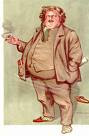
It’s tempting, living in 2009, to think we know more than those who lived in 209. From this side of the Enlightenment, everything prior seems like the Dark Ages, doesn’t it?
That’s one of the thoughts inspired by Chesterton’s preamble to this chapter, in which he refers to tradition as “democracy extended through time” and as “the democracy of the dead.” This is the thing that has struck me most forcibly about Catholicism, that as a member of the Catholic Church, I join ranks with the entire communion of saints. For two thousand years, women and men have been living by these principles, modeling Christ, saying the same prayers, participating in the same Eucharistic Mystery, yes, even going to confession, as my fourth-graders did yesterday. It worked for them. Why wouldn’t it work for me? Why wouldn’t the truths that have stood the test of two millennia not still be true? As I have written in another context, how did we think we were so smart all of a sudden—replacing the democracy of the dead with the aristocracy of the assinine? (I think the only way to meet Chesterton is to fight alliteration with alliteration!)
Chesterton’s ode to tradition takes up the first 15 percent, or so, of the chapter. (And in writing this, wasn’t he saying yes to the Catholic Church, founded on tradition, years before he became a Catholic himself? I think he was.) The rest of the chapter is given over to Elfland. I think others will have better comments here. I frankly got a bit lost.
I did find this passage especially good:
Every man has forgotten who he is. One may understand the cosmos, but never the ego; the self is more distant than any star. Thou shalt love the Lord thy God; but thou shalt not know thyself. We are all under the same mental calamity; we have all forgotten our names. We have all forgotten what we really are. All that we call common sense and rationality and practicality and positivism only means that for certain dead levels of our life we forget that we have forgotten. All that we call spirit and art and ecstacy only means that for one awful instant we remember that we forget.
Like many in Chesterton, this passage gives me something to think about for a long time—at least as long as it will take others to comment on “The Ethics of Elfland.” . . .

Previous Post

December 10, 2009
YIMC Book Club Membership Roll - Update
Next Post
December 11, 2009 For All the Saints: Blessed Arthur Bell
Browse Our Archives
Select a Category Blog News Conversion Story Culture Learning Living Nature Prayer Uncategorized Working
Select a Month June 2016 May 2016 August 2015 July 2015 June 2015 May 2015 April 2015 March 2015 February 2015 January 2015 December 2014 November 2014 October 2014 September 2014 August 2014 July 2014 June 2014 May 2014 April 2014 March 2014 February 2014 January 2014 December 2013 November 2013 October 2013 September 2013 August 2013 July 2013 June 2013 May 2013 April 2013 March 2013 February 2013 January 2013 December 2012 November 2012 October 2012 September 2012 August 2012 July 2012 June 2012 May 2012 April 2012 March 2012 February 2012 January 2012 December 2011 November 2011 October 2011 September 2011 August 2011 July 2011 June 2011 May 2011 April 2011 March 2011 February 2011 January 2011 December 2010 November 2010 October 2010 September 2010 August 2010 July 2010 June 2010 May 2010 April 2010 March 2010 February 2010 January 2010 December 2009 November 2009 October 2009 September 2009 August 2009
Follow Us!
TAKE THE
Religious Wisdom Quiz
Who is credited with predicting Cyrus by name, who would rebuild Jerusalem?
Select your answer to see how you score.
Isaiah Zechariah Ezekiel Jeremiah
Related posts from Why I Am Catholic

Belated Happy Birthday To Blaise Pascal, Unofficial Saint...

Because My Brother Imran Yousef Is An American...

Because of G.K. Chesterton (29 May, 1874 – 14 June, 1936)

Joe Six-Pack, USMC, With A Few Post-Terrorist Attack...
TRENDING AT PATHEOS Catholic

Rejecting Doom: Christian Hope And Human Action
Christianity is a religion of hope. We are to have hope and...

It’s What Comes From Within Which Matters
One of the most difficult things for us to understand is why...

Why I Choose the Eucharist Over the Sermon
Choose the Eucharist, Not the Sermon What are we supposed to get...

5 Design Elements Found in Spiritually Rooted Homes
Putting Spirituality Into Home Decor Our homes are more than our living...

Credo: A Story of God Told with the...
About 10 years ago, I began to imagine a personal "Credo" that...

The Anatomy of Divine Revelation in Catholic Thought
The claim that God has made Himself known to human beings is...
Ad-Free & Subscriber Log-In Subscription Support
- About Us
- 2026 Calendar
- Videos
- Podcasts
- Library of World Religions
- Faith In Media Tracker
- Advertise With Us
- Write for Us
- Privacy Policy
- Terms of Service
- Do Not Sell My Data
- Contact Us
- Radiant Digital
- Manage Newsletter Subscriptions
- Unsubscribe From Notifications
- Sitemap
Copyright 2008-2026, Patheos. All rights reserved.
Subscription Support Ad-Free & Subscriber Log-In
Follow Patheos