
BuddhistCatholicContemplativeEvangelicalGeneral ChristianHinduJewishLatter-day SaintMuslimNew VisionsProgressive Christian
Beliefs
- Buddhist
- Catholic
- Contemplative
- Evangelical
- General Christian
- Hindu
- Jewish
- Latter-day Saint
- More Voices
- Muslim
- New Visions
- Pagan
- Progressive Christian
Topics
- Religion News
- Food and Religion
- Sports and Religion
- Religious Art
- Religious Music and Entertainment
- Religious Events
- History and Religion
- Style and Religion
- Politics and Religion
- Women in Religion
- Recreation Outdoors and Religion
- Business Finance and Religion
- Careers Workplace and Religion
- Education and Religion
- Family Parenting and Religion
- Health Fitness and Religion
- Home and Religion
- Relationships and Religion
- Technology and Religion
- Travel and Religion
Columnists
- Buddhist Columnists
- Business Finance and Religion Columnists
- Careers Workplace and Religion Columnists
- Catholic Columnists
- Contemplative Columnists
- Education and Religion Columnists
- Evangelists Columnists
- Family Parenting and Religion Columnists
- General Christian Columnists
- Health Fitness and Religion Columnists
- Hindu Columnists
- History and Religion Columnists
- Home and Religion Columnists
- Jewish Columnists
- More Voices Columnists
- Latter Day Columnists
- Muslim Columnists
- New Visions Columnists
- Nonreligious Columnists
- Pagan Columnists
- Politics and Religion Columnists
- Progressive Columnists
- Recreation Outdoors and Religion Columnists
- Relationships and Religion Columnists
- Religion News Columnists
- Religious Art Columnists
- Religious Events Columnists
- Religious Music and Entertainment Columnists
- Sports and Religion Columnists
- Style and Religion Columnists
- Technology and Religion Columnists
- Travel and Religion Columnists
- Women in Religion Columnists
Resource Library
- 2026 Calendar
- Library of World Religions
- The 100 Most Holy Places on Earth
- Patheos Answers
- Podcasts
- Videos
- Faith Leaders Database
- Anglican Episcopalian
- Bahai
- Baptist
- Buddhism
- Christianity
- Confucianism
- Eastern Orthodoxy
- Hinduism
- Holiness and Pentecostal
- ISKCON
- Islam
- Judaism
- Lutheran
- Methodist
- The Church of Jesus Christ of Latter-day Saints
- New Age
- Paganism
- Presbytarian and Reformed
- Protestantism
- Religion Behind the Scenes
- Roman Catholic
- Scientology
- Shia Islam
- Sikhism
- Sufism
- Sunni Islam
- Taoism
- Zen
- See all religions
Research Tools
 Ad-Free & Subscriber Log-In Subscription Support
Ad-Free & Subscriber Log-In Subscription Support
Follow Patheos 

- Trending:
- Forgiveness
- |
- Marriage
- |
- Consciousness
- |
- Death Penalty
- |
- Election
- |
- Halloween
 Why I Am Catholic
-
More
- Home
- YIM Catholic Book Club, “Orthodoxy,” Chapter 2
YIM Catholic Book Club, “Orthodoxy,” Chapter 2
Last updated on: January 24, 2017 at 7:17 pm by Webster Bull
YIM Catholic Book Club, “Orthodoxy,” Chapter 2 2017-01-24T19:17:18-05:00 Webster Bull
Patheos Explore the world's faith through different perspectives on religion and spirituality! Patheos has the views of the prevalent religions and spiritualities of the world.
We got a start on G. K. Chesterton’s “Orthodoxy” last week, looking at the first chapter, “In Defense of Everything Else.” If you’re just coming in, you might want to check out the discussion and comments here. In the second chapter, “The Maniac,” Chesterton begins setting up his argument for Christianity by taking on two common forms of secular thinking in his time and ours: materialism and its opposite, what he calls “panegoism,” or the belief that only the self is real.
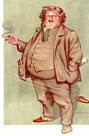
At the other extreme is the panegoist, the man who “believes in himself”:
There is a sceptic far more terrible than he who believes that everything began in matter. It is possible to meet the sceptic who believes that everything began in himself. He doubts not the existence of angels or devils [as the materialist does], but the existence of men and cows. For him his own friends are a mythology made up by himself. He created his own father and his own mother. This horrible fancy has in it something decidedly attractive to the somewhat mystical egoism of our day.
I would add that New Age “religion” is a contemporary form of the “mystical egoism” of Chesterton’s age and therefore not so new, after all, as I argued earlier this week both here and here. In the 1970s, Werner Erhard, founder of est, taught that before we are born, we choose our parents, which is as good as “creating” them, I suppose.
These two extremes, materialism and egoism, exhibit the same paradox, according to the author; they are “complete in theory, crippling in practice.” Each is like a circle closed in upon itself: perfect in its simplicity, but also limited. Chesterton’s final thrust in the direction of Christianity contrasts the circular symbol he describes as a snake eating its own tail (the yin-yang in another form), with the cross, which unites contradictions, as healthy people always do.
* * *
Healthy people. Healthy ordinary people. This is the notion that interests me in this chapter, which otherwise I find pretty dense. (Chesterton does love to pile up analogies, and alliteration.) Chesterton doesn’t accuse materialism or egoism of being illogical. He accuses them of being unhealthy. They limit man, preventing him from being and experiencing all that he can. The materialist and egoist both end in the lunatic asylum. What keeps men sane?
Mysticism keeps men sane. As long as you have mystery you have health; when you destroy mystery you create morbidity. The ordinary man has always been sane because the ordinary man has always been a mystic. He has permitted the twilight. He has always had one foot in earth and the other in fairyland.
What I like about this is what I like about Catholicism. First, it places Mystery at the center of our religious life: the Incarnation, the Eucharist, the Holy Trinity. There are libraries full of commentary on these mysteries, but ultimately they remain mysteries.
Second, Catholicism places the ordinary man and woman in front of the Mystery. When I was moving away from Christianity into spiritual practices that weren’t called New Age in the 1960s or 1970s and weren’t new then, the appeal of these practices was the promise that I might become extraordinary, that I might rise above the common man. These practices were fundamentally gnostic. They seduced one with the belief that there is an esoteric knowledge that only the true initiate can access. The ordinary man or woman need not apply.
I love the ordinariness of Catholicism, which is another way of saying the universality of Catholicism. Everyone may apply, and be saved. Maybe I am diverging from Chesterton’s main points here, but I encourage readers to use comments to bring the discussion back to Chesterton. What did you find meaningful? Meanwhile, I will stand, or kneel, with my ordinary Catholic friends before the Mystery of the Eucharist—and feel pretty healthy in the bargain.

Previous Post

November 26, 2009
Because of the Church’s Position on War I
Next Post
November 27, 2009 Because of the Church’s Position on War II
Browse Our Archives
Select a Category Blog News Conversion Story Culture Learning Living Nature Prayer Uncategorized Working
Select a Month June 2016 May 2016 August 2015 July 2015 June 2015 May 2015 April 2015 March 2015 February 2015 January 2015 December 2014 November 2014 October 2014 September 2014 August 2014 July 2014 June 2014 May 2014 April 2014 March 2014 February 2014 January 2014 December 2013 November 2013 October 2013 September 2013 August 2013 July 2013 June 2013 May 2013 April 2013 March 2013 February 2013 January 2013 December 2012 November 2012 October 2012 September 2012 August 2012 July 2012 June 2012 May 2012 April 2012 March 2012 February 2012 January 2012 December 2011 November 2011 October 2011 September 2011 August 2011 July 2011 June 2011 May 2011 April 2011 March 2011 February 2011 January 2011 December 2010 November 2010 October 2010 September 2010 August 2010 July 2010 June 2010 May 2010 April 2010 March 2010 February 2010 January 2010 December 2009 November 2009 October 2009 September 2009 August 2009
Follow Us!
TAKE THE
Religious Wisdom Quiz
For God so loved the world that he gave his one and only Son, that whoever believes in him shall not ____ but have eternal life.
Select your answer to see how you score.
Suffer Fail Perish Fall
Related posts from Why I Am Catholic

Belated Happy Birthday To Blaise Pascal, Unofficial Saint...

Because My Brother Imran Yousef Is An American...

Because of G.K. Chesterton (29 May, 1874 – 14 June, 1936)

Joe Six-Pack, USMC, With A Few Post-Terrorist Attack...
TRENDING AT PATHEOS Catholic

The Parable Of The Sower And The Word...
One of Christ’s most famous parables is that of the sower who...

Rejecting Doom: Christian Hope And Human Action
Christianity is a religion of hope. We are to have hope and...

Why I Choose the Eucharist Over the Sermon
Choose the Eucharist, Not the Sermon What are we supposed to get...

5 Design Elements Found in Spiritually Rooted Homes
Putting Spirituality Into Home Decor Our homes are more than our living...

Credo: A Story of God Told with the...
About 10 years ago, I began to imagine a personal "Credo" that...

The Anatomy of Divine Revelation in Catholic Thought
The claim that God has made Himself known to human beings is...
Ad-Free & Subscriber Log-In Subscription Support
- About Us
- 2026 Calendar
- Videos
- Podcasts
- Library of World Religions
- Faith In Media Tracker
- Advertise With Us
- Write for Us
- Privacy Policy
- Terms of Service
- Do Not Sell My Data
- Contact Us
- Radiant Digital
- Manage Newsletter Subscriptions
- Unsubscribe From Notifications
- Sitemap
Copyright 2008-2026, Patheos. All rights reserved.
Subscription Support Ad-Free & Subscriber Log-In
Follow Patheos