
BuddhistCatholicContemplativeEvangelicalGeneral ChristianHinduJewishLatter-day SaintMuslimNew VisionsProgressive Christian
Beliefs
- Buddhist
- Catholic
- Contemplative
- Evangelical
- General Christian
- Hindu
- Jewish
- Latter-day Saint
- More Voices
- Muslim
- New Visions
- Pagan
- Progressive Christian
Topics
- Religion News
- Food and Religion
- Sports and Religion
- Religious Art
- Religious Music and Entertainment
- Religious Events
- History and Religion
- Style and Religion
- Politics and Religion
- Women in Religion
- Recreation Outdoors and Religion
- Business Finance and Religion
- Careers Workplace and Religion
- Education and Religion
- Family Parenting and Religion
- Health Fitness and Religion
- Home and Religion
- Relationships and Religion
- Technology and Religion
- Travel and Religion
Columnists
- Buddhist Columnists
- Business Finance and Religion Columnists
- Careers Workplace and Religion Columnists
- Catholic Columnists
- Contemplative Columnists
- Education and Religion Columnists
- Evangelists Columnists
- Family Parenting and Religion Columnists
- General Christian Columnists
- Health Fitness and Religion Columnists
- Hindu Columnists
- History and Religion Columnists
- Home and Religion Columnists
- Jewish Columnists
- More Voices Columnists
- Latter Day Columnists
- Muslim Columnists
- New Visions Columnists
- Nonreligious Columnists
- Pagan Columnists
- Politics and Religion Columnists
- Progressive Columnists
- Recreation Outdoors and Religion Columnists
- Relationships and Religion Columnists
- Religion News Columnists
- Religious Art Columnists
- Religious Events Columnists
- Religious Music and Entertainment Columnists
- Sports and Religion Columnists
- Style and Religion Columnists
- Technology and Religion Columnists
- Travel and Religion Columnists
- Women in Religion Columnists
Resource Library
- 2026 Calendar
- Library of World Religions
- The 100 Most Holy Places on Earth
- Patheos Answers
- Podcasts
- Videos
- Faith Leaders Database
- Anglican Episcopalian
- Bahai
- Baptist
- Buddhism
- Christianity
- Confucianism
- Eastern Orthodoxy
- Hinduism
- Holiness and Pentecostal
- ISKCON
- Islam
- Judaism
- Lutheran
- Methodist
- The Church of Jesus Christ of Latter-day Saints
- New Age
- Paganism
- Presbytarian and Reformed
- Protestantism
- Religion Behind the Scenes
- Roman Catholic
- Scientology
- Shia Islam
- Sikhism
- Sufism
- Sunni Islam
- Taoism
- Zen
- See all religions
Research Tools
 Ad-Free & Subscriber Log-In Subscription Support
Ad-Free & Subscriber Log-In Subscription Support
Follow Patheos 

- Trending:
- Forgiveness
- |
- Marriage
- |
- Consciousness
- |
- Death Penalty
- |
- Election
- |
- Halloween
 Why I Am Catholic
-
More
- Home
- For All the Saints
For All the Saints
Last updated on: January 24, 2017 at 7:22 pm by Webster Bull
For All the Saints 2017-01-24T19:22:27-05:00 Webster Bull
Patheos Explore the world's faith through different perspectives on religion and spirituality! Patheos has the views of the prevalent religions and spiritualities of the world.
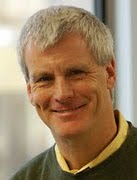
This is the post that launched the good ship YIMCatholic into the open sea of the Catholic blogosphere one year ago yesterday. (August 17, 2009). As you can see, it garnered all of three comments, the first of which didn’t show up until three weeks later. So, from that shaky beginning, how do you explain the following? One year, 645 posts, two partners, and 186,600 blog views later, YIMCatholic has managed to make it one lap around the track. Whew—Talk about a long lap!
I want to thank all of the readers, Google followers, Facebook fans, Twitter followers, etc., and friends in the world of Catholic blogs, who have taken a few moments out of their precious time every day (or so) to stop by this space. I also would like to thank the many friends we have made along the way. They have helped to build this community, and bring it to where it is today. Kevin Knight of New Advent, Elizabeth Scalia, aka“the Anchoress”, Deacon Greg Kandra of The Deacons Bench, Julie D. at Happy Catholic, and the many, many others (see blogroll in sidebar!) that have shared this journey with Frank, Allison and me; they have helped present our work to others so that we three could share our experiences of being Catholic with other Catholics, those in discernment, and those who just wonder why we continue to reflect on the most compelling question of all: Why I am Catholic?
Here’s to hoping, and praying, that we will celebrate many more anniversaries for YIMCatholic into the future! Now, dear readers, to the post that started it all…
When I was in fourth grade at The Blake School in Hopkins, Minnesota, I met my first Catholic. He was a boy in my class, who invited me over to his house one day. I don’t remember a crucifix or a Madonna; I don’t remember the term catechism or CCD being mentioned; I don’t even remember my friend’s name or what he looked like. All I remember is Butler’s Lives of the Saints, on the bookshelf above his head.
I understood, perhaps from a comment that he made, perhaps by noticing Butler, that my fourth-grade buddy, or at least someone in his family, knew about the saints and I didn’t. This gave me a sense of loss, the awareness that something was missing from my life. I know I didn’t envy his being Catholic. John Kennedy ran against Richard Nixon for president in my fourth-grade year, and I distinctly remember declaring to someone, “I would never vote for a Catholic!”
Catholic was strange, alien, suspect in my Midwestern, Protestant world. Forty-seven years later, when I told my father that I was converting to Catholicism, his first reaction was, “My mother would roll over in her grave.” Maybe that’s where the prejudice came from: his Methodist parents, although he himself never showed any anti-Catholic prejudice and was beamingly proud of my conversion. Yet despite the bias of my upbringing, I knew, even at age nine, that the saints were something else again.
We attended a Congregational church in our community outside Minneapolis. It was a beautiful white building with nothing on the walls except high, clear windows that let the Sunday morning light pour in. I remember no stained glass, no Stations of the Cross, no iconography whatsoever except for a naked cross at the head of the nave. Nothing spoke of the saints.
In Connecticut, where we moved when I was ten, my parents scouted for a church and ended at an Episcopalian congregation in the rolling countryside north of town. Here the walls were stone and the light streamed in from one side only, through large, sliding glass doors that overlooked an upscale garden. As I recall, there was stained glass above the altar, but no saints anywhere to be found
In Connecticut there was one intriguing set of symbols that I did not remember from our church in Minnesota. When I was twelve, I took confirmation classes, which qualified me to kneel at the sanctuary rail and take communion one Sunday a month—the statutory Episcopal limit, it seemed. Along the rail, there were cushions for kneeling that had been slip-cased in needlepoint by some industrious members of the altar guild. From left to right, against a blue knit background, were the traditional symbols of the twelve Apostles: keys for Peter, an X-shaped cross or saltire for Andrew, a carpenter’s square for St. Thomas, the gruesome saw with which St. James the Less was martyred, and so on. I must have asked about these symbols, and it was probably my mother who gave me the answer. She is knowledgeable about cultural history, and it was her mother, not my father’s, who would rattle teacups around Lake Minnetonka in Minnesota by converting to Catholicism after my grandfather died, when I was about twenty-five.
The symbols of the Apostles were like Butler to me: clues to hidden treasure, hints that behind the spare Protestant storyline of Nativity, Crucifixion, and Resurrection, there was a secret language that filled in the gaps, enlarging the simplistic narrative into an epic of adventure and glory. I was in my twenties before I understood that this epic was Catholic.
By that time, I had wandered, alternately on fire and lukewarm, through several years of wishing to live right. In this there was a certain amount of adolescent cluelessness, and in the psycholingo popular at the time, I thought I was experiencing an identity crisis. But my late adolescence was driven by something more: a search for spiritual exemplars and ways of living like them. If I had remained a churchgoer after leaving Greenwich for boarding school in tenth grade, I might have found my way to the saints much sooner. But in the everything-overboard mentality of those Vietnam War years, I probably would not have been satisfied with anything familiar.
There was a Catholic parish in our neighborhood, St. Sulpice, where we eavesdropped on the mass in French. Around the corner from St. Sulpice was a Catholic bookstore, where I picked up a copy of the Spiritual Exercises of St. Ignatius of Loyola in French. I read it then and still have it today on my bookshelf. En route to Madrid we stopped at Lourdes, where I was entranced by the story of St. Bernadette and a candlelit procession of thousands chanting the Hail Mary in three languages alternately. In Rome, St. Peter’s was our first and last destination, while Assisi was an Italian side trip that we made more than once. Here in a church basement I stared in stunned silence at the intact body of St. Francis’s spiritual sister, St. Clare, covered only with a gauzy shroud. Every feature was clearly discernible beneath the veil eight centuries after her death. I almost thought I saw the gauze rise and fall with her breath
St. Francis was the saint who hit me over the head first, especially in Nikos Kazantzakis’s fictionalized biography and later in Franco Zeffirelli’s film, Brother Son, Sister Moon, in which Francis and Clare are flower children loping through sun-honeyed fields to the strains of English folk minstrel Donovan. Over the next thirty years, as my unchurched life rolled on, other saints grabbed my attention. Vita Sackville West’s biography of Joan of Arc was a thrilling discovery; I was astonished that Joan is no legend. The facts of her miraculous life are known in minute detail thanks to exhaustive testimony recorded at her several trials. When was it I realized that the central figure in the film that had hypnotized me since the mid-1960s was himself a saint, Thomas More in A Man for All Seasons? As time went on, I saw that film fifteen or twenty times, in the cinema, in syndicated TV rerun, on video, on DVD.
For about a month in the mid-1990s, I attended daily mass at the Catholic church in our town. I sat through the liturgy without taking communion until one day I stood with the other parishioners, approached the priest bearing a chalice, and heard him say, “The Body of Christ.” Not knowing what to respond, I said nothing, held my hands before me as I had in the Episcopal Church, received the Host, and consumed it. I was immediately ashamed. When I got home, I asked my wife Katie, born a Catholic, what one is supposed to say when the priest says, “The Body of Christ.” She told me, “Amen.” At that moment, I realized that I would have to stop attending mass until I was ready to become a Catholic. I was an impostor before God.
I never thought about returning to daily mass for the next ten or twelve years. Then one Friday night, when Katie was out with girlfriends, I ate in a restaurant, had one drink too many, and found myself in a Borders bookstore. I went directly to the two-for-one table, thinking that I might find a birthday present for a friend whose birthday was coming up. The next moment I was in front of the book that changed my life. What was it about the book that I noticed first? The cover? A striking painting of ten men and women standing side by side with their hands posed prayerfully in front of them, a multiracial gathering, including one bearded fellow who held an upside-down cross in front of him. No, not the cover.The author? James Martin, SJ. I knew that meant Society of Jesus, Jesuit.
No, what grabbed me was the title, My Life with the Saints. Francis: the rich boy turned mendicant, the holy fool for God. God asked Francis to “repair my church,” and did he ever! Joan: a shepherd girl who, like Bernadette of Lourdes, had visions that spoke to her, visions that told her to ride across war-torn France to lead the disgraced dauphin into battle and to witness the dauphin crowned king at Reims—maid turned militant turned martyr, who died at the stake with the holy name Jesu on her lips. Thomas More: husband, father, scholar, diplomat, statesman, poet, heroic defender of the Faith, Renaissance man turned martyr and saint, “His Majesty’s good servant, but God’s first
Three dramatically different figures—beggar, warrior, statesman—one faith in common. These three saints had professed the same Credo, said the same prayers, received the same Body of Christ, and died with the same God on their minds, in their hearts, and on their lips. As I attended daily mass at St. Mary Star of the Sea Church in Beverly, Massachusetts, and attended RCIA meetings in the old convent a block away, I was convinced that what had worked for these three saints, and for every other saint in Butler, would just have to be good enough for me.
Was it possible that each of the saints—not just Francis and Thomas and Joan, but every last one chronicled by Butler, to say nothing of the hundreds added since—was deluded or just plain wrong about the existence of God, the centrality of Christ, and the reality of human salvation through faith and works? That seemed unlikely to me, although I couldn’t prove otherwise
All that I knew for a certainty, and the certainty has only increased, is that morning mass is the best hour of my day. I do it—I am a Catholic—because nothing else is better for me. Two years on, nothing else seems to make much sense at all.

Previous Post

June 20, 2016
Belated Happy Birthday To Blaise Pascal, Unofficial Saint and Mystic
Next Post
August 18, 2009 Because of a Book So Beautiful
Browse Our Archives
Select a Category Blog News Conversion Story Culture Learning Living Nature Prayer Uncategorized Working
Select a Month June 2016 May 2016 August 2015 July 2015 June 2015 May 2015 April 2015 March 2015 February 2015 January 2015 December 2014 November 2014 October 2014 September 2014 August 2014 July 2014 June 2014 May 2014 April 2014 March 2014 February 2014 January 2014 December 2013 November 2013 October 2013 September 2013 August 2013 July 2013 June 2013 May 2013 April 2013 March 2013 February 2013 January 2013 December 2012 November 2012 October 2012 September 2012 August 2012 July 2012 June 2012 May 2012 April 2012 March 2012 February 2012 January 2012 December 2011 November 2011 October 2011 September 2011 August 2011 July 2011 June 2011 May 2011 April 2011 March 2011 February 2011 January 2011 December 2010 November 2010 October 2010 September 2010 August 2010 July 2010 June 2010 May 2010 April 2010 March 2010 February 2010 January 2010 December 2009 November 2009 October 2009 September 2009 August 2009
Follow Us!
TAKE THE
Religious Wisdom Quiz
How did God protect Daniel in the lion’s den?
Select your answer to see how you score.
He made the lions fall asleep He blinded the guards He sent an angel to shut the lions’ mouths He made Daniel invisible
Related posts from Why I Am Catholic

Belated Happy Birthday To Blaise Pascal, Unofficial Saint...

Because My Brother Imran Yousef Is An American...

Joe Six-Pack, USMC, With A Few Post-Terrorist Attack...
HHS Forced Sex Changes? There Ain't No Fait...
TRENDING AT PATHEOS Catholic

Rejecting Doom: Christian Hope And Human Action
Christianity is a religion of hope. We are to have hope and...

It’s What Comes From Within Which Matters
One of the most difficult things for us to understand is why...

Why I Choose the Eucharist Over the Sermon
Choose the Eucharist, Not the Sermon What are we supposed to get...

5 Design Elements Found in Spiritually Rooted Homes
Putting Spirituality Into Home Decor Our homes are more than our living...

Credo: A Story of God Told with the...
About 10 years ago, I began to imagine a personal "Credo" that...

The Anatomy of Divine Revelation in Catholic Thought
The claim that God has made Himself known to human beings is...
Ad-Free & Subscriber Log-In Subscription Support
- About Us
- 2026 Calendar
- Videos
- Podcasts
- Library of World Religions
- Faith In Media Tracker
- Advertise With Us
- Write for Us
- Privacy Policy
- Terms of Service
- Do Not Sell My Data
- Contact Us
- Radiant Digital
- Manage Newsletter Subscriptions
- Unsubscribe From Notifications
- Sitemap
Copyright 2008-2026, Patheos. All rights reserved.
Subscription Support Ad-Free & Subscriber Log-In
Follow Patheos