
BuddhistCatholicContemplativeEvangelicalGeneral ChristianHinduJewishLatter-day SaintMuslimNew VisionsProgressive Christian
Beliefs
- Buddhist
- Catholic
- Contemplative
- Evangelical
- General Christian
- Hindu
- Jewish
- Latter-day Saint
- More Voices
- Muslim
- New Visions
- Pagan
- Progressive Christian
Topics
- Religion News
- Food and Religion
- Sports and Religion
- Religious Art
- Religious Music and Entertainment
- Religious Events
- History and Religion
- Style and Religion
- Politics and Religion
- Women in Religion
- Recreation Outdoors and Religion
- Business Finance and Religion
- Careers Workplace and Religion
- Education and Religion
- Family Parenting and Religion
- Health Fitness and Religion
- Home and Religion
- Relationships and Religion
- Technology and Religion
- Travel and Religion
Columnists
- Buddhist Columnists
- Business Finance and Religion Columnists
- Careers Workplace and Religion Columnists
- Catholic Columnists
- Contemplative Columnists
- Education and Religion Columnists
- Evangelists Columnists
- Family Parenting and Religion Columnists
- General Christian Columnists
- Health Fitness and Religion Columnists
- Hindu Columnists
- History and Religion Columnists
- Home and Religion Columnists
- Jewish Columnists
- More Voices Columnists
- Latter Day Columnists
- Muslim Columnists
- New Visions Columnists
- Nonreligious Columnists
- Pagan Columnists
- Politics and Religion Columnists
- Progressive Columnists
- Recreation Outdoors and Religion Columnists
- Relationships and Religion Columnists
- Religion News Columnists
- Religious Art Columnists
- Religious Events Columnists
- Religious Music and Entertainment Columnists
- Sports and Religion Columnists
- Style and Religion Columnists
- Technology and Religion Columnists
- Travel and Religion Columnists
- Women in Religion Columnists
Resource Library
- 2026 Calendar
- Library of World Religions
- The 100 Most Holy Places on Earth
- Patheos Answers
- Podcasts
- Videos
- Faith Leaders Database
- Anglican Episcopalian
- Bahai
- Baptist
- Buddhism
- Christianity
- Confucianism
- Eastern Orthodoxy
- Hinduism
- Holiness and Pentecostal
- ISKCON
- Islam
- Judaism
- Lutheran
- Methodist
- The Church of Jesus Christ of Latter-day Saints
- New Age
- Paganism
- Presbytarian and Reformed
- Protestantism
- Religion Behind the Scenes
- Roman Catholic
- Scientology
- Shia Islam
- Sikhism
- Sufism
- Sunni Islam
- Taoism
- Zen
- See all religions
Research Tools
 Ad-Free & Subscriber Log-In Subscription Support
Ad-Free & Subscriber Log-In Subscription Support
Follow Patheos 

- Trending:
- Forgiveness
- |
- Marriage
- |
- Consciousness
- |
- Death Penalty
- |
- Election
- |
- Halloween

- Home
- Latter-day Saint
- Family, Parenting and Religion
- What is Salvation? A Deeper Look at God’s Eternal Plan
What is Salvation? A Deeper Look at God’s Eternal Plan
Last updated on: April 10, 2025 at 12:37 pm by Richard Robbins
What is Salvation? A Deeper Look at God’s Eternal Plan 2025-04-10T12:37:46-04:00 Richard Robbins
Patheos Explore the world's faith through different perspectives on religion and spirituality! Patheos has the views of the prevalent religions and spiritualities of the world.
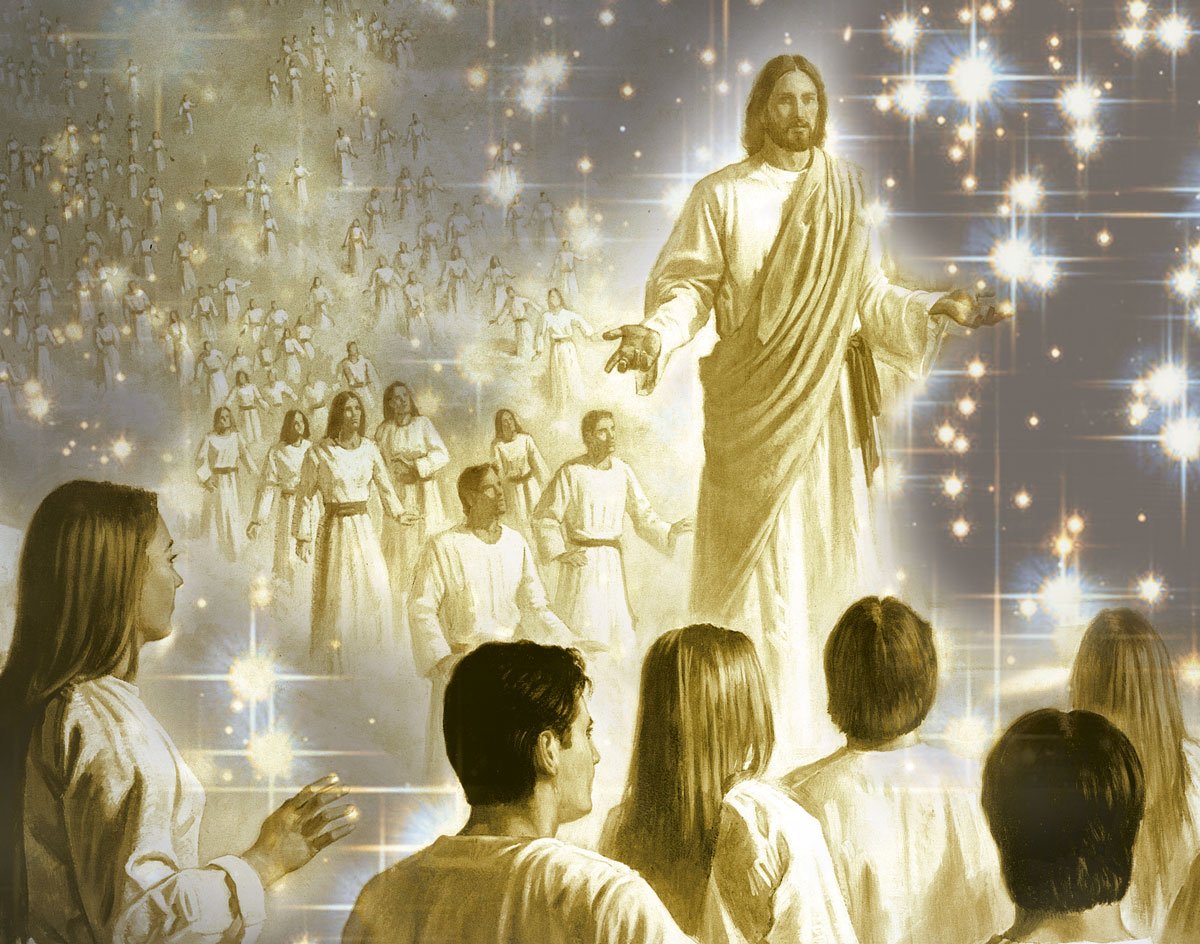 The essence of Christianity is the notion that Jesus Christ has made it possible for mankind, a collection of imperfect sinners who are incapable of achieving perfection on their own, to receive salvation. Salvation, often referred to in the scriptures as redemption, provides to the recipient the ability to be retrieved from being useless and disregarded and turned into something infinitely valuable.
But what is salvation?
What does it mean to be saved?
What must a person do to qualify for salvation, or is that even something that is outside the scope of a person’s ability to choose?
Those are all legitimate questions. Finding satisfactory answers to those questions seems to be critical to experiencing fulfillment for each person living out his life on this earth, especially as we consider that the time we spend here is relatively very brief.
For the majority of Christian believers, salvation refers to having some sort of existence in heaven living with God in the next life. While the details of how exactly that works, including in what form you’ll exist and what your relationships with God and with other people will be like, is typically not often even considered by most Christians, it is widely believed that receiving salvation involves going to heaven to spend eternity in a peaceful and happy state. The opposite of that, the ultimate end of those who don’t receive salvation, is going to hell and living with the devil in a state of misery.
I just summarized, as I’ve learned and understood it through my interactions with mainstream Christians, the core beliefs of most of the Christian world as the explanation of salvation versus damnation.
Answering the question, “What is salvation?” more thoroughly than just saying, “good people go to heaven and bad people go to hell”, however, provides us with much more clarity about this life and the eternities, and it provides us with more actionable insights that we can use to experience the fruits of salvation in this life and in the next.
The Plan of Salvation
The plan of salvation, put succinctly, is God’s specific system for allowing and encouraging his offspring to become like Him. God said through Moses: “For behold, this is my work and my glory – to bring to pass the immortality and eternal life of man.” The New Testament makes it clear that our potential is to be “heirs of God, and joint-heirs with Christ…that we may be glorified together.”
The objective of the plan of salvation, then, is to give the offspring of God the opportunity to inherit all that our Father has through the mechanisms he has provided for doing that.
We can find the details of the plan of salvation in the scriptures and in the words of modern prophets. Here is a summary of that plan, along with some scripture references for clarification and further study. I will divide this summary into three stages: Premortal Existence, Mortal Life, and Life After Death.
Premortal Existence
- Spirit creation: intelligence was organized into male and female spirits, made in the image of their Heavenly Parents. (Jeremiah 1:5, Acts 17:29, Moses 6:51)
- Agency: In this premortal existence, God presented His plan for us to come to Earth, receive a physical body, experience challenges, and ultimately return to Him of our own free will and choice through the gift of agency. (2 Nephi 2:27)
- The earth was created for the purpose of being the place where we would experience this test and have the opportunity to progress. (Abraham 3:24-26)
Mortal Life
- Birth: Our premortal spirits are born in mortal tabernacles of flesh and blood to male and female parents who have been given that creative power. (Genesis 1:28)
- Mortal life provides us with challenges and trials which provide opportunities for growth and learning, including developing faith in Jesus Christ and conforming to his character. (2 Nephi 2:21, Alma 34:32)
Life After Death
- At death, our spirit separates from our mortal body and continues living in another realm, referred to as the spirit world. (Alma 40:11-12
- We later experience the reuniting of our bodies with our spirits in a perfect form through the resurrection.
- After the resurrection, we experience the final judgment, at which point we are assigned to a kingdom of glory. A very small portion of the offspring of God are cast off into perdition.
Having this outline summary of the plan of salvation is helpful for understanding salvation and describing what it means.
There are actually multiple aspects of salvation found in the overall plan of salvation. They are:
- Salvation from death through resurrection.
- Salvation from sin through the Atonement and repentance
- Exaltation, which is often referred to as the ultimate salvation, or becoming like God.
I will explain each of these.
Salvation from Death
Death is the separation of our spirit from our mortal, temporal bodies. Whether it comes by accident, disease, or simply aging, this kind of death comes to everyone born to this earth (except for a select few who have been translated, meaning they don’t experience death prior to their resurrection).
When Jesus overcame death and was resurrected on the third day after his crucifixion, he provided salvation from death to the world.
Everyone who has ever been born on this earth, even the most evil of people, will experience this kind of salvation. It is a free gift from the Savior to each and every one of the inhabitants of earth.
Salvation from Sin
Salvation from sin comes from Jesus’ Atonement, in which he took upon himself the sins, the pains, the fears, the sicknesses of all who have ever lived. To receive salvation from sin, we must personally accept the sacrifice Jesus made, recognize his role as our Savior, and commit to believing in him and not rebelling against him.
In the merciful plan of salvation, almost all who have ever lived will also receive some degree of salvation from sin. By the time the Final Judgment arrives, “every knee shall bow and every tongue confess…that he is God.” (Mosiah 27:31)
Exaltation
Thankfully, the truths that were lost during the apostasy soon after the establishment of the Church of Jesus Christ in the Savior’s lifetime have been restored such that we can understand more completely what is meant by salvation.
In its most advanced form, full and complete salvation refers to the advancement of a person from the mortal imperfections that are experienced by humans living in a fallen world to the perfection, fullness of knowledge, and expansion of power to be on a level with God. The most perfect form of salvation involves becoming like God, inheriting all that He has. This kind of salvation is also referred to as “eternal life”, or living the way that God lives.
This level of salvation clearly requires much more than the other forms of salvation: being resurrected and receiving some kingdom of glory despite not being perfect. To be exalted requires a person to have consistent and unrelenting faith in Jesus Christ and his role in the plan of salvation, to establish a habit of repenting of sins, to receive the ordinances (starting with baptism) that have been prescribed by God, and to continually learn, improve, and develop talents, skills, and intelligence until he is ultimately (at some point in the eternities) just like God and Jesus Christ, who are perfect.
Understanding this ultimate potential for mankind makes it easier to accept Jesus’ instruction to his disciples in Matthew 5:48: “Be ye therefore perfect, even as your Father which is in heaven is perfect.”
Am I Saved?
Having looked at the various levels of salvation that comprise the overall plan of salvation, we can take a look at the question that is often asked by many Protestant, Evangelical, and non-denominational Christians on billboards, in pamphlets, and in sermons across the world: “Am I saved?” or “Are you saved?”
The basic answer to that question for everyone is, Yes!
Everyone will be saved from physical death through the universal gift of resurrection given when the Savior overcame death and was resurrected 2,000 years ago.
Will you be saved from sin?
Again, this is also a yes. Unless you are one of those few who are so rebellious that you are unwilling to ever accept the divinity and mission of Jesus Christ, and you intentionally choose eternal darkness over light, you will also be saved, even if your character isn’t exemplary in this life.
Of course, those who choose not to repent and exercise faith in this life will have to experience hell in the form of “eternal punishment” (which is a way of saying “God’s punishment”, not that the punishment upon an individual is never-ending; see Doctrine and Covenants 19:6-12). However, once they’ve paid the price for their rebelliousness, they will receive salvation. It will be a lower degree of salvation than those who were diligent, but it is certainly a form of salvation.
Now, if by “saved” you’re referring to living in the full presence of God in a state equal in glory to him and to Jesus Christ, it is for that salvation that the scriptures repeatedly speak of a “strait and narrow” path leading to eternal life. It is not easy. Most people will not choose to meet the requirements. In my opinion, it is likely that only a small percentage of those who have walked this earth will receive the exaltation level of salvation, but I hope I’m wrong.
God’s Salvation Perfectly Combines Justice with Mercy
One thing that is clear with each of these definitions of salvation and the requirements for each of them is that God is a perfectly just and a perfectly merciful Being. Through Jesus Christ, he provides opportunities for His children to receive everything they are willing to receive from him. However, he also grants them their agency, a divine principle that co-exists with God himself.
In the end, I believe all of us will gladly acknowledge the perfection of God in distributing to us whatever level of salvation we ultimately receive.

About Richard Robbins
Richard Robbins is a husband and father, and a lifelong member of The Church of Jesus Christ of Latter-day Saints. You can read more about the author here.
Previous Post

July 31, 2023
Do You Have to Be Baptized to Go to Heaven?
Next Post

December 5, 2023 Why Do Latter-day Saints Have Large Families?
Recent Comments
Browse Our Archives
Select a Category Artificial Intelligence Conspiracies God Health Marriage Miracles Parenting Power Priesthood Prosperity Salvation Second Coming of Christ Uncategorized
Select a Month October 2025 September 2025 May 2025 April 2025 November 2024 October 2024 August 2024 May 2024 February 2024 January 2024 December 2023 August 2023 July 2023 June 2023 May 2023 April 2023
Follow Us!
TAKE THE
Religious Wisdom Quiz
What Hebrew word, meaning "vanity" or "meaningless," is frequently used in Ecclesiastes?
Select your answer to see how you score.
Torah Ruach Shalom Hevel
Related posts from Ye Shall Prosper in the Land

Amazon's 14k Job Cuts and the Coming Beast...

Who Is Behind the Murder of Charlie Kirk...

Should Latter-day Saints Eat Cheetos?

The Masculine and Feminine Attributes of Justice and...
TRENDING AT PATHEOS Latter-day Saint

Did Prayer Cure His Cancer? Or Was It...
At 4 AM one morning, Joshua W. Brown’s wife awoke to a...

8 Ways a Near-Death Experience Rewires the Soul
Does Consciousness Survive Physical Death? After 50 Years of Research, Dr. Raymond...

Holy Longing: What Our Restlessness Is Telling Us
“One can find so many pains when the rain is falling.” -John...

What this is NOT about. This blog is definitely not about...

Who said the Israelites were God’s chosen? That’s right, they did. Who...

The Spirit World Is the Real World: God...
A Monk’s Wisdom on Body and Spirit I sit with Brother Martin...
view all Latter-day Saint blogs
Ad-Free & Subscriber Log-In Subscription Support
- About Us
- 2026 Calendar
- Videos
- Podcasts
- Library of World Religions
- Faith In Media Tracker
- Advertise With Us
- Write for Us
- Privacy Policy
- Terms of Service
- Do Not Sell My Data
- Contact Us
- Radiant Digital
- Manage Newsletter Subscriptions
- Unsubscribe From Notifications
- Sitemap
Copyright 2008-2026, Patheos. All rights reserved.
Subscription Support Ad-Free & Subscriber Log-In
Follow Patheos