
BuddhistCatholicContemplativeEvangelicalGeneral ChristianHinduJewishLatter-day SaintMuslimNew VisionsProgressive Christian
Beliefs
- Buddhist
- Catholic
- Contemplative
- Evangelical
- General Christian
- Hindu
- Jewish
- Latter-day Saint
- More Voices
- Muslim
- New Visions
- Pagan
- Progressive Christian
Topics
- Religion News
- Food and Religion
- Sports and Religion
- Religious Art
- Religious Music and Entertainment
- Religious Events
- History and Religion
- Style and Religion
- Politics and Religion
- Women in Religion
- Recreation Outdoors and Religion
- Business Finance and Religion
- Careers Workplace and Religion
- Education and Religion
- Family Parenting and Religion
- Health Fitness and Religion
- Home and Religion
- Relationships and Religion
- Technology and Religion
- Travel and Religion
Columnists
- Buddhist Columnists
- Business Finance and Religion Columnists
- Careers Workplace and Religion Columnists
- Catholic Columnists
- Contemplative Columnists
- Education and Religion Columnists
- Evangelists Columnists
- Family Parenting and Religion Columnists
- General Christian Columnists
- Health Fitness and Religion Columnists
- Hindu Columnists
- History and Religion Columnists
- Home and Religion Columnists
- Jewish Columnists
- More Voices Columnists
- Latter Day Columnists
- Muslim Columnists
- New Visions Columnists
- Nonreligious Columnists
- Pagan Columnists
- Politics and Religion Columnists
- Progressive Columnists
- Recreation Outdoors and Religion Columnists
- Relationships and Religion Columnists
- Religion News Columnists
- Religious Art Columnists
- Religious Events Columnists
- Religious Music and Entertainment Columnists
- Sports and Religion Columnists
- Style and Religion Columnists
- Technology and Religion Columnists
- Travel and Religion Columnists
- Women in Religion Columnists
Resource Library
- 2026 Calendar
- Library of World Religions
- The 100 Most Holy Places on Earth
- Patheos Answers
- Podcasts
- Videos
- Faith Leaders Database
- Anglican Episcopalian
- Bahai
- Baptist
- Buddhism
- Christianity
- Confucianism
- Eastern Orthodoxy
- Hinduism
- Holiness and Pentecostal
- ISKCON
- Islam
- Judaism
- Lutheran
- Methodist
- The Church of Jesus Christ of Latter-day Saints
- New Age
- Paganism
- Presbytarian and Reformed
- Protestantism
- Religion Behind the Scenes
- Roman Catholic
- Scientology
- Shia Islam
- Sikhism
- Sufism
- Sunni Islam
- Taoism
- Zen
- See all religions
Research Tools
 Ad-Free & Subscriber Log-In Subscription Support
Ad-Free & Subscriber Log-In Subscription Support
Follow Patheos 

- Trending:
- Forgiveness
- |
- Marriage
- |
- Consciousness
- |
- Death Penalty
- |
- Election
- |
- Halloween

- Home
- Latter-day Saint
- Family, Parenting and Religion
- What Does God Look Like?
What Does God Look Like?
Last updated on: July 14, 2023 at 11:25 am by Richard Robbins
What Does God Look Like? 2023-07-14T11:25:45-04:00 Richard Robbins
Patheos Explore the world's faith through different perspectives on religion and spirituality! Patheos has the views of the prevalent religions and spiritualities of the world.
The Father has a body of flesh and bones as tangible as man’s;
the Son also; but the Holy Ghost has not a body of flesh and bones, but is a personage of Spirit. Were it not so, the Holy Ghost could not dwell in us. Doctrine and Covenants 130:22
My daughter has been attending a Christian music camp over the past several weeks. As soon as others in her group at the camp found out that she is a Latter-day Saint, the nightly Bible studies they held got a little more exciting, as you might imagine. As her father, I double as my daughter’s doctrinal and scriptural consultant, which means I have had the opportunity to get involved in scriptural discussions (let’s be honest though, they really are debates or Bible bashes) about some of the topics commonly known to be points of debate between traditional Christian churches (Protestant, Catholic, and non-denominational) and members of The Church of Jesus Christ of Latter-day Saints.
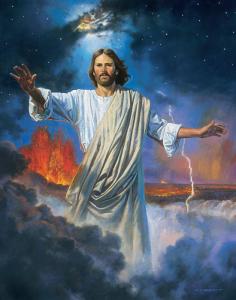
Naturally, the topic that has come up most frequently in their discussions has to do with the very nature of God and his relationship with the people on this planet. Understanding who God is and making a relationship between him and an individual is essential to the ability to worship. I’ve been inclined to write about God’s attributes as part of my personal scripture study in the past.
In this article, I am going to explain what God looks like, and by natural extension I’ll describe who God is, including what we know about His nature and attributes. My resources for describing what God looks like and who He is include:
- The Bible – specifically the King James Version
- Revelation from modern prophets
- My own personal experience
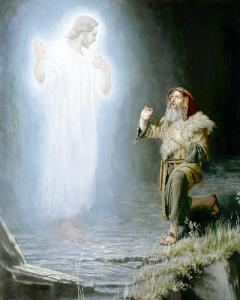
Among the 8 billion people on the planet there are plenty of religious systems, many of which are dedicated to better understanding God (some are clearly not). Within those systems there is a wide spectrum of ideas on what type supernatural Being governs over this planet and those who reside on it.
Here is a summary of what each of the most common religions in the world believe about what God looks like:
Christianity
In most of Christianity, God is considered to be a spiritual being who is not confined to a physical form. However, Jesus Christ, as the Son of God (but who is also considered to be God himself), is often depicted in human form. The Holy Spirit is often symbolized as a dove or tongues of fire.
Islam
In Islam, God (Allah) is considered beyond human comprehension and is not represented in any physical form. In fact, creating images or depictions of God is considered idolatrous in Islamic tradition. This principle, known as aniconism, is based on the belief in the transcendence of God and the avoidance of idolatry (Shirk).
Hinduism
In Hinduism, God or the divine reality (Brahman) is considered ultimately formless and beyond human comprehension. However, this divine reality is often represented through a myriad of deities, each with its own physical form and symbolism. For example, Lord Shiva is often depicted with a third eye and holding a trident, while Lord Vishnu is depicted with four arms holding various objects like a conch and a lotus.
Buddhism
Buddhism does not centrally focus on the concept of God in the way that many other religions do. The Buddha is not considered a god but an enlightened being, and he is often represented in human form in statues and paintings. However, some forms of Buddhism, like Mahayana and Vajrayana, have a pantheon of bodhisattvas and deities, each depicted in various forms and with different iconographies.
The world’s major religions have some similarities in their respective beliefs about God’s physical appearance, but there is clearly a lot of ambiguity among each of them regarding whether God has any form at all, and, if he does, what form is there. Those who have formed the belief systems of these religions have often attempted to relate their supreme beings to humans in believing that there is some human-like
What The Bible Teaches About God’s Physical Appearance
The Bible is very clear about what God looks like. You don’t have to go farther than the first chapter of the Bible to find out that God looks like us, and we look like him.
In the account of the Creation in Genesis 1:26-27, we read this:
26 And God said, Let us make man in our image, after our likeness: and let them have dominion over the fish of the sea, and over the fowl of the air, and over the cattle, and over all the earth, and over every creeping thing that creepeth upon the earth.
27 So God created man in his own image, in the image of God created he him; male and female created he them.
There are a few things we learn about God from these verses.
The first is the use of the word “us” in the discussion. Clearly there is more than one entity involved in this discussion. There is a conversation occurring between two divine personages.
The second concept clearly laid out in these verses is that mankind, men and women, are created in the image of God, after his likeness. It is clear, then, that we look like Them, and They look like us. The reason I use the plural in referring to God is to emphasize that there are physically separate and distinct personages who comprise the Godhead.
From modern revelation we receive some clarity about God, Jesus, and the Holy Ghost, the three personages who make up the one God that we worship.
Joseph Smith, one of many prophets who have documented having personal, physical interactions with God, explains the physical form of the three members of the Godhead this way, in Doctrine and Covenants 130:22
22 The Father has a body of flesh and bones as tangible as man’s; the Son also; but the Holy Ghost has not a body of flesh and bones, but is a personage of Spirit. Were it not so, the Holy Ghost could not dwell in us.
Based upon this verse and many other evidences, it is clear that who we call God is actually three three distinct physical Personages. Two of them – Jesus (also known as Jehova) and Elohim (typically referred to as the Father) have perfected bodies of flesh and bones, similar to what each human will have when we are resurrected. The third member of the Godhead, the Holy Ghost, has a physical form like a man, but does not have flesh. Instead, he is made out of spirit matter.
Nicene Creed: Uninspired, Confusing, Wrong
One of the difficult issues that mainstream Christians have in arguing their concept of God and describing his appearance is that the Bible doesn’t back up what has been traditionally understood in Catholic and Protestant tradition as the definition of God, dating back to revisions that have been made since just after the New Testament apostles were killed and the church established by Jesus Christ no longer existed.
In fact, as explained by Jeffery R Holland in his conference talk The Only True God and Jesus Christ Whom He Hath Sent, a well-respected Bible reference (Harper’s Bible Dictionary) makes the assertion that “the formal doctrine of the Trinity as it was defined by the great church councils of the fourth and fifth centuries is not to be found in the [New Testament].”
That point is made clear through the many instances in the New Testament that verify the distinction between God and Jesus, including at Jesus’ baptism by John, wherein the Father’s voice came from heaven to endorse the event and to recognize that Jesus was His “beloved Son, in whom I am well pleased.” The martyr Stephen later saw a vision of heaven, wherein Jesus was “standing on the right hand of God.”
Although there are other examples in scripture that show the distinction between the Father and the Son, it’s hard to get clearer than the two I just referenced.
What Does It Mean to Be One?
Many Christians refer to the instances when Jesus said that he and his Father are one as a way of solidifying the position that somehow the Father and the Son are somehow mergeable. However, Jesus’ intercessory prayer in John 17 puts that idea to rest. In that prayer, Jesus prays that his followers would become one as He and his Father are also one.
Reading those verses gives plenty of context to understand that Jesus didn’t want his disciples to be merged into something akin to the Trinity.
John 17:20-22
20) Neither pray I for these alone, but fo rhythm also which shall believe on me through their word;
21) That they all may be one; as thou, Father, art in me, and I in thee, that they also may be one in us: that the world may believe that thou hast sent me.
22) And the glory which thou gavest me I have given them; that they may be one, even as we are one.
The oneness of Jesus and his Father refers to their oneness in purpose, in perfection, in unification. Being one in this context does not refer to their physical being.
Why God is Referred to as Father
To understand the entire Godhead, it is helpful to understand the Being to whom we are ultimately most beholden. God the Father is the father of our spirits. He, along with his wife (as revealed by modern prophets) who we know little about except that the family unit in this life models heaven and the eternities, created our spirits prior to the creation of this earth. The Father is often referred to as Elohim.
The scriptures refer to God the Father as they do because he is literally our Father. The scriptures are also very clear about the potential that each of us has to become just like him, equal in knowledge, power, and status to him.
Jesus Christ, the God known as Jehovah in the Old Testament, is the Firstborn spirit son of Elohim, and he is a spiritual sibling to all who live on earth. Prior to the creation of this earth, Jehovah was already equal in knowledge, power, and authority to his and our spirit Father. Jesus Christ has the unique ability to fully represent the interests of the Father
Who Has Seen God?
Understanding God’s appearance becomes easier when we understand that there are people who have seen him.
Who has seen God? Lots of prophets have, including Abraham, Jacob (Israel), Moses, and Isaiah in the Old Testament, each of whom testified that they had seen and/or spoken with Jehovah. In the New Testament, the disciples knew and walked with the mortal Messiah. After his resurrection, the Savior appeared to those same people as an immortal being.
In these latter-days, prior to the 2nd Coming of the Lord, Joseph Smith was called as a prophet beginning with his vision of God the Father and the Son, an event that overcame centuries of confusion about the nature of God.
History and Religion

About Richard Robbins
Richard Robbins is a You can read more about the author here.
Previous Post

June 23, 2023
Mormon Crickets: The Bug Named After a Miracle
Next Post

July 31, 2023 Do You Have to Be Baptized to Go to Heaven?
Recent Comments
Browse Our Archives
Select a Category Artificial Intelligence Conspiracies God Health Marriage Miracles Parenting Power Priesthood Prosperity Salvation Second Coming of Christ Uncategorized
Select a Month October 2025 September 2025 May 2025 April 2025 November 2024 October 2024 August 2024 May 2024 February 2024 January 2024 December 2023 August 2023 July 2023 June 2023 May 2023 April 2023
Follow Us!
TAKE THE
Religious Wisdom Quiz
Who said, 'For the wages of sin is death, but the gift of God is eternal life'?
Select your answer to see how you score.
John Paul James Peter
Related posts from Ye Shall Prosper in the Land
The Masculine and Feminine Attributes of Justice and...

Amazon's 14k Job Cuts and the Coming Beast...

Who Is Behind the Murder of Charlie Kirk...

Should Latter-day Saints Eat Cheetos?
TRENDING AT PATHEOS Latter-day Saint

Did Prayer Cure His Cancer? Or Was It...
At 4 AM one morning, Joshua W. Brown’s wife awoke to a...

8 Ways a Near-Death Experience Rewires the Soul
Does Consciousness Survive Physical Death? After 50 Years of Research, Dr. Raymond...

Holy Longing: What Our Restlessness Is Telling Us
“One can find so many pains when the rain is falling.” -John...

What this is NOT about. This blog is definitely not about...

Who said the Israelites were God’s chosen? That’s right, they did. Who...

The Spirit World Is the Real World: God...
A Monk’s Wisdom on Body and Spirit I sit with Brother Martin...
view all Latter-day Saint blogs
Ad-Free & Subscriber Log-In Subscription Support
- About Us
- 2026 Calendar
- Videos
- Podcasts
- Library of World Religions
- Faith In Media Tracker
- Advertise With Us
- Write for Us
- Privacy Policy
- Terms of Service
- Do Not Sell My Data
- Contact Us
- Radiant Digital
- Manage Newsletter Subscriptions
- Unsubscribe From Notifications
- Sitemap
Copyright 2008-2026, Patheos. All rights reserved.
Subscription Support Ad-Free & Subscriber Log-In
Follow Patheos