
BuddhistCatholicContemplativeEvangelicalGeneral ChristianHinduJewishLatter-day SaintMuslimNew VisionsProgressive Christian
Beliefs
- Buddhist
- Catholic
- Contemplative
- Evangelical
- General Christian
- Hindu
- Jewish
- Latter-day Saint
- More Voices
- Muslim
- New Visions
- Pagan
- Progressive Christian
Topics
- Religion News
- Food and Religion
- Sports and Religion
- Religious Art
- Religious Music and Entertainment
- Religious Events
- History and Religion
- Style and Religion
- Politics and Religion
- Women in Religion
- Recreation Outdoors and Religion
- Business Finance and Religion
- Careers Workplace and Religion
- Education and Religion
- Family Parenting and Religion
- Health Fitness and Religion
- Home and Religion
- Relationships and Religion
- Technology and Religion
- Travel and Religion
Columnists
- Buddhist Columnists
- Business Finance and Religion Columnists
- Careers Workplace and Religion Columnists
- Catholic Columnists
- Contemplative Columnists
- Education and Religion Columnists
- Evangelists Columnists
- Family Parenting and Religion Columnists
- General Christian Columnists
- Health Fitness and Religion Columnists
- Hindu Columnists
- History and Religion Columnists
- Home and Religion Columnists
- Jewish Columnists
- More Voices Columnists
- Latter Day Columnists
- Muslim Columnists
- New Visions Columnists
- Nonreligious Columnists
- Pagan Columnists
- Politics and Religion Columnists
- Progressive Columnists
- Recreation Outdoors and Religion Columnists
- Relationships and Religion Columnists
- Religion News Columnists
- Religious Art Columnists
- Religious Events Columnists
- Religious Music and Entertainment Columnists
- Sports and Religion Columnists
- Style and Religion Columnists
- Technology and Religion Columnists
- Travel and Religion Columnists
- Women in Religion Columnists
Resource Library
- 2026 Calendar
- Library of World Religions
- The 100 Most Holy Places on Earth
- Patheos Answers
- Podcasts
- Videos
- Faith Leaders Database
- Anglican Episcopalian
- Bahai
- Baptist
- Buddhism
- Christianity
- Confucianism
- Eastern Orthodoxy
- Hinduism
- Holiness and Pentecostal
- ISKCON
- Islam
- Judaism
- Lutheran
- Methodist
- The Church of Jesus Christ of Latter-day Saints
- New Age
- Paganism
- Presbytarian and Reformed
- Protestantism
- Religion Behind the Scenes
- Roman Catholic
- Scientology
- Shia Islam
- Sikhism
- Sufism
- Sunni Islam
- Taoism
- Zen
- See all religions
Research Tools
 Ad-Free & Subscriber Log-In Subscription Support
Follow Patheos 

- Trending:
- Advent
- |
- Forgiveness
- |
- Thanksgiving
- |
- Election
- |
- Seasonal Holidays
- |
- Marriage
 Writing from the Edge
- Home
- Jewish
- The End of Jewish History? What makes radical theologian Marc H. Ellis too hot to handle?
The End of Jewish History? What makes radical theologian Marc H. Ellis too hot to handle?
Last updated on: November 26, 2015 at 10:44 pm by Robert A. H. Cohen
The End of Jewish History? What makes radical theologian Marc H. Ellis too hot to handle? 2015-11-26T22:44:12+01:00 Robert A. H. Cohen
Patheos Explore the world's faith through different perspectives on religion and spirituality! Patheos has the views of the prevalent religions and spiritualities of the world.
The “Jewish Civil War”, “Empire Judaism”, “Jews of Conscience”, the “End of Jewish History”.
Is this the vocabulary of a scholarly Jewish theologian or a lot of overblown rhetoric from a semi-retired professor of Jewish studies who’s lost the plot?
Are Jews across the world really tearing their communities apart over the question of Israel’s behaviour towards the Palestinians? Are things so bad that we face the demise of Judaism as we know it and the abandonment of the community by a disaffected generation fed up with the hypocrisy of it all?
There was a time when Marc H. Ellis was in favour with at least some parts of the Jewish religious and cultural establishment. I can tell by the fact that quotes from his writings can be found anthologised in the study sections of my prayers books.
But I doubt Ellis gets quite so many copyright requests these days. His views have become too hot to handle.
Last year when I approached a respected UK Jewish journal offering an interview I’d conducted with Ellis I had this response from the editor.
“I’m deeply concerned about what Marc Ellis has to say. I have read his work in the past and seen him speak. I found his work useful and provocative. I think though, from the evidence of the interview, he has ‘jumped the shark’….we don’t like to publish rants and polemics and his words do appear to be that, they certainly lack the elegance of his earlier writing.”
Ouch!
I had to Google ‘Jump the shark’. It’s a reference to long running TV shows where far fetched claims and plots are required for the sake of novelty, usually indicating a decline in quality.
Double ouch.
‘Heartbeat of the Prophetic’ goes a long way to explaining why Ellis has fallen out of favour even within the liberal Jewish elite that once championed him following the publication of ‘Towards a Jewish Theology of Liberation’ nearly 30 years ago.
That book was built on his experience of working alongside Catholic adherents of liberation theology in the Latin America of the 1970s. Once Ellis could see how this world view should be applied to Judaism, in the post Holocaust world where Jews were finally empowered, he found his prophetic voice. It’s a voice that eventually lost him his teaching post at Baylor University. For those paying attention, the direction of travel for Ellis has been clear for some time. His theological/political/identity prognosis for the Jewish people has not been good for many years.
The online ‘Rabbi in Residence’

The Heartbeat of the Prophetic
‘Heartbeat’ is the first of a multi-volume project that will gather together his almost daily writings for the Mondoweiss website where since 2012 he has become its virtual ‘Rabbi in Residence’. Mondoweiss is the home for a growing band of Jews commentating on and chronicling the moral and political bankruptcy of the mainstream Jewish establishment when it comes to Israel/Palestine.
The challenge of switching from book length works with academic rigour to daily reportage has not been straightforward, as Ellis is the first to admit. Since these writings first appeared online Ellis has learnt the knack of keeping a tight focus and writing standalone pieces usually linked clearly to the daily news agenda. His Mondoweiss posts during the summer 2014 Gaza War have already been published as ‘Burning Children’. They are as direct and forthright as you could hope for and tightly locked into the unfolding horror of Operation Protective Edge. His record of those weeks is an instant theological reckoning that will stand the test of time and ought to be a set text in rabbinic seminaries. It won’t be though. The heat they give off is just too fierce.
In this new collection his early limitations as a blogger turn out to be a virtue. Breaking all the standard blogging rules is what makes ‘Heartbeat’ such a worthwhile read. Thoughts, images and word play flow from one post to the next as Ellis contemplates his new post academia surroundings in Florida, walks along the beach front, reads and applies to his thinking a wide range of political and cultural biographies, and explores the ever deepening Jewish malaise.
His talent for provocative word and image associations which illuminate how faith, identity and power politics have become so hopelessly tangled up is on full display. So welcome to beach front walks where muzuzahs become symbols of intimidation to the “Jew of Conscience” and to apocalyptic daydreams where you draw back the velvet curtains of the Synagogue Ark to find, not Hebrew scrolls, but helicopter gunships emblazoned with the Star of David.
It’s unsettling. But that’s the point.
A journey into exile
In book form these collected posts turn out to be an intense journey into what it means to be a ‘Jew in exile’, an exile both forced upon Ellis and one which he has freely entered into. He’s in no doubt why he has found himself pushed to the margins.
“Imperialism has penetrated so deeply into the core of what it means to be Jewish that calling it out provokes an intense reaction.”
For Ellis the prophetic tradition of speaking truth to power, that first burst through in the fiery and fearless indignation of Hebrew scripture, remains what he calls “the Jewish indigenous”. Strip away all the arguments over what makes an ‘authentic Jew’ (culture, religious observance, loyalty to Israel?) and you are left with Judaism’s prophetic disposition, the compulsion to call out iniquity and injustice whatever the personal or communal consequences.
What’s interesting as you read ‘Heartbeat’, is working out if Ellis himself has become more extreme in his prophetic critique, as my UK Jewish Editor insisted, or if he is simply responding to the ever worsening situation in Israel/Palestine.
“The Palestinians reach bottom after bottom, until a cardinal belief emerges…that there is no bottom that cannot be broken through. Downward.”
For those Jews that can no longer stomach what has happened in the long shadow cast by the Holocaust and in the name of Jewish security, the picture is bleak.
“Think of Jews of Conscience as scavengers after the Jewish ethical tradition has been scorched beyond recognition. That’s where we start. If we are honest.”
It’s easy to see why Ellis is not everyone’s cup of tea. He’s certainly a modern day Jewish iconoclast, smashing idols in true Abrahamic tradition. That sometimes means taking aim at those who are considered ‘the good guys’ by most Jews on the dovish, anti-occupation, anti-settlement spectrum of Jewish opinion.
He says of Rabbi Michael Lerner of Tikkun magazine, “Lerner’s sword is dull. He hasn’t slain anything, just carved out a place in the windmills of his own self-appointed (rabbinic) universe.”
This may taste like so many sour grapes but when combined with Ellis’ criticism of Rabbis for Human Rights, it becomes clear why he has such little patience with what he describes as the “left wing of Jewish Empire”.
“Progressive Jews” such a Lerner, Arthur Waskow and the late Rabbi David Forman, all fail the Ellis test of prophetic integrity. They want to uphold Jewish ethical virtues but are unwilling to follow the prophetic to the uncomfortable places it leads you to.
For Ellis, the Jewish “Progressives” duck the the difficult questions. Was Zionism flawed from the very beginning? Was Israel born in sin? Have we liberated ourselves at the expense of another people whose needs we must now forever suppress? Ellis sees Lerner and Forman as too concerned with maintaining a privileged Jewish ethical position that in the end just tempers the worst excesses of “Empire Judaism”.
No route map to redemption
So what does the “Jew of Conscience” do who is not prepared to sell out to the power elites, or rationalise the oppression of another people, or play the Holocaust card to protect against criticism of Israel? Is the “Jew of Conscience” left with nothing to do but chronicle the destruction and howl into the wind?
Ellis recounts a trip to the West Bank with his son Aaron that displays a generational gap in possible responses:
“…Aaron and I stood at the Apartheid Wall. With my arm around his shoulder, I said to him This is the end of Jewish history. He replied – it’s unjust Dad, wrong. We have to bring the Wall down… Generational difference. I carry so much Holocaust/Israel baggage. Baggage surrounded by mourning. Aaron doesn’t have any time for that. Let’s get on with the task in hand.”
But getting on with the task in hand is never straight forward. We learn about the encounters Ellis has had with the anti-Semitism he has found in the Boycott Divestment Sanctions (BDS) movement in Scotland, Ireland and continental Europe. It’s another response that “tangles me up in blue”. It’s not an excuse to give up though: “A few do not make the whole…it does not give Jews a reason to retreat”.
Readers of Marc Ellis shouldn’t expect too much comfort. Don’t expect a manifesto for action. And certainly not a route map to redemption.
When he writes about the “end of Jewish history” Ellis means the end of the ethical framework we have known and inherited. Jewish history will continue of course “but in a way that Jews of Conscience cannot embrace”. We are left with rubble. There is no clear future. Lamentations will come next.
It’s not surprising that Ellis has so few Jewish takers if this is all that’s on offer. But since when was hope eternal and a happy ending the prerequisite for a challenging analysis?
Reading Ellis, it’s impossible not to draw comparisons with the Hebrew Prophets of old. They too were disregarded in their own day, and their Godly inspiration critique dismissed as so much polemical ranting and raving. Too hot to handle.
Jumping the shark?
So has Ellis “jumped the shark”? Is “Empire Judaism”, the “Jewish Civil War”, “Jews of Conscience” just the fantasy creation of an academic whose career is burning out?
It doesn’t look that way to me.
The Occupation of the West Bank is approaching 50 years. It’s not temporary, it’s permanent. A peace process worthy of the name is nowhere in sight. The two state solution was killed off long ago by the Settlements. Israel, by virtue of the Occupation, is a failing democracy. After three Gaza Wars in five years it’s clear that there is no bottom to Palestinian suffering. Meanwhile, in the Jewish diaspora, Zionism is embedded in Synagogue life and liturgy, our leaders ape the hardliners that dominate the Israeli Knesset and a growing number of younger Jews see Boycotts as a rational and ethical response.
Under the circumstances, why would any reasonable observer think that Ellis is over the top in identifying that Jews and Judaism itself are facing a crisis? Not taking Ellis seriously is what starts to look irresponsible, assuming you care about the Jewish future.
The long term significance of Ellis’ work is difficult to judge but you can draw a fairly straight line from Towards a Jewish Theology of Liberation, and his subsequent writings,to the emergence of organisations like Jewish Voice for Peace and the popularity of Mondoweiss itself. The prophetic heartbeat is growing stronger and those that hear it are unwilling to walk with Ellis into ‘exile’ without putting up a fight first. Ellis deserves some credit for that. But don’t expect the patient to make a full recovery anytime soon.
‘Heartbeat of the Prophetic’ is published by New Diaspora Books. You can also purchase it through Amazon UK or Amazon USA
Read my new interview with Marc Ellis here.
Heartbeat of the Prophetic review


Browse Our Archives
Select a Category anti-Semitism antisemitism antisemitism Balfour BDS campus Jews Christians Church of England Church of Scotland Climate Climate change Corbyn Equal rights EU referendum facebook General Election 2019 Hanukkah High Holidays Holocaust denial Intel Interfaith dialogue Islam Israel-Palestine Jewish students Judaism Labour Party Liberal Zionism music Palestinian Refugees Passover Radical thinking Rosh Hashonah Trump Uncategorized Yom Kippur Zionism
Select a Month July 2021 May 2021 March 2021 January 2021 December 2020 October 2020 September 2020 July 2020 June 2020 May 2020 April 2020 February 2020 January 2020 December 2019 November 2019 October 2019 September 2019 August 2019 June 2019 May 2019 April 2019 March 2019 February 2019 January 2019 November 2018 October 2018 September 2018 August 2018 July 2018 June 2018 May 2018 April 2018 March 2018 February 2018 January 2018 December 2017 November 2017 October 2017 September 2017 August 2017 July 2017 June 2017 May 2017 April 2017 March 2017 February 2017 January 2017 December 2016 November 2016 October 2016 September 2016 August 2016 July 2016 June 2016 May 2016 April 2016 March 2016 February 2016 January 2016 December 2015 November 2015 October 2015 September 2015 August 2015 July 2015 June 2015
Follow Us!
TAKE THE
Religious Wisdom Quiz
Which book comes immediately after Acts in the New Testament?
Select your answer to see how you score.
Hebrews 1 Corinthians Galatians Romans
Related posts from Writing from the Edge
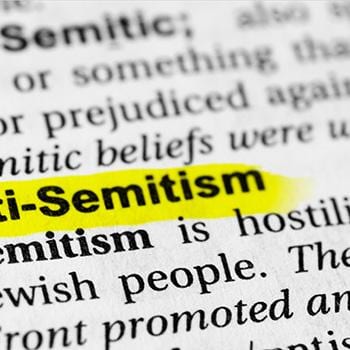
We need to decolonise our understanding of antisemitism

“History will judge us” – Have Progressive Rabbis...

Tom Stoppard’s first Jewish play leaves Zionism offstage

Extinction Rebellion has shown me the way forward...
TRENDING AT PATHEOS Jewish

Building a Little Ark in a Frightening World
This past Shabbat, we read about Noah. I love this story. The...

Yom Kippur : Is There Always Room for...
Making Room for Forgiveness Every year as Yom Kippur approaches, I find...

This Rosh Hashanah: Can I Find New Meaning?
A Sunrise, a New Year, and a Question On our way to...

Killing Amalek: The Torah’s Most Misunderstood Commandment
Few passages of the Torah have provoked more confusion, polemic, and misuse...

I have never trusted a first draft. I don’t mean that...

Back to School, Back to Reality—and a New...
A New School Year Begins… Back to Reality A new school year...
view all Jewish blogs
Ad-Free & Subscriber Log-In Subscription Support
- About Us
- 2026 Calendar
- Videos
- Podcasts
- Library of World Religions
- Faith In Media Tracker
- Advertise With Us
- Write for Us
- Privacy Policy
- Terms of Service
- Do Not Sell My Data
- Contact Us
- Radiant Digital
- Manage Newsletter Subscriptions
- Unsubscribe From Notifications
- Sitemap
Copyright 2008-2026, Patheos, part of the Radiant Digital network of media brands. All rights reserved.
Subscription Support Ad-Free & Subscriber Log-In
Follow Patheos