
BuddhistCatholicContemplativeEvangelicalGeneral ChristianHinduJewishLatter-day SaintMuslimNew VisionsProgressive Christian
Beliefs
- Buddhist
- Catholic
- Contemplative
- Evangelical
- General Christian
- Hindu
- Jewish
- Latter-day Saint
- More Voices
- Muslim
- New Visions
- Pagan
- Progressive Christian
Topics
- Religion News
- Food and Religion
- Sports and Religion
- Religious Art
- Religious Music and Entertainment
- Religious Events
- History and Religion
- Style and Religion
- Politics and Religion
- Women in Religion
- Recreation Outdoors and Religion
- Business Finance and Religion
- Careers Workplace and Religion
- Education and Religion
- Family Parenting and Religion
- Health Fitness and Religion
- Home and Religion
- Relationships and Religion
- Technology and Religion
- Travel and Religion
Columnists
- Buddhist Columnists
- Business Finance and Religion Columnists
- Careers Workplace and Religion Columnists
- Catholic Columnists
- Contemplative Columnists
- Education and Religion Columnists
- Evangelists Columnists
- Family Parenting and Religion Columnists
- General Christian Columnists
- Health Fitness and Religion Columnists
- Hindu Columnists
- History and Religion Columnists
- Home and Religion Columnists
- Jewish Columnists
- More Voices Columnists
- Latter Day Columnists
- Muslim Columnists
- New Visions Columnists
- Nonreligious Columnists
- Pagan Columnists
- Politics and Religion Columnists
- Progressive Columnists
- Recreation Outdoors and Religion Columnists
- Relationships and Religion Columnists
- Religion News Columnists
- Religious Art Columnists
- Religious Events Columnists
- Religious Music and Entertainment Columnists
- Sports and Religion Columnists
- Style and Religion Columnists
- Technology and Religion Columnists
- Travel and Religion Columnists
- Women in Religion Columnists
Resource Library
- 2026 Calendar
- Library of World Religions
- The 100 Most Holy Places on Earth
- Patheos Answers
- Podcasts
- Videos
- Faith Leaders Database
- Anglican Episcopalian
- Bahai
- Baptist
- Buddhism
- Christianity
- Confucianism
- Eastern Orthodoxy
- Hinduism
- Holiness and Pentecostal
- ISKCON
- Islam
- Judaism
- Lutheran
- Methodist
- The Church of Jesus Christ of Latter-day Saints
- New Age
- Paganism
- Presbytarian and Reformed
- Protestantism
- Religion Behind the Scenes
- Roman Catholic
- Scientology
- Shia Islam
- Sikhism
- Sufism
- Sunni Islam
- Taoism
- Zen
- See all religions
Research Tools
 Ad-Free & Subscriber Log-In Subscription Support
Ad-Free & Subscriber Log-In Subscription Support
Follow Patheos 

- Trending:
- Forgiveness
- |
- Marriage
- |
- Consciousness
- |
- Death Penalty
- |
- Election
- |
- Halloween
 World Religions
- Home
- Interfaith
- Education and Religion
- The Sari & Burqa: Symbols of Imperialism
The Sari & Burqa: Symbols of Imperialism
Last updated on: September 10, 2015 at 7:48 pm by George G. Coe
The Sari & Burqa: Symbols of Imperialism 2015-09-10T19:48:36-05:00 George G. Coe
Patheos Explore the world's faith through different perspectives on religion and spirituality! Patheos has the views of the prevalent religions and spiritualities of the world.
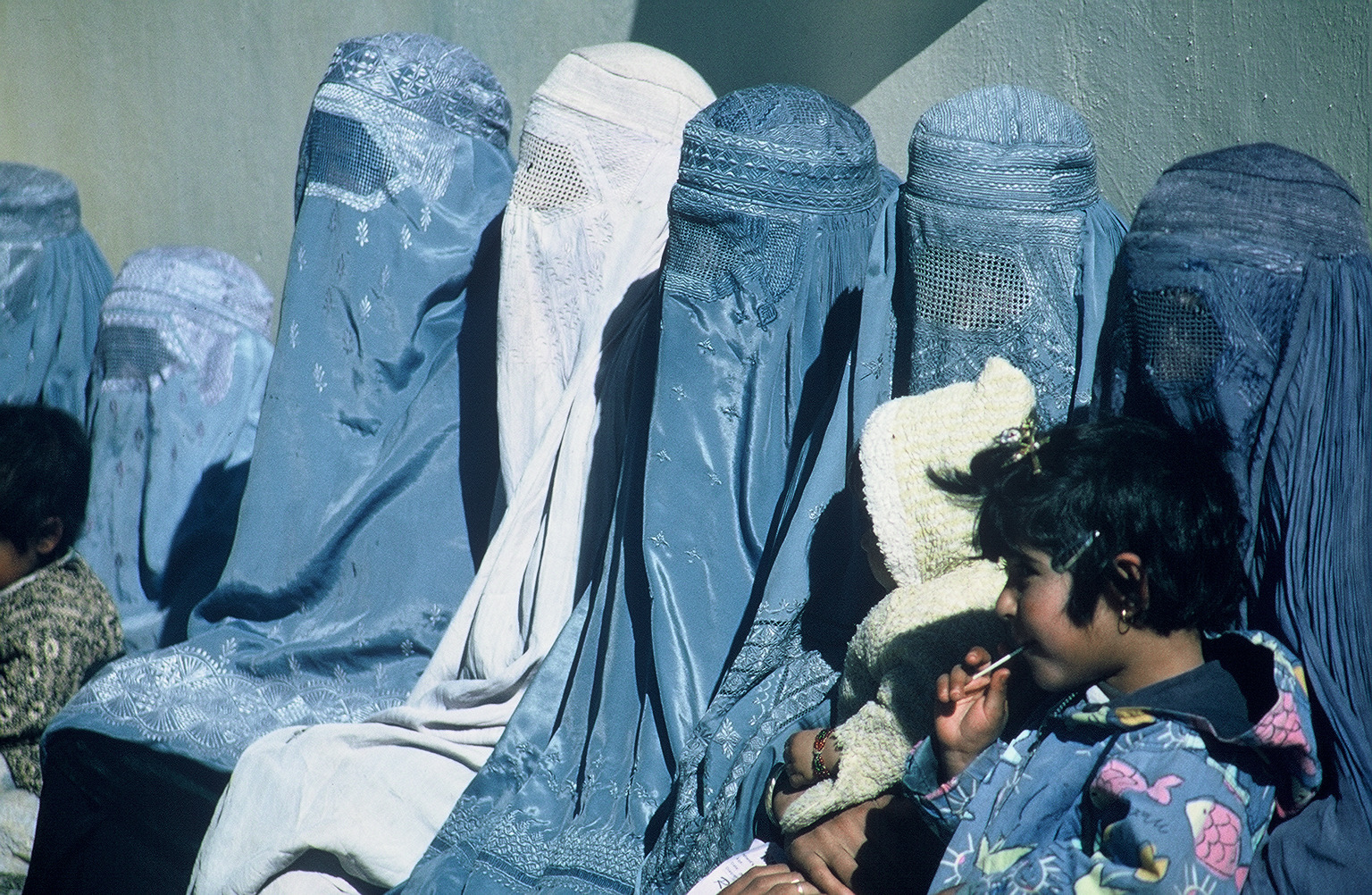
“Group of Women Wearing Burkas” by Nitin Madhav (USAID) – http://gemini.info.usaid.gov/photos/index.php
Do clothes like the Indian sari or the Afghan burqa justify empire?
British missionaries in the centuries after the East India Company took over India tried to change the sari because they thought Indian women wore it in a scandalous way.
Feminists, like Jay Leno’s wife, want to ban the burqa in Afghanistan. They see it as a symbol of subjugation.
In a fascinating essay for the digital magazine Aeon, Rafia Zakaria, a writer and political philosopher, suggests that these “moral campaigns against such ‘offensive’ practices are in reality sophisticated imperial technologies of control.”
Zakaria also argues that the British condemnation of sati, the Hindu custom of women in some parts of India to self-immolate on the funeral pyre of their husband, further demonstrates the lengths westerners would go to justify their colonization.
Ending sati or widow immolation in 19th-century India, and founding women’s shelters to protect women from honour killings in 21st-century Afghanistan: these campaigns bookend two centuries of Anglo-Americans standing squarely against horrific local customs. Specifically: protecting brown women from barbaric local customs. The 19th-century British Missionary Register and The New York Times Magazine of the 21st-century both tell urgent stories of Anglo-Americans as the fragile ‘thin line of defence’ protecting vulnerable local women.
While sati and the burqa might be reprehensible, they are not the only only symbols of Indian or Afghan civilization. According to Zakaria, “sati was barbaric, but as British colonial officials well knew, some parts of India did not practise it at all; in other regions it was restricted to certain castes, while in others still it retained relative popularity. It hardly deserved to be the one thing most Europeans knew about India.”
This is a compelling essay that helps us to understand just how devastating imperialism was in forming western ideas of the east.
Previous Post

September 6, 2015
Similarities between Muslims & Christians
Next Post

September 12, 2015 Religious Freedom & the Law
Browse Our Archives
Select a Category Uncategorized
Select a Month May 2019 January 2017 December 2016 October 2016 September 2016 July 2016 May 2016 April 2016 March 2016 February 2016 January 2016 December 2015 November 2015 October 2015 September 2015 August 2015 July 2015 June 2015 May 2015 April 2015 March 2015 February 2015 January 2015 December 2014 November 2014 October 2014 September 2014 August 2014 July 2014 June 2014 May 2014 April 2014 March 2014 February 2014 January 2014 December 2013 November 2013 October 2013 September 2013 August 2013 July 2013 June 2013 May 2013 April 2013 March 2013 February 2013 January 2013
Follow Us!
TAKE THE
Religious Wisdom Quiz
Who said: "See to it that no one takes you captive through hollow and deceptive philosophy"?
Select your answer to see how you score.
James Peter John Paul
Related posts from World Religions



The Christmas Message That All Faiths Believe In

TRENDING AT PATHEOS Interfaith

Did Prayer Cure His Cancer? Or Was It...
At 4 AM one morning, Joshua W. Brown’s wife awoke to a...

8 Ways a Near-Death Experience Rewires the Soul
Does Consciousness Survive Physical Death? After 50 Years of Research, Dr. Raymond...

Holy Longing: What Our Restlessness Is Telling Us
“One can find so many pains when the rain is falling.” -John...

What this is NOT about. This blog is definitely not about...

Who said the Israelites were God’s chosen? That’s right, they did. Who...

The Spirit World Is the Real World: God...
A Monk’s Wisdom on Body and Spirit I sit with Brother Martin...
view all Interfaith blogs
Ad-Free & Subscriber Log-In Subscription Support
- About Us
- 2026 Calendar
- Videos
- Podcasts
- Library of World Religions
- Faith In Media Tracker
- Advertise With Us
- Write for Us
- Privacy Policy
- Terms of Service
- Do Not Sell My Data
- Contact Us
- Radiant Digital
- Manage Newsletter Subscriptions
- Unsubscribe From Notifications
- Sitemap
Copyright 2008-2026, Patheos. All rights reserved.
Subscription Support Ad-Free & Subscriber Log-In
Follow Patheos