
BuddhistCatholicContemplativeEvangelicalGeneral ChristianHinduJewishLatter-day SaintMuslimNew VisionsProgressive Christian
Beliefs
- Buddhist
- Catholic
- Contemplative
- Evangelical
- General Christian
- Hindu
- Jewish
- Latter-day Saint
- More Voices
- Muslim
- New Visions
- Pagan
- Progressive Christian
Topics
- Religion News
- Food and Religion
- Sports and Religion
- Religious Art
- Religious Music and Entertainment
- Religious Events
- History and Religion
- Style and Religion
- Politics and Religion
- Women in Religion
- Recreation Outdoors and Religion
- Business Finance and Religion
- Careers Workplace and Religion
- Education and Religion
- Family Parenting and Religion
- Health Fitness and Religion
- Home and Religion
- Relationships and Religion
- Technology and Religion
- Travel and Religion
Columnists
- Buddhist Columnists
- Business Finance and Religion Columnists
- Careers Workplace and Religion Columnists
- Catholic Columnists
- Contemplative Columnists
- Education and Religion Columnists
- Evangelists Columnists
- Family Parenting and Religion Columnists
- General Christian Columnists
- Health Fitness and Religion Columnists
- Hindu Columnists
- History and Religion Columnists
- Home and Religion Columnists
- Jewish Columnists
- More Voices Columnists
- Latter Day Columnists
- Muslim Columnists
- New Visions Columnists
- Nonreligious Columnists
- Pagan Columnists
- Politics and Religion Columnists
- Progressive Columnists
- Recreation Outdoors and Religion Columnists
- Relationships and Religion Columnists
- Religion News Columnists
- Religious Art Columnists
- Religious Events Columnists
- Religious Music and Entertainment Columnists
- Sports and Religion Columnists
- Style and Religion Columnists
- Technology and Religion Columnists
- Travel and Religion Columnists
- Women in Religion Columnists
Resource Library
- 2026 Calendar
- Library of World Religions
- The 100 Most Holy Places on Earth
- Patheos Answers
- Podcasts
- Videos
- Faith Leaders Database
- Anglican Episcopalian
- Bahai
- Baptist
- Buddhism
- Christianity
- Confucianism
- Eastern Orthodoxy
- Hinduism
- Holiness and Pentecostal
- ISKCON
- Islam
- Judaism
- Lutheran
- Methodist
- The Church of Jesus Christ of Latter-day Saints
- New Age
- Paganism
- Presbytarian and Reformed
- Protestantism
- Religion Behind the Scenes
- Roman Catholic
- Scientology
- Shia Islam
- Sikhism
- Sufism
- Sunni Islam
- Taoism
- Zen
- See all religions
Research Tools
 Ad-Free & Subscriber Log-In Subscription Support
Ad-Free & Subscriber Log-In Subscription Support
Follow Patheos 

- Trending:
- Forgiveness
- |
- Marriage
- |
- Consciousness
- |
- Death Penalty
- |
- Election
- |
- Halloween
 Work Cited
- Home
- Careers, Workplace and Religion
- Wisdom for all your journeys: Befriending Silence by Carl McColman
Wisdom for all your journeys: Befriending Silence by Carl McColman
Last updated on: December 5, 2015 at 11:32 pm by Jennifer Woodruff Tait
Wisdom for all your journeys: Befriending Silence by Carl McColman 2015-12-05T23:32:25-05:00 Jennifer Woodruff Tait
Patheos Explore the world's faith through different perspectives on religion and spirituality! Patheos has the views of the prevalent religions and spiritualities of the world.
This post is a participation in the Patheos Book Club on Befriending Silence.
It’s quite possible I heard the voice of Cistercians before I could walk; my mother was a devotee of the writings of Thomas Merton. From childhood I heard of the virtues of silence, perseverance, humility, and contemplation that Carl McColman describes in this book (and at his blog). And from that experience, I learned early that monks are not super-Christians, and the monastic calling is not one to a superior way of life: instead, it is a calling to pay attention to the holiness of the everyday by hallowing your work with prayer and your prayer with work.
McColman knows this; those interested in the intersection of faith and work should read pp. 125-126 of the book perhaps even before they read any of the rest of it. There he describes how St. Benedict, the founder of Western monasticism, set forth the job description of the monastery’s cellarer, the person in charge of its tools and supplies: “‘He will regard all utensils and goods of the monastery as sacred vessels of the altar…’ Even the lowliest and most unassuming of tools–shovels and hammers, hoes and brooms–should be handled in a spirit of reverence, just as a priest or deacon handles the chalice and paten used for the consecration of the Holy Eucharist. In this one simple sentence, Benedict undermined the human tendency to segregate the ‘spiritual’ and ‘material’ dimensions of life.”
But reading the rest of the book is actually a good idea, because it’s the most user-friendly description I’ve ever read of how lay people can appropriate the riches of Cistercian spirituality as laypeople. Its language is clear and everyday, its explanations graspable, and its coverage of topics that interest spiritual seekers is thorough. How can you express hospitality in your own life to those different from you? What does a vow of stability mean as you navigate modern career paths? What are some specific, concrete prayer practices you can use in your daily devotional time? McColman covers all of this, with frequent probing questions to make you think about how incredibly relevant monastic practices actually are to modern life.
Is it a bit idealistic about monasticism? Sure. Do I hope that most of you, after reading it, will jump off into the deep contemplative sea and read some Thomas Merton? Absolutely. But should you start here? Yes. (Some folks, as he notes, may even feel the call to become lay Cistercians. You can do this even if you’re not Catholic as a way of giving yourself a spiritual rule of life. Check it out.)
As I’ve thought about what I could say about the book, besides wishing that I could hand a copy of it out to many folks I’ve worked with and encountered, I thought about the two times in my life I spent on spiritual retreat at Cistercian monasteries (here and here–the second is the monastery that Merton made famous). Shortly after the second retreat–they were separated by about 8 years–I wrote about how experiencing Cistercian spirituality had changed me. I’m almost 20 years past the moment when I first felt that change, described below. It’s still changing me. I urge you to let it change you too; not to call you away from the world, but to draw you back to it, to encounter it from a centered and grounded place within yourself. (And no, I’m not as centered and grounded as I’d like to be yet myself. I’m on this journey, too. But the water in the font is still the surest thing I know.)
 New Mellaray to Gethsemani: The Road to Joy
There will be two bells;
the first to say mass will soon be said,
the second to warn you
that prayers are starting. [Abbey of Gethsemani, 1997]
…our own road to joy, which is mysteriously revealed to us without our exactly realizing it. (Thomas Merton)
All week long
I watched two students fall silently in love,
felt suddenly old,
prayed for a friend’s dead mother,
read books on the Eucharist,
sat in a darkened church at three a.m.
and was too asleep to sing.
Eight years ago
I last attended vigils,
college student,
agnostic,
wild-minded,
hiding strange secrets under many words
and the stained skirt
I wore for three days in a row.
Sometimes all I find still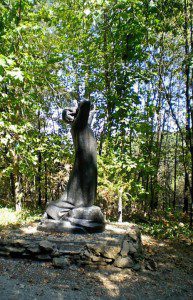
in the darkness
is darkness.
I could list
secrets accumulated
sins committed
words mistrusted
at least four commandments
that led me over a cliff
to the brink of a windowsill
and the bottom of a well
on the journey to the center of my soul.
Why was there any light at all?
Why did the grace I hardly asked for
with no gentle hand
grasp me from darkness
and pull me, screaming, into the light
blessed with a balm I could not understand
a sanctifying desire
I cannot bear?
So that here I sit,
even if the peace is only for tonight,
wrapped in a blanket,
drinking hot chocolate, listening to Strauss,
writing poetry. 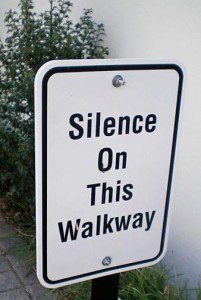
Wednesday night
I called my friend
told her I had said Mass for her mother.
We cried
talked of questions and orphans
and I held on to love
in a hot phone booth.
And all week long
I was making arguments
for the truth of God
to a man who could not hear me
whose face followed me at every turn
who might love me
if I let him
who does not yet know the name of grace.
 Tomorrow I will say Vigils again
then Lauds at daybreak
go to Mass
take blood and body
and drive back into a world
I cannot even
(as Merton did)
pretend to leave.
When I did not expect sense
things were much easier.
Now tears surprise me at every turn
and water in the font is the surest thing I know,
and there are no answers
and deep in the vigil night
the presence candle burns alone.
The monks are asleep
the night air cool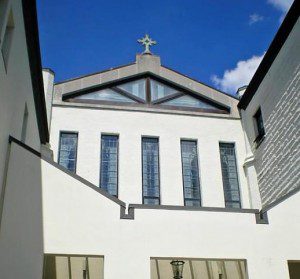
where the student lovers
are out kissing the stars.
And I write love letters in my mind
to the dead
and the living.
Lord, I believe; help thou my unbelief.
There will be two bells;
the first has rung already.
The second comes in surprising nighttime
to wake the living and the dead
to wash the tears away
and over the mountains
alarming day comes in glory.
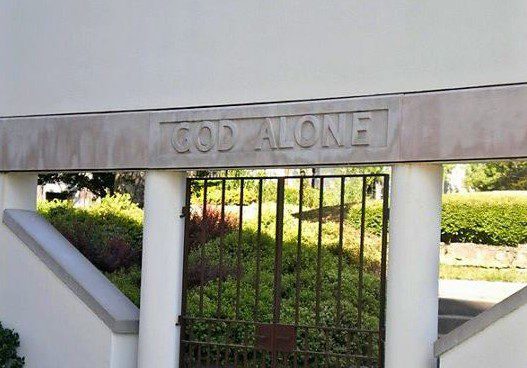
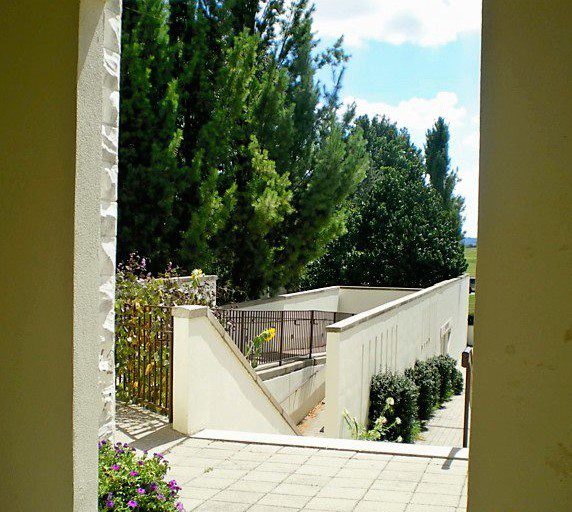
I took the photos in this post on a visit to Gethsemani in 2011.
Previous Post

December 5, 2015
Why Business Matters to God and What Still Needs to Be Fixed
Next Post
December 7, 2015 14 Books That Will Make You Smarter
Browse Our Archives
Select a Category Book Reviews Curriculum Reviews Discipleship Information Interviews Movie Reviews New Book Resource Lists Theology of Work Uncategorized Videos
Select a Month March 2016 February 2016 January 2016 December 2015 November 2015 October 2015 September 2015 August 2015 July 2015 June 2015 May 2015 April 2015 March 2015 February 2015 January 2015 December 2014
Follow Us!
TAKE THE
Religious Wisdom Quiz
What does Paul say godliness with what is great gain?
Select your answer to see how you score.
Love Faith Prayer Contentment
Related posts from Work Cited


"My passions feel at odds with each other":...

A big deal for the Kingdom of God:...

What are you up to and what are...
TRENDING AT PATHEOS Careers, Workplace and Religion

St. Francis by Bill Droel Pope Leo XIV declares 2026 as “Year...

Catholics are schooled in the faith by memorizing dogmatic points and lots...

The Good News of Our Human Limitations -...
After another day of trying to meet deadlines and working on projects,...

Quiet Holy Attentiveness (podcast) with Sarah Clarkson
We know that quiet is an essential aspect of the spiritual life,...

Every Vocation Everywhere All At Once
What is a vocation? How does it endure through the years? Can...

I promise this is not going to become a Taylor Swift Studies...
view all Careers, Workplace and Religion blogs
Ad-Free & Subscriber Log-In Subscription Support
- About Us
- 2026 Calendar
- Videos
- Podcasts
- Library of World Religions
- Faith In Media Tracker
- Advertise With Us
- Write for Us
- Privacy Policy
- Terms of Service
- Do Not Sell My Data
- Contact Us
- Radiant Digital
- Manage Newsletter Subscriptions
- Unsubscribe From Notifications
- Sitemap
Copyright 2008-2026, Patheos. All rights reserved.
Subscription Support Ad-Free & Subscriber Log-In
Follow Patheos