
BuddhistCatholicContemplativeEvangelicalGeneral ChristianHinduJewishLatter-day SaintMuslimNew VisionsProgressive Christian
Beliefs
- Buddhist
- Catholic
- Contemplative
- Evangelical
- General Christian
- Hindu
- Jewish
- Latter-day Saint
- More Voices
- Muslim
- New Visions
- Pagan
- Progressive Christian
Topics
- Religion News
- Food and Religion
- Sports and Religion
- Religious Art
- Religious Music and Entertainment
- Religious Events
- History and Religion
- Style and Religion
- Politics and Religion
- Women in Religion
- Recreation Outdoors and Religion
- Business Finance and Religion
- Careers Workplace and Religion
- Education and Religion
- Family Parenting and Religion
- Health Fitness and Religion
- Home and Religion
- Relationships and Religion
- Technology and Religion
- Travel and Religion
Columnists
- Buddhist Columnists
- Business Finance and Religion Columnists
- Careers Workplace and Religion Columnists
- Catholic Columnists
- Contemplative Columnists
- Education and Religion Columnists
- Evangelists Columnists
- Family Parenting and Religion Columnists
- General Christian Columnists
- Health Fitness and Religion Columnists
- Hindu Columnists
- History and Religion Columnists
- Home and Religion Columnists
- Jewish Columnists
- More Voices Columnists
- Latter Day Columnists
- Muslim Columnists
- New Visions Columnists
- Nonreligious Columnists
- Pagan Columnists
- Politics and Religion Columnists
- Progressive Columnists
- Recreation Outdoors and Religion Columnists
- Relationships and Religion Columnists
- Religion News Columnists
- Religious Art Columnists
- Religious Events Columnists
- Religious Music and Entertainment Columnists
- Sports and Religion Columnists
- Style and Religion Columnists
- Technology and Religion Columnists
- Travel and Religion Columnists
- Women in Religion Columnists
Resource Library
- 2026 Calendar
- Library of World Religions
- The 100 Most Holy Places on Earth
- Patheos Answers
- Podcasts
- Videos
- Faith Leaders Database
- Anglican Episcopalian
- Bahai
- Baptist
- Buddhism
- Christianity
- Confucianism
- Eastern Orthodoxy
- Hinduism
- Holiness and Pentecostal
- ISKCON
- Islam
- Judaism
- Lutheran
- Methodist
- The Church of Jesus Christ of Latter-day Saints
- New Age
- Paganism
- Presbytarian and Reformed
- Protestantism
- Religion Behind the Scenes
- Roman Catholic
- Scientology
- Shia Islam
- Sikhism
- Sufism
- Sunni Islam
- Taoism
- Zen
- See all religions
Research Tools
 Ad-Free & Subscriber Log-In Subscription Support
Ad-Free & Subscriber Log-In Subscription Support
Follow Patheos 

- Trending:
- Forgiveness
- |
- Marriage
- |
- Consciousness
- |
- Death Penalty
- |
- Election
- |
- Halloween
 Work Cited
- Home
- Careers, Workplace and Religion
- The Virtues of Capitalism by Austin Hill and Scott Rae
The Virtues of Capitalism by Austin Hill and Scott Rae
Last updated on: October 28, 2015 at 2:07 pm by Mikel Del Rosario
The Virtues of Capitalism by Austin Hill and Scott Rae 2015-10-28T14:07:15-05:00 Mikel Del Rosario
Patheos Explore the world's faith through different perspectives on religion and spirituality! Patheos has the views of the prevalent religions and spiritualities of the world.
Recommended: The Virtues of Capitalism
A Review of The Virtues of Capitalism
By Mikel Del Rosario
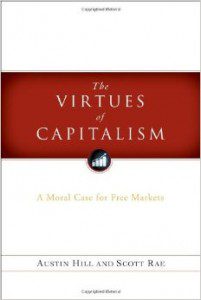 In The Virtues of Capitalism: A Moral Case for Free Markets, Austin Hill and Scott Rae examine capitalism from a Christian perspective, arguing that it is the economic system most compatible with classic Judeo-Christian virtues.
They demonstrate that economics is intertwined with moral issues by comparing capitalism to other economic systems, focusing on the impact these systems have on human rights and poverty.
The book explains misconceptions of capitalism and addresses its challenges and critiques using key economic events of the early 21st century.
3 Key Points from the Book
Here are just three ideas you will see the authors develop in The Virtues of Capitalism
Capitalism is most consistent with Biblical principles.
A biblical economic system should maximize opportunities for people to be creative, take initiative, to innovate. It should also help people support themselves and their dependents and care for the poor and those who are unable to care for themselves. Capitalism does both of these things and allows the poor to help themselves out of poverty in a way that upholds their human dignity. Although capitalism has its problems, it is the economic system which is most consistent with the Judeo-Christian worldview.
Capitalism promotes moral goodness and virtues.
Capitalism requires that people act in a virtuous manner and often brings out the best in people. For example, capitalism elevates human creativity, and promotes innovations that can help people meet their needs and the needs of others. Furthermore, capitalistic free-market enterprise requires people from diverse cultural, religious and socio-economic backgrounds to work together to pursue their common goals. Moreover, capitalism promotes responsibility by allowing people to succeed as well as fail.
Capitalism has not failed us.
Is the Great Recession an example of how capitalism has failed? No. It was the global financial system which failed as a result of government intervention—not capitalism. The unintended results of government intervention in the market, paired with public policy decisions, produced a situation where greed flourished on a huge scale. One thing we must learn: If businesses continue making risky investments with other people’s money, private enterprise may fall under more government regulation and many may stop being privately owned altogether.
Conclusion
The Virtues of Capitalism helps readers evaluate capitalism, economic systems and recent economic history from a biblical perspective. It would be beneficial, not only for Christians or those who hold to a Judeo-Christian worldview, but for anyone interested in deepening their understanding of free markets or economic systems from a moral perspective.
Read the Book
Previous Post

October 10, 2015
The 10 Most Important Books to Expand Your Brain
Next Post
November 2, 2015 Best Books for Business: The Power of No
Browse Our Archives
Select a Category Book Reviews Curriculum Reviews Discipleship Information Interviews Movie Reviews New Book Resource Lists Theology of Work Uncategorized Videos
Select a Month March 2016 February 2016 January 2016 December 2015 November 2015 October 2015 September 2015 August 2015 July 2015 June 2015 May 2015 April 2015 March 2015 February 2015 January 2015 December 2014
Follow Us!
TAKE THE
Religious Wisdom Quiz
Who said: "The Lord knows how to rescue the godly from trials and to hold the unrighteous for punishment"?
Select your answer to see how you score.
Peter James Jude Paul
Related posts from Work Cited

What is the most important issue in the...


"My passions feel at odds with each other":...

A big deal for the Kingdom of God:...
TRENDING AT PATHEOS Careers, Workplace and Religion

St. Francis by Bill Droel Pope Leo XIV declares 2026 as “Year...

Catholics are schooled in the faith by memorizing dogmatic points and lots...

The Good News of Our Human Limitations -...
After another day of trying to meet deadlines and working on projects,...

Quiet Holy Attentiveness (podcast) with Sarah Clarkson
We know that quiet is an essential aspect of the spiritual life,...

Every Vocation Everywhere All At Once
What is a vocation? How does it endure through the years? Can...

I promise this is not going to become a Taylor Swift Studies...
view all Careers, Workplace and Religion blogs
Ad-Free & Subscriber Log-In Subscription Support
- About Us
- 2026 Calendar
- Videos
- Podcasts
- Library of World Religions
- Faith In Media Tracker
- Advertise With Us
- Write for Us
- Privacy Policy
- Terms of Service
- Do Not Sell My Data
- Contact Us
- Radiant Digital
- Manage Newsletter Subscriptions
- Unsubscribe From Notifications
- Sitemap
Copyright 2008-2026, Patheos. All rights reserved.
Subscription Support Ad-Free & Subscriber Log-In
Follow Patheos