
BuddhistCatholicContemplativeEvangelicalGeneral ChristianHinduJewishLatter-day SaintMuslimNew VisionsProgressive Christian
Beliefs
- Buddhist
- Catholic
- Contemplative
- Evangelical
- General Christian
- Hindu
- Jewish
- Latter-day Saint
- More Voices
- Muslim
- New Visions
- Pagan
- Progressive Christian
Topics
- Religion News
- Food and Religion
- Sports and Religion
- Religious Art
- Religious Music and Entertainment
- Religious Events
- History and Religion
- Style and Religion
- Politics and Religion
- Women in Religion
- Recreation Outdoors and Religion
- Business Finance and Religion
- Careers Workplace and Religion
- Education and Religion
- Family Parenting and Religion
- Health Fitness and Religion
- Home and Religion
- Relationships and Religion
- Technology and Religion
- Travel and Religion
Columnists
- Buddhist Columnists
- Business Finance and Religion Columnists
- Careers Workplace and Religion Columnists
- Catholic Columnists
- Contemplative Columnists
- Education and Religion Columnists
- Evangelists Columnists
- Family Parenting and Religion Columnists
- General Christian Columnists
- Health Fitness and Religion Columnists
- Hindu Columnists
- History and Religion Columnists
- Home and Religion Columnists
- Jewish Columnists
- More Voices Columnists
- Latter Day Columnists
- Muslim Columnists
- New Visions Columnists
- Nonreligious Columnists
- Pagan Columnists
- Politics and Religion Columnists
- Progressive Columnists
- Recreation Outdoors and Religion Columnists
- Relationships and Religion Columnists
- Religion News Columnists
- Religious Art Columnists
- Religious Events Columnists
- Religious Music and Entertainment Columnists
- Sports and Religion Columnists
- Style and Religion Columnists
- Technology and Religion Columnists
- Travel and Religion Columnists
- Women in Religion Columnists
Resource Library
- 2026 Calendar
- Library of World Religions
- The 100 Most Holy Places on Earth
- Patheos Answers
- Podcasts
- Videos
- Faith Leaders Database
- Anglican Episcopalian
- Bahai
- Baptist
- Buddhism
- Christianity
- Confucianism
- Eastern Orthodoxy
- Hinduism
- Holiness and Pentecostal
- ISKCON
- Islam
- Judaism
- Lutheran
- Methodist
- The Church of Jesus Christ of Latter-day Saints
- New Age
- Paganism
- Presbytarian and Reformed
- Protestantism
- Religion Behind the Scenes
- Roman Catholic
- Scientology
- Shia Islam
- Sikhism
- Sufism
- Sunni Islam
- Taoism
- Zen
- See all religions
Research Tools
 Ad-Free & Subscriber Log-In Subscription Support
Ad-Free & Subscriber Log-In Subscription Support
Follow Patheos 

- Trending:
- Forgiveness
- |
- Marriage
- |
- Consciousness
- |
- Death Penalty
- |
- Election
- |
- Halloween
 Work Cited
- Home
- Careers, Workplace and Religion
- How can colleges help students grapple with vocation? The Purposeful Graduate by Tim Clydesdale
How can colleges help students grapple with vocation? The Purposeful Graduate by Tim Clydesdale
Last updated on: August 7, 2015 at 1:41 pm by Mission:Work
How can colleges help students grapple with vocation? The Purposeful Graduate by Tim Clydesdale 2015-08-05T14:34:24-05:00 Mission:Work
Patheos Explore the world's faith through different perspectives on religion and spirituality! Patheos has the views of the prevalent religions and spiritualities of the world.

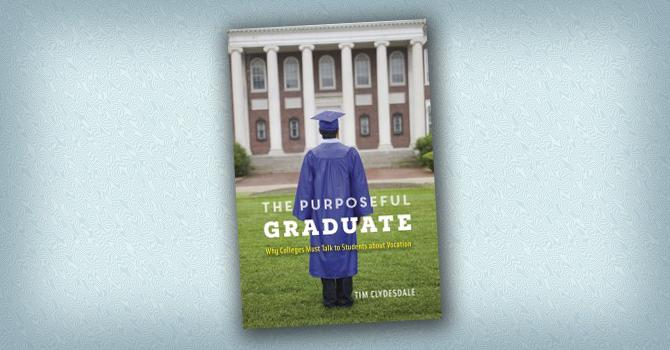
Programs that engage college students with questions of meaning and vocation help form them into resolute and resilient citizen-leaders, says the author of “The Purposeful Graduate: Why Colleges Must Talk to Students About Vocation.” This was first published in Faith & Leadership.
In 1999, Lilly Endowment Inc. launched an ambitious project funding programs to engage students in questions of meaning, purpose and vocation at independent colleges and universities across the country.
When sociologist Tim Clydesdale set about to study the results of these programs, he found that they were a resounding success — so much so that most colleges and universities continued them after the original funding ended.
He found that the students who had engaged the big questions were “grounded idealists” who became “citizen-leaders” after graduation.
“I found that they were more broadly satisfied with their lives. They had more general equanimity about their current circumstances and were more positive in their long-term perspective, and more resilient,” he said. “And that contrasted with the students that I interviewed from places that didn’t have these programs. I was surprised at the level of pessimism I was hearing from these other young adults.”
 In his new book, “The Purposeful Graduate: Why Colleges Must Talk to Students About Vocation,” Clydesdale reports on his findings and explores the many benefits of establishing a structured program to encourage college students — especially sophomores and juniors — to think about how to live meaningful, purposeful lives.
Clydesdale and his research team studied 26 of the 88 campuses that received funds from the Lilly project, Programs for the Theological Exploration of Vocation. After visits, meetings and interviews with students both before and after graduation, he concluded that the benefits of such programs were so significant that he would urge even non-religiously affiliated colleges and universities to adopt them.
The programs were intended to help students examine the relationship between their faith and vocational choices; provide opportunities for young people to explore Christian ministry leadership; and enhance the capacity of an institution’s faculty and staff to teach and mentor students in this regard. The objective was to identify and nurture a new generation of talented and committed leaders for religious communities and for society.
In this interview, Clydesdale,a professor at the College of New Jersey and the author of “The First Year Out: Understanding American Teens After High School,” talks about what he found when he analyzed the results of the programs.
Q: What’s the most important take-away from the research that you did? What would you advise someone running a college, based on what you learned?
There are a goodly number of students who are in their sophomore year, and some in their junior year, who open up to the bigger questions of life. They’re willing to engage the bigger questions.
And if you draw those students creatively into a conversation to think about these questions, give them some stimulating resources and give them some conversation partners — both mentors and peers — the lasting effects are powerful on those young people.
There’s an immediate effect — they become much more plugged in to studies, and also to their campus community and the surrounding community.
And they track out of college, and into life thereafter, with a much clearer direction and purpose, which is resilient. It can survive the inevitable bumps and bangs that come in life and still keep them on a path that they find meaningful and fulfilling, and of service to others.
Q: Do you think that this is pertinent only to young adults who are religious, or is it a more general finding?
Oh, I think it is definitely a more general finding. I’d say a good dozen or more of the campuses that received these grants have only a historic affiliation with religion. They very much consider themselves resolutely nonsectarian.
Many of the students that participated in these conversations were coming from a place of faith, some of them from diverse faiths, and some were coming from places of not really being religiously engaged but wanting to ask questions of purpose and meaning and be able to think broadly about them. So they weren’t necessarily religious at all.
Q: Is the goal for the outcome to create a lot of idealistic people who want to change the world?
The interesting thing for me was I thought it was going to create a lot more idealism among people who are already too idealistic.
All of these organizations realize that there are two aspects to thinking about and discerning and reflecting on your purpose. The one is the more reflective piece. And the other is by actual experience and service.
All of these programs combine reflection pieces with service. So what happened was students would be absolutely idealistic, but they’d also spend weeks, months, semesters, years, summers involved in some very real and very hard situations of service.
And so the outcome was what I call in the book a “grounded idealism.”
They very much held on to, “I do want to do something to try to change the world. But I realize how hard that is; I realize how complex some of the problems out there are; I realize what the odds against us are. But nonetheless, I have seen those glimmers of hope that I’m going to continue to pursue despite knowing all the odds.”
And that grounded idealism is what I think made it so useful.
I thought the people who would come into these programs would be really idealistic, and they’d slam into the real world and they’d hit office politics — trying to make friends and all that sort of stuff — and they would be really disillusioned.
In fact, I found that they were more broadly satisfied with their lives. They had more general equanimity about their current circumstances and were more positive in their long-term perspective, and more resilient.
Some of them did hit some pretty serious setbacks in the first year, and even after they graduated from university, and managed to overcome those and find a way to move forward.
And that contrasted with the students that I interviewed from places that didn’t have these programs. I was surprised at the level of pessimism I was hearing from these other young adults, and the number of them who were already starting to abandon their dreams and start to settle for things.
It was interesting. It was very, very interesting.
So despite my thought that this was going to lead to a lot of starry-eyed idealists, it left people with a much more resolute, grounded and clear sense of all the challenges they were about to face. They were very clear-eyed and at the same time had an even stronger desire to try to do something important and powerful with their lives for the communities that they served.
Click to read more about how these programs work!
Previous Post

August 6, 2015
The Political Disciple: A Theology of Public Life By Vincent Bacote
Next Post
August 10, 2015 Best Books for Business: What We Hope for When We Read
Browse Our Archives
Select a Category Book Reviews Curriculum Reviews Discipleship Information Interviews Movie Reviews New Book Resource Lists Theology of Work Uncategorized Videos
Select a Month March 2016 February 2016 January 2016 December 2015 November 2015 October 2015 September 2015 August 2015 July 2015 June 2015 May 2015 April 2015 March 2015 February 2015 January 2015 December 2014
Follow Us!
TAKE THE
Religious Wisdom Quiz
Which prophet was a shepherd and a sycamore-fig farmer?
Select your answer to see how you score.
Micah Amos Joel Daniel
Related posts from Work Cited

"My passions feel at odds with each other":...

A big deal for the Kingdom of God:...

Helping College Students Find Meaning

Resources on faith and vocation especially for small...
TRENDING AT PATHEOS Careers, Workplace and Religion

St. Francis by Bill Droel Pope Leo XIV declares 2026 as “Year...

Catholics are schooled in the faith by memorizing dogmatic points and lots...

The Good News of Our Human Limitations -...
After another day of trying to meet deadlines and working on projects,...

Quiet Holy Attentiveness (podcast) with Sarah Clarkson
We know that quiet is an essential aspect of the spiritual life,...

Every Vocation Everywhere All At Once
What is a vocation? How does it endure through the years? Can...

I promise this is not going to become a Taylor Swift Studies...
view all Careers, Workplace and Religion blogs
Ad-Free & Subscriber Log-In Subscription Support
- About Us
- 2026 Calendar
- Videos
- Podcasts
- Library of World Religions
- Faith In Media Tracker
- Advertise With Us
- Write for Us
- Privacy Policy
- Terms of Service
- Do Not Sell My Data
- Contact Us
- Radiant Digital
- Manage Newsletter Subscriptions
- Unsubscribe From Notifications
- Sitemap
Copyright 2008-2026, Patheos. All rights reserved.
Subscription Support Ad-Free & Subscriber Log-In
Follow Patheos