
BuddhistCatholicContemplativeEvangelicalGeneral ChristianHinduJewishLatter-day SaintMuslimNew VisionsProgressive Christian
Beliefs
- Buddhist
- Catholic
- Contemplative
- Evangelical
- General Christian
- Hindu
- Jewish
- Latter-day Saint
- More Voices
- Muslim
- New Visions
- Pagan
- Progressive Christian
Topics
- Religion News
- Food and Religion
- Sports and Religion
- Religious Art
- Religious Music and Entertainment
- Religious Events
- History and Religion
- Style and Religion
- Politics and Religion
- Women in Religion
- Recreation Outdoors and Religion
- Business Finance and Religion
- Careers Workplace and Religion
- Education and Religion
- Family Parenting and Religion
- Health Fitness and Religion
- Home and Religion
- Relationships and Religion
- Technology and Religion
- Travel and Religion
Columnists
- Buddhist Columnists
- Business Finance and Religion Columnists
- Careers Workplace and Religion Columnists
- Catholic Columnists
- Contemplative Columnists
- Education and Religion Columnists
- Evangelists Columnists
- Family Parenting and Religion Columnists
- General Christian Columnists
- Health Fitness and Religion Columnists
- Hindu Columnists
- History and Religion Columnists
- Home and Religion Columnists
- Jewish Columnists
- More Voices Columnists
- Latter Day Columnists
- Muslim Columnists
- New Visions Columnists
- Nonreligious Columnists
- Pagan Columnists
- Politics and Religion Columnists
- Progressive Columnists
- Recreation Outdoors and Religion Columnists
- Relationships and Religion Columnists
- Religion News Columnists
- Religious Art Columnists
- Religious Events Columnists
- Religious Music and Entertainment Columnists
- Sports and Religion Columnists
- Style and Religion Columnists
- Technology and Religion Columnists
- Travel and Religion Columnists
- Women in Religion Columnists
Resource Library
- 2026 Calendar
- Library of World Religions
- The 100 Most Holy Places on Earth
- Patheos Answers
- Podcasts
- Videos
- Faith Leaders Database
- Anglican Episcopalian
- Bahai
- Baptist
- Buddhism
- Christianity
- Confucianism
- Eastern Orthodoxy
- Hinduism
- Holiness and Pentecostal
- ISKCON
- Islam
- Judaism
- Lutheran
- Methodist
- The Church of Jesus Christ of Latter-day Saints
- New Age
- Paganism
- Presbytarian and Reformed
- Protestantism
- Religion Behind the Scenes
- Roman Catholic
- Scientology
- Shia Islam
- Sikhism
- Sufism
- Sunni Islam
- Taoism
- Zen
- See all religions
Research Tools
 Ad-Free & Subscriber Log-In Subscription Support
Ad-Free & Subscriber Log-In Subscription Support
Follow Patheos 

- Trending:
- Forgiveness
- |
- Marriage
- |
- Consciousness
- |
- Death Penalty
- |
- Election
- |
- Halloween
 Work Cited
- Home
- Careers, Workplace and Religion
- A theology of inequality? Degrees of Glory by Jonathan Edwards
A theology of inequality? Degrees of Glory by Jonathan Edwards
Last updated on: March 14, 2015 at 11:33 am by Oikonomia Network
A theology of inequality? Degrees of Glory by Jonathan Edwards 2015-03-03T12:09:51-05:00 Oikonomia Network
Patheos Explore the world's faith through different perspectives on religion and spirituality! Patheos has the views of the prevalent religions and spiritualities of the world.
This article originally appeared at the Oikonomia Network. Thanks, folks!
By Uche Anizor
There are different degrees of glory in heaven. Some saints will there be exalted higher in glory than others. This is a doctrine very fully revealed in the Scriptures.
– Jonathan Edwards, “Degrees of Glory”
We see disparities in income, opportunities, education, skills – you name it – all around us. Public discussion and debate about these disparities often center on the issue of justice or equity. However, inequality is not necessarily inequity. No doubt some inequalities are unjust, even extremely so. But others may be just, and still other inequalities may have little to do with justice or injustice.
As in all matters, it is helpful to get somewhat of a God’s-eye view of this easily misunderstood issue. One strand of
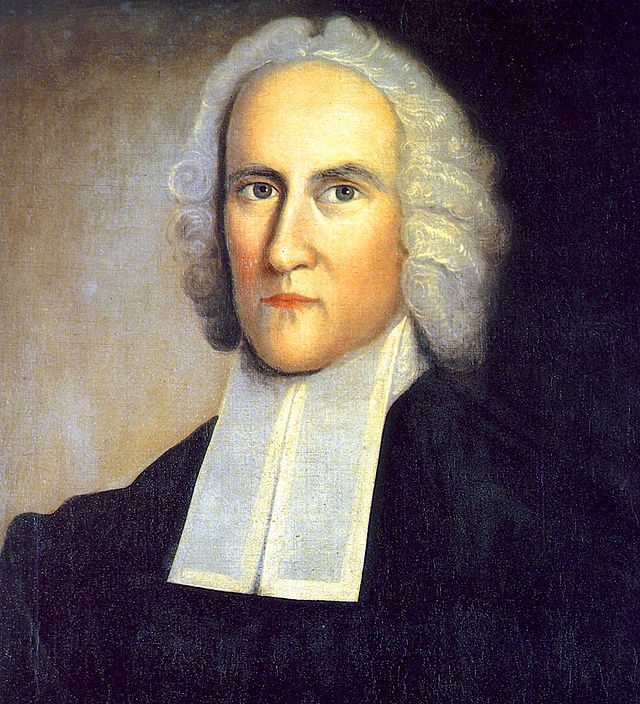
Jonathan Edwards, courtesy Wikimedia
biblical teaching that is worth considering in this context is brought into sharp focus by Jonathan Edwards’ eschatology.
In “Degrees of Glory,” Edwards argues that in heaven, after judgment, some people will have more glory than others. We may not know what it would mean to attain more or less “glory,” but that is not the main concern here. The basic point is that in God’s perfected world, there will be inequality. No doubt this will be a just inequality.
Edwards makes the point through a number of biblical texts, including Luke 19’s parable of the pounds. He writes:
This is also a doctrine that we are very plainly and directly taught in the parable, in the nineteenth of Luke, of the nobleman travelling into a far country to receive for himself a kingdom, and delivering to his ten servants each of them a pound; who when he returned, having received his kingdom, reckoned with the servants; and one told his lord that he had with his pound gained ten pounds, and he rewards him by making of him ruler over ten cities; and another gained five pounds, and he is rewarded by making of him ruler over five cities.
Edwards then concludes:
This evidently respects the different degrees of reward that will be bestowed on Christ’s faithful servants at his coming to judgment, according as they have been more or less profitable. For doubtless by the nobleman that travelled into a far country to receive for himself a kingdom is meant Christ’s ascending to heaven to receive an heavenly kingdom; and by his returning again to call his servants to an account, is meant his coming again to judgment.
A key point for Edwards is that Christ is the one giving out unequal rewards. Therefore, the inequality of the rewards is the Lord’s intent. In fact, in glory inequality is the most equitable (i.e., “just”) outcome.
If Edwards is correct that there will be differing degrees of honor, blessing, or reward in the consummated Kingdom, then one need not be disturbed by the mere existence of inequalities in the present, as if inequality were contrary to God’s will for humanity in and of itself. The fact of inequality doesn’t necessarily prove some kind of funny business going on. In the new creation, according to Edwards, some will have more while others will have less, in the absence of greed and exploitation.
Inequity or injustice obviously requires urgent attention, but not as a knee-jerk response to inequality. Further reflection on the eschatological economy might aid our efforts in fighting for justice, helping to bring Christian clarity to economic and social issues.
By Uche Anizor, associate professor of biblical and theological studies, Biola University. This article is adapted from a contribution to Biola’s “Good Book Blog” that the author composed as part of Biola’s faculty reading group on theology and economics.
Previous Post

March 8, 2015
Bringing globalization home: Boom, Bust, Exodus by Chad Broughton
Next Post
March 18, 2015 Why institutions matter: On Thinking Institutionally by Hugh Heclo
Browse Our Archives
Select a Category Book Reviews Curriculum Reviews Discipleship Information Interviews Movie Reviews New Book Resource Lists Theology of Work Uncategorized Videos
Select a Month March 2016 February 2016 January 2016 December 2015 November 2015 October 2015 September 2015 August 2015 July 2015 June 2015 May 2015 April 2015 March 2015 February 2015 January 2015 December 2014
Follow Us!
TAKE THE
Religious Wisdom Quiz
What is the main theme of the Parable of the Two Sons?
Select your answer to see how you score.
Repentance is easy Obedience is proved by actions Honesty is best Firstborns are favored
Related posts from Work Cited


"My passions feel at odds with each other":...

A big deal for the Kingdom of God:...

What are you up to and what are...
TRENDING AT PATHEOS Careers, Workplace and Religion

St. Francis by Bill Droel Pope Leo XIV declares 2026 as “Year...

Catholics are schooled in the faith by memorizing dogmatic points and lots...

The Good News of Our Human Limitations -...
After another day of trying to meet deadlines and working on projects,...

Quiet Holy Attentiveness (podcast) with Sarah Clarkson
We know that quiet is an essential aspect of the spiritual life,...

Every Vocation Everywhere All At Once
What is a vocation? How does it endure through the years? Can...

I promise this is not going to become a Taylor Swift Studies...
view all Careers, Workplace and Religion blogs
Ad-Free & Subscriber Log-In Subscription Support
- About Us
- 2026 Calendar
- Videos
- Podcasts
- Library of World Religions
- Faith In Media Tracker
- Advertise With Us
- Write for Us
- Privacy Policy
- Terms of Service
- Do Not Sell My Data
- Contact Us
- Radiant Digital
- Manage Newsletter Subscriptions
- Unsubscribe From Notifications
- Sitemap
Copyright 2008-2026, Patheos. All rights reserved.
Subscription Support Ad-Free & Subscriber Log-In
Follow Patheos