
BuddhistCatholicContemplativeEvangelicalGeneral ChristianHinduJewishLatter-day SaintMuslimNew VisionsProgressive Christian
Beliefs
- Buddhist
- Catholic
- Contemplative
- Evangelical
- General Christian
- Hindu
- Jewish
- Latter-day Saint
- More Voices
- Muslim
- New Visions
- Pagan
- Progressive Christian
Topics
- Religion News
- Food and Religion
- Sports and Religion
- Religious Art
- Religious Music and Entertainment
- Religious Events
- History and Religion
- Style and Religion
- Politics and Religion
- Women in Religion
- Recreation Outdoors and Religion
- Business Finance and Religion
- Careers Workplace and Religion
- Education and Religion
- Family Parenting and Religion
- Health Fitness and Religion
- Home and Religion
- Relationships and Religion
- Technology and Religion
- Travel and Religion
Columnists
- Buddhist Columnists
- Business Finance and Religion Columnists
- Careers Workplace and Religion Columnists
- Catholic Columnists
- Contemplative Columnists
- Education and Religion Columnists
- Evangelists Columnists
- Family Parenting and Religion Columnists
- General Christian Columnists
- Health Fitness and Religion Columnists
- Hindu Columnists
- History and Religion Columnists
- Home and Religion Columnists
- Jewish Columnists
- More Voices Columnists
- Latter Day Columnists
- Muslim Columnists
- New Visions Columnists
- Nonreligious Columnists
- Pagan Columnists
- Politics and Religion Columnists
- Progressive Columnists
- Recreation Outdoors and Religion Columnists
- Relationships and Religion Columnists
- Religion News Columnists
- Religious Art Columnists
- Religious Events Columnists
- Religious Music and Entertainment Columnists
- Sports and Religion Columnists
- Style and Religion Columnists
- Technology and Religion Columnists
- Travel and Religion Columnists
- Women in Religion Columnists
Resource Library
- 2026 Calendar
- Library of World Religions
- The 100 Most Holy Places on Earth
- Patheos Answers
- Podcasts
- Videos
- Faith Leaders Database
- Anglican Episcopalian
- Bahai
- Baptist
- Buddhism
- Christianity
- Confucianism
- Eastern Orthodoxy
- Hinduism
- Holiness and Pentecostal
- ISKCON
- Islam
- Judaism
- Lutheran
- Methodist
- The Church of Jesus Christ of Latter-day Saints
- New Age
- Paganism
- Presbytarian and Reformed
- Protestantism
- Religion Behind the Scenes
- Roman Catholic
- Scientology
- Shia Islam
- Sikhism
- Sufism
- Sunni Islam
- Taoism
- Zen
- See all religions
Research Tools
 Ad-Free & Subscriber Log-In Subscription Support
Ad-Free & Subscriber Log-In Subscription Support
Follow Patheos 

- Trending:
- Forgiveness
- |
- Marriage
- |
- Consciousness
- |
- Death Penalty
- |
- Election
- |
- Halloween
 Work Cited
- Home
- Careers, Workplace and Religion
- Faith in a rational God: The Victory of Reason by Rodney Stark
Faith in a rational God: The Victory of Reason by Rodney Stark
Last updated on: February 9, 2015 at 5:24 pm by Mikel Del Rosario
Faith in a rational God: The Victory of Reason by Rodney Stark 2015-02-09T17:24:30-05:00 Mikel Del Rosario
Patheos Explore the world's faith through different perspectives on religion and spirituality! Patheos has the views of the prevalent religions and spiritualities of the world.
 (This post first appeared here at the blog of the Hendricks Center for Christian Leadership and Cultural Engagement.)
By Kasey Summerer
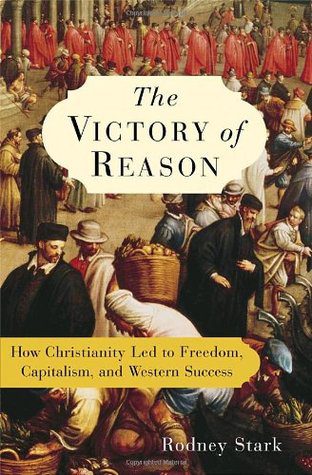
In this installment of our series featuring resources on Faith, Work and Economics, we recommend Rodney Stark’s The Victory of Reason: How Christianity Led to Freedom, Capitalism, and Western Success.
Stark helps the reader understand and even rethink the way history unfolded concerning innovations of the last millennium within science, industry, politics, and economics. As Stark works his way through history he draws out misconceptions that have arisen over time such as that science is naturally at odds with Christianity and that Christianity is a religion of mere faith and not intellectual thought. From this foundation, Stark proposes the exact opposite- that it is Christianity’s “faith in reason” that caused the West to make technological breakthroughs and propel it economically ahead of the rest of the world.
3 Key Points from the Book
This book challenges the reader to look beyond the face value of the pages of history, asking not merely the “what” but the “why” that caused some of history’s greatest innovations. Stark guides this process by digging deeper into the beliefs that sparked an intellectual revolution.
Christianity’s Rational Theology Sets it Apart
Unlike all other world religions, Stark argues that Christianity alone possesses two key distinct characteristics that predispose its adherents toward a pursuit of knowledge. First, Christianity believes in a God who is a “conscious, rational, supernatural being of unlimited power and scope who cares about humans and imposes moral codes and responsibilities upon them,” and therefore necessitates an exhaustive theology that seeks to answer “serious intellectual questions” (5). Second, Christianity has an extremely high emphasis on orthodoxy, that is, a right understanding of God and therefore emphasizes progress in an effort to gain clearer understanding of the nature of God. Being so, Christianity has been a catalyst for innovation (in science, technology, and morality) in comparison to other religions that stifle innovation either in an effort to follow legal standards (Judaism and Islam) or to pursue spirituality in lieu of theology (Taoism and Buddhism).
Christian Reason and Progress Put Europe on the Map
Due to Christianity’s commitment to reason and progress, Europe experienced remarkable innovation in the period notoriously known as the “Dark Ages.” Unbridled from the control and high taxation of fallen Rome, Europe began to thrive with innovation due to what Stark attributes to the fundamental Christian beliefs of freedom and moral equality of every person. Stark keenly notes that invention and innovation are often stifled under oppressive despots and “tend to occur only where property is safe from seizure either because the state has become disorganized or because its powers have been curtailed” (38). While this period is often veiled behind misconceptions, innovations such as the watermill, eyeglasses, and the mechanical clock found their birth during this time.
Capitalism: A Christian Innovation
Coming out of an age of innovation, founded on the Christian principles of freedom and moral equality, capitalism was born. As Stark asserts, another key Christian principle was foundational in the birth of capitalism: property rights. As Stark writes, “The Bible takes private property rights for granted, often condemning infringements such as theft and fraud” (78). Stark spends extensive time on the issue of property rights, as well as free markets and free labor and shows that in countries where these three were either present or lacking determined whether capitalism either thrived or writhed.
Conclusion
Rodney Stark persuasively points to the underlying source of the modern world we see today: the Christian beliefs and principles that birthed a revolution of thought and innovation. While Stark works as a generalist for the most part (which may the biggest criticism against his book), covering vast brush strokes as he paints the picture of capitalism’s storied history, his point is undeniable: Christianity is not at odds with science, reason, and innovation, but rather is a proponent and even catalyst of all three. This is a great read for anyone looking to better understand Christianity’s relationship to business, economics, and even science.
Read the Book
Next Post

February 12, 2015 An essential faith and work bibliography, or two, or three...
Browse Our Archives
Select a Category Book Reviews Curriculum Reviews Discipleship Information Interviews Movie Reviews New Book Resource Lists Theology of Work Uncategorized Videos
Select a Month March 2016 February 2016 January 2016 December 2015 November 2015 October 2015 September 2015 August 2015 July 2015 June 2015 May 2015 April 2015 March 2015 February 2015 January 2015 December 2014
Follow Us!
TAKE THE
Religious Wisdom Quiz
Who was the giant defeated by David?
Select your answer to see how you score.
Samson Goliath Pharaoh Herod
Related posts from Work Cited

What is the most important issue in the...


"My passions feel at odds with each other":...

A big deal for the Kingdom of God:...
TRENDING AT PATHEOS Careers, Workplace and Religion

St. Francis by Bill Droel Pope Leo XIV declares 2026 as “Year...

Catholics are schooled in the faith by memorizing dogmatic points and lots...

The Good News of Our Human Limitations -...
After another day of trying to meet deadlines and working on projects,...

Quiet Holy Attentiveness (podcast) with Sarah Clarkson
We know that quiet is an essential aspect of the spiritual life,...

Every Vocation Everywhere All At Once
What is a vocation? How does it endure through the years? Can...

I promise this is not going to become a Taylor Swift Studies...
view all Careers, Workplace and Religion blogs
Ad-Free & Subscriber Log-In Subscription Support
- About Us
- 2026 Calendar
- Videos
- Podcasts
- Library of World Religions
- Faith In Media Tracker
- Advertise With Us
- Write for Us
- Privacy Policy
- Terms of Service
- Do Not Sell My Data
- Contact Us
- Radiant Digital
- Manage Newsletter Subscriptions
- Unsubscribe From Notifications
- Sitemap
Copyright 2008-2026, Patheos. All rights reserved.
Subscription Support Ad-Free & Subscriber Log-In
Follow Patheos