
BuddhistCatholicContemplativeEvangelicalGeneral ChristianHinduJewishLatter-day SaintMuslimNew VisionsProgressive Christian
Beliefs
- Buddhist
- Catholic
- Contemplative
- Evangelical
- General Christian
- Hindu
- Jewish
- Latter-day Saint
- More Voices
- Muslim
- New Visions
- Pagan
- Progressive Christian
Topics
- Religion News
- Food and Religion
- Sports and Religion
- Religious Art
- Religious Music and Entertainment
- Religious Events
- History and Religion
- Style and Religion
- Politics and Religion
- Women in Religion
- Recreation Outdoors and Religion
- Business Finance and Religion
- Careers Workplace and Religion
- Education and Religion
- Family Parenting and Religion
- Health Fitness and Religion
- Home and Religion
- Relationships and Religion
- Technology and Religion
- Travel and Religion
Columnists
- Buddhist Columnists
- Business Finance and Religion Columnists
- Careers Workplace and Religion Columnists
- Catholic Columnists
- Contemplative Columnists
- Education and Religion Columnists
- Evangelists Columnists
- Family Parenting and Religion Columnists
- General Christian Columnists
- Health Fitness and Religion Columnists
- Hindu Columnists
- History and Religion Columnists
- Home and Religion Columnists
- Jewish Columnists
- More Voices Columnists
- Latter Day Columnists
- Muslim Columnists
- New Visions Columnists
- Nonreligious Columnists
- Pagan Columnists
- Politics and Religion Columnists
- Progressive Columnists
- Recreation Outdoors and Religion Columnists
- Relationships and Religion Columnists
- Religion News Columnists
- Religious Art Columnists
- Religious Events Columnists
- Religious Music and Entertainment Columnists
- Sports and Religion Columnists
- Style and Religion Columnists
- Technology and Religion Columnists
- Travel and Religion Columnists
- Women in Religion Columnists
Resource Library
- 2026 Calendar
- Library of World Religions
- The 100 Most Holy Places on Earth
- Patheos Answers
- Podcasts
- Videos
- Faith Leaders Database
- Anglican Episcopalian
- Bahai
- Baptist
- Buddhism
- Christianity
- Confucianism
- Eastern Orthodoxy
- Hinduism
- Holiness and Pentecostal
- ISKCON
- Islam
- Judaism
- Lutheran
- Methodist
- The Church of Jesus Christ of Latter-day Saints
- New Age
- Paganism
- Presbytarian and Reformed
- Protestantism
- Religion Behind the Scenes
- Roman Catholic
- Scientology
- Shia Islam
- Sikhism
- Sufism
- Sunni Islam
- Taoism
- Zen
- See all religions
Research Tools
 Ad-Free & Subscriber Log-In Subscription Support
Ad-Free & Subscriber Log-In Subscription Support
Follow Patheos 

- Trending:
- Forgiveness
- |
- Marriage
- |
- Consciousness
- |
- Death Penalty
- |
- Election
- |
- Halloween
 Work Cited
- Home
- Careers, Workplace and Religion
- How to help the poor: When Helping Hurts by Steve Corbett and Brian Fikkert
How to help the poor: When Helping Hurts by Steve Corbett and Brian Fikkert
Last updated on: February 9, 2015 at 5:25 pm by Mikel Del Rosario
How to help the poor: When Helping Hurts by Steve Corbett and Brian Fikkert 2015-02-09T17:25:22-05:00 Mikel Del Rosario
Patheos Explore the world's faith through different perspectives on religion and spirituality! Patheos has the views of the prevalent religions and spiritualities of the world.
 This post first appeared here at the blog of the Hendricks Center for Christian Leadership and Cultural Engagement.)
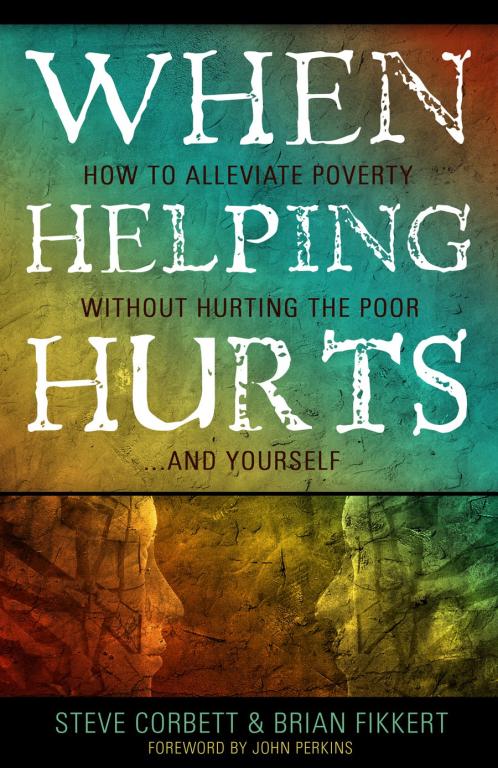
In this installment of our series featuring resources on Faith, Work and Economics, we recommend When Helping Hurts by Steve Corbett and Brian Fikkert
When Helping Hurts presents foundational concepts about poverty from a distinctly Christian worldview, focusing on key principles and practical strategies for churches and individuals to reflect God’s grace while effectively contributing to poverty alleviation. Using a variety of engaging stories, the authors suggest appropriate ways for North American churches and missionaries to engage the culture in terms of local and international poverty alleviation. The book is designed for both individual and group study, and includes helpful reflection questions and exercises. Related resources are available at www.whenhelpinghurts.com and www.chalmers.org.
3 Key Points from the Book
This book is full of biblical insight and practical strategies anyone can understand. Here are just three things you’ll learn by reading Corbett and Fikkert’s work on poverty alleviation.
Poverty alleviation is a ministry of reconciliation
God established four foundational spheres of responsibility for human beings. First, a relationship with the loving, relational God. Second, a relationship with yourself—a person created in God’s image, endowed with inherent worth and dignity. Third, a responsibility toward other people. And fourth, a relationship with the rest of creation as stewards. Sin damaged these relationships, and we see the resulting dysfunction in the economic, social, religious, and political systems we have created. Poverty is the absence of shalom. Poverty alleviation helps people move closer to a right relationship with God, themselves, others, and the rest of creation so that they can fulfill their callings to glorify God and support themselves and their families through their work.
Paternalism reduces dignity and slows growth
How often do we begin a relationship with the poor by essentially asking “What’s wrong with you? How can we fix you?” One reason for the slow progress in poverty alleviation is inadequate participation of poor people in the process, fueled by a paternalistic approach to assistance. Instead, avoid doing things for people which they can do themselves. The authors suggest Asset Based Community Development (ABCD), which begins by identifying the resources already present within the poor community. How can the poor steward their existing resources? This affirms their dignity, empowers them, and contributes to the process of overcoming their poverty. Then we can see them like God does.
When to apply relief, rehabilitation and development
The authors explain that, “one of the biggest mistakes we make is in applying relief in situation in which rehabilitation or development is the appropriate intervention” (p. 105). While relief is immediate, temporary assistance, rehabilitation means working with people who participate in their own recovery. Development is related to ongoing change efforts to move both the helper and ones being helped toward a closer relationship with God. In order to be truly effective, churches and individuals should not try to focus on all three areas in their ministries. Rather, we should focus on supporting relief, rehabilitation, or development efforts in a given location—giving much more focus to effective development in order to produce lasting change.
Read the Book
Steve Corbett and Brian Fikkert. When Helping Hurts: How to Alleviate Poverty Without Hurting the Poor . . . and Yourself. Chicago: Moody Publishers, 2012.

Browse Our Archives
Select a Category Book Reviews Curriculum Reviews Discipleship Information Interviews Movie Reviews New Book Resource Lists Theology of Work Uncategorized Videos
Select a Month March 2016 February 2016 January 2016 December 2015 November 2015 October 2015 September 2015 August 2015 July 2015 June 2015 May 2015 April 2015 March 2015 February 2015 January 2015 December 2014
Follow Us!
TAKE THE
Religious Wisdom Quiz
According to Titus, what did God do when his kindness and love appeared?
Select your answer to see how you score.
He saved us through the washing of rebirth and renewal by the Holy Spirit He sent his Son He established his church He destroyed his enemies
Related posts from Work Cited


"My passions feel at odds with each other":...

A big deal for the Kingdom of God:...

What are you up to and what are...
TRENDING AT PATHEOS Careers, Workplace and Religion

St. Francis by Bill Droel Pope Leo XIV declares 2026 as “Year...

Catholics are schooled in the faith by memorizing dogmatic points and lots...

The Good News of Our Human Limitations -...
After another day of trying to meet deadlines and working on projects,...

Quiet Holy Attentiveness (podcast) with Sarah Clarkson
We know that quiet is an essential aspect of the spiritual life,...

Every Vocation Everywhere All At Once
What is a vocation? How does it endure through the years? Can...

I promise this is not going to become a Taylor Swift Studies...
view all Careers, Workplace and Religion blogs
Ad-Free & Subscriber Log-In Subscription Support
- About Us
- 2026 Calendar
- Videos
- Podcasts
- Library of World Religions
- Faith In Media Tracker
- Advertise With Us
- Write for Us
- Privacy Policy
- Terms of Service
- Do Not Sell My Data
- Contact Us
- Radiant Digital
- Manage Newsletter Subscriptions
- Unsubscribe From Notifications
- Sitemap
Copyright 2008-2026, Patheos. All rights reserved.
Subscription Support Ad-Free & Subscriber Log-In
Follow Patheos