
BuddhistCatholicContemplativeEvangelicalGeneral ChristianHinduJewishLatter-day SaintMuslimNew VisionsProgressive Christian
Beliefs
- Buddhist
- Catholic
- Contemplative
- Evangelical
- General Christian
- Hindu
- Jewish
- Latter-day Saint
- More Voices
- Muslim
- New Visions
- Pagan
- Progressive Christian
Topics
- Religion News
- Food and Religion
- Sports and Religion
- Religious Art
- Religious Music and Entertainment
- Religious Events
- History and Religion
- Style and Religion
- Politics and Religion
- Women in Religion
- Recreation Outdoors and Religion
- Business Finance and Religion
- Careers Workplace and Religion
- Education and Religion
- Family Parenting and Religion
- Health Fitness and Religion
- Home and Religion
- Relationships and Religion
- Technology and Religion
- Travel and Religion
Columnists
- Buddhist Columnists
- Business Finance and Religion Columnists
- Careers Workplace and Religion Columnists
- Catholic Columnists
- Contemplative Columnists
- Education and Religion Columnists
- Evangelists Columnists
- Family Parenting and Religion Columnists
- General Christian Columnists
- Health Fitness and Religion Columnists
- Hindu Columnists
- History and Religion Columnists
- Home and Religion Columnists
- Jewish Columnists
- More Voices Columnists
- Latter Day Columnists
- Muslim Columnists
- New Visions Columnists
- Nonreligious Columnists
- Pagan Columnists
- Politics and Religion Columnists
- Progressive Columnists
- Recreation Outdoors and Religion Columnists
- Relationships and Religion Columnists
- Religion News Columnists
- Religious Art Columnists
- Religious Events Columnists
- Religious Music and Entertainment Columnists
- Sports and Religion Columnists
- Style and Religion Columnists
- Technology and Religion Columnists
- Travel and Religion Columnists
- Women in Religion Columnists
Resource Library
- 2026 Calendar
- Library of World Religions
- The 100 Most Holy Places on Earth
- Patheos Answers
- Podcasts
- Videos
- Faith Leaders Database
- Anglican Episcopalian
- Bahai
- Baptist
- Buddhism
- Christianity
- Confucianism
- Eastern Orthodoxy
- Hinduism
- Holiness and Pentecostal
- ISKCON
- Islam
- Judaism
- Lutheran
- Methodist
- The Church of Jesus Christ of Latter-day Saints
- New Age
- Paganism
- Presbytarian and Reformed
- Protestantism
- Religion Behind the Scenes
- Roman Catholic
- Scientology
- Shia Islam
- Sikhism
- Sufism
- Sunni Islam
- Taoism
- Zen
- See all religions
Research Tools
 Ad-Free & Subscriber Log-In Subscription Support
Ad-Free & Subscriber Log-In Subscription Support
Follow Patheos 

- Trending:
- Forgiveness
- |
- Marriage
- |
- Consciousness
- |
- Death Penalty
- |
- Election
- |
- Halloween

- Home
- Progressive Christian
- Religious Events
- Does Easter Have Pagan Roots? Exploring the Debate
Does Easter Have Pagan Roots? Exploring the Debate
Last updated on: March 20, 2026 at 10:06 am by Ginny Baxter
Does Easter Have Pagan Roots? Exploring the Debate 2026-03-20T10:06:21-04:00 Ginny Baxter
Patheos Explore the world's faith through different perspectives on religion and spirituality! Patheos has the views of the prevalent religions and spiritualities of the world.
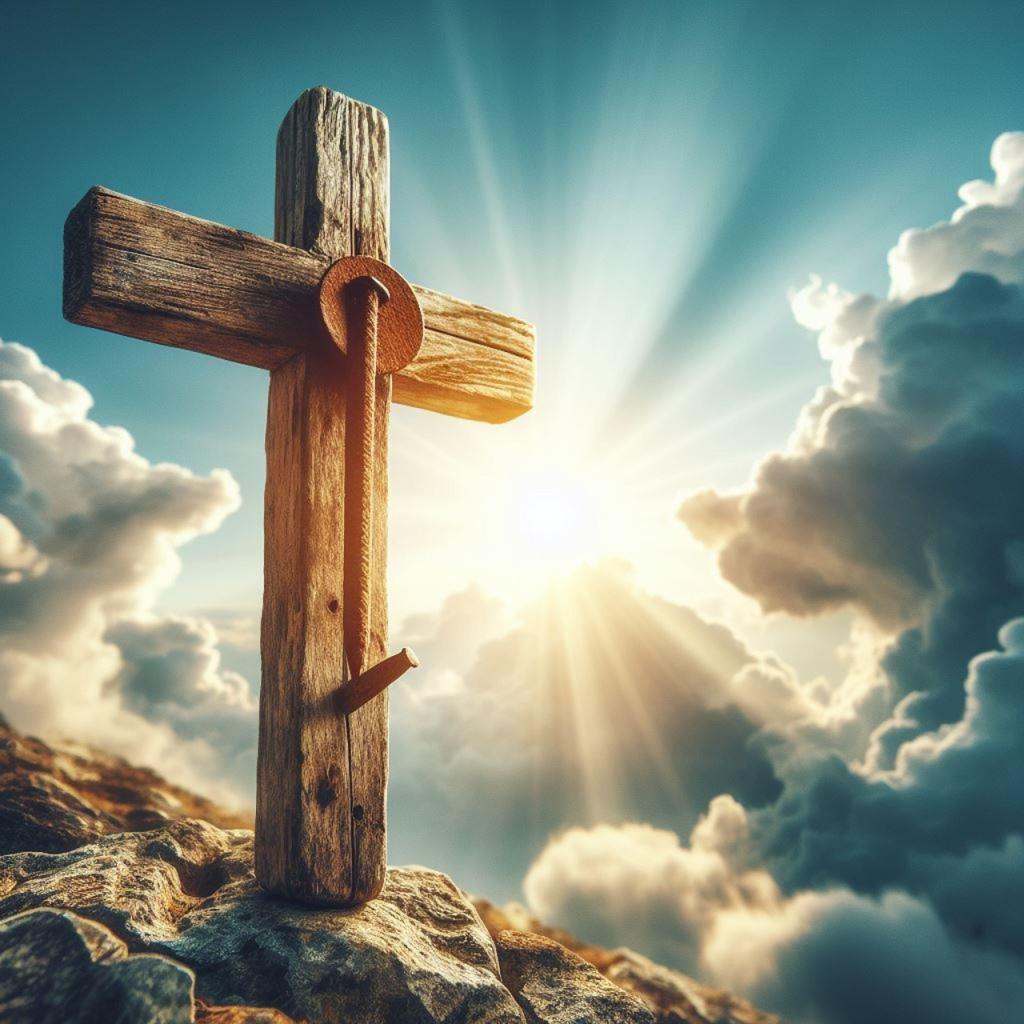
Christians celebrate the foundation of our faith on Easter. Christ the Lord is risen! (AI image courtesy of Pixaby / ImagenesIAcristianas)
Christians, Pagans and Easter: Is There a Connection?
Christians, pagans and Easter…. Does Christ’s resurrection have anything to do with pagan rituals and celebrations that welcome the arrival of spring? Opinions are divided.
Some people find a common thread between the Bible’s profoundly moving story of sacrificial love and eternal salvation, and pagans’ joyful nature-based tales of bonfires, eggs and rabbits. But many Christians insist there is no connection.

Pagans have incorporated eggs into their spring celebrations for thousands of years. (AI image courtesy of Pixaby / silviarita)
If you’re curious about a possible connection, as I was, fix yourself a cup of hot tea or coffee, get comfortable, and let’s look at the situation.
The Relevance of Old Testament Stories
Early Christians were Jewish converts for the most part. They believed Jesus’ death and resurrection were a continuation of the Jewish Passover and the Exodus. Beginning in Exodus 5, the Bible shares stories of the Israelites’ enslavement in Egypt, the 10 plagues God unleashed on Pharaoh and his people, the parting of the Red Sea, and Moses’ encounter with God on Mt. Sinai.
The story continues in Exodus 19. God makes a covenant with the Israelites, Moses receives the 10 commandments and the Israelites build a tabernacle. The covenant was a permanent and binding agreement in which God promised to make Israel “his treasured possession” and “holy nation,” and the Israelites agreed to obey his laws. God kept his part of the agreement. But the Israelites? Not so much.
Passover & the 10 Plagues
The Passover story begins with God’s decision to unleash 10 plagues on Egypt because its leader, the pharaoh, refused to free the enslaved Israelites. The 10th and final plague resulted in the deaths of all the firstborn people and livestock in the land, according to the Bible. The only exception was the Israelites who – at God’s command — marked their doorposts with lamb’s blood.
Easter and Christ’s Triumph Over Death
For Christians, these Old Testament stories are an important prelude to what happens in the New Testament. But what did they have to do with Easter?
Early Christians believed that Jesus’ death and resurrection fulfilled the Passover sacrifice. They celebrated Christ’s triumph over death by coming together once a week to have communion and share scripture. They eventually added an annual observance that sometimes coincided with Passover and eventually became known as Easter.
The early Christians didn’t celebrate “Easter” as we do. They called the day “Pascha,” which comes from the Hebrew word “Pesach,” i.e., Passover. But they could not agree on when to observe it.
The Council of Nicaea settled the question in 325 AD, when a group of bishops met and decided, among other things, that Pascha would be observed on the first Sunday after the first full moon following the vernal equinox, which was when day and night lengths are equal. (We still determine Easter’s date this way.)
Determining Easter’s date is convoluted from my perspective, but it is what it is because church leaders decided not to set an immovable date, as other leaders did with Christmas. For Easter, they used a complicated formula that took lunar, solar and ecclesiastical calendars into account. Rather than go through the calculations, most Christians use a calendar or Google.
The word “Easter” wasn’t adopted until the 7th or 8th century. Some religious scholars believe it came from an Old German word for “dawn,” which begins in the eastern sky. Others think it originates with the pagan goddess of spring and dawn, Eostre.
That Brings Us to the Pagans
Easter is the most sacred day in Christendom because it commemorates the day Jesus rose from the dead and gives believers the promise of eternal life. It’s also a complicated holiday. At any rate, it seems odd that this holiest of holy days in the Christian faith would become intertwined with eggs, goddesses and fantastical animals running around with colored eggs and candy.
I admit to knowing next to nothing about pagan practices and apologize if I offend any followers. But if you’re interested in learning more, check out the Patheos article, Christian & Pagan Holidays: Easter Bunnies Come from Ostara, here.
Religious experts agree that Christ’s crucifixion occurred about the time of Passover, which always takes place in the spring. Spring is also the time when pagans still celebrate the arrival of warmer and longer days, as they have for thousands of years. In ancient times, spring also meant that pagans in northern areas and their livestock had survived another long and brutal winter.
Light, Life & Fertility
Central to the pagan celebrations was/is the Anglo-Saxon goddess Eostre, or Ostara. Pagans believe she embodies light, life and fertility, and some people think the word “Easter” comes from her. The problem is that the mythical goddess’s connection to Easter is based on the writings of one man – an 8th century English monk named The Venerable Bede. Another myth claims that Easter was named after a Mesopotamian deity named Ishtar, but there is almost no evidence to support this claim.
What we do know is that spring is the time when lilies, daffodils, tulips and other beautiful flowers blossom, and soft pinks, yellows, purples and corals replace the somber winter landscape. Crops begin to grow again, and livestock and other animals welcome offspring. Earth feels alive once again.
For the sake of brevity, let’s confine ourselves to several stories about Eostre. Ancient pagan celebrations included rituals and offerings to Eostre, which people offered in hopes the goddess would provide an abundant harvest. According to some stories, Eostre was accompanied by a hare that represented fertility and the promise of new life. The hare also announced spring’s arrival, according to some people, and in one myth, Eostre changed a bird into a hare that laid eggs.
What’s the Truth?
So now, we come back to the question of whether Christians adapted certain pagan traditions into the Christian Easter. There are arguments on both sides.
Church leaders did have a habit of adapting and incorporating existing traditions from other cultures. They reasoned that those traditions were already familiar to the people they were trying to convert and would make conversions easier.
It’s said that the Druids dyed eggs and buried them in plowed fields to encourage an abundant harvest. As far back as 1,300 BC, people in Eastern Europe practiced the ancient art of “pysanky,” which means “to write.” This tradition involved drawing or writing elaborate circles, crosses, horses, stags and other symbols on eggs.
Christians color eggs and have Easter egg hunts, of course. But we also incorporated eggs into our religious celebrations. Many Christians fast during Lent, which precedes Easter, and eggs were one food many gave up. But on Easter Sunday, that requirement ended.
Christians versus Pagans
There are a few superficial parallels between pagan myths and Christian beliefs, but the similarities don’t prove Christianity is rooted in paganism.
- First-century Christians were Jews, not pagans.
- Christians worship one God. Pagans worship many gods or divine forces in nature.
- Christians focus on salvation through Christ and the afterlife. Many pagans believe in divine forces that exist in nature.
- Christians have one authority — the Bible. Pagans don’t generally have that type of authority.
- Christians believe in original sin, while many pagans do not.
- Modern pagans often have earth-focused traditions, i.e., Druids and Wiccans, which modern Christianity does not have.
- Pagans sometimes blend various faith traditions, rather than one exclusive God.
- Some pagans believe Jesus is a wise teacher. However, they don’t tend to believe he’s divine. Rather, he co-exists with various gods and goddesses.
Religious Events
History and Religion
Previous Post

March 2, 2026
'Living Faith Out Loud': How Jesse Jackson Changed America
Next Post

April 21, 2026 A Pope, A President and A One-Sided Fight
Recent Comments
"I'm not here to defend President Trump, but the Pope has said some stupid things ..."
A Pope, A President and A ..."
"Hilarious. https://uploads.disquscdn.c..."
A Pope, A President and A ..."
"Of course it's partisan. It's a blog in which Patheos writers give their opinions. In ..."
A Pope, A President and A ..."
"It's not that I don't like your article. I don't like your article because it ..."
A Pope, A President and A ..."
Browse Our Archives
Select a Category 8 points of Progressive Christianity Advent All dogs go to heaven Alvin York Amazing Grace heart health American violence Angels anti-semitism Beloved hymns Bible Trivia Quiz Biblical family conflicts Biblical family conflicts Bill Moyers death Black churches in America Black Music Month Buddhism Calming Bible verses Carter and Christian faith Carter and faith Carter Center Changes in Christianity Changing Christianity in U.S. Christ Christian aid to Ukraine Christian belief Christian beliefs Christian extremism Christian flag Christian help Christian martyrs Christian media campaign Christian nationalism Christian nationalism Christian Olympians Christian outreach Christian pastors Christian prayer room Christianity Christians and Donald Trump Christians and U.S. immigration Christians behaving badly Christmas Christmas holidays and depression church and state church attendance church membership church tax exemption Classical Christian music conservatives Creation Creationism and Science Crisis in the Clergy Early Christian women Easter lamb Easter preparations Easter worldwide Education and Religion evangelicals Faith and families Faith and Mental Health Faith and miracles Faith and Super Bowl Faith and winter blues faith healers faith leaders false leaders False Prophets family Father's Day feeding 5000 flags in churches Football and Christianity freedom of religion friends Genesis Ghosts God Golden Rule Good Friday Good Samaritan Gospel of Thomas grief grieving Halloween hate hatred hatred of Jews He Gets Us He Gets Us campaign Hinduism Holocaust how are Abrahamic religions similar How to read the Bible Hubble Islam James Webb Telescope Jesse Jackson's legacy Jesus Jesus' brothers and sisters Jewish holy days and hate Jews Judaism judging others July 4th & Religion Kamala Harris's faith Lent Liberal Christianity liberal Christians Liberal Theology liberals Lindsey Graham's legacy Lord's prayer losing church members loss loss of church members loss of husband loss of spouse love love thy neighbor marketing Christ Mary Magdalene Methodist's split National Day of Prayer National Day of Prayer New United Methodist leader Pat Robertson Pope and President Pope Francis compassion Portals for demons post-evangelicals pray prayer prayer survey praying Preserving religious freedom President Jimmy Carter Presidents' Day Project 2025 Putin's faith Racism and radicalized Christianity racism in America religion Religion and Entertainment Religion and football Religious coercion religious tyranny in U.S. Remembering Jimmy Carter resurrection Revelation Rewriting black history Riley Leonard's faith risen lord Rosalynn Carter Rusty Golden death science Scientology Sen. Joe Leiberman dies Sex abuse and Christianity Sex abuse in churches South Africa Southern Baptist Convention spirituality St. Paddy's Day St. Patrick St. Patrick myths St. Patrick's Day St. Paul suicide and religion Susanna Wesley taxes and religion Televangelists television evangelists the Philippines The Trinity Trump's faith adviser U.S. Ukraine Uncategorized Underground churches universe women and happiness Women church leaders women in the pulpit Yoga and Christianity Yule Zimbabwe
Select a Month July 2026 June 2026 April 2026 March 2026 November 2025 October 2025 September 2025 August 2025 July 2025 June 2025 May 2025 April 2025 March 2025 February 2025 January 2025 December 2024 November 2024 October 2024 September 2024 August 2024 July 2024 June 2024 May 2024 April 2024 March 2024 February 2024 January 2024 December 2023 November 2023 October 2023 September 2023 August 2023 July 2023 June 2023 May 2023 April 2023 March 2023 February 2023 January 2023 December 2022 November 2022 October 2022 September 2022 August 2022 July 2022 June 2022
TAKE THE
Religious Wisdom Quiz
Which tribe of Israel did NOT receive a land inheritance?
Select your answer to see how you score.
Gad Benjamin Judah Levi
Related posts from Woman to Woman

Why Does the Easter Bunny Bring Eggs? And...

Lindsey Graham's Contested Legacy: Hero or Traitor?

America After 250 Years: Should We Be a...
This Is My Song: How Black Artists Changed...
TRENDING AT PATHEOS Progressive Christian

What Being a Modern-Day Apostle Means to Me
In my last column, I discussed the ins and outs of modern-day...

Did Ancient China Once Worship the God of...
Across human history, a common thread weaves through the origins of the...

Love Your Neighbor – Including Earth-Kin: Lev. 19,...
God’s command to love your neighbor means acting in an ethical and...

Lead a Church Study of “Jesus and Lao...
Guest writer Jack Thomas (The Irreverent Reverend) reflects on leading his church...

Pastoral Wisdom for Responding to Sermon Pushback
Getting sermon pushback on your social justice sermon? Learn practical, Proverbs-based strategies...

Principles for Understanding the Apostolic Ministry Today
Whenever people discover that my formal ministry title is "apostle," as in...
view all Progressive Christian blogs
What Are Your Thoughts?leave a comment
Ad-Free & Subscriber Log-In Subscription Support
- About Us
- 2026 Calendar
- Videos
- Podcasts
- Library of World Religions
- Faith In Media Tracker
- Advertise With Us
- Write for Us
- Privacy Policy
- Terms of Service
- Do Not Sell My Data
- Contact Us
- Radiant Digital
- Manage Newsletter Subscriptions
- Unsubscribe From Notifications
- Sitemap
Copyright 2008-2026, Patheos. All rights reserved.
Subscription Support Ad-Free & Subscriber Log-In
Follow Patheos