
BuddhistCatholicContemplativeEvangelicalGeneral ChristianHinduJewishLatter-day SaintMuslimNew VisionsProgressive Christian
Beliefs
- Buddhist
- Catholic
- Contemplative
- Evangelical
- General Christian
- Hindu
- Jewish
- Latter-day Saint
- More Voices
- Muslim
- New Visions
- Pagan
- Progressive Christian
Topics
- Religion News
- Food and Religion
- Sports and Religion
- Religious Art
- Religious Music and Entertainment
- Religious Events
- History and Religion
- Style and Religion
- Politics and Religion
- Women in Religion
- Recreation Outdoors and Religion
- Business Finance and Religion
- Careers Workplace and Religion
- Education and Religion
- Family Parenting and Religion
- Health Fitness and Religion
- Home and Religion
- Relationships and Religion
- Technology and Religion
- Travel and Religion
Columnists
- Buddhist Columnists
- Business Finance and Religion Columnists
- Careers Workplace and Religion Columnists
- Catholic Columnists
- Contemplative Columnists
- Education and Religion Columnists
- Evangelists Columnists
- Family Parenting and Religion Columnists
- General Christian Columnists
- Health Fitness and Religion Columnists
- Hindu Columnists
- History and Religion Columnists
- Home and Religion Columnists
- Jewish Columnists
- More Voices Columnists
- Latter Day Columnists
- Muslim Columnists
- New Visions Columnists
- Nonreligious Columnists
- Pagan Columnists
- Politics and Religion Columnists
- Progressive Columnists
- Recreation Outdoors and Religion Columnists
- Relationships and Religion Columnists
- Religion News Columnists
- Religious Art Columnists
- Religious Events Columnists
- Religious Music and Entertainment Columnists
- Sports and Religion Columnists
- Style and Religion Columnists
- Technology and Religion Columnists
- Travel and Religion Columnists
- Women in Religion Columnists
Resource Library
- 2026 Calendar
- Library of World Religions
- The 100 Most Holy Places on Earth
- Patheos Answers
- Podcasts
- Videos
- Faith Leaders Database
- Anglican Episcopalian
- Bahai
- Baptist
- Buddhism
- Christianity
- Confucianism
- Eastern Orthodoxy
- Hinduism
- Holiness and Pentecostal
- ISKCON
- Islam
- Judaism
- Lutheran
- Methodist
- The Church of Jesus Christ of Latter-day Saints
- New Age
- Paganism
- Presbytarian and Reformed
- Protestantism
- Religion Behind the Scenes
- Roman Catholic
- Scientology
- Shia Islam
- Sikhism
- Sufism
- Sunni Islam
- Taoism
- Zen
- See all religions
Research Tools
 Ad-Free & Subscriber Log-In Subscription Support
Ad-Free & Subscriber Log-In Subscription Support
Follow Patheos 

- Trending:
- Forgiveness
- |
- Marriage
- |
- Consciousness
- |
- Death Penalty
- |
- Election
- |
- Halloween

- Home
- Progressive Christian
- History and Religion
- How Many Disciples Did Christ Have & Who Were They?
How Many Disciples Did Christ Have & Who Were They?
Last updated on: August 7, 2022 at 4:01 pm by Ginny Baxter
How Many Disciples Did Christ Have & Who Were They? 2022-08-07T16:01:32-04:00 Ginny Baxter
Patheos Explore the world's faith through different perspectives on religion and spirituality! Patheos has the views of the prevalent religions and spiritualities of the world.
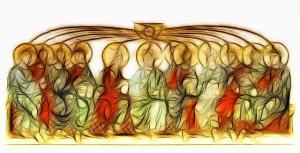
Christ chose 12 ordinary Jewish men to leave their old lives behind and follow him during his three-year ministry on earth. They were mostly simple, uneducated men and included several fishermen, a tax collector and a thief who eventually betrayed Jesus to the authorities.
They remained the primary disciples even when Christ attracted other followers, including women, as he went about teaching and preaching in Galilee and Judea.
WHO WERE THE 12 DISCIPLES?
Christ chose these men:
1. Simon Peter
2. Andrew, brother of Simon Peter
3. James, son of Zebedee
4. John, son of Zebedee
5. Philip
6. Bartholomew
7. Matthew
8. Thomas
9. James, son of Alphaeus
10. Simon the Zealot
11. Thaddeus, also called Jude or Judas the Zealot
12. Judas Iscariot
As he prepared for his ascension into heaven, Christ instructed his 12 disciples to share the things he taught them with the world. He told them, “Go ye therefore and make disciples of all nations, baptizing them in the name of the Father and of the Son and of the Holy Spirit, teaching them to observe all that I have commanded you. And behold, I am with you always, to the end of the age” Matthew 28:19-20. This passage is known as The Great Commission.
The words “disciple” and “apostle” are not interchangeable. “Disciple” means “learner,” and it applies to the 12 during Christ’s earthly ministry. They became apostles, or messengers, when Christ completed his earthly ministry and instructed them to share his message with the world.
WHAT DO WE KNOW ABOUT THE 12?
PETER was apparently the disciples’ spokesman. He worked with his brother Andrew and two friends, brothers James and John, as fishermen on the Sea of Galilee before Christ called all four men to be disciples.
The Bible describes Peter as emotional, outspoken, volatile and impulsive. It tells how he took a sword and cut off a man’s ear in order to prevent Christ’s arrest. He also challenged Christ to let him walk on water. Jesus said, “Come,” and Peter took a few steps before his faith faltered. He started to sink, but Christ intervened. Peter also became fearful of arrest at one point and denied that he knew Jesus.
Nevertheless, Christ chose Peter to lead the early church, saying: “And I say also unto thee, Thou art Peter, and upon this rock I will build my church, and the gates of hell shall not prevail against it” (Matthew 16:18). Peter was one the greatest leaders of the first century church and is recognized as the first pope by Catholics.
According to church scholars, Peter went to Rome around 61 A.D., where emperor Nero condemned him to death. Peter was crucified, head down at his own request because he did not feel worthy enough to die as Christ had died. Peter’s wife also may have been a follower of Christ and was crucified while her husband watched.
Peter’s brother ANDREW was a follower of John the Baptist before he became the first of the 12 disciples to follow Christ. John the Baptist pointed Jesus out to Andrew and others, saying he is “the Lamb of God who takes away the sin of the world” (John 1:35-42).
After leading his brother Peter to Christ, Andrew became a supporting player rather than a leader.
Jesus called two other brothers, JAMES and JOHN, to follow him at the same time he called Peter and Andrew. Like Peter, they became part of Christ’s inner circle.
John was fiery and had a larger-than-life personality. Christ called him and his brother James “sons of thunder,” which may have been a nod to their passionate and stormy personalities.
When Mary Magdalene reported that Christ’s tomb was empty on the first Easter Sunday, John and Peter went to see for themselves. John also traveled to Jerusalem with Peter to preach the gospel and suffered beatings and imprisonment.
As the purported author of five New Testament books – John, First, Second and Third John, and Revelation – John was an important figure in the Christian faith. He outlived the other disciples according to church tradition and was the only apostle to die of natural causes.
PHILIP is a lesser-known, but enthusiastic disciple who may have encouraged Bartholomew to follow Jesus.
Philip once asked Christ to show the disciples the Father. Jesus replied, “Have I been with you so long, and yet you have not known me, Philip? He who has seen me has seen the Father” (John 14:8-9).
Biblical scholars believe Philip preached the gospel in modern-day Turkey, where he died a martyr.
BARTHOLOMEW was skeptical when the apostle Philip introduced him to Christ. At their first encounter, Christ said to Bartholomew, “Here is a true Israelite in whom there is nothing false.” Bartholomew asked, “How do you know me?” Christ answered by saying, “I saw you while you were still under the fig tree before Philip called you,” to which Bartholomew said, “Rabbi, you are the Son of God.”
Church tradition says that Bartholomew served as a missionary to Armenia, Mesopotamia (modern Iraq), Parthia (part of modern Iran), Lycaonia (modern Turkey), and possibly India.
The Bible says little else about him.
MATTHEW was a tax collector who enjoyed a comfortable life before becoming a disciple. The Jews saw tax collectors as dishonest men who exploited their own people on behalf of the Romans who ruled them.
People criticized Christ for socializing with men like Matthew, but Christ told critics, “I came not to call the righteous, but sinners” (Mark 2:15-17).
Despite his failings, Matthew immediately left his old life behind to become a disciple when Jesus said, “Follow me.”
THOMAS is best known to us as “Doubting Thomas” because he required proof that Christ had risen from the dead. The proof came when he touched the wounds Christ received when he was crucified.
He may have been born in Galilee and possibly died in India. His name means “twin.”
JAMES, SON OF ALPHAEUS, was the second apostle named James. The Bible says little about him other than he was present in an upper room in Jerusalem after Christ ascended into heaven.
SIMON THE ZEALOT is another mystery man in the Bible. The scripture mentions his name in three places, and Acts 1:13 tells us that he was with the other disciples in the upper room.
Little is known about BARTHOLOMEW. Scholars are not even sure of his name. Some religious experts believe he also was called Nathanael or Nathaniel, while others think Bartholomew and Nathanael were two different people.
The books of Matthew, Mark and Luke mention him, and he reportedly witnessed Christ’s ascension.
JUDAS ISCARIOT is notorious because he betrayed Jesus with a kiss prior to the crucifixion. Consequently, people through the ages have despised him.
The word “Iscariot” means “dagger man,” which suggests that Judas was a zealot who carried a knife to kill traitors to his cause. His group of zealots believed the long-promised Messiah would lead them against Rome and establish a kingdom on earth. They thought Christ was that Messiah, but became disillusioned when he showed no interest in rebellion.
Jesus placed Judas in charge of the disciples’ money bag or box, and Judas started stealing from it. Jesus knew about the thefts, but allowed them to continue, possibly to teach a lesson about treasuring the wrong things. “You cannot serve God and money,” Christ said (Matthew 6:24).
Judas was not only a thief, but also a traitor. He pointed out Christ to the authorities for 30 pieces of silver, which lead to Christ’s trial and crucifixion. Judas regretted the betrayal and hanged himself.
WERE THERE OTHER APOSTLES?
Following Christ’s ascension, the apostles voted to replace Judas with a follower of Jesus named Matthias, according to the book of Acts. Matthias apparently followed Jesus throughout his early ministry, but the New Testament tells us nothing else about this disciple.
One of the most influential apostles was Paul, a Greek-speaking Jew from Tarsus. He was not one of the original 12 apostles, but his letters to early Christian churches had an enormous influence on the Christian faith.
Some scholars consider him second only to Christ in importance to the church and attribute 13 of the 27 books in the New Testament to him and the people he influenced.
Paul’s original name was Saul, and as such, he persecuted Jews who followed Christ. Saul was traveling to Damascus when he saw a blinding light and God revealed Christ’s divinity to him. He became known as Paul upon his conversion.
As an apostle Paul was instrumental in spreading the gospel to the Gentiles, who were non-Jewish. He also founded several Christian churches in Europe and Asia Minor. The letters to those churches are the basis for several New Testament books, including Romans, First and Second Corinthians, Galatians, Ephesians and others.
He may have been executed in Rome.
WHAT ARE THE SOURCES?
It is difficult to attribute specific parts of this article to specific sources because numerous sources report the same information. That said, my sources include the Holy Bible and these religious websites: learnreligions.com, britannica.com, bibletools.org, bibleinfo.com, overviewbible.com and crosswalk.com. — Ginny
General Christian
Evangelical
Catholic
History and Religion
Family, Parenting and Religion
Previous Post

July 27, 2022
Jesus Wept for Lazarus & He Weeps for Us
Next Post
August 14, 2022 SHOULD CHRISTIANS ALLOW WOMEN IN THE PULPIT?
Browse Our Archives
Select a Category 8 points of Progressive Christianity Advent All dogs go to heaven Alvin York Amazing Grace heart health American violence Angels anti-semitism Beloved hymns Bible Trivia Quiz Biblical family conflicts Biblical family conflicts Bill Moyers death Black churches in America Black Music Month Buddhism Calming Bible verses Carter and Christian faith Carter and faith Carter Center Changes in Christianity Changing Christianity in U.S. Christ Christian aid to Ukraine Christian belief Christian beliefs Christian extremism Christian flag Christian help Christian martyrs Christian media campaign Christian nationalism Christian nationalism Christian Olympians Christian outreach Christian pastors Christian prayer room Christianity Christians and Donald Trump Christians and U.S. immigration Christians behaving badly Christmas Christmas holidays and depression church and state church attendance church membership church tax exemption Classical Christian music conservatives Creation Creationism and Science Crisis in the Clergy Early Christian women Easter lamb Easter preparations Easter worldwide Education and Religion evangelicals Faith and families Faith and Mental Health Faith and miracles Faith and Super Bowl Faith and winter blues faith healers faith leaders false leaders False Prophets family Father's Day feeding 5000 flags in churches Football and Christianity freedom of religion friends Genesis Ghosts God Golden Rule Good Friday Good Samaritan Gospel of Thomas grief grieving Halloween hate hatred hatred of Jews He Gets Us He Gets Us campaign Hinduism Holocaust how are Abrahamic religions similar How to read the Bible Hubble Islam James Webb Telescope Jesse Jackson's legacy Jesus Jesus' brothers and sisters Jewish holy days and hate Jews Judaism judging others July 4th & Religion Kamala Harris's faith Lent Liberal Christianity liberal Christians Liberal Theology liberals Lindsey Graham's legacy Lord's prayer losing church members loss loss of church members loss of husband loss of spouse love love thy neighbor marketing Christ Mary Magdalene Methodist's split National Day of Prayer National Day of Prayer New United Methodist leader Pat Robertson Pope and President Pope Francis compassion Portals for demons post-evangelicals pray prayer prayer survey praying Preserving religious freedom President Jimmy Carter Presidents' Day Project 2025 Putin's faith Racism and radicalized Christianity racism in America religion Religion and Entertainment Religion and football Religious coercion religious tyranny in U.S. Remembering Jimmy Carter resurrection Revelation Rewriting black history Riley Leonard's faith risen lord Rosalynn Carter Rusty Golden death science Scientology Sen. Joe Leiberman dies Sex abuse and Christianity Sex abuse in churches South Africa Southern Baptist Convention spirituality St. Paddy's Day St. Patrick St. Patrick myths St. Patrick's Day St. Paul suicide and religion Susanna Wesley taxes and religion Televangelists television evangelists the Philippines The Trinity Trump's faith adviser U.S. Ukraine Uncategorized Underground churches universe women and happiness Women church leaders women in the pulpit Yoga and Christianity Yule Zimbabwe
Select a Month July 2026 June 2026 April 2026 March 2026 November 2025 October 2025 September 2025 August 2025 July 2025 June 2025 May 2025 April 2025 March 2025 February 2025 January 2025 December 2024 November 2024 October 2024 September 2024 August 2024 July 2024 June 2024 May 2024 April 2024 March 2024 February 2024 January 2024 December 2023 November 2023 October 2023 September 2023 August 2023 July 2023 June 2023 May 2023 April 2023 March 2023 February 2023 January 2023 December 2022 November 2022 October 2022 September 2022 August 2022 July 2022 June 2022
TAKE THE
Religious Wisdom Quiz
What book comes directly after Lamentations?
Select your answer to see how you score.
Ezekiel Jeremiah Hosea Daniel
Related posts from Woman to Woman

America After 250 Years: Should We Be a...
Does the 7M TikTok Cult Exist? New Netflix Film...
Christianity & Humanitarianism Can Go Hand in Hand...
Did Slavery Benefit Slaves? Florida Schools Say ‘Yes!’...
TRENDING AT PATHEOS Progressive Christian

Why Christians Have a Sacred Duty to Vote:...
The Bible offers strong support for the sacred duty to vote. Here...

What Being a Modern-Day Apostle Means to Me
In my last column, I discussed the ins and outs of modern-day...

Did Ancient China Once Worship the God of...
Across human history, a common thread weaves through the origins of the...

Love Your Neighbor – Including Earth-Kin: Lev. 19,...
God’s command to love your neighbor means acting in an ethical and...

Lead a Church Study of “Jesus and Lao...
Guest writer Jack Thomas (The Irreverent Reverend) reflects on leading his church...

Principles for Understanding the Apostolic Ministry Today
Whenever people discover that my formal ministry title is "apostle," as in...
view all Progressive Christian blogs
Ad-Free & Subscriber Log-In Subscription Support
- About Us
- 2026 Calendar
- Videos
- Podcasts
- Library of World Religions
- Faith In Media Tracker
- Advertise With Us
- Write for Us
- Privacy Policy
- Terms of Service
- Do Not Sell My Data
- Contact Us
- Radiant Digital
- Manage Newsletter Subscriptions
- Unsubscribe From Notifications
- Sitemap
Copyright 2008-2026, Patheos. All rights reserved.
Subscription Support Ad-Free & Subscriber Log-In
Follow Patheos