
BuddhistCatholicContemplativeEvangelicalGeneral ChristianHinduJewishLatter-day SaintMuslimNew VisionsProgressive Christian
Beliefs
- Buddhist
- Catholic
- Contemplative
- Evangelical
- General Christian
- Hindu
- Jewish
- Latter-day Saint
- More Voices
- Muslim
- New Visions
- Pagan
- Progressive Christian
Topics
- Religion News
- Food and Religion
- Sports and Religion
- Religious Art
- Religious Music and Entertainment
- Religious Events
- History and Religion
- Style and Religion
- Politics and Religion
- Women in Religion
- Recreation Outdoors and Religion
- Business Finance and Religion
- Careers Workplace and Religion
- Education and Religion
- Family Parenting and Religion
- Health Fitness and Religion
- Home and Religion
- Relationships and Religion
- Technology and Religion
- Travel and Religion
Columnists
- Buddhist Columnists
- Business Finance and Religion Columnists
- Careers Workplace and Religion Columnists
- Catholic Columnists
- Contemplative Columnists
- Education and Religion Columnists
- Evangelists Columnists
- Family Parenting and Religion Columnists
- General Christian Columnists
- Health Fitness and Religion Columnists
- Hindu Columnists
- History and Religion Columnists
- Home and Religion Columnists
- Jewish Columnists
- More Voices Columnists
- Latter Day Columnists
- Muslim Columnists
- New Visions Columnists
- Nonreligious Columnists
- Pagan Columnists
- Politics and Religion Columnists
- Progressive Columnists
- Recreation Outdoors and Religion Columnists
- Relationships and Religion Columnists
- Religion News Columnists
- Religious Art Columnists
- Religious Events Columnists
- Religious Music and Entertainment Columnists
- Sports and Religion Columnists
- Style and Religion Columnists
- Technology and Religion Columnists
- Travel and Religion Columnists
- Women in Religion Columnists
Resource Library
- 2026 Calendar
- Library of World Religions
- The 100 Most Holy Places on Earth
- Patheos Answers
- Podcasts
- Videos
- Faith Leaders Database
- Anglican Episcopalian
- Bahai
- Baptist
- Buddhism
- Christianity
- Confucianism
- Eastern Orthodoxy
- Hinduism
- Holiness and Pentecostal
- ISKCON
- Islam
- Judaism
- Lutheran
- Methodist
- The Church of Jesus Christ of Latter-day Saints
- New Age
- Paganism
- Presbytarian and Reformed
- Protestantism
- Religion Behind the Scenes
- Roman Catholic
- Scientology
- Shia Islam
- Sikhism
- Sufism
- Sunni Islam
- Taoism
- Zen
- See all religions
Research Tools
 Ad-Free & Subscriber Log-In Subscription Support
Ad-Free & Subscriber Log-In Subscription Support
Follow Patheos 

- Trending:
- Forgiveness
- |
- Marriage
- |
- Consciousness
- |
- Death Penalty
- |
- Election
- |
- Halloween
 Wild Woman Witchcraft
- Home
- Pagan
- What is the Year of the Witch?
What is the Year of the Witch?
Last updated on: October 21, 2020 at 12:33 pm by Temperance Alden
What is the Year of the Witch? 2020-10-21T12:33:57-04:00 Temperance Alden
Patheos Explore the world's faith through different perspectives on religion and spirituality! Patheos has the views of the prevalent religions and spiritualities of the world.
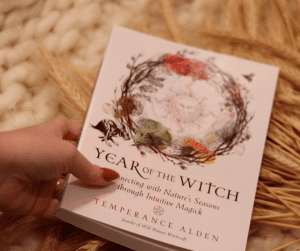
What is the Year of the Witch? Recently, it was pointed out by an astute commenter that I am not Wiccan. I thought that would be fairly obvious based on how much I let people know that but contrary to popular belief, I don’t hate Wicca at all – I’m just not Wiccan. This person went on to point out how I wrote a wheel book and intoned that it is essentially “stealing from Wicca”. Here are my thoughts on that.
 Thoughts
The wheel of the year has been around a lot longer than Wicca. Wicca, being formed mid twentieth century, cannot lay claim to the observance of every solstice and equinox. Additionally, the cross quarter days were not gnosis created specifically for Wicca but were historical observance days part of other European cultures specifically primarily Celtic, Cornish, and Germanic.
‘Year of the Witch’ differs in a few ways from traditional wheel books. First, it gives non-Wiccans the framework they need to celebrate the solstice, and equinox days WITHOUT Wicca. These days are not owned by any one religion and quite frankly the pool of earth based pagans is much deeper than JUST Wicca. Secondly, this book adjusts for both climate specific days and climate change.
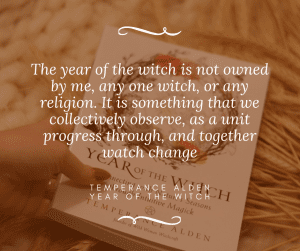
Year of the Witch is not just a wheel of the year book, its a map for solitary earth based pagans to create their OWN wheel of local harvests, personal holidays, and celestial events. The seasons will continue to cycle whether you stop to observe that or not and no-one own the change from fall to winter.
Why Year of the Witch? Why now?
Year of the Witch was a book born out of a love and frustration with my personal path of paganism. Living in South Florida, and practicing folk magick, I have found myself in a unique position where I do not connect with the wheel of the year as it has been written. It is not that I don’t live on the earth, and obviously Florida has equinoxes and solstices too, but the actual traditions and lore built around the Wiccan calendar is just something that geographically did not make sense to me.
As I’ve taken a more public role online in the witchcraft and pagan community over the past few years, my followers began to notice that I wasn’t posting about the sabbats at what they considered to be the appropriate times. I would receive a lot of questions about what was different, how I celebrated it or if I even did, and what that looked like. I have received tons of messages from other frustrated witches across the globe who felt like they just couldn’t connect with the Wheel and felt like something had to give.
The Blessing and Devotion of Writing
A passion project turned actual project, Year of the Witch is not just my idea alone but is something I have developed over my years of practice. It has been my biggest blessing that not only do I get to live a magical life personally, I was blessed to be able to write about it both in a physical book and online as well. Year of the Witch was written for every witch to add depth and understanding to their practice. Creating your own wheel makes every day intentional, and reminds us that each day we have a chance to connect to the things that are sacred and divine.
As far as books go, my writing and my life is an open devotional to the gods that I serve. While that phrasing might seem subservient, it is absolutely not. This book was a message from spirit, devoted to my Patron, and deeply personal. Throughout its pages I share many personal stories, talk about some edgier aspects of my personal craft, go through recipes and ideas and shadow work methods that I use. It is a part of me and now hopefully will become a part of you as well.
What Year of the Witch is not a sabbat guide book. All of the traditional 8 festivals are discussed in the book, but that is not the primary focus. Throughout the pages we cover topics ranging from elements and spirit to climate science and gardening. Entering an earth based path of paganism requires a certain level of rudimentary knowledge about these topics that will allow each reader to tap into their intuition much easier.
Closing Thoughts
One of the most commonly asked questions I have received about Year of the Witch is if the reader should do anything specific either before or after they read it. Honestly, I think before anyone picks up my book they should do a quick google search of the specific climate zone they live in. This will help tremendously as they map out how they want to start working their craft. Year of the witch will not hold you hand and create a personal path for you, but will create a solid foundation for you to build your own landscape.
I’d love to point out as closing thoughts that there is nothing wrong with Wicca and I have a deep respect for it. The intention of this book was to fill a gap for people who felt like the wheel doesn’t work for them and give them something that is uniquely their own. I think it is a valuable tool for any witch INCLUDING Wiccans. It will give you ideas and tools to go deeper with your daily personally practice and I genuinely hope you guys see the love and time I put into this work.
Previous Post

October 9, 2020
Taking Back Our Spirituality - Overcoming Spiritual Burnout
Browse Our Archives
Select a Category thoughts
Select a Month October 2020
Follow Us!
TAKE THE
Religious Wisdom Quiz
What does Jeremiah use to symbolize Israel's relationship to God in Jeremiah 18?
Select your answer to see how you score.
A bride and bridegroom A potter and clay A tree and fruit A shepherd and sheep
Related posts from Wild Woman Witchcraft
Taking Back Our Spirituality - Overcoming Spiritual Burnout
TRENDING AT PATHEOS Pagan

When we talk about Greek religion, we often begin with the dodekatheion—the...

I was recently chatting with someone on Instagram. She asked me what...

While there are many people who share their results, the end of...

On July 23, I saw Christopher Nolan's The Odyssey which is Homer’s...

As I write this two big events have just finished up. One...

Restoring the Watershed of Divine Love
Perhaps cooperation is not something we manufacture through legislation, ideology, or moral...
view all Pagan blogs
Ad-Free & Subscriber Log-In Subscription Support
- About Us
- 2026 Calendar
- Videos
- Podcasts
- Library of World Religions
- Faith In Media Tracker
- Advertise With Us
- Write for Us
- Privacy Policy
- Terms of Service
- Do Not Sell My Data
- Contact Us
- Radiant Digital
- Manage Newsletter Subscriptions
- Unsubscribe From Notifications
- Sitemap
Copyright 2008-2026, Patheos. All rights reserved.
Subscription Support Ad-Free & Subscriber Log-In
Follow Patheos