
BuddhistCatholicContemplativeEvangelicalGeneral ChristianHinduJewishLatter-day SaintMuslimNew VisionsProgressive Christian
Beliefs
- Buddhist
- Catholic
- Contemplative
- Evangelical
- General Christian
- Hindu
- Jewish
- Latter-day Saint
- More Voices
- Muslim
- New Visions
- Pagan
- Progressive Christian
Topics
- Religion News
- Food and Religion
- Sports and Religion
- Religious Art
- Religious Music and Entertainment
- Religious Events
- History and Religion
- Style and Religion
- Politics and Religion
- Women in Religion
- Recreation Outdoors and Religion
- Business Finance and Religion
- Careers Workplace and Religion
- Education and Religion
- Family Parenting and Religion
- Health Fitness and Religion
- Home and Religion
- Relationships and Religion
- Technology and Religion
- Travel and Religion
Columnists
- Buddhist Columnists
- Business Finance and Religion Columnists
- Careers Workplace and Religion Columnists
- Catholic Columnists
- Contemplative Columnists
- Education and Religion Columnists
- Evangelists Columnists
- Family Parenting and Religion Columnists
- General Christian Columnists
- Health Fitness and Religion Columnists
- Hindu Columnists
- History and Religion Columnists
- Home and Religion Columnists
- Jewish Columnists
- More Voices Columnists
- Latter Day Columnists
- Muslim Columnists
- New Visions Columnists
- Nonreligious Columnists
- Pagan Columnists
- Politics and Religion Columnists
- Progressive Columnists
- Recreation Outdoors and Religion Columnists
- Relationships and Religion Columnists
- Religion News Columnists
- Religious Art Columnists
- Religious Events Columnists
- Religious Music and Entertainment Columnists
- Sports and Religion Columnists
- Style and Religion Columnists
- Technology and Religion Columnists
- Travel and Religion Columnists
- Women in Religion Columnists
Resource Library
- 2026 Calendar
- Library of World Religions
- The 100 Most Holy Places on Earth
- Patheos Answers
- Podcasts
- Videos
- Faith Leaders Database
- Anglican Episcopalian
- Bahai
- Baptist
- Buddhism
- Christianity
- Confucianism
- Eastern Orthodoxy
- Hinduism
- Holiness and Pentecostal
- ISKCON
- Islam
- Judaism
- Lutheran
- Methodist
- The Church of Jesus Christ of Latter-day Saints
- New Age
- Paganism
- Presbytarian and Reformed
- Protestantism
- Religion Behind the Scenes
- Roman Catholic
- Scientology
- Shia Islam
- Sikhism
- Sufism
- Sunni Islam
- Taoism
- Zen
- See all religions
Research Tools
 Ad-Free & Subscriber Log-In Subscription Support
Ad-Free & Subscriber Log-In Subscription Support
Follow Patheos 

- Trending:
- Forgiveness
- |
- Marriage
- |
- Consciousness
- |
- Death Penalty
- |
- Election
- |
- Halloween
 The Wild Hunt
- Home
- Pagan
- Have We Forgotten How to Be Secular?
Have We Forgotten How to Be Secular?
Last updated on: September 13, 2012 at 11:08 am by Jason Pitzl-Waters
Have We Forgotten How to Be Secular? 2012-09-13T11:08:03-07:00 Jason Pitzl-Waters
Patheos Explore the world's faith through different perspectives on religion and spirituality! Patheos has the views of the prevalent religions and spiritualities of the world.
According to Jacques Berlinerblau, associate professor of Jewish Civilization at Georgetown University, more biblical verses have been invoked by presidents and presidential candidates in the past four years than they have in the previous two or three decades. Berlinerblau posits that our society may be forgetting how to be secular, or what “secularism” even means, and has written a new book entitled “How to Be Secular: A Call to Arms for Religious Freedom” in order to address the issue.
“Weary of religious conservatives urging “defense of marriage” and atheist polemicists decrying the crimes of religion? Sick of pundits who want only to recast American life in their own image? Americans are stuck in an all-or-nothing landscape for religion in public life. What are reasonable citizens to do? Seen as godless by the religious and weak by the atheists, secularism mostly has been misunderstood. In How to Be Secular, Berlinerblau argues for a return to America’s hard-won secular tradition; the best way to protect religious diversity and freedom lies in keeping an eye on the encroachment of each into the other.”
Berlinerblau notes that the concept of secularism has been blurred from both sides, with conservative Christians and atheists both defining the term as equivalent to atheism. This wasn’t always so, as “secular” was a label anyone could apply to themselves, in many different contexts.
“Why must so-called secular organizations be focused exclusively on nonbelievers? After all, just a few decades back, in secularism’s mild separationist golden age, all sorts of religious believers could have been categorized as secularists. The term could refer to a Baptist, a Jew, a progressive Catholic, a Unitarian, and so on. Also, there were secular identities that didn’t make any reference to a person’s religious belief or lack thereof. A secularist might just as likely have been a public school teacher, a journalist, a civil rights activist, a professor, a Hollywood mogul, a civil libertarian, a pornographer, and so forth. From the 1940s to the 1980s all of the aforementioned groups mobilized on behalf of secular causes, the most prominent being separation of church and state.”
With secularism so out of fashion in the United States we risk, according to the author, the very “soil in which democracy is planted.” This erosion of secularism could be especially harmful to religious minorities within the United States, including Pagans. There’s been a noticeable trend towards “religious freedom” initiatives that directly favor the majority faith, while purporting to bring freedom to all people of faith.
“The problem with these attempts to codify “religious freedom” into law is that almost always benefits the majority at the expense of the minority. I have seen time and time again, in a number of different circumstances, when laws and policies that are supposed to be viewpoint neutral end up empowering one expression of faith in the public square. That’s bad when it involves adults struggling over the issue, but it becomes pernicious when we use our children as proxies in a fight over the nature of religious freedom and secularism within our country. It shows just how desperate and anxious sections of our Christian majority have become.”
We’re in a weird place right now when it comes to religion, the Christian character of our nation has been softening, and smaller faiths (and people of no faith) have been expanding, but our politics and culture are dominated by a Christian narrative (more than 3/4 of Americans identify as Christian). A robust secularism could be the answer to mollifying some of the tensions inherent in the demographic shifts currently underway, but only if we understand what secularism is, and what it can be. A new coalition for a strong secularism, the separation of Church and State, must be built from moderates in the dominant religions, agnostics, non-theists, and the many religious minorities who rely on secularism to protect their rights and freedoms.
“To ensure the future of secularism and its “virtues of moderation and tolerance,” millions more Americans must declare themselves secularists, including followers of liberal faiths and religious minorities.” – From the Kirkus Review of “How To Be Secular.”
I have yet to read Jacques Berlinerblau‘s book, but I think it addresses an important topic for our interconnected communities, and I look forward to doing so.
How to Be Secular: A Call to Arms for Religious Freedom
Previous Post

September 12, 2012
Update: Send Patrick McCollum to Awakened World 2012
Next Post
September 14, 2012 Unleash the Hounds! (Link Roundup)
Browse Our Archives
Select a Category indigenous Neopaganism Paganism Religion The Wild Hunt Uncategorized
Select a Month October 2012 September 2012 August 2012 July 2012 June 2012 May 2012 April 2012 March 2012 February 2012 January 2012 December 2011 November 2011 October 2011 September 2011 August 2011 July 2011 June 2011
TAKE THE
Religious Wisdom Quiz
Who said, "Behold the Lamb of God, who takes away the sin of the world"?
Select your answer to see how you score.
John the Baptist Paul Mary Peter
Related posts from The Wild Hunt

Canadian Government: Non-Christian Prisoners Must Turn to Christian...

Being a Religious Minority (in Public Schools)
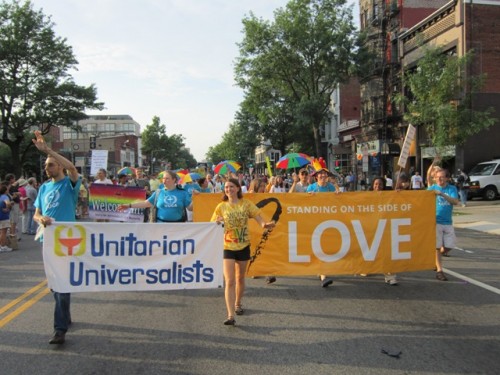
What Does the Growth of Unitarian Universalism Mean?

TRENDING AT PATHEOS Pagan

I was recently chatting with someone on Instagram. She asked me what...

While there are many people who share their results, the end of...

On July 23, I saw Christopher Nolan's The Odyssey which is Homer’s...

As I write this two big events have just finished up. One...

Restoring the Watershed of Divine Love
Perhaps cooperation is not something we manufacture through legislation, ideology, or moral...

Many UUs don’t pray because of bad experiences in a previous religion,...
view all Pagan blogs
Ad-Free & Subscriber Log-In Subscription Support
- About Us
- 2026 Calendar
- Videos
- Podcasts
- Library of World Religions
- Faith In Media Tracker
- Advertise With Us
- Write for Us
- Privacy Policy
- Terms of Service
- Do Not Sell My Data
- Contact Us
- Radiant Digital
- Manage Newsletter Subscriptions
- Unsubscribe From Notifications
- Sitemap
Copyright 2008-2026, Patheos. All rights reserved.
Subscription Support Ad-Free & Subscriber Log-In
Follow Patheos