
BuddhistCatholicContemplativeEvangelicalGeneral ChristianHinduJewishLatter-day SaintMuslimNew VisionsProgressive Christian
Beliefs
- Buddhist
- Catholic
- Contemplative
- Evangelical
- General Christian
- Hindu
- Jewish
- Latter-day Saint
- More Voices
- Muslim
- New Visions
- Pagan
- Progressive Christian
Topics
- Religion News
- Food and Religion
- Sports and Religion
- Religious Art
- Religious Music and Entertainment
- Religious Events
- History and Religion
- Style and Religion
- Politics and Religion
- Women in Religion
- Recreation Outdoors and Religion
- Business Finance and Religion
- Careers Workplace and Religion
- Education and Religion
- Family Parenting and Religion
- Health Fitness and Religion
- Home and Religion
- Relationships and Religion
- Technology and Religion
- Travel and Religion
Columnists
- Buddhist Columnists
- Business Finance and Religion Columnists
- Careers Workplace and Religion Columnists
- Catholic Columnists
- Contemplative Columnists
- Education and Religion Columnists
- Evangelists Columnists
- Family Parenting and Religion Columnists
- General Christian Columnists
- Health Fitness and Religion Columnists
- Hindu Columnists
- History and Religion Columnists
- Home and Religion Columnists
- Jewish Columnists
- More Voices Columnists
- Latter Day Columnists
- Muslim Columnists
- New Visions Columnists
- Nonreligious Columnists
- Pagan Columnists
- Politics and Religion Columnists
- Progressive Columnists
- Recreation Outdoors and Religion Columnists
- Relationships and Religion Columnists
- Religion News Columnists
- Religious Art Columnists
- Religious Events Columnists
- Religious Music and Entertainment Columnists
- Sports and Religion Columnists
- Style and Religion Columnists
- Technology and Religion Columnists
- Travel and Religion Columnists
- Women in Religion Columnists
Resource Library
- 2026 Calendar
- Library of World Religions
- The 100 Most Holy Places on Earth
- Patheos Answers
- Podcasts
- Videos
- Faith Leaders Database
- Anglican Episcopalian
- Bahai
- Baptist
- Buddhism
- Christianity
- Confucianism
- Eastern Orthodoxy
- Hinduism
- Holiness and Pentecostal
- ISKCON
- Islam
- Judaism
- Lutheran
- Methodist
- The Church of Jesus Christ of Latter-day Saints
- New Age
- Paganism
- Presbytarian and Reformed
- Protestantism
- Religion Behind the Scenes
- Roman Catholic
- Scientology
- Shia Islam
- Sikhism
- Sufism
- Sunni Islam
- Taoism
- Zen
- See all religions
Research Tools
 Ad-Free & Subscriber Log-In Subscription Support
Follow Patheos 

- Trending:
- Advent
- |
- Forgiveness
- |
- Thanksgiving
- |
- Election
- |
- Seasonal Holidays
- |
- Marriage
 The Wild Hunt
- Home
- Pagan
- ‘Religion’ is not a synonym for ‘Christianity’
‘Religion’ is not a synonym for ‘Christianity’
Last updated on: July 5, 2012 at 11:18 am by Jason Pitzl-Waters
‘Religion’ is not a synonym for ‘Christianity’ 2012-07-05T11:18:35-07:00 Jason Pitzl-Waters
Patheos Explore the world's faith through different perspectives on religion and spirituality! Patheos has the views of the prevalent religions and spiritualities of the world.
There was a time in America’s history that, when talk turned to religion, it was widely assumed you meant Protestant forms of Christianity. Eventually, and with some struggle, this was broadened to include Catholics and Jews, creating a tri-faith “Judeo-Christian” conception of faith in the United States. Groups outside this understanding were, at the time, either too small, or considered too strange and foreign, to be seriously considered. Thanks to a number of different factors, immigration, social upheaval, and shifting attitudes, different religious groups and movements took hold and found fertile soil here. Now the Judeo-Christian understanding is increasingly threadbare as Pagans, Hindus, Muslims, Buddhists, African diasporic faiths, syncretic movements, renewed indigenous traditions, and those who claim no formal faith at all, demand equal treatment and consideration under the law. This has created a unique friction as those who cling to the old conceptions of faith in America encounter a pluralism that threatens their conception of moral and societal order.
A perfect example of this friction is displayed in the case of Louisiana’s new, expansive, school voucher program that would funnel government money to private schools, including religiously-run schools. There are a number of things that are being challenged in the new law, and it remains to be seen if it will ultimately stand, but some early supporters are having second thoughts now that it’s apparent that “religious” schools don’t automatically mean “Christian” schools.
Rep. Valarie Hodges, worried about Muslim school vouchers.
Rep. Valarie Hodges, a Republican who represents East Baton Rouge and Livingston, now says she wishes she hadn’t voted for the Jindal voucher bill. “I actually support funding for teaching the fundamentals of America’s Founding Fathers’ religion, which is Christianity, in public schools or private schools,” Hodges told theLivingston Parish News. “I liked the idea of giving parents the option of sending their children to a public school or a Christian school,” Hodges added. The newspaper reported that she “mistakenly assumed that ‘religious’ meant ‘Christian.’” […] “Unfortunately it will not be limited to the Founders’ religion,” Hodges told the News. “We need to insure that it does not open the door to fund radical Islam schools. There are a thousand Muslim schools that have sprung up recently. I do not support using public funds for teaching Islam anywhere here in Louisiana.”
You see, while Christianity is still the most popular form of religious adherence in the United States, they no longer operate unchallenged. Since this is a pluralistic, secular, country, the law is prohibited from favoring one faith over another, and there are people willing to fight so that ethos is enforced. However, religiously conservative (predominantly Christian) lawmakers and advocacy groups, in an effort to roll back disestablismentary reforms made in the 20th century, have floated a larger number of “religious freedom” laws, many aimed at public schools, that they hope will create a status quo which benefits the majority at the expense of the minority. Branding any space carved out for non-Christian rites as an assault on their free exercise. Driving home an ethic that says religious freedom isn’t about celebrating diversity, but clearing space for the majority.
Perhaps I’m overstating this? Don’t listen to me, listen to the Texas House Research Organization’s own analysis of a then-pending student “religious liberties” bill.
“The bill could serve as a tool to proselytize the majority religious view, Christianity, in Texas schools. The United States is a nation made up of people of many faiths. Children are required to attend school and should be permitted to do so without someone else’s religion being imposed on them … A school should be a religion-free zone – leaving religion for homes, places of worship, and individual hearts.”
You see, the “other faiths you don’t like might benefit” scenario presented above is more a gambit than a true threat. In most cases the tyranny of the majority, once unconstrained by the law, proceeds to do its level best to silence all dissenting voices through threats, intimidation, violence, or simply peer pressure (and if you don’t believe that, you don’t remember high school). The real problem is that the coalition of groups working for the long-term shifts in how schools and the public square deal with religion, have to balance that with their fear-mongering that paints groups like Pagans, or more often Muslims, as a serious threat to their conception of a “Christian Nation.” If you delegitimize minority faith communities by saying they aren’t real religions, that the First Amendment doesn’t even apply to them, or that they are sleeper cells for terror, your constituents will be shocked when they learn they have equal access to the law.
Of course, religion is not a synonym for Christianity, and recently two federal appeals courts have handed down decisions against allegedly “open” public invocation policies that were too uniformly Christian. So perhaps all the maneuvering to reintroduce Christianity into our government and school curriculum through the side-door will ultimately collapse, especially as religious minorities become increasingly proactive in establishing their rights. What’s important if we want to stop these initiatives that (consciously or not) twist religion into meaning simply “Christianity” is an increasing commitment to engagement from religious minorities. Only by standing up and being heard, by destroying the notion that this is solely a Judeo-Christian nation, can we progress to a point where American pluralism means something. We have to pursue a policy of both fighting these laws that are designed to benefit the majority faith, while also promising that we will seek full and public participation in them should they pass.
Previous Post

July 4, 2012
Happy 4th of July
Next Post
July 6, 2012 Unleash the Hounds! (Link Roundup)
Browse Our Archives
Select a Category indigenous Neopaganism Paganism Religion The Wild Hunt Uncategorized
Select a Month October 2012 September 2012 August 2012 July 2012 June 2012 May 2012 April 2012 March 2012 February 2012 January 2012 December 2011 November 2011 October 2011 September 2011 August 2011 July 2011 June 2011
TAKE THE
Religious Wisdom Quiz
Who was struck dead for lying about money in the early church?
Select your answer to see how you score.
Demas Simon the Sorcerer Ananias and Sapphira Nicodemus
Related posts from The Wild Hunt

Canadian Government: Non-Christian Prisoners Must Turn to Christian...

Being a Religious Minority (in Public Schools)
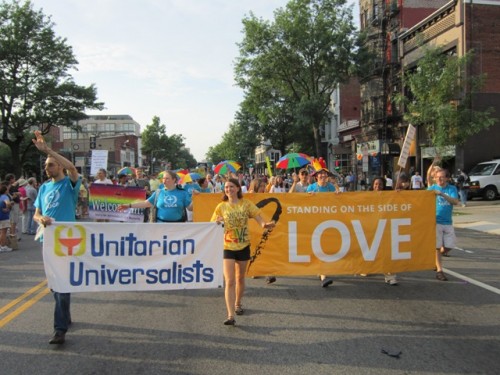
What Does the Growth of Unitarian Universalism Mean?

TRENDING AT PATHEOS Pagan

To help with the upcoming holiday season, I'm introducing the Holiday Helper...

10 years of the Power Sigil & Moving...
Last week while reorganizing my studio space, I found the sketchbook that...

Why are younger seekers drawn to Paganism and...
One of the things I've noticed the most is that I'm far...

When we talk about Greek religion, we often begin with the dodekatheion—the...

I was recently chatting with someone on Instagram. She asked me what...

On July 23, I saw Christopher Nolan's The Odyssey which is Homer’s...
view all Pagan blogs
Ad-Free & Subscriber Log-In Subscription Support
- About Us
- 2026 Calendar
- Videos
- Podcasts
- Library of World Religions
- Faith In Media Tracker
- Advertise With Us
- Write for Us
- Privacy Policy
- Terms of Service
- Do Not Sell My Data
- Contact Us
- Radiant Digital
- Manage Newsletter Subscriptions
- Unsubscribe From Notifications
- Sitemap
Copyright 2008-2026, Patheos, part of the Radiant Digital network of media brands. All rights reserved.
Subscription Support Ad-Free & Subscriber Log-In
Follow Patheos