
BuddhistCatholicContemplativeEvangelicalGeneral ChristianHinduJewishLatter-day SaintMuslimNew VisionsProgressive Christian
Beliefs
- Buddhist
- Catholic
- Contemplative
- Evangelical
- General Christian
- Hindu
- Jewish
- Latter-day Saint
- More Voices
- Muslim
- New Visions
- Pagan
- Progressive Christian
Topics
- Religion News
- Food and Religion
- Sports and Religion
- Religious Art
- Religious Music and Entertainment
- Religious Events
- History and Religion
- Style and Religion
- Politics and Religion
- Women in Religion
- Recreation Outdoors and Religion
- Business Finance and Religion
- Careers Workplace and Religion
- Education and Religion
- Family Parenting and Religion
- Health Fitness and Religion
- Home and Religion
- Relationships and Religion
- Technology and Religion
- Travel and Religion
Columnists
- Buddhist Columnists
- Business Finance and Religion Columnists
- Careers Workplace and Religion Columnists
- Catholic Columnists
- Contemplative Columnists
- Education and Religion Columnists
- Evangelists Columnists
- Family Parenting and Religion Columnists
- General Christian Columnists
- Health Fitness and Religion Columnists
- Hindu Columnists
- History and Religion Columnists
- Home and Religion Columnists
- Jewish Columnists
- More Voices Columnists
- Latter Day Columnists
- Muslim Columnists
- New Visions Columnists
- Nonreligious Columnists
- Pagan Columnists
- Politics and Religion Columnists
- Progressive Columnists
- Recreation Outdoors and Religion Columnists
- Relationships and Religion Columnists
- Religion News Columnists
- Religious Art Columnists
- Religious Events Columnists
- Religious Music and Entertainment Columnists
- Sports and Religion Columnists
- Style and Religion Columnists
- Technology and Religion Columnists
- Travel and Religion Columnists
- Women in Religion Columnists
Resource Library
- 2026 Calendar
- Library of World Religions
- The 100 Most Holy Places on Earth
- Patheos Answers
- Podcasts
- Videos
- Faith Leaders Database
- Anglican Episcopalian
- Bahai
- Baptist
- Buddhism
- Christianity
- Confucianism
- Eastern Orthodoxy
- Hinduism
- Holiness and Pentecostal
- ISKCON
- Islam
- Judaism
- Lutheran
- Methodist
- The Church of Jesus Christ of Latter-day Saints
- New Age
- Paganism
- Presbytarian and Reformed
- Protestantism
- Religion Behind the Scenes
- Roman Catholic
- Scientology
- Shia Islam
- Sikhism
- Sufism
- Sunni Islam
- Taoism
- Zen
- See all religions
Research Tools
 Ad-Free & Subscriber Log-In Subscription Support
Ad-Free & Subscriber Log-In Subscription Support
Follow Patheos 

- Trending:
- Forgiveness
- |
- Marriage
- |
- Consciousness
- |
- Death Penalty
- |
- Election
- |
- Halloween
 The Wild Hunt
- Home
- Pagan
- Did Haiti Eliminate Constitutional Protections for Vodou?
Did Haiti Eliminate Constitutional Protections for Vodou?
Last updated on: July 16, 2012 at 12:19 pm by Jason Pitzl-Waters
Did Haiti Eliminate Constitutional Protections for Vodou? 2012-07-16T12:19:45-07:00 Jason Pitzl-Waters
Patheos Explore the world's faith through different perspectives on religion and spirituality! Patheos has the views of the prevalent religions and spiritualities of the world.
Two years after the disastrous earthquake that left large areas of Haiti in ruins, most stories focus on the homeless camps slowly clearing out, positive signs of new construction, and the sometimes-contentious presidency of Michel Martelly. In June, President Michel Martelly signed an amended version of the Haiti’s constitution. This new version of their constitution grants voting rights to Haitians with dual citizenship, something long desired by the large Haitian diaspora which provides Haiti with around 20% of its GDP. It also reforms how elections are run, though some say the changes are “unworkable from the start.” But does this amended constitution also eliminate constitutional protections to the religion of Vodou?
httpv://www.youtube.com/watch?v=kpeLdXeIbwA
A 1935 Haitian law effectively outlawed the practice of Vodou as superstitious, noting that “ceremonies, rituals, dances and meetings during which it is practiced as an offering to the alleged deities, of sacrifices of livestock or poultry” could land a Haitian in prison, and fined (here’s an interesting article on the tensions from which that law arose). This law was explicitly abrogated in Haiti’s 1987 constitution, and in 2003 Vodou was recognized as an official religion in Haiti, meaning it enjoyed the same rights and legal protections as the politically dominant Catholic Church. Now, according to Euvonie Auguste, Head of the National Confederation of Haitian Vodou (KNVA), this newly amended constitution explicitly removes the 1987 abrogation of the 1935 anti-Vodou law, leaving Vodouisants open to possible legal persecution once more (also reported by Religion Clause).
“Voodoo would be no longer protected by the Constitution amended. The Priestess Euvonie Auguste, Head of the National Confederation of voodoo in Haiti, deplores the abrogation of Article 297 of the Constitution which, accrding to her protected the sector voodoo against all forms of discrimination. Recall that Article 297 abrogated amongst other things the Decree-Law of 5 September 1935 on superstitious beliefs that restricted arbitrarily the fundamental rights and freedoms of citizens. Given this new constitutional situation, the priestess Euvonie Augustus, stated that now, the vodoo practitioners will have to use their own means to protect themselves from any attacks against them.“
Any immediate government crack-down on Vodou seems unlikely. We know that Haitian President Michel Martelly wants to build a tourism industry around Vodou, with Martelly telling the United Nations: “Do you know how many people would like to come to Haiti and try to understand what Voodoo is?” Haiti’s tourism minister, Stéphanie Balmir Villedrouin, is already utilizing the allure of Vodou to boost ambitious plans for a new tourism industry for the island nation. So arresting people for engaging in a faith you’re hoping curious tourists will come and investigate seems counterproductive. That said, Haiti can be a politically volatile place, and Vodou has often been an convenient scapegoat for the nation’s problems. This was in full evidence right after the earthquake, when a number of political commentators decided it was Vodou that mired Haiti in poverty.
“As Lawrence E. Harrison explained in his book “The Central Liberal Truth,” Haiti, like most of the world’s poorest nations, suffers from a complex web of progress-resistant cultural influences. There is the influence of the voodoo religion, which spreads the message that life is capricious and planning futile. There are high levels of social mistrust. Responsibility is often not internalized. Child-rearing practices often involve neglect in the early years and harsh retribution when kids hit 9 or 10. We’re all supposed to politely respect each other’s cultures. But some cultures are more progress-resistant than others, and a horrible tragedy was just exacerbated by one of them.” – David Brooks, The New York Times
In addition, there is a long history of Christian missionaries working to eliminate the faith, using coercive conversion tactics, along with serious accusations that missionaries have stirred up anti-Vodou violence. So it is important that the nation have protections for Vodou, lest it fall victim to the capricious whims of any of the groups that would prefer to see it go extinct.
httpv://www.youtube.com/watch?v=6kn_NZzRyck
At this point there are several unanswered questions: does the amended 2011 constitution protect religious freedom for all Haitians? Does the 1935 anti-Vodou law now stand, or is it no longer applicable? Why was article 297 struck down in the new constitution? I have yet to find a copy of the amended constitution on the Internet, which might help answer some of these questions. Right now, some Haitian commentators do indeed see these changes as a repressive move by the current government. Once I have more information, I’ll post an update.
Previous Post

July 15, 2012
Guest Post: Interview with John Matthews on The Wildwood Tarot
Browse Our Archives
Select a Category indigenous Neopaganism Paganism Religion The Wild Hunt Uncategorized
Select a Month October 2012 September 2012 August 2012 July 2012 June 2012 May 2012 April 2012 March 2012 February 2012 January 2012 December 2011 November 2011 October 2011 September 2011 August 2011 July 2011 June 2011
TAKE THE
Religious Wisdom Quiz
What was the primary economic system in Biblical times?
Select your answer to see how you score.
Barter Taxation Gold standard Silver coins
Related posts from The Wild Hunt

Canadian Government: Non-Christian Prisoners Must Turn to Christian...

Being a Religious Minority (in Public Schools)
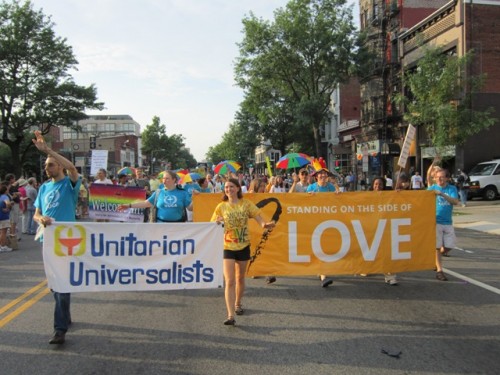
What Does the Growth of Unitarian Universalism Mean?

TRENDING AT PATHEOS Pagan

I was recently chatting with someone on Instagram. She asked me what...

While there are many people who share their results, the end of...

On July 23, I saw Christopher Nolan's The Odyssey which is Homer’s...

As I write this two big events have just finished up. One...

Restoring the Watershed of Divine Love
Perhaps cooperation is not something we manufacture through legislation, ideology, or moral...

Many UUs don’t pray because of bad experiences in a previous religion,...
view all Pagan blogs
Ad-Free & Subscriber Log-In Subscription Support
- About Us
- 2026 Calendar
- Videos
- Podcasts
- Library of World Religions
- Faith In Media Tracker
- Advertise With Us
- Write for Us
- Privacy Policy
- Terms of Service
- Do Not Sell My Data
- Contact Us
- Radiant Digital
- Manage Newsletter Subscriptions
- Unsubscribe From Notifications
- Sitemap
Copyright 2008-2026, Patheos. All rights reserved.
Subscription Support Ad-Free & Subscriber Log-In
Follow Patheos